




The building owner can confirm that the technician arrived. The management board can record entry and exit times at the site. But without technical expertise, they can hardly know whether a task was properly inspected or merely marked as completed.
At that point, the acceptance signature carries an element of trust that the signer had no means to verify.
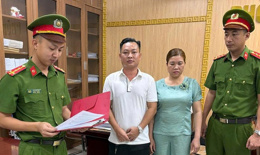
An incident in Gansu, China, shows that this trust can be exploited even when records have been digitized. During a maintenance round for 68 elevators in December 2025, employees of the Gansu branch of Yungtay Elevator Company scanned codes on wooden boards that the management board had already removed in order to file reports, instead of visiting each elevator to perform the work. They even signed on behalf of the safety manager.
In April 2026, this branch was fined 60,000 yuan and had 7,500 yuan of illegal gains confiscated. Also in Gansu, Xinyaotuoda Electromechanical Company was fined 75,000 yuan for failing to carry out maintenance as required. The cases were announced by local regulatory authorities in August 2026.
What is worth reflecting on is that work that was never performed can still make it through the entire documentation process. If acceptance relies only on records and signatures, those who follow the full procedure and those who go through the motions can be paid the same.
Service buyers find it hard to distinguish quality, while businesses that do the job seriously find it hard to prove their value, until … an accident happens!
China applies direct sanctions to this behavior. Article 88 of the Law on Safety of Special Equipment stipulates fines of 10,000 to 100,000 yuan for maintenance units that violate legal requirements and safety technical regulations; any illegal gains are confiscated.
Liability arises from wrongdoing, not from waiting until an accident or incident occurs.
In Vietnam, Elevator Magazine has previously reported that pressure on service prices can reduce maintenance to visiting the site, taking a quick look, and signing the logbook.
A low price does not necessarily mean poor service; a high price does not guarantee that the technician does the job properly either. However, a maintenance contract must be sufficient to cover manpower, time, tools, and the tasks that need to be performed.
This report is not sufficient to conclude how widespread the violations are, but it raises a question: When customers find it easier to compare price than quality, how will businesses that follow the full procedure compete?
A fully completed set of records can lead the owner to believe that the equipment has been inspected. Latent faults continue to accumulate while the maintenance records have been closed as completed; the technician on the next visit then relies on a history that does not reflect the true condition of the equipment.
An elevator still running does not mean that maintenance tasks have been performed.
Domestic regulations already require work records to be kept. Section 3.5 of QCVN 02:2019/BLDTBXH stipulates that maintenance units must keep an assignment and monitoring logbook showing the name of the person responsible, the work content, and the time of performance. The managing and using party must keep maintenance, repair, and component replacement records.
What is still missing in practice is the ability to cross-check that information against work at the site.
Requiring the building owner to follow along and supervise every operation is not a viable solution. They hire the service because they need professional expertise that they do not have.
The service provider must demonstrate the work that has been done. The managing party has the responsibility to review, request clarification, and organize inspections when necessary. The signature of a person without technical understanding should not become the basis for the service provider to consider all obligations fulfilled.
This is the gap that a management system like LiftCare aims to address.
Developed in coordination with the Vietnam Elevator Association and launched in August 2026, LiftCare connects management activities from the office to the site. Managers can create plans for each elevator, track maintenance frequency, create work orders, and assign them to technicians.
Maintenance tickets that are overdue, due today, or approaching their due date are displayed so that service providers can identify maintenance periods at risk of being missed.

At the site, technicians receive assignments, look up records, and update results on the app. For repair tickets, LiftCare allows before-and-after images to be saved, along with information about the time and location of data entry.
This data provides additional grounds for cross-checking reports against the site: where the work was recorded, at what time, and how the equipment condition changed.

Thanks to the Elevator Identification Code system developed by the Association, when the service provider changes, records remain linked to the equipment and accompany it throughout its lifecycle.
All information about maintenance history, repairs, materials replaced, and the person who performed the work is stored for each elevator. Investors can access a dedicated portal to view the entire equipment history and work schedules under their management.
For technicians and service providers that do the job properly, this is also a way to demonstrate their effort and quality. A fully recorded maintenance visit shows who performed it, when, with what results, and which tasks still need follow-up.
Many countries have made significant progress on this problem.
Hong Kong has implemented Digital Log-books for elevators and escalators since November 2022. Staff update work on the app; contractors, persons responsible for equipment management, and regulatory authorities can all access the records. Blockchain technology is used to increase resistance to record tampering.

The common value of electronic elevator and escalator record management systems such as Hong Kong's Digital Log-books or the Vietnam Elevator Association's LiftCare lies in the entire process: clear task assignment, on-site recording, result approval, history storage, and inspection when signs of abnormality appear.
Maintenance visits with unreasonable duration, duplicate images, or reports with identical content repeated over time will be detected and required to be explained.
Whether by paper logbook or app, the ultimate goal remains unchanged: To turn work that traditionally takes place outside the customer's view into a process that can be traced and verified.
At that point, the acceptance signature no longer has to bear the entire burden of trust between the client and the service provider. It is merely the endpoint of a chain of evidence about the work performed.
A signature takes only a few seconds.
The value lies in what actually happened before that.