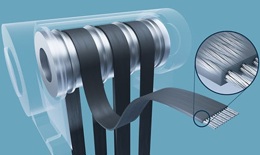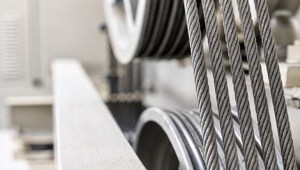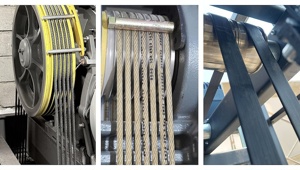




Alongside traditional round steel wire ropes, the market now offers various other technologies such as high-strength PU-coated steel wire ropes, PU-coated steel-core flat ropes/belts, and ropes using synthetic fiber or carbon fiber cores. Each technology has been developed to address different requirements and each has its own limitations.
To help consumers make informed choices, Elevator Magazine presents a series of articles on elevator suspension ropes, consisting of two parts:
Part 1 - What are elevator suspension ropes? - Some regulations related to ropes; Why manufacturers need to develop new-generation elevator suspension ropes.
Part 2 - Types of elevator suspension ropes: Should traditional round steel wire ropes be chosen?
Part 3 - Types of elevator suspension ropes: Should PU-coated round steel wire ropes be chosen?
Part 4 - Types of elevator suspension ropes: Should PU-coated flat ropes, steel-core belts be chosen?
Elevator Magazine hopes that through this series, consumers will have additional basis for selecting technology suited to their project and long-term usage costs.
Three common groups of elevator suspension rope technologies
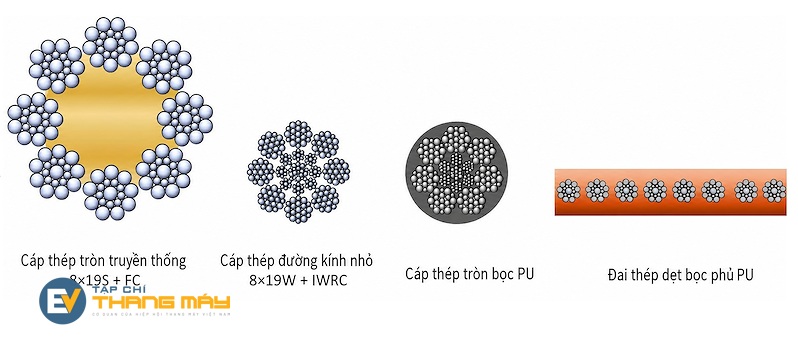
Classified in a way that is easy for consumers to recognize, suspension means in elevators today can be divided into three common main groups:
1. Traditional round steel wire ropes - steel wire ropes;
2. High-strength elastomer-coated steel wire ropes (*) - Elastomeric coated ropes - steel wire;
3. Elastomer-coated flat ropes/belts - Elastomeric coated belts.
(*) Elastomer is the general name for any synthetic or natural material with elastic properties such as rubber. In elevator applications, manufacturers typically use polyurethane (PU), a high-durability synthetic plastic.
Comparing elevator suspension rope technologies
1. Should traditional round steel wire ropes be chosen for elevators?
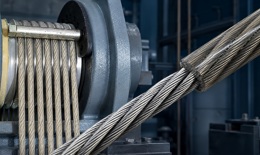
Round steel wire rope is the longest-established and most common suspension means, with over 180 years of usage data. A complete rope is made from many small steel wires twisted into strands; the strands are then twisted around a core to form a structure capable of both withstanding tension and bending over pulleys.
Traditional round steel wire ropes have core types including fiber core and steel core. In elevator applications, manufacturers typically use fiber-core steel wire ropes using natural fibers (hemp) or synthetic fibers. The fiber core serves to shape the rope, retain rope lubricating oil, and provide high flexibility when the rope bends over small pulleys.
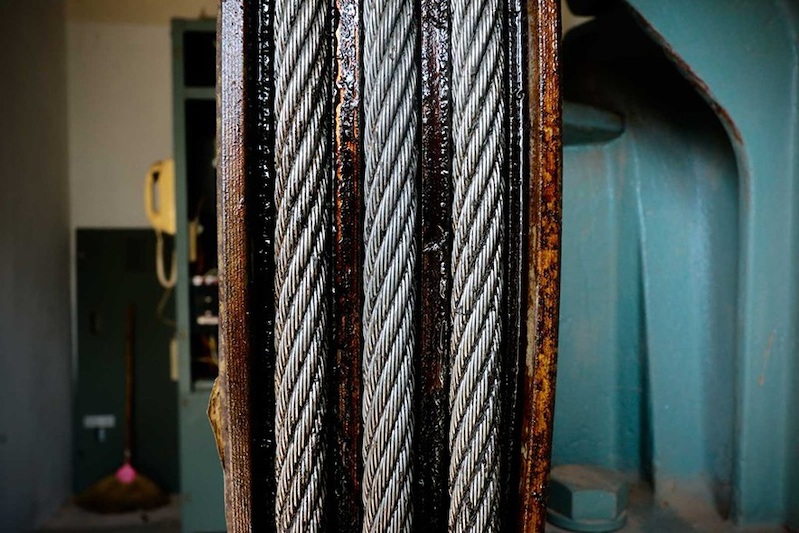
Traditional round steel wire ropes commonly used in elevators are oil-impregnated fiber-core ropes, which have a self-lubricating mechanism during operation
It should be noted that during production, the core of traditional steel wire ropes has been impregnated with lubricating oil. During operation, the fiber core will automatically release oil, so there is no need to apply rope lubricant.
Excessive use of oil/grease lubricant can reduce traction and friction between the rope and pulley, causing rope slippage and floor misalignment. In cases where the rope core has dried out, applying lubricating oil at this point is only a temporary maintenance measure; the owner/service provider must replace the rope to ensure safety.
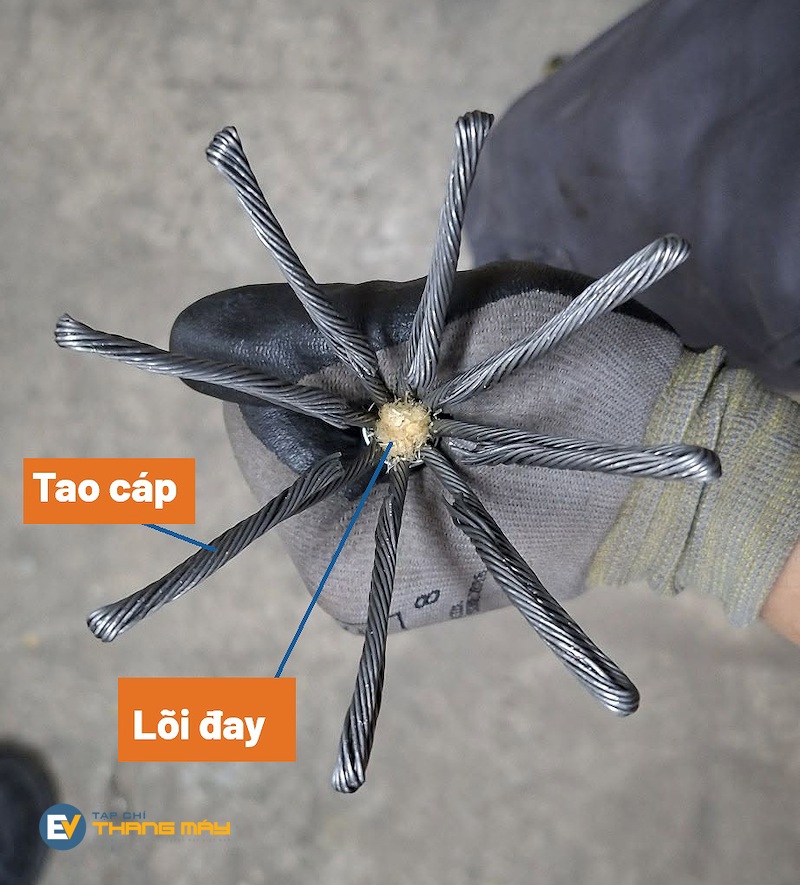
The hemp/fabric core helps increase rope flexibility when bending over pulleys, while also storing lubricating oil for the rope, so during normal maintenance/servicing there is no need to apply oil/grease.
2. Advantages of traditional round steel wire ropes
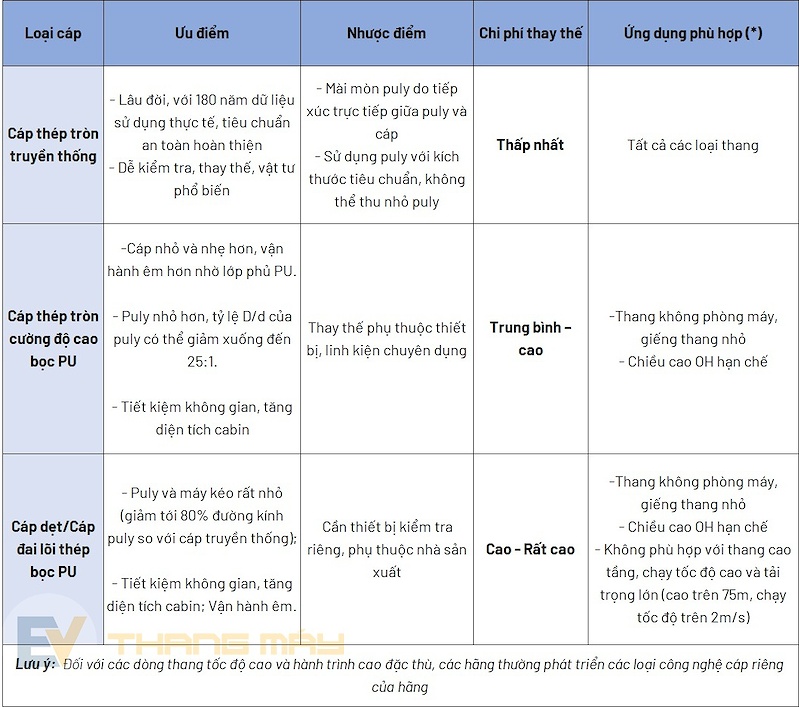
The greatest advantage of round steel wire ropes is the standards framework, design experience, and inspection methods that have been established over a long period.
Because the outer strands are not covered, technicians can directly observe and measure many degradation indicators such as broken wires, abrasion, corrosion, diameter reduction, or deformation to assess rope condition.
Replacement materials for traditional round steel wire ropes are also more widely available than for elastomer/PU-coated steel wire rope or flat rope technologies. Replacement and modernization costs are also lower and easier to estimate.
3. Limitations of traditional round steel wire ropes
During operation, the rope continuously undergoes tension, bending, and straightening as it passes over pulleys. Relative movement and internal friction also occur between the steel wires. At the same time, the rope surface contacting the pulley groove over time can cause wear to both the rope and the pulley.
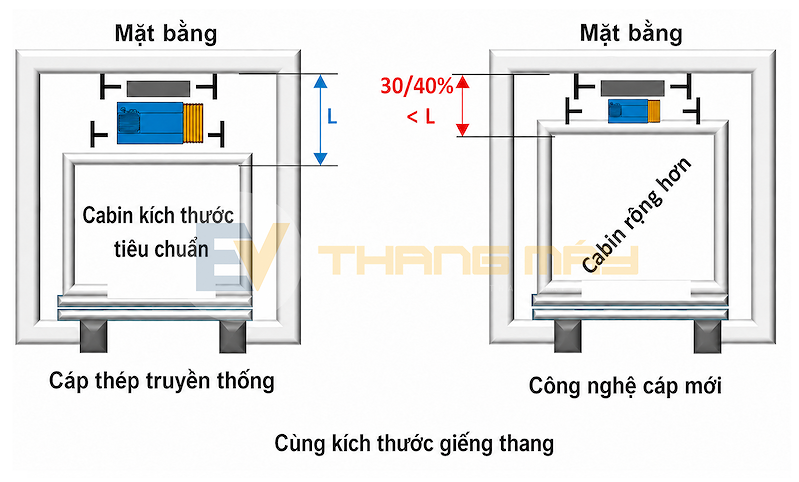
Compared to small-diameter PU-coated rope technologies that can help reduce traction machine pulley diameter, round steel wire ropes require standard pulley dimensions.
Regarding architectural space, as mentioned, European Standard EN 81-20 (in Vietnam, TCVN 6396-20) requires that pulley diameter be at least 40 times the rope diameter; therefore, traditional round steel wire ropes require sufficiently large pulley diameters to limit bending stress. This can increase traction machine size and layout space compared to systems using steel wire rope or flat rope/belt technologies coated with elastomer/PU that have smaller rope diameters.
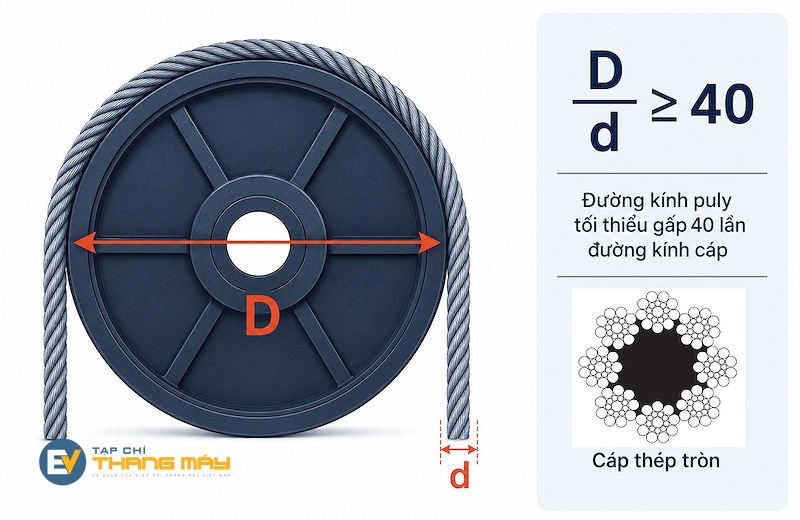
By regulation, the traction machine pulley diameter must be at least 40 times the rope diameter. For example, a rope with a diameter of 10 mm requires a pulley with a minimum diameter of 400 mm.
Due to direct exposure to the environment, round steel wire ropes are easily affected by moisture or water, causing loss of lubricant, fiber core swelling, rope shortening, red rust powder formation, corrosion, reduced traction, and damage to pulley grooves.
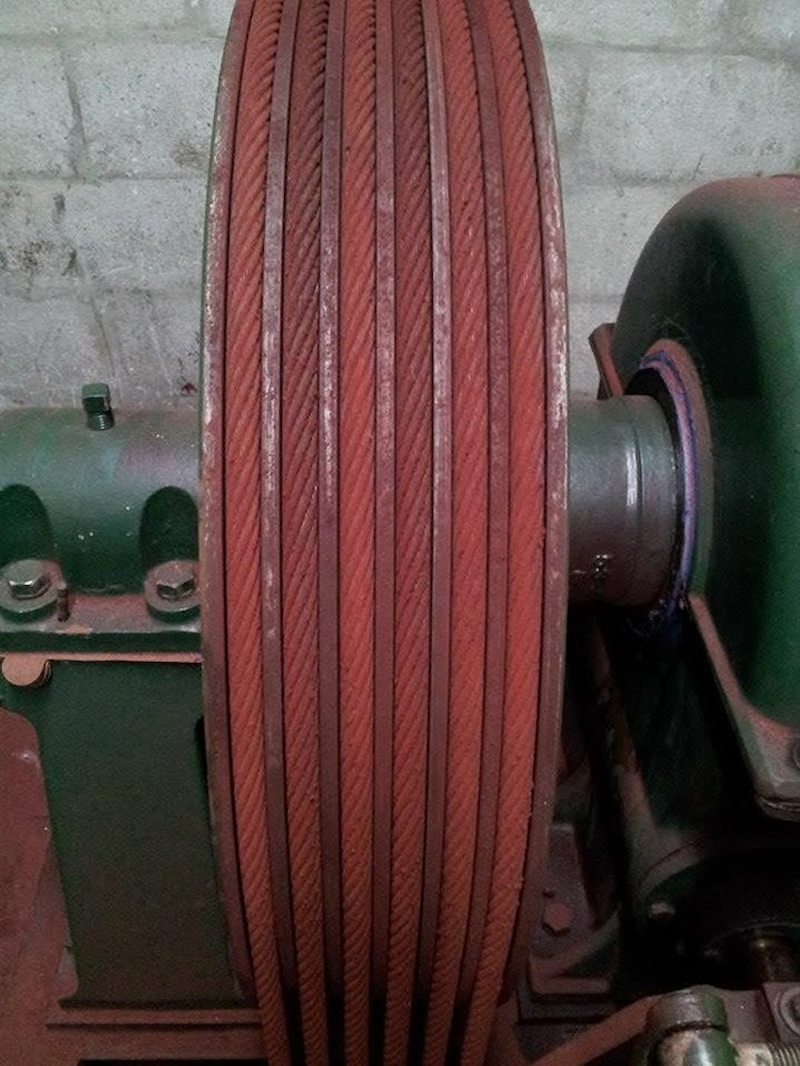
Due to direct exposure to the environment, round steel wire ropes are easily affected by moisture or water, causing loss of lubricant, fiber core swelling, rope shortening, red rust powder formation, corrosion, reduced traction, and damage to pulley grooves.
4. Applications of traditional round steel wire ropes:
Thanks to their structure and strength grades along with flexible, suitable production and replacement costs, round steel wire ropes are used in a very wide range: from home elevators, apartment buildings, and hotels to heavy-duty freight elevators, high-speed elevators, and elevators with large travel distances.
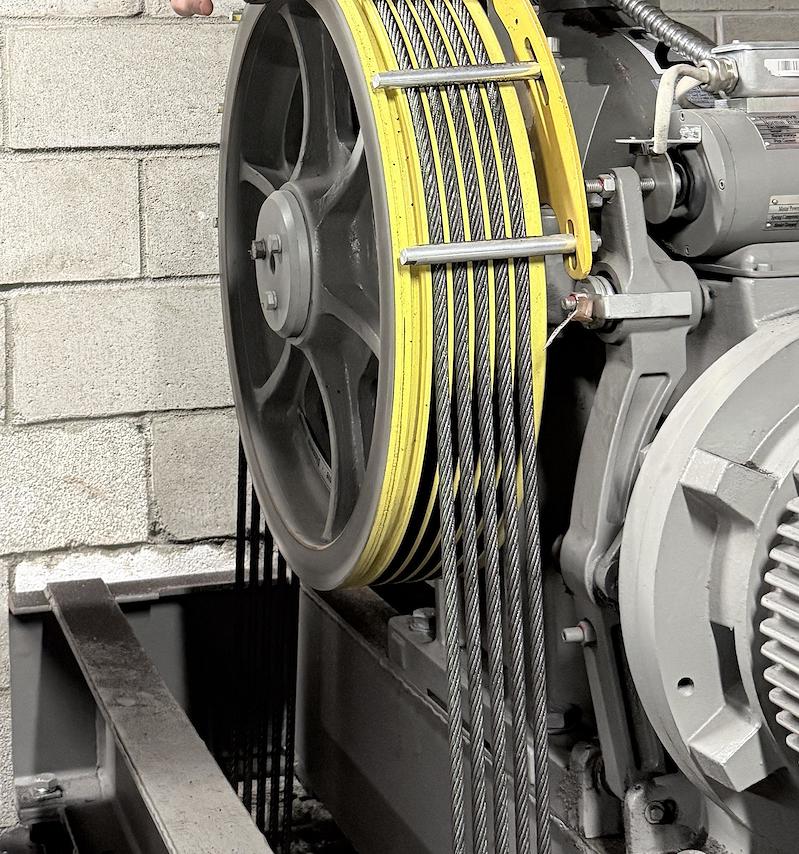
Round steel wire ropes can meet the technical requirements of most projects with high reliability.
However, for super high-rise projects, using traditional steel wire ropes at travel distances above approximately 500 m faces disadvantages due to the self-weight of the rope system, which has also driven research into high-strength, lighter-weight fiber ropes.
Follow the series "Which elevator suspension rope type is best?":
Part 1 - What are elevator suspension ropes?
Part 3 – Types of elevator suspension ropes: Should PU-coated round steel wire ropes be chosen?