

In Official Letter No. 33/CV-VNEA dated November 5, 2026, sent to the Department of Employment (Ministry of Home Affairs), the Vietnam Elevator Association (VNEA) provides the results of testing and inspection of 40 elevator buffer samples within the framework of JACOP 2025 (*) of Europe and proposes preventive measures to protect elevator users and enhance industry safety.
(*) Joint Action on Product Compliance in the European Union (EU) and the countries of the European Free Trade Association (EFTA)
In the above Official Letter, the Vietnam Elevator Association requests the Department of Employment to disseminate warnings and guidance on reviewing buffers manufactured domestically, imported, in circulation, and already installed. The Association recommends focusing on products of unknown origin or with abnormal documentation.
The Association also requests the Department of Employment to refer to the EU test results, particularly cases where PU buffers were banned from sale and cases requiring explanation, and to propose remedial measures in order to take appropriate action regarding buffers currently in circulation in Vietnam.
Given concerns about buffer samples failing inspection and testing standards, the Vietnam Elevator Association requests the Department of Employment to publicly disclose, or advise competent authorities to publicly disclose, the list of recognized foreign testing organizations so that consumers, enterprises, and certification bodies have a basis for evaluation.
The Vietnam Elevator Association emphasizes that public disclosure of information on testing organizations and the scope of recognized results will help consumers, investors, and enterprises verify documentation and select products, testing, and certification services; it will also support transparency in the elevator safety components market.
Along with the above recommendations, the Vietnam Elevator Association proposes establishing a two-way information exchange channel between the Association and the Department of Employment in order to receive feedback and promptly disseminate warnings and guidance to members and readers.
The Association states that it is ready to coordinate in accordance with its functions and duties to contribute to ensuring safety for users and protecting the legitimate rights and interests of enterprises in the industry.
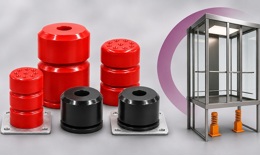
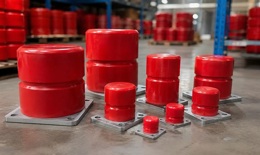
Previously, according to the notification of the European Commission and the JACOP 2025 Summary Report, this activity tested 40 buffer samples taken in Germany, the Netherlands, Sweden, Malta, Cyprus, and Switzerland, including 33 polyurethane (PU) samples and 7 hydraulic samples. Samples were collected from December 2025 to February 2026; testing was conducted at laboratories from February to April 2026, in accordance with EN 81-20:2020 and EN 81-50:2020.
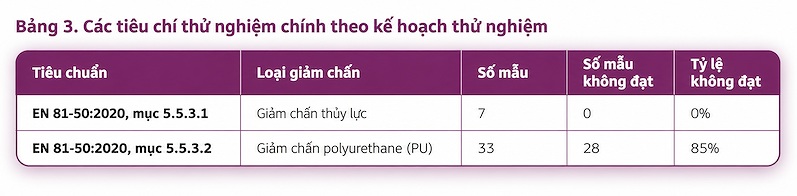
Source: JACOP 2025 Summary Report of the European Commission on Market Surveillance – Elevators and Safety Components of Elevators.
Results: 28/33 PU buffer samples failed to meet technical testing requirements (approximately 85%); all 7 hydraulic samples passed technical testing. Deviations mainly related to braking acceleration, particularly maximum braking acceleration exceeding limits, which may cause the car or counterweight to be braked too abruptly upon impact with the buffer.
In addition, 15/40 samples had deficiencies in labeling or documentation; combining both inspection groups, 32/40 samples failed to comply with at least one requirement.
European surveillance authorities sent written requests for explanation and proposed remedial measures in 23 cases; imposed sales bans on 5 products; required supporting documentation in 2 cases; and provided guidance in the national language in 2 cases.