


Elevators and safety equipment belong to the group of products and goods with high risk levels, posing a potential risk of serious unsafety if not properly managed. This characteristic places high demands on the capacity and responsibility of enterprises operating in the production, trading, and provision of elevator technical services.
When choosing to purchase an elevator, investors and consumers need to consider the service provision capability throughout the product lifecycle. Maintenance, repair, and troubleshooting capacity, along with the enterprise's responsibility after handover, therefore need to be clarified from the outset.
These requirements need to be concretized into unified criteria, covering legal, organizational, and personnel capacity to technical capability, quality management, safety, and responsibility to customers.
Not only is this a basis for customers to evaluate and select suppliers, it is also a basis for enterprises to self-assess, improve, and enhance their capacity; while also serving inspection and recording of compliance levels during operations.
In that spirit, the Vietnam Elevator Association (VNEA) has developed the Draft Vietnam Elevator Enterprise Standard, designated TCCS 04:2027/VNEA, expected to be officially issued in 2027.
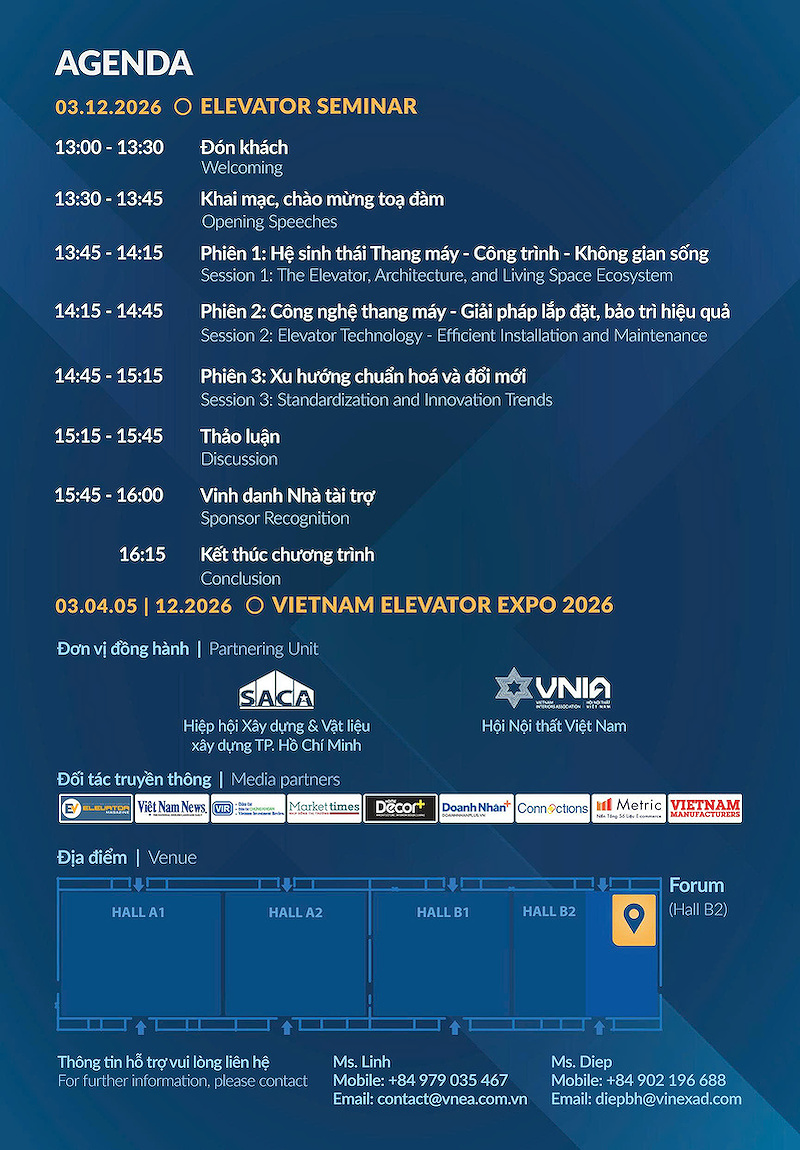
The Draft Vietnam Elevator Enterprise Standard will be officially announced by VNEA and open for comments at the Elevator Talk 2026 seminar: Elevators Connecting Works & Living Spaces, within the framework of Vietnam Elevator Expo 2026 in Ho Chi Minh City.
- Time: 13:30 on December 3, 2026
- Location: Vietnam Elevator Expo 2026 - Hall B, Saigon Exhibition and Convention Center (SECC), Ho Chi Minh City.
Bringing the draft up for public discussion creates an opportunity for enterprises, experts, investors, and service users to contribute opinions on the level of requirements, assessment methods, and applicability.
Feedback from practice will serve as a basis for VNEA to continue refining the draft before issuance, aiming toward a measure that reflects actual capacity, recognizes systematic investment, and helps enterprises clearly identify the requirements they need to meet.
Enhancing the competitiveness of Vietnamese elevator enterprises
The draft is developed on the basis of relevant legal regulations, with reference to national and international standards and technical practices appropriate to Vietnam's conditions. The goal is to enhance the competitiveness of enterprises, contributing to building a professional, safe, transparent, and sustainable operating environment for the elevator industry.
According to the content of the Draft Enterprise Standard TCCS 04:2027/VNEA preparing to be published for comments, enterprises are assessed according to four functional groups: production, trading, installation, and maintenance. An entity may register for assessment of one or multiple functions, corresponding to its scope of operations.
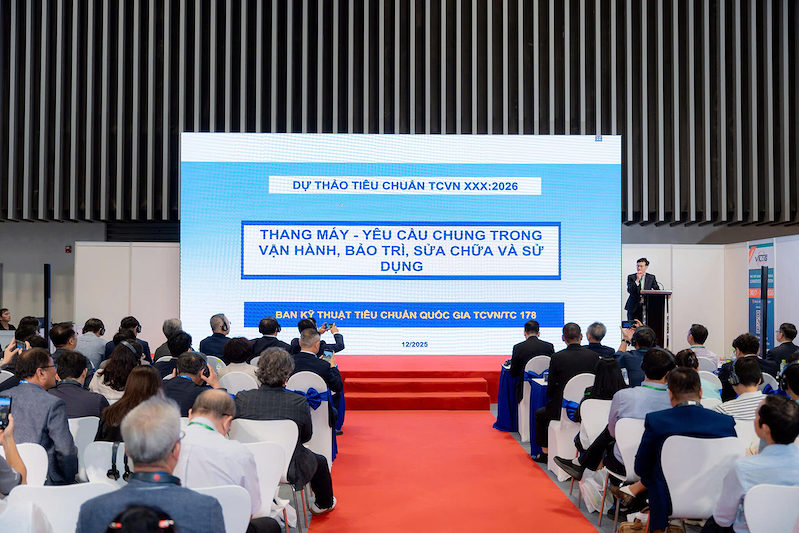
The seminar on Collecting Opinions on the Draft National Standard TCVN on Elevators - General Requirements in Operation, Maintenance, Repair and Use held within the framework of Vietnam Elevator Expo 2025 in Ho Chi Minh City.
In addition to general criteria on legal, financial, and quality management systems, each group must meet specific requirements on capacity standards tied to actual work.
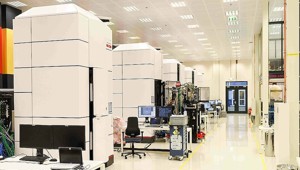
For manufacturing enterprises, the draft sets conditions on factories, machinery, design and production personnel, and the degree of autonomy in processing and manufacturing.
Trading enterprises must meet requirements on technical personnel, control of equipment origin, product quality, and after-sales responsibility. Installation entities need specialized personnel along with appropriate equipment and tools to perform the work.
For maintenance enterprises, the draft focuses on service organization capacity, the qualifications and experience of technicians, and the ability to handle incidents and rescue. Personnel requirements are classified by high-speed elevator group and medium- and low-speed group, and are also tied to the number of elevators the enterprise handles.
This classification creates a basis for cross-referencing between the registered function and the enterprise's actual implementation capacity. For investors, owners, and operation management units, assessment results can supplement the basis when selecting suppliers for each stage, from procurement and installation to elevator maintenance.
The draft is also designed to move toward enterprise classification, equipment identification, and digital records management, contributing to promoting digital transformation, information transparency, and enhancing the ability to trace and verify information in the operations of elevator enterprises.
Through discussion and public consultation on the Draft Vietnam Elevator Enterprise Standard at the Elevator Talk 2026 seminar: Elevators Connecting Works & Living Spaces, taking place on the upcoming December 3, 2026, enterprises, experts, and service users can contribute opinions on the level of requirements, assessment methods, and applicability.