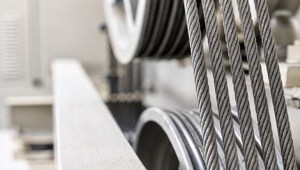




In elevator systems, wire ropes/hoist ropes are the components that directly suspend the car and the counterweight; they directly friction against the traction machine's pulley grooves to generate traction force that moves the elevator. Rope technology affects the size of the traction machine, hoistway space, ride smoothness, inspection methods, as well as maintenance and replacement costs throughout the equipment's lifecycle.
Besides traditional round steel ropes, the market currently offers many other technologies such as high-strength PU-coated steel ropes, PU-coated steel-core flat ropes/belt ropes, and ropes using synthetic fiber or carbon fiber cores. Each technology was developed to address different requirements and each has its own limitations.
To help consumers understand correctly before making a choice, Elevator Magazine presents a series of articles related to elevator hoist ropes, consisting of two parts:
Part 1 – What are elevator hoist ropes? - Some regulations related to ropes; Why manufacturers need to develop new-generation elevator hoist ropes.
Part 2 – Types of elevator hoist ropes: Should traditional round steel ropes be chosen?
Part 3 – Types of elevator hoist ropes: Should PU-coated round steel ropes be chosen?
Elevator Magazine hopes that through this series, consumers will have more basis to choose technology suitable for their project and long-term usage costs.
Part 1 - What are elevator hoist ropes?
In traction elevators, the car and counterweight are connected to each other by a hoist rope system, moving in opposite directions within the hoistway. The traction machine rotates the pulley; the friction force between the hoist ropes and the pulley grooves transmits force to raise and lower the car.
If the friction force is insufficient, the ropes may slip on the pulley, causing the car to move improperly or stop inaccurately at floors.
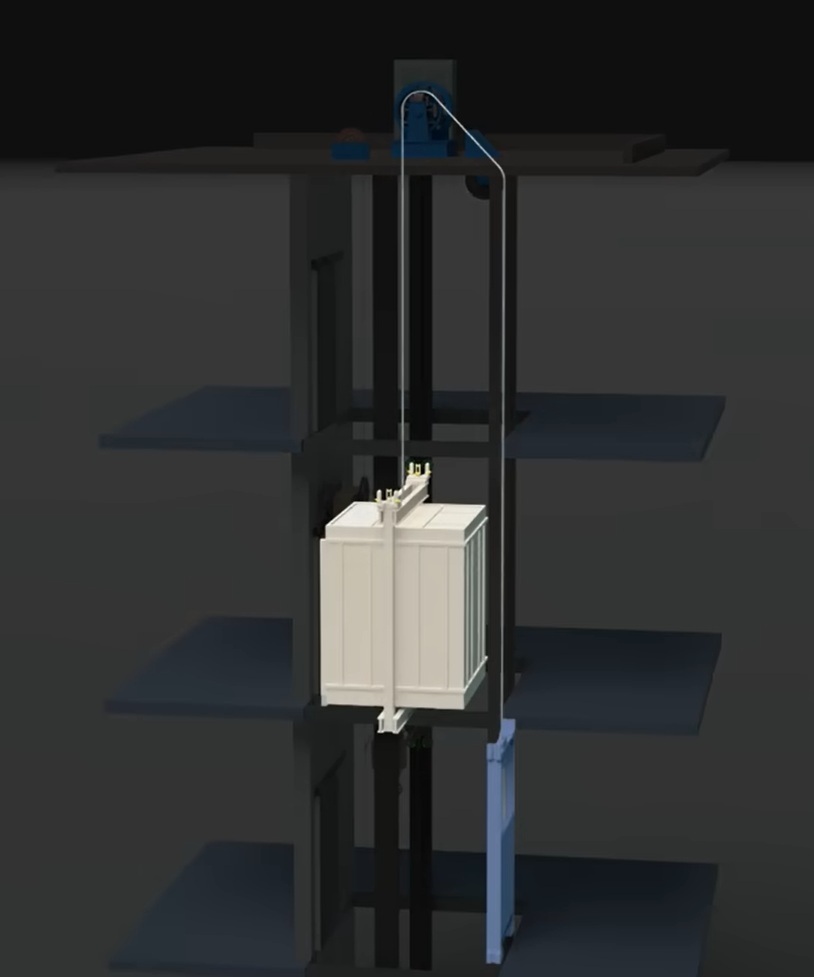
Elevator hoist ropes are called wire ropes or hoist ropes in English, used to suspend the car and counterweight.
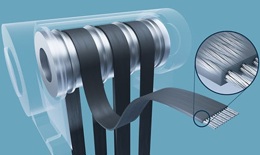
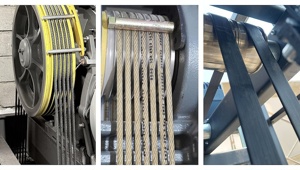
In international standards, hoist ropes are referred to more broadly as suspension means. This term includes traditional round steel ropes and other technologies used to suspend the car and counterweight, such as high-strength round steel ropes coated with elastomer/PU, PU-coated flat steel ropes/belt ropes (belt coated rope), and flat ropes/belts with carbon fiber cores (carbon fiber rope).
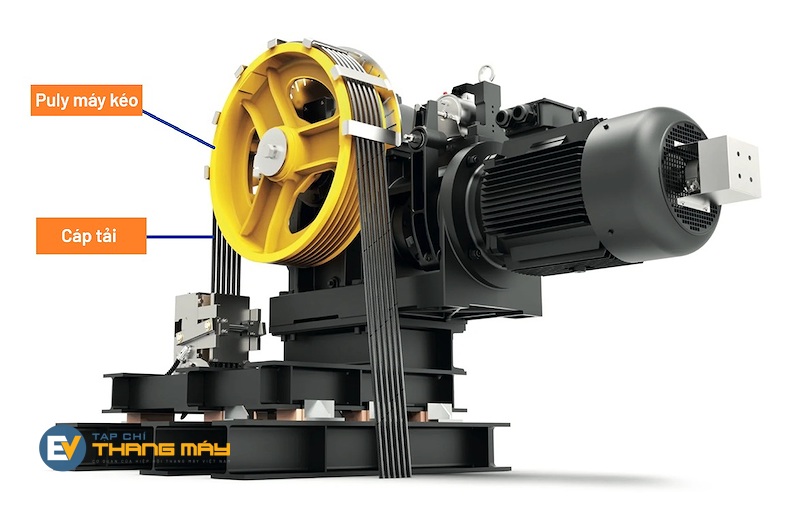
In friction-driven elevators (traction elevators), the elevator car is raised/lowered through the friction force between the hoist ropes and the grooves of the drive pulley of the traction machine.
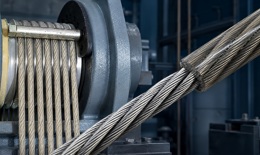
Fiber-core round steel rope is the oldest and most common rope technology in the elevator industry.
However, from the late 1990s to the early 2000s, the development of gearless traction machines and machine-room-less elevators created a demand for miniaturizing the drive system. This need became even more evident in buildings with narrow hoistways, limited overhead height (OH), or renovation projects.
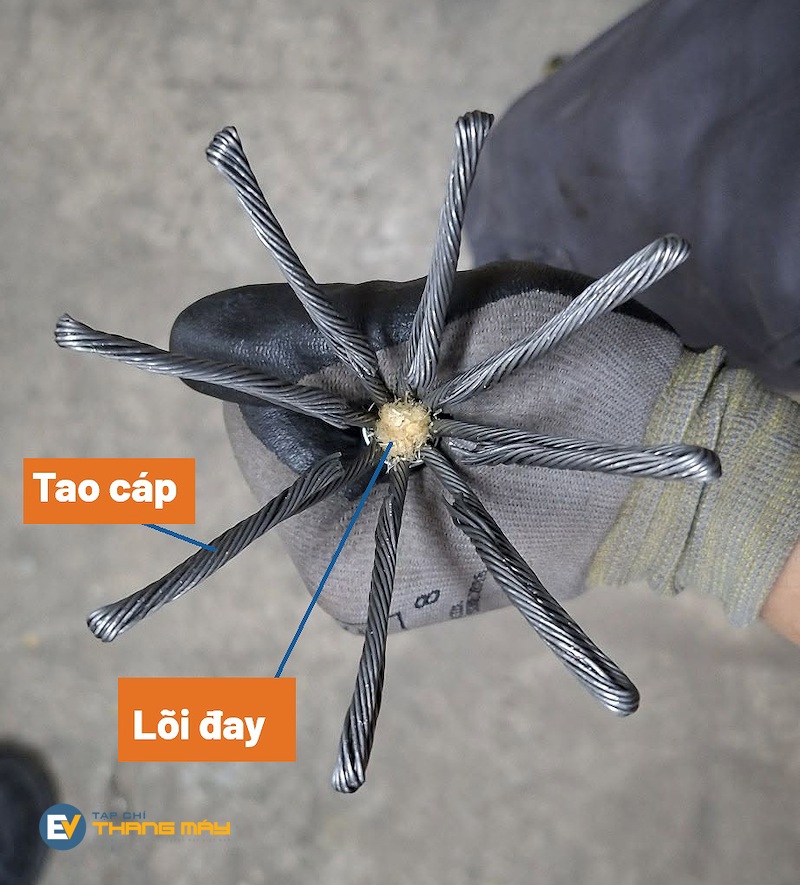
Hemp-core round steel rope is the most common type of rope used in the elevator industry. The hemp core helps increase the rope's flexibility when bending over pulleys, while also storing lubricating oil for the rope.
The traction capability of an elevator depends on many factors such as the coefficient of friction between the suspension means and the pulley, the wrap angle between the pulley and the rope, the pulley groove profile, and the ratio of rope tension at both ends.
In compact traction machine designs, the wrap angle or conditions for generating traction friction may be limited. At the same time, if the pulley continues to be downsized while still using conventional steel ropes, the bending stress in the rope will increase, causing the rope to fatigue faster and reducing its lifespan.
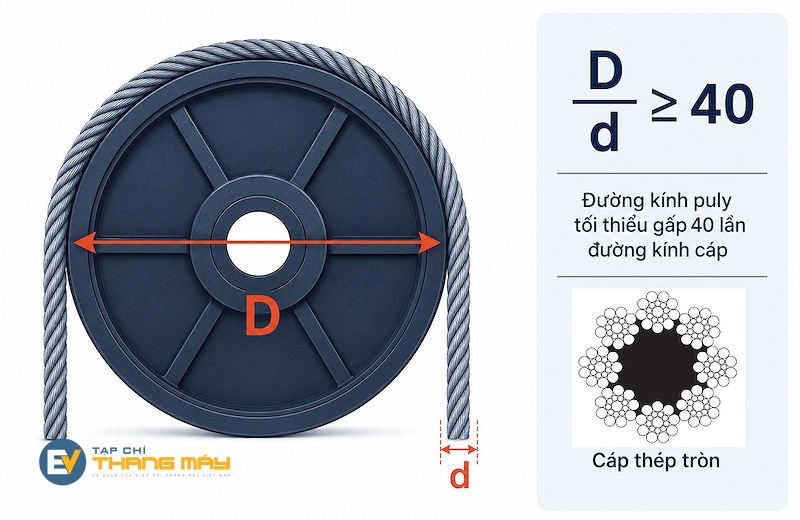
Note: Standard EN 81-20:2014 and its fully equivalent standard in Vietnam, TCVN 6396-20:2017, specifies in clause 5.5.2.1: The ratio between the nominal diameter of the traction pulley, diverting pulley, or rope drum (D) and the nominal diameter of the suspension rope (d) must be at least 40 regardless of the number of rope strands.
D/d≥40
In other words, the diameter of the pulley must be at least 40 times the rope diameter. For example, a rope with a diameter of 10 mm requires a pulley with a minimum diameter of 400 mm.
Therefore, new-generation suspension means are developed in two directions: (1) Using high-strength load-bearing cores with small diameter or thickness to reduce pulley size; (2) Simultaneously using elastomer/PU coating to increase and control friction between the pulley and rope, isolate metal-to-metal contact, reduce noise, and limit wear on both rope and pulley.
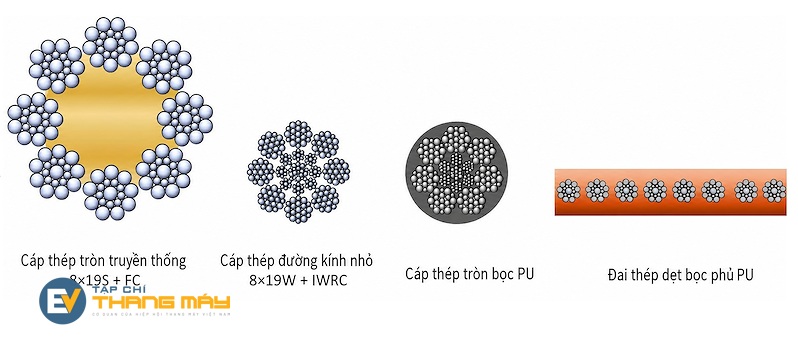
To compact the traction machine for projects with low OH height requirements, as well as to develop ultra-light rope technologies for high-speed/long-travel elevators, elevator manufacturers have researched and developed various rope technologies.
Besides the requirement to miniaturize traction machines for machine-room-less elevators, the development of new rope technologies also stems from super high-rise buildings, where the weight of steel ropes becomes a significant portion of the total moving mass. The longer the rope, the greater the load placed on the traction machine, increasing power consumption and the risk of rope oscillation.
In reality, nearly 70% of an elevator's weight is from the ropes, and when the ropes are too long, the elevator's weight becomes excessive, consuming traction machine power and operational energy.
Therefore, manufacturers have researched suspension means with higher strength-to-weight ratios, such as aramid fiber ropes, round ropes or flat ropes/belt ropes with carbon fiber cores, and small-diameter high-strength steel ropes coated with polymer/PU…
The development of new rope technologies helps enable miniaturization of traction machines and optimization of hoistway space; but also requires design, inspection, and replacement criteria suitable for each technology.
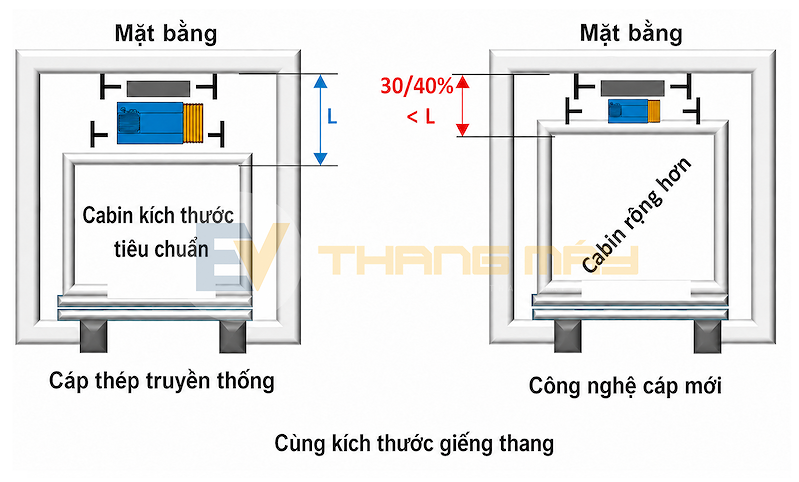
New rope technologies with smaller diameters and greater friction help compact the traction machine size, thereby increasing car area and reducing OH height.
There are many different rope technologies on the current market; regardless of which rope technology is applied, manufacturers must ensure the safety factor requirements for ropes, as follows:
Standard EN 81-20:2014 and its fully equivalent standard in Vietnam, TCVN 6396-20:2017, specifies in clause 5.5.2.2:
5.5.2.2 The safety factor of suspension means must be no less than:
a) 12 in the case of friction drive with three or more ropes;
b) 16 in the case of friction drive with two ropes;
c) 12 in the case of drum drive and hydraulic elevators using ropes;
d) 10 in the case of using chains.
The safety factor is the ratio between the minimum breaking force (in Newtons) of a rope and the maximum tension (in Newtons) on this rope, when the car carrying rated load stops at the lowest floor.
Example: When the elevator car is fully loaded and stops at the lowest floor, each rope bears a maximum tension of 5,000 N:
If the elevator uses 4 ropes, the minimum safety factor is 12. Each rope must have a minimum breaking force of:
5,000×12=60,000 N
If the elevator uses only 2 ropes, the safety factor must increase to 16. Each rope must have a minimum breaking force of:
5,000×16=80,000 N
Just like when hanging a 10 kg weight, one does not choose a rope that can barely hold 10 kg but chooses one with strength many times greater.
Note: Elevator wire ropes/hoist ropes need to be distinguished from some other types of rope equipment in elevators:
• Governor ropes (wire ropes): transmit motion to the governor and contribute to activating the safety gear when the car overspeeds.
• Compensation Ropes/Chains: compensate for the change in hoist rope weight between the car and counterweight, typically needed for elevators with long travel.
• Traveling cable: is the cable that conducts electricity and transmits signals between the car and the control system; it does not have the function of suspending the car.
• Door ropes (wire ropes): transmit motion in the door opening and closing mechanism.
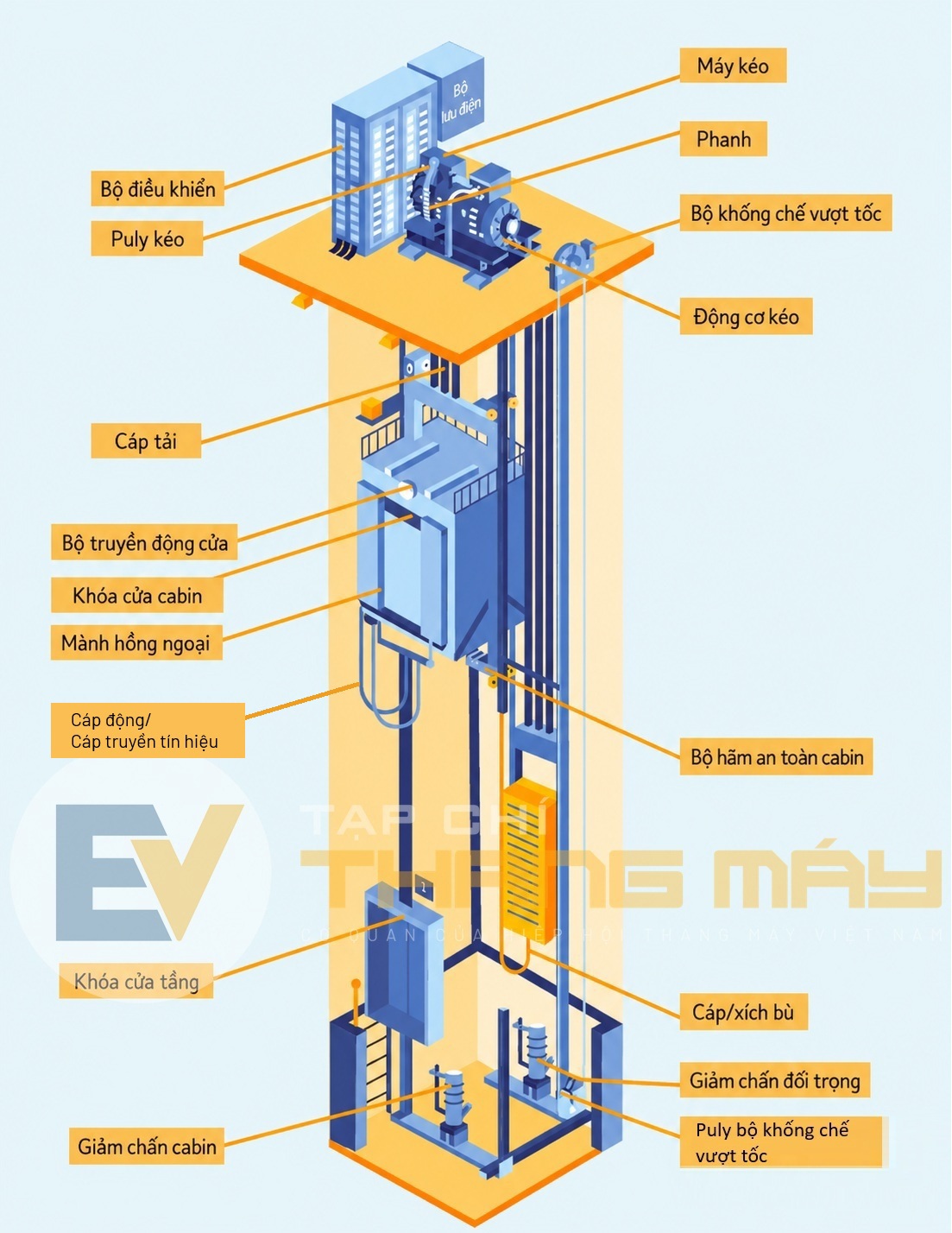
Not every rope that appears in the hoistway is called a hoist rope.
In the following parts of the series Which elevator hoist rope type is best?, Elevator Magazine will focus on hoist rope technologies for traction elevators and indirect hydraulic elevators, helping consumers compare and choose hoist rope technology for their elevator system.
Part 2 – Types of elevator hoist ropes: Should traditional round steel ropes be chosen?
Part 3 – Types of elevator hoist ropes: Should PU-coated round steel ropes be chosen?