

1. What is a levelling sensor?
A levelling sensor is a device that provides signals enabling the controller to recognize the cabin's position in the approach zone and its stop at a floor. Based on these signals together with drive system data, the controller adjusts motion so that the cabin floor stops level with the floor landing.
Under the traditional method, this sensor comes in two types:
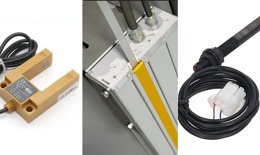
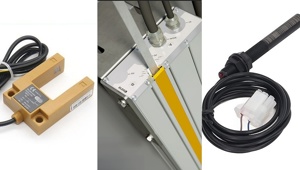
(1) Optical or photoelectric sensors combined with levelling vanes, also known as horseshoe-type sensors.
(2) Magnetic/reed sensors combined with magnets, also known as pencil-type sensors.
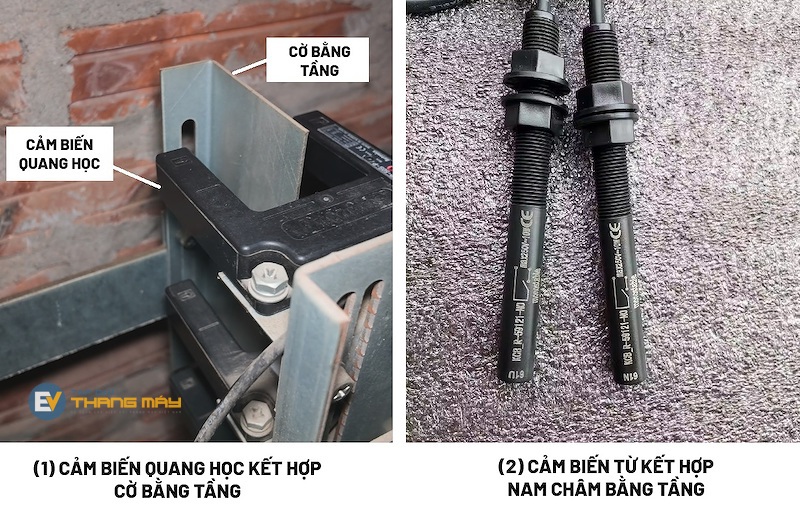
Given the limitations in accuracy and stability, as well as application to high-speed, high-rise elevators, manufacturers have developed a product line of absolute magnetic positioning and measurement systems for elevators.
(3) Absolute magnetic tape based shaft copying system in the hoistway, or magnetic tape/magnetic scale technology - the most modern technology today.
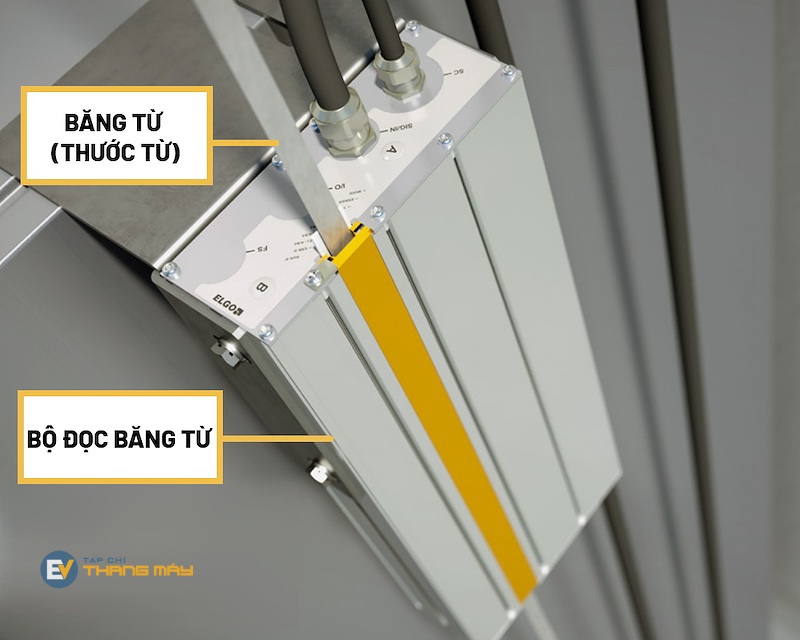
Absolute magnetic tape based shaft copying system in the hoistway
2. Traditional levelling sensor technology
2.1. Optical sensors combined with levelling vanes and magnetic sensors combined with magnets
Under the traditional method, the elevator system uses pulse signals from optical sensors combined with levelling vanes or magnetic sensors combined with magnets.
Among these, U-shaped photoelectric sensors are commonly called "horseshoe" sensors. A light emitter and a light receiver are arranged on either side of the sensor slot. When the cabin approaches the stopping floor, the levelling vane enters the slot, blocks the light beam and changes the signal sent to the central controller.
For magnetic sensors combined with magnets, the magnetic sensor device is mounted on the cabin, in combination with magnets placed on the guide rails at levelling positions along the hoistway. When the sensor enters the magnet's actuation zone, the magnetic field actuates the opening/closing of the electrical circuit inside the sensor device, changing the output signal and helping the control cabinet recognize that the cabin has reached the corresponding mark.
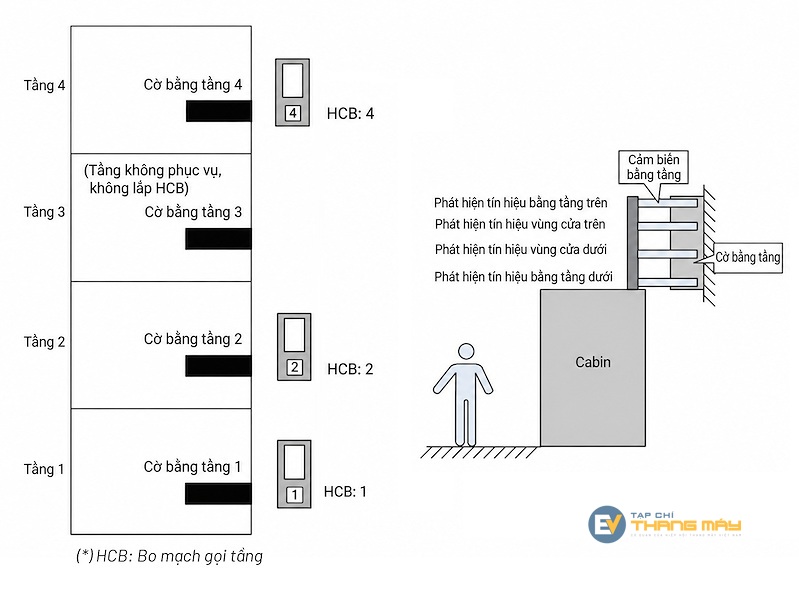
With the traditional levelling sensor method, levelling vanes or levelling magnets must be installed at every stopping floor.
With both traditional levelling sensor methods mentioned above, a corresponding number of levelling vanes or magnets must be arranged at each stopping floor. For high-rise buildings, the number of levelling vanes or magnets to be installed and inspected increases accordingly. For example, a 25-storey building corresponds to 25 levelling vane or magnet marks.
In particular, with the traditional levelling sensor method, the cabin positioning system in the hoistway requires additional upper and lower deceleration switch assemblies in the hoistway, and upper and lower limit assemblies in the elevator hoistway.
2.2. Deceleration and limit switch assemblies
Levelling sensors help the controller recognize that the cabin has reached the levelling zone. With the traditional configuration using optical sensors combined with levelling vanes or magnetic sensors combined with magnets, the system must additionally arrange deceleration switches and limit switches at both ends of the hoistway, corresponding to the lowest and highest floors.
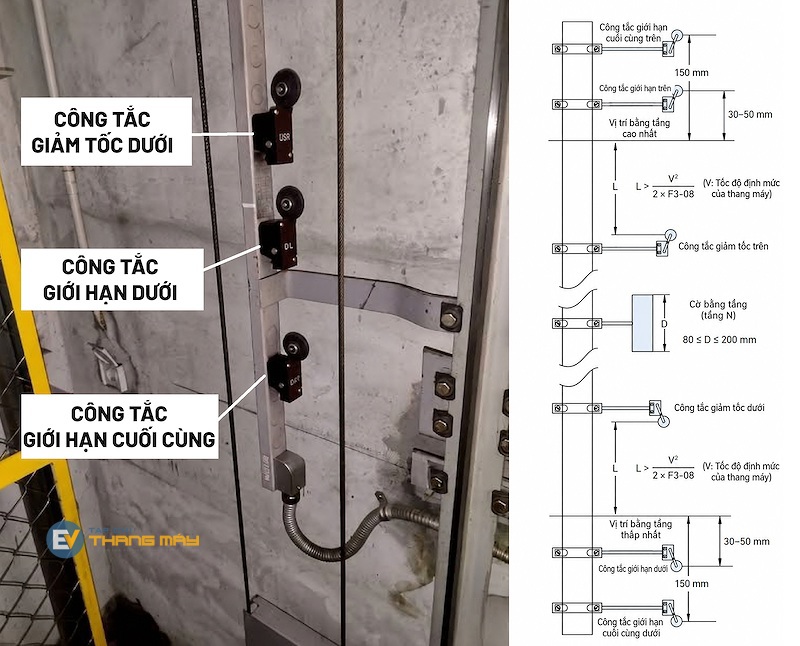
Layout diagram of the elevator cabin positioning system according to the traditional method.
During operation, deceleration switches installed at both ends of travel help the controller perform forced deceleration if the cabin approaches the top or bottom floor at an unsuitable speed or if position information is incorrect, reducing the risk of over-travel. The number and location of switches depend on speed, deceleration distance and elevator design.
Upper/lower limit switches help control the range, preventing the cabin from continuing to move in the corresponding direction when it reaches the limit position. If the cabin still continues past this position, the final limit switch will actuate to cut the safety circuit to stop the elevator, protecting the cabin from the risk of over-travel that could endanger users.
2.3 Limitations of traditional levelling sensors
- Does not provide accurate elevator cabin position: Position signals under the traditional method do not provide continuous coordinates over the entire travel. The sensor and levelling vane/magnet system only provides information at specific marks. To track movement between floors, the controller needs to combine other sources of information, such as signals from the motor's encoder pulse counter.
- High installation and maintenance workload: The more stopping floors there are, the greater the number of vanes and magnets to be installed and aligned. During use, displaced actuation marks, faulty sensors or unstable signals can cause floor recognition errors. Maintenance work therefore must check many details distributed along the hoistway.
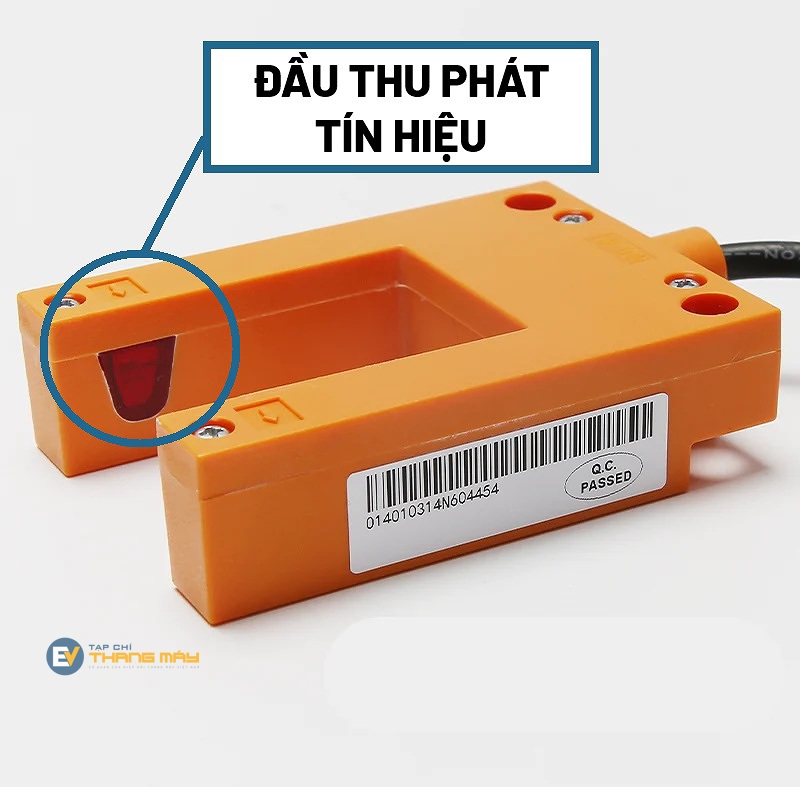
Traditional levelling sensor methods reveal many limitations in accuracy and operational safety in high-rise, high-speed elevator systems. In the photo: Optical levelling sensor, also known as a horseshoe sensor.
- Working conditions affect accuracy: With optical sensors, dusty environments can affect the light transmission path and cause unstable signals. With magnetic sensors combined with magnets, distance, approach direction, magnet polarity and the influence of surrounding ferromagnetic materials are factors that need to be controlled.
- Limitations in high-speed, high-rise elevator applications: With both traditional optical and magnetic sensors combined with discrete levelling marks, the higher the elevator speed, the shorter the time passing through the actuation zone. In principle, if the signal is too short relative to the sensor's response time and the control cabinet's reception capability, the risk of missing the signal may arise.
3. Absolute magnetic tape based shaft copying system in the hoistway
Along with the limitations in installation and operation, as well as the development of high-speed elevator systems in super high-rise buildings, measurement equipment manufacturers have developed a new generation of technology for measuring and monitoring cabin position in the hoistway.
The absolute magnetic tape based shaft copying system in the hoistway, also known as magnetic tape/magnetic scale technology, was first developed by the ELGO Group (Germany) in the 2000s, enabling elevator systems to travel faster and higher with the utmost accuracy and safety.
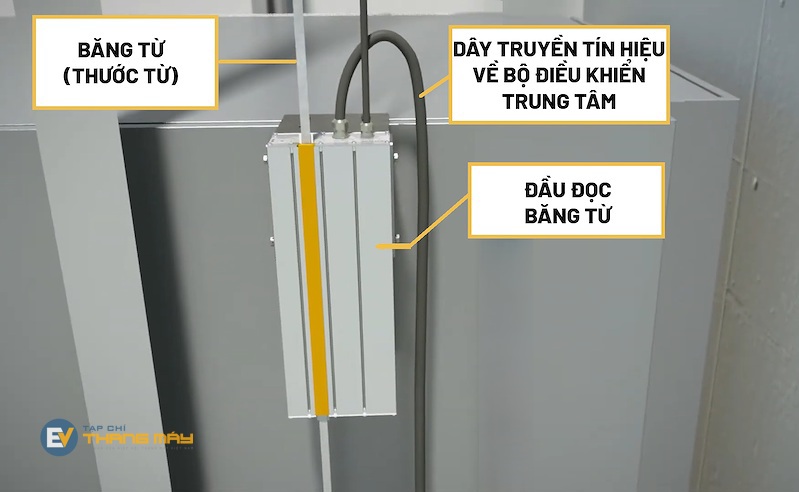
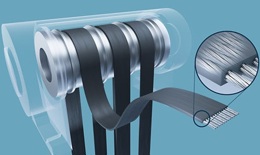
Simulation of the absolute magnetic tape based shaft copying system in the hoistway
Instead of individual levelling marks running along the hoistway, magnetic tape positioning technology consists of two main parts: 01 encoded magnetic tape strip running along the hoistway and 01 read head mounted on the cabin. As the cabin moves, the read head recognizes the magnetic code and transmits coordinates to the control cabinet. As a result, the system determines the cabin's position over the entire travel, including the spaces between floors.
With magnetic tape technology, the elevator system can completely eliminate sensor components along the hoistway such as levelling sensors, levelling vane/magnet marks; upper/lower deceleration switch assemblies; limit switches, etc., helping optimize hoistway space and reduce complexity, shortening installation and maintenance time.
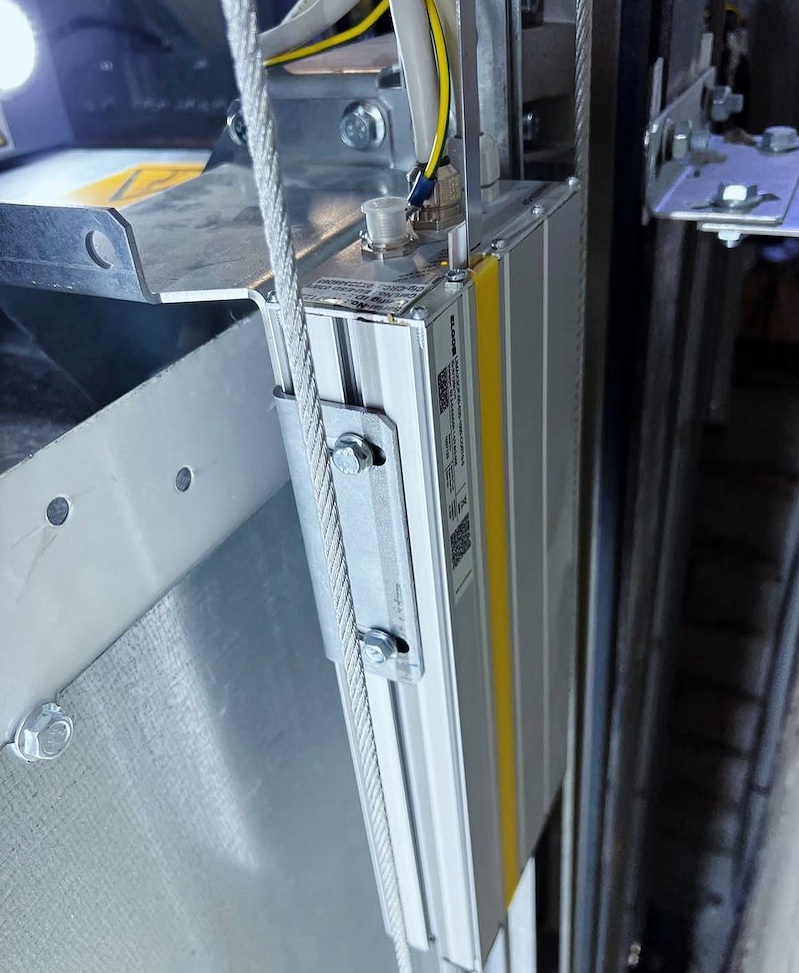
Magnetic tape devices can operate accurately and stably in smoky, dusty and high-humidity environments, meeting the requirements of elevator systems with speeds of up to 18 m/s and maximum travel of 1,500 m.
Magnetic tape devices are designed to operate stably in dusty, humid or even dense smoke environments without affecting the device's tracking results, achieving standards of up to IP 67 for water and dust resistance.
Currently, in addition to ELGO (Germany), there are also several famous magnetic tape manufacturers in the world such as Kübler (Germany); CEDES (Switzerland). Magnetic tape technology is currently being applied by most elevator manufacturers such as Otis, Orona, Kone, Schindler, TKE, etc.
With many older elevator control systems, although magnetic tape technology brings outstanding benefits in installation, maintenance and repair, some control systems have not yet integrated the magnetic tape cabin positioning feature.
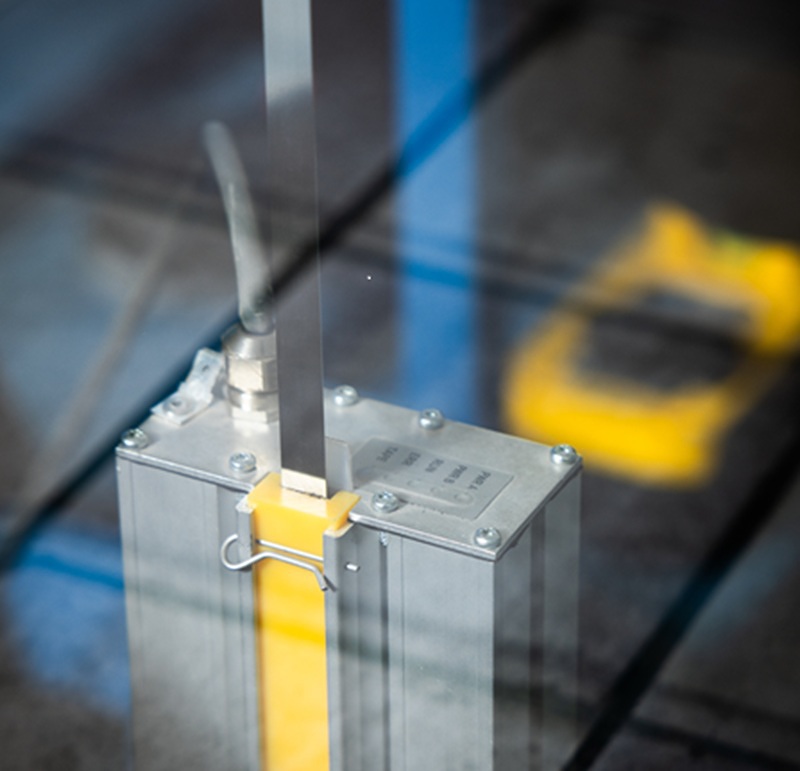
In Vietnam, the Institute of Applied Elevator Engineering integrates ELGO magnetic tape positioning technology into the VILEA-INT control system, developed on the basis of technology transfer from INTEC (Germany), serving new installations and renovation of electrical and control systems for existing elevators.
In Vietnam, ELGO's (Germany) LIMAX magnetic tape technology is integrated in the VILEA-INT control system, developed from the technology transfer cooperation between the Institute of Applied Elevator Engineering and INTEC GmbH of Germany. The VILEA-INT control system is developed to suit new installations and modernization of elevator systems.
With ELGO's magnetic tape product lines integrated into the VILEA-INT control cabinet system, magnetic tape technology can be applied to elevators with speeds of up to 18 m/s and to super high-rise buildings with hoistway heights of up to 1,500 m.
The magnetic tape system and read head meet IP67 standards and can maintain stable operation in harsh environments with dusty, smoky or high-humidity hoistways. High heat resistance, capable of operating at temperatures from -10 to +70°C, with relative non-condensing humidity of up to 95%.