‘The race to the bottom’ in China’s elevator industry
0
Tuesday, 8/9/2026 | 16:09
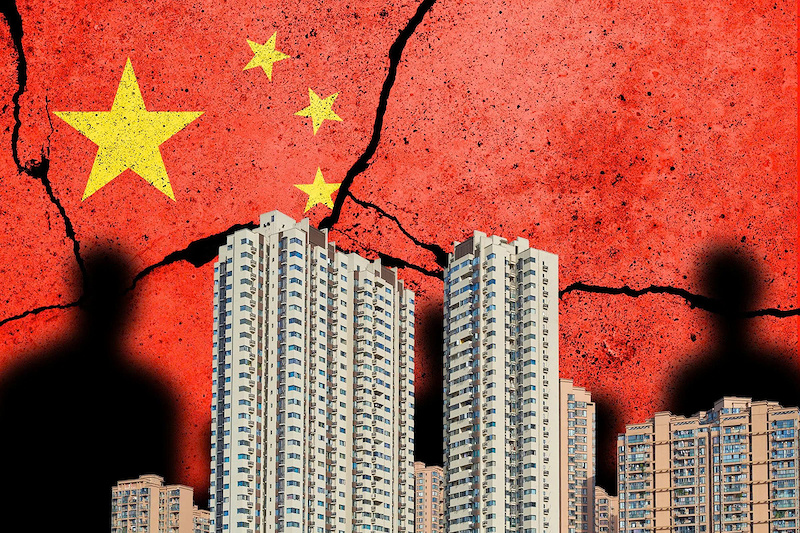
TCTM - The real estate downturn, coupled with large-scale production capacity, is pushing China's elevator industry into a paradox: enterprises must sell more and at lower prices to sustain operations, while profits become increasingly thin.
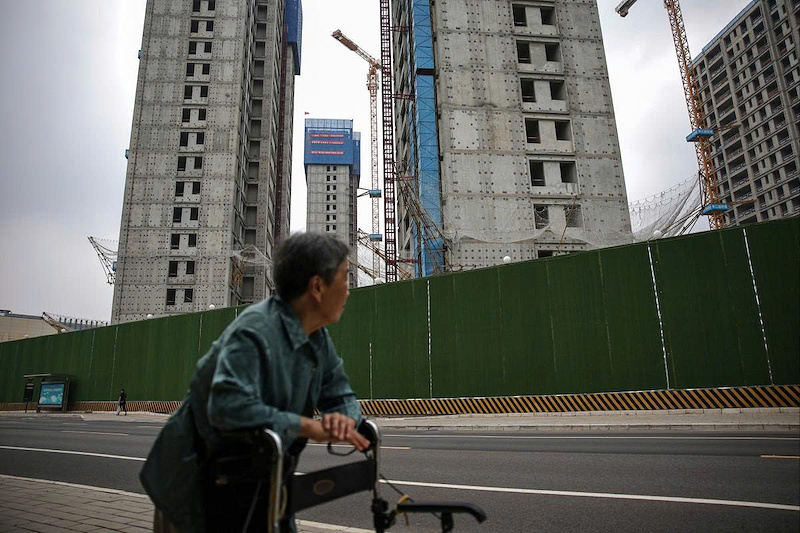
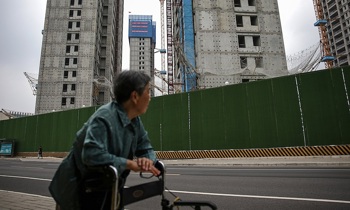
China's 1.4 billion people no longer view real estate as a store of wealth
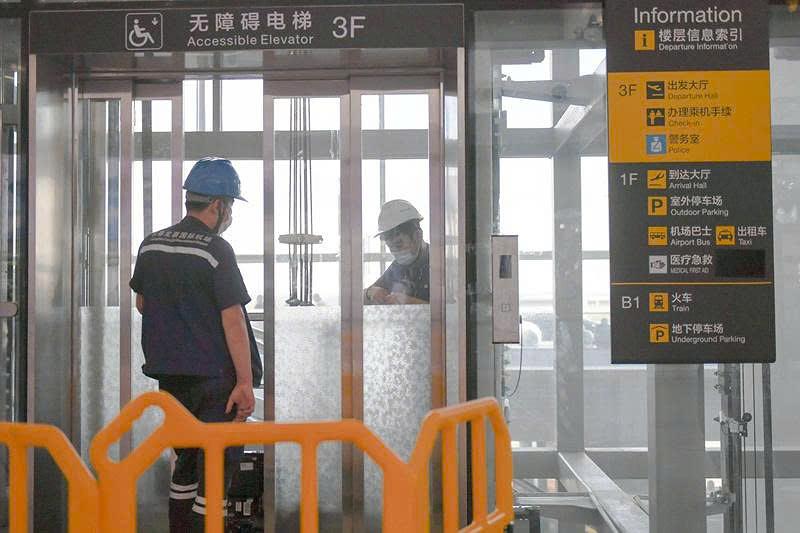
KONE says fierce competition is putting pressure on prices for new equipment in China. Otis recorded a double-digit decline in orders in this market in Q2/2026. Schindler also identified China as the only region that did not achieve revenue growth in the first half of the year.
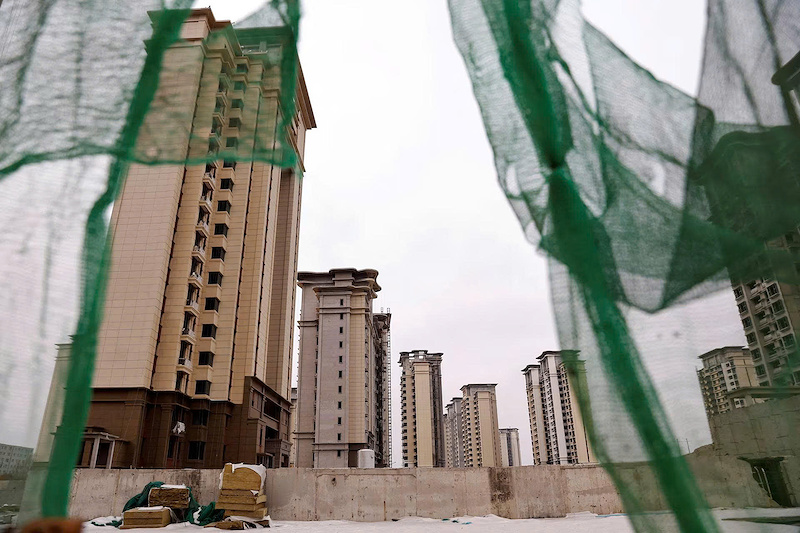
These developments come amid a backdrop of China's real estate development investment falling 18%, and new construction starts decreasing 23.4% in the first six months of 2026.
The widening gap between demand and production capacity is pulling China's elevator industry into a phenomenon known as "neijuan" - "involution," or "destructive competition."
Simply put, "involution" means that even as China pursues global dominance in the industries of the future - artificial intelligence, renewable energy, robotics - much of its economy is in a race to the bottom, threatening to lead to widespread stagnation.
Exports are helping to relieve some of the excess capacity. But if that growth is based primarily on low prices, the competition in China risks being transferred to the Middle East, Southeast Asia, and major importing markets like Vietnam.
From growth engine to headwind
For many years, China's elevator industry grew on a relatively simple foundation: a vast market, rapid urbanization, expanding real estate, and a continuously increasing number of new construction projects.
That cycle is now reversing.
Data released by China's National Bureau of Statistics on July 15, 2026, shows that the Gross Domestic Product (GDP) in Q2/2026 grew only 4.3% compared to the same period last year.
Except for a 3-year period affected by strict lockdown measures due to the COVID-19 pandemic, this is the lowest growth rate since the country formally adopted its GDP reporting mechanism in the early 1990s.
In Chinese culture, owning real estate represents not only financial stability but also social status. However, the slowing economy and the housing market's deep crisis have completely reversed China's home-buying culture.
Notably, indicators directly tied to the demand for new elevator installations are significant. In the first six months of 2026, fixed asset investment fell 5.7%, real estate development investment fell 18%, and new construction starts decreased 23.4%. Residential construction starts alone fell 24.1%. All indicators point to a clear decline in demand for new installations.
China's elevator industry is facing significant headwinds.
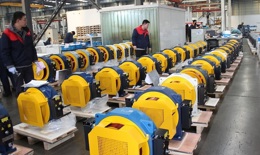
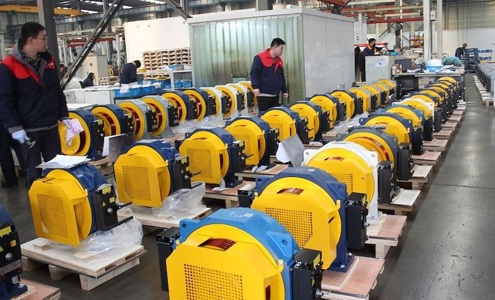
The factory networks, production lines, and supply chains built during the high-growth real estate era... now mean China's elevator industry does not lack production capacity; what it lacks is a sufficient volume of orders to absorb that massive capacity.
A report from the China Elevator Association shows that in 2025, demand for traditional new elevator installations fell by 12.9%. China's total output of elevators, escalators, and lifting equipment in 2025 reached approximately 1.401 million units, marking the second consecutive year of decline.
The weakening of the real estate and construction sector is making China's elevator industry more challenging than ever.
Weakness from construction sites flows into financial reports
"Destructive competition" or "involution" occurs when numerous businesses simultaneously increase their efforts to compete for a market that can no longer 'grow' larger.
Selling prices are pushed down, profit margins shrink, and resources for innovation, services, and quality control risk being cut... yet no company can easily reduce output for fear of losing customers, market share, and the ability to recover initial investment costs.
In the elevator industry, this spiral begins with a decline in new installation orders. To maintain capacity utilization, manufacturers cut prices. Competitors are forced to follow suit, and the pressure to cut costs continues down the chain to component suppliers, installation units, and maintenance providers.
Real estate recession, weak consumption, and automation shrinking job opportunities... all are dampening China's 'consumption engine' despite numerous government stimulus packages being launched
The prolonged decline in China's real estate sector is shifting from construction sites to the financial reports of many elevator companies.
KONE's first-half 2026 report provides the clearest indication of this trend: Intense competition continues to impact the pricing environment for new building solutions in China, while prices in other markets remain more stable.
At Schindler, group revenue rose 1.4%, but China was the only region not to record growth. Modernization and new installation activities outside China, particularly in Europe, served as compensating drivers.
The picture is similar in Otis's Q2/2026 financial report: global revenue grew 7% in the first half of the year. In Q2/2026 alone, both sales and new equipment orders in China fell by double digits (around 17-18%, 'high-teens').
In contrast to the bleak situation in the Chinese market, some companies operating actively in the European market, such as Spain's Orona Elevator Group, recorded a brighter financial picture with record revenue of EUR 1.195 billion in 2025, up over 7% from 2024.
Corporate profits eroded
Results from several Chinese manufacturers also reveal competitive pressures.
Canny Elevator recorded revenue of RMB 4.45 billion in 2025, up 8.93%, but net profit fell 7.56%. In Q1/2026, revenue continued to grow 8.91%, while net profit plummeted by 46.75%.
Guangri recorded nearly flat revenue in 2025 at RMB 7.25 billion, while net profit fell 15.07%.
And many other figures in the financial reports of elevator companies operating in China all reflect a single trend: revenue growth is increasingly difficult to translate into profit growth.
Too many companies competing in a market with little remaining growth potential is pushing China's elevator industry into a brutal price war.
Companies can maintain output and market share by lowering prices, but the value retained from each contract is getting smaller. At that point, scale no longer equates to efficiency.
The pressure doesn't stop at complete elevator manufacturers. To protect profit margins, companies may demand price cuts from component suppliers, extend payment terms, or reduce installation costs. The entire supply chain consequently comes under pressure.
When the 'factory storm' crosses borders
The competition in the elevator industry is a slice of a larger imbalance in China's economy: production and exports continue to grow strongly, while consumption, private investment, and real estate recover slowly.
This imbalance is reflected in the Producer Price Index (PPI). Prices of goods at China's factory gates fell continuously for 41 months, from October 2022 to February 2026. The index has risen again since March 2026, but this is mainly due to energy and raw material costs, not a sign of solid domestic demand recovery. Price wars in many industries, therefore, are still ongoing.
Amid years of real estate downturn, China has promoted manufacturing as a growth driver through subsidy programs and loans for businesses. But when domestic demand doesn't increase correspondingly, huge production capacity becomes a burden.
To keep production lines running, companies must either cut prices or seek additional orders overseas.
"Involution" means that, even as China pursues global dominance in the industries of the future - artificial intelligence, renewable energy, robotics - much of its economy is in a race to the bottom, threatening to lead to widespread stagnation.
Reuters noted that since early 2025, many Chinese manufacturers have simultaneously shifted their focus to Asia, Africa, and Latin America as domestic demand weakened and the US market erected additional barriers. However, when too many companies target the same alternative markets, domestic competition risks being replicated abroad in the form of price cuts and shrinking profits.
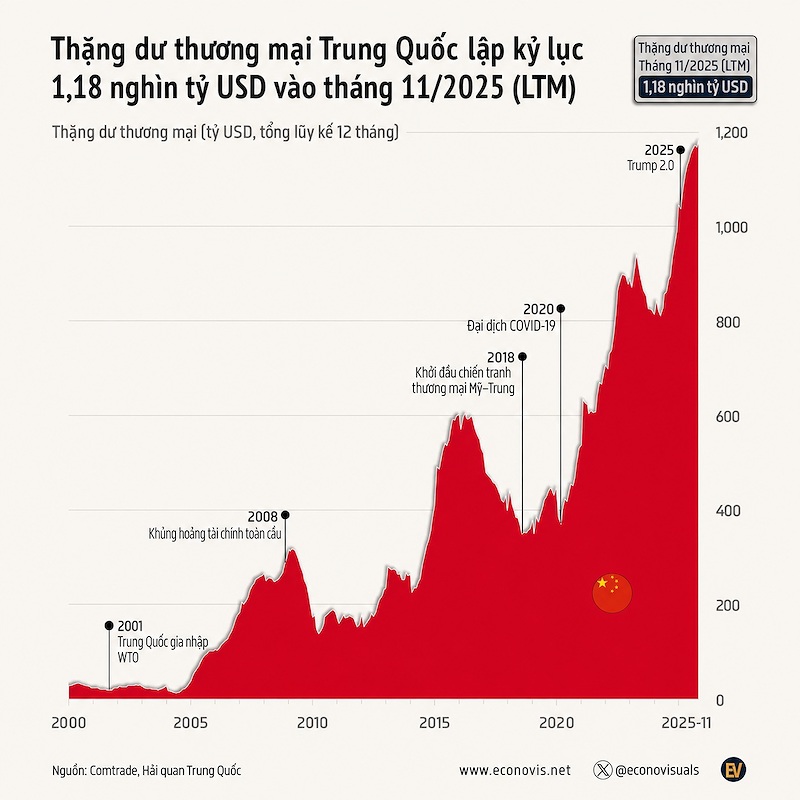
In 2025, China recorded a record trade surplus of USD 1,189 billion. While exports to the US fell 20%, exports to Africa rose 25.8%, to ASEAN by 13.4%, and to the EU by 8.4%. This indicates that domestic competitive pressure is being partly transferred to other markets.
Vietnam is also currently becoming one of the notable export markets for China's elevator industry. In 2024, China exported 2,578 passenger elevators to Vietnam. By 2025, these figures increased by nearly 50%, reaching 3,838 units. Vietnam ranked eighth among China's largest importing markets for passenger elevators.
This increase shows Vietnam is absorbing a significant portion of China's exported elevator output.
Analysis by Nomura (Japan) warns that the flow of low-priced goods could severely disrupt emerging economies, particularly in Asia: consumers benefit from lower prices, but domestic manufacturers may have to cut prices, sacrificing profit, investment, and jobs to maintain market share.
This phenomenon is often called "China Shock 2.0." However, this new version is not entirely like the export wave following China's WTO accession in 2001, when cheap goods from the country helped keep inflation low but led to the disappearance of many local manufacturing jobs.
And while the first "shock" was primarily associated with low-priced clothing, toys, furniture, and consumer electronics, the current wave has shifted to automobiles, batteries, energy equipment, machinery, robotics, industrial components,... and now, the elevator industry as well.
TCTM – When purchasing an elevator traction machine, many people rely solely on the brand name and country of origin stated by the seller in the quotation. However, this information is not sufficient to determine the manufacturer, origin, and actual quality of the equipment.























 0989.761.499
 contact@tapchithangmay.vn
  18/647 Lạc Long Quân, Tây Hồ, Hà Nội


