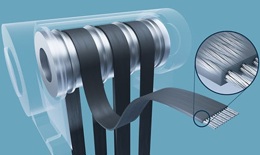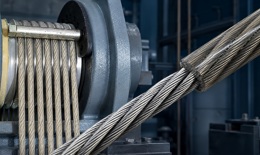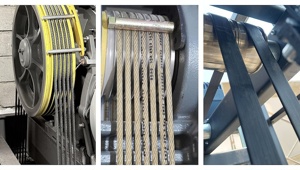




Alongside traditional round steel cables, the market now offers many other technologies such as high-strength PU-coated steel cables, steel-core PU-coated flat belts/ribbon cables, and cables using synthetic fiber or carbon fiber cores. Each technology was developed to address different requirements and each has its own limitations.
To help consumers understand correctly before making a choice, Elevator Magazine presents a series of articles related to elevator suspension cables, consisting of two parts:
Part 1 – What is an elevator suspension cable? - Some regulations related to cables; Why manufacturers need to develop new-generation elevator suspension cables.
Part 2 – Types of elevator suspension cables: Should you choose traditional round steel cables?
Part 3 – Types of elevator suspension cables: Should you choose PU-coated round steel cables?
Elevator Magazine hopes that through this series of articles, consumers will have additional basis for choosing technology suitable for their project and long-term usage costs.
Three common groups of elevator suspension cable technologies
Classified in a way that is easy for consumers to recognize, the suspension means in elevators today can be divided into three common main groups:
1. Traditional round steel cables - steel wire ropes;
2. High-strength elastomer-coated steel cables (*) - Elastomeric coated ropes - steel wire;
3. Flat suspension cables/elastomer-coated belts - Elastomeric coated belts.
(*) Elastomer is the general term for any synthetic or natural material with elastic properties such as rubber. In elevator applications, manufacturers typically use polyurethane (PU), a type of synthetic plastic with high durability.
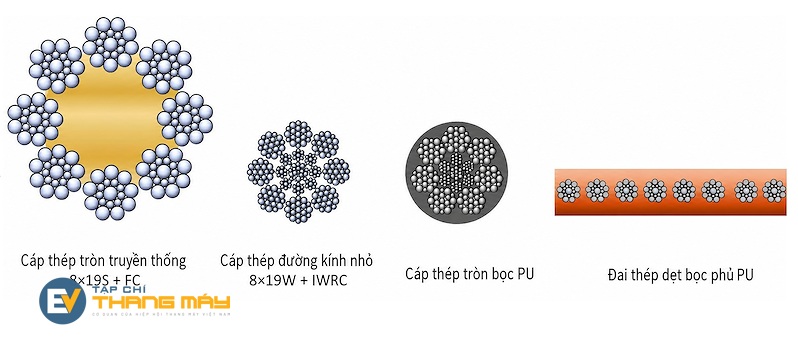
1. Should you choose high-strength elastomer/PU-coated steel cable technology (Elastomeric coated ropes - steel wire) for elevators?
High-strength elastomer-coated steel cable is a type of suspension cable with a circular cross-section, consisting of high-strength steel wires braided into strands inside, covered on the outside by a layer of elastic material. Polyurethane, abbreviated as PU, is the coating material commonly used in the group of plastic-coated cable technologies.
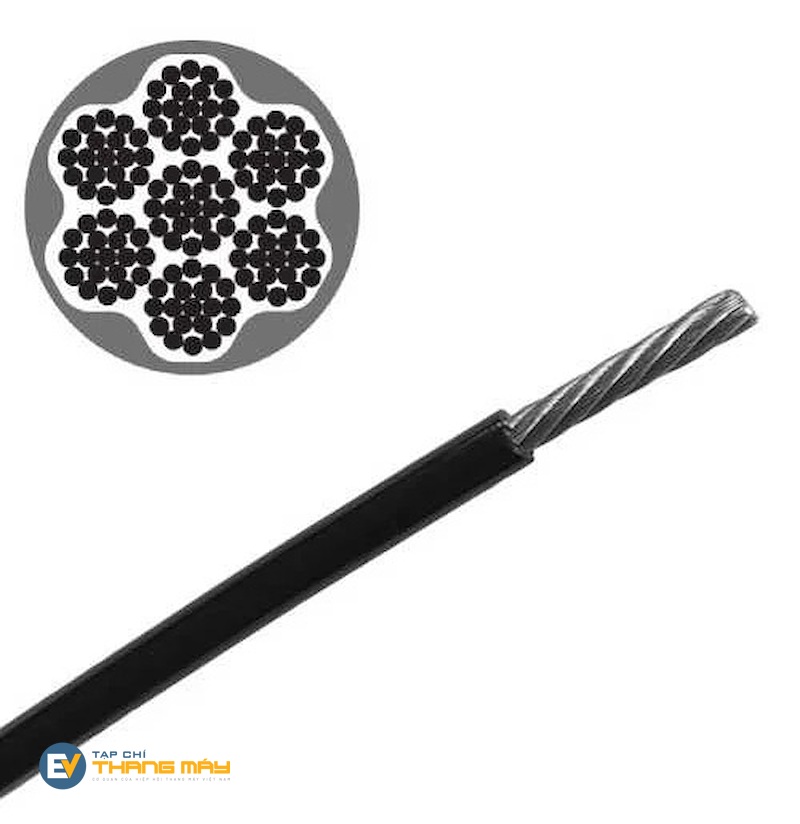
PU-coated, covered round steel cable is constructed with a high-strength steel core and small diameter.
The steel part inside is high-strength steel with the advantage of being more durable and bearing greater loads than traditional steel cables. However, the structure is typically stiffer than traditional steel, and in cases of direct contact with the pulley, it will cause rapid wear. Therefore, this type of cable is coated with an additional layer of PU on the outside, creating a contact surface with the pulley groove, preventing steel wires from contacting the pulley directly and limiting dust and moisture intrusion from outside.
Compared to traditional steel cables, high-strength elastomer/PU-coated steel cables have higher durability, smaller cable diameter, and are lighter than traditional steel cables. The D/d ratio of the pulley is reduced to 25:1.
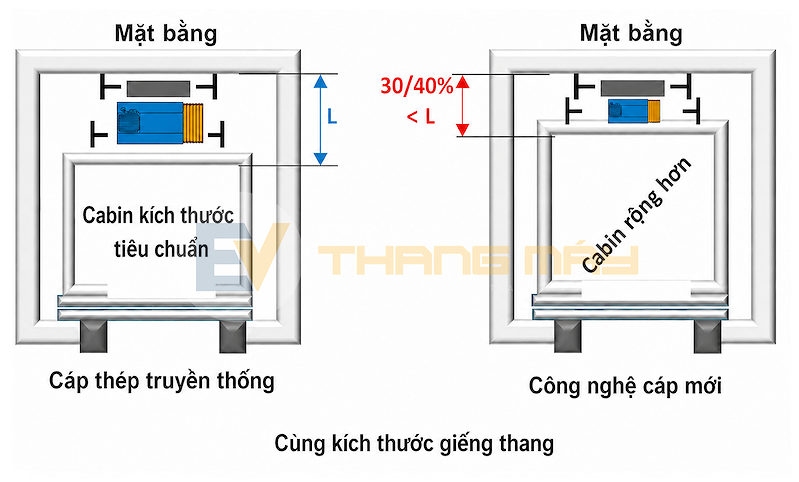
Compared to traditional round steel cables, PU-coated small-diameter cables help reduce traction machine size, reduce hoistway size, and save technical space. The saved space can increase cabin area or reduce the elevator layout footprint.
The high-strength elastomer/PU-coated steel cable technology has been applied by major elevator manufacturers such as Orona Elevators (Spain) with Orona SDR E, SDR SES cable technology – Small Diameter Rope; and later Kone with EcoRope cable.
The Orona Group has been researching small-diameter cables since 2000. After the testing process, SDR cable was officially first introduced to the market in 2003, and is still being widely applied and developed for the company's elevator product lines.
The SDR steel cable type (Small Diameter Rope) developed by Orona uses high-strength steel with a strength exceeding 2800 N/mm2, compared to conventional steel cables using 1570 N/mm2 strength.
The entire coated cable has a diameter of 6.5mm and a minimum breaking load approximately 60% higher than a conventional cable of the same diameter. Through this, Orona can reduce the traction machine pulley diameter, optimize machine space, and increase cabin area.
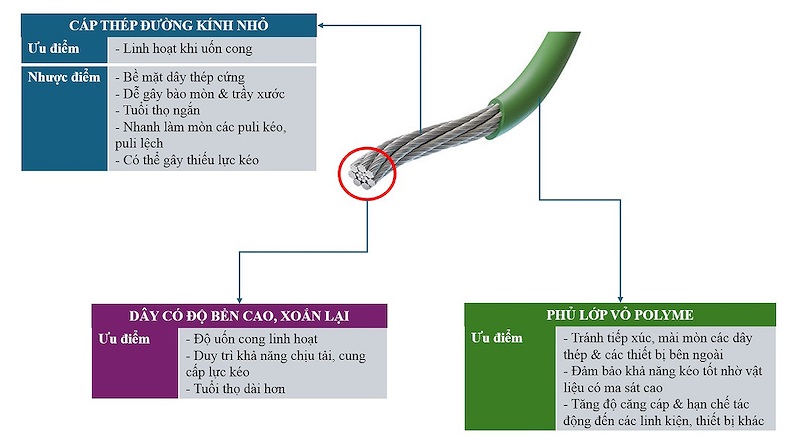
High-strength steel cables have a hard steel surface, easily causing abrasion and reducing diameter size when in direct contact with the pulley. Therefore, Orona developed the high-strength PU-coated steel cable line that both ensures reduced cable and pulley diameter while maintaining safety performance and increasing cable lifespan.
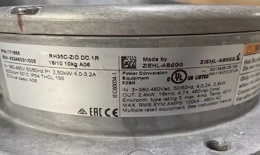
Besides complete elevator manufacturers, brands specializing in traction machine production such as Ziehl Abegg also develop traction machine lines applying this cable technology.
In addition to high-strength steel cores, PU-coated round suspension cables also use other cores such as aramid fiber developed by Schindler under the name Schindler Aramid. Schindler's aramid fiber cable is a different technology because the load-bearing element is made from synthetic fiber, not a steel core.
2. Advantages of high-strength elastomer/PU-coated steel cables:
PU-coated round steel cable combines a high-strength small-diameter cable structure with a high-grip coating. Thanks to the reduced cable and pulley diameter, the required torque of the traction machine is reduced, allowing the use of smaller motors and inverters. This helps save hoistway space, increase cabin area, and is especially suitable for machine-room-less elevators or projects with limited floor space.
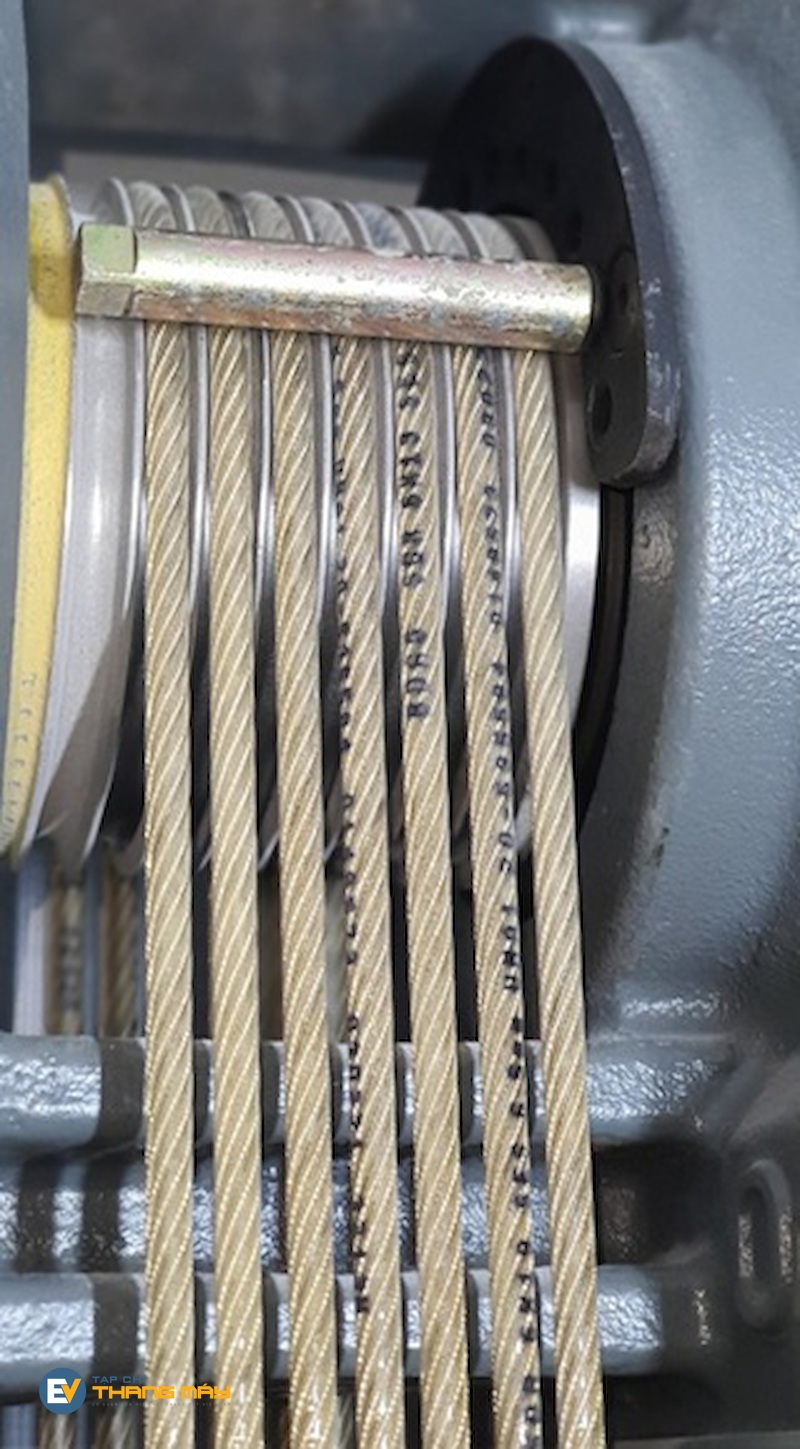
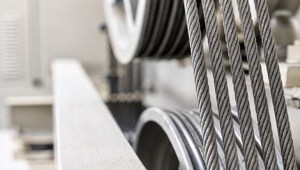
The combination of high-strength steel wire and PU coating creates a cable that is lightweight, durable, and has superior performance compared to other types of cables. Pictured is Orona's SDR cable.
For example, a traditional cable with a diameter of 8 mm requires a minimum pulley of 320 mm; while a PU-coated round steel cable with a diameter of 6.5 mm can be combined with a 120 mm pulley in tested and certified designs. At the same cabin speed, a smaller pulley causes the motor to rotate faster and in some configurations can operate in a better efficiency range.
The PU layer has a high friction coefficient that helps increase the force transmission between the cable and pulley. The PU layer creates greater grip so the cable can run on smooth U-shaped pulley grooves, causing less damage compared to V-shaped pulley grooves commonly used to increase traction for small steel cables without PU coating. As a result, pressure and wear at the contact area are reduced, contributing to extending the lifespan of both cable and pulley.
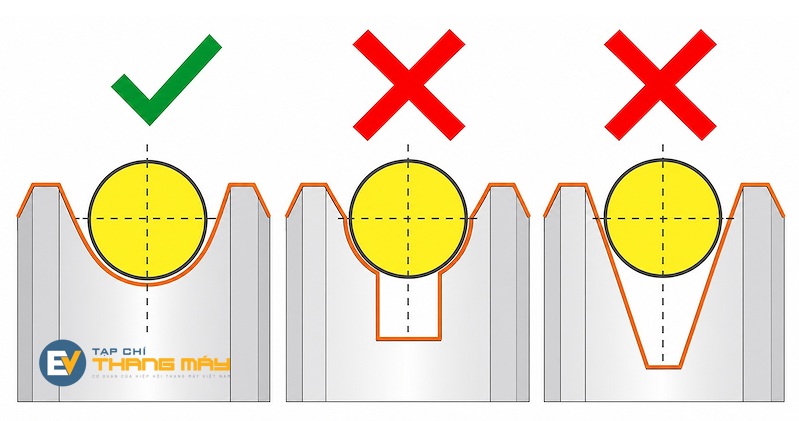
The friction coefficient creating traction between the PU sheath and steel pulley groove is typically about three times higher than between conventional steel cable and steel pulley. Therefore, the system does not need to use groove types with high grip but causing severe wear, such as undercut U-grooves or V-grooves – profiles that can significantly reduce cable lifespan.
The absence of metal-to-metal contact helps reduce noise, vibration, and direct wear on the pulley groove, thereby improving elevator smoothness.
Additionally, using high-strength PU-coated steel cables also helps reduce the number of steel cables needed. Specifically, for an elevator with a 630 kg load, 2:1 suspension system, and 120 mm pulley: if using small steel cables without PU coating, 8 - 10 ropes may be needed to achieve reasonable lifespan, while PU-coated cable only needs about 3 - 4 ropes.
3. Disadvantages of high-strength round steel cables coated with elastomer/PU:
Compared to traditional steel cables with over 180 years of usage data, PU-coated cable technologies in general (including high-strength round steel cables coated with PU and flat cables/PU-coated belts) have less historical data and reference documentation.
Therefore, it is not possible to rely solely on the friction coefficient of the material for design. Each combination of cable, PU layer, groove profile, and pulley must be tested to determine the friction coefficient under actual conditions. Manufacturers are also recommended to test on a sample elevator before bringing a new configuration to market.
PU-coated cables are sensitive to environmental conditions and cleanliness at contact surfaces. Oil, grease, or dirt can degrade the PU layer and cause cable slippage. Therefore, technicians must use clean gloves when handling, avoid oil and grease sources, and only clean with products specified by the manufacturer.
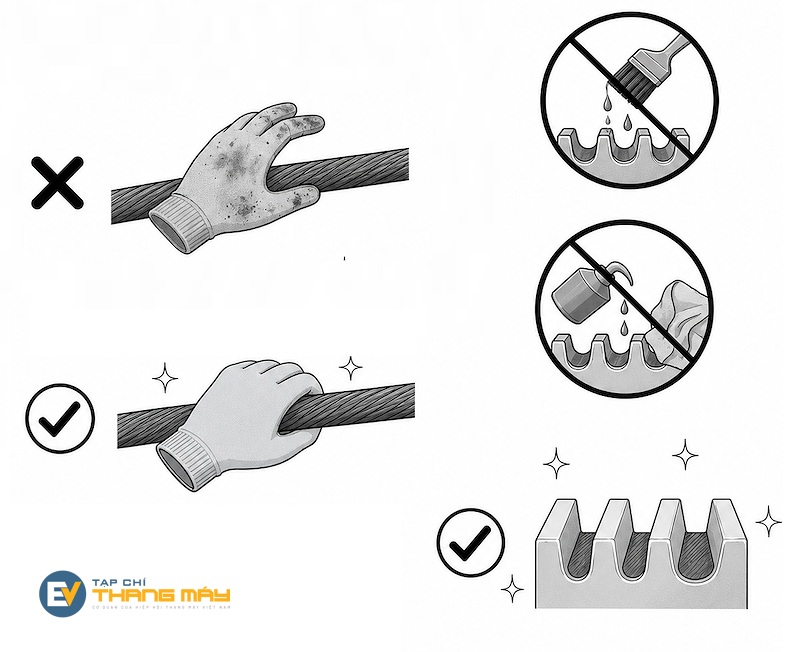
For PU-coated cables, care must be taken to keep the cable and pulley surfaces clean, without applying oil or grease.
Design, installation, and maintenance must also comply with the manufacturer's instructions. In Europe, small-diameter cables are only used when the system has a conformity assessment certification issued by a designated organization. This makes the testing and certification process more complex than for traditional steel cables.
This is a product with high synchronization requirements. The cable must be compatible with the pulley, connectors, traction machine, and monitoring system. It is not possible to arbitrarily replace PU-coated cable with conventional steel cable of approximately equivalent size.
4. Applications of high-strength round steel cables coated with elastomer/PU:
High-strength PU-coated round steel cables are mostly used in gearless traction machines, machine-room-less elevators, and projects with limited hoistway or traction machine space.
In general, high-strength PU-coated round steel cables can have a wide range of applications in most projects, helping reduce operating costs and CO2 emissions.
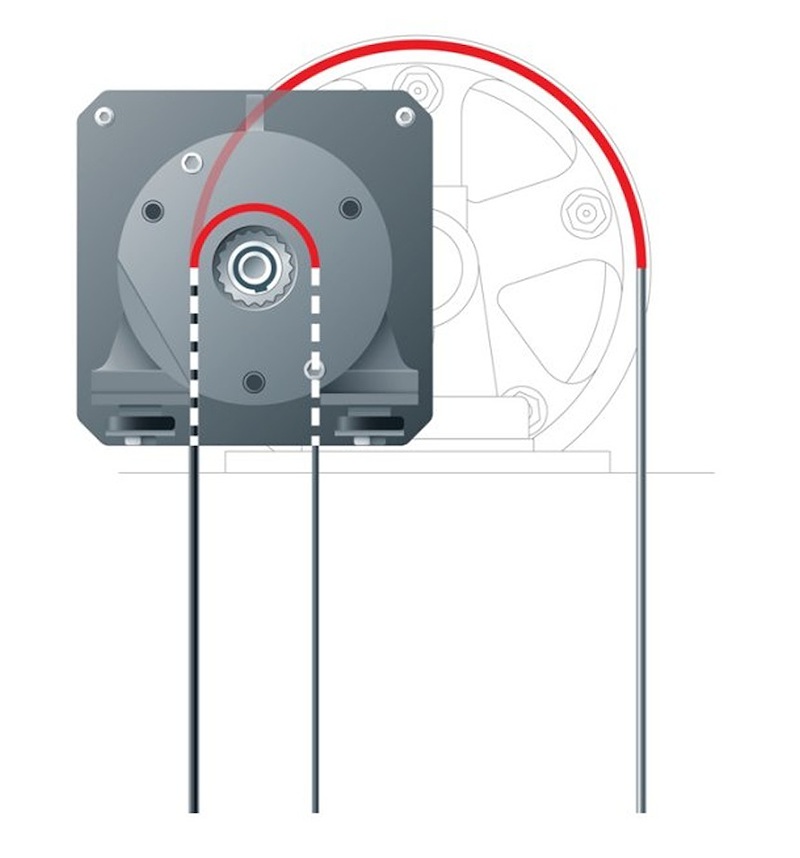
The common application characteristics of PU-coated round steel cables and PU-coated flat cables are helping reduce pulley diameter, increase friction, prevent pulley wear, and reduce noise during operation.
Follow the series "Which type of elevator suspension cable is best?":
Part 1 - What is an elevator suspension cable?
Part 2 - Types of elevator suspension cables: Should you choose traditional round steel cables
Part 3 – Types of elevator suspension cables: Should you choose PU-coated round steel cables?