

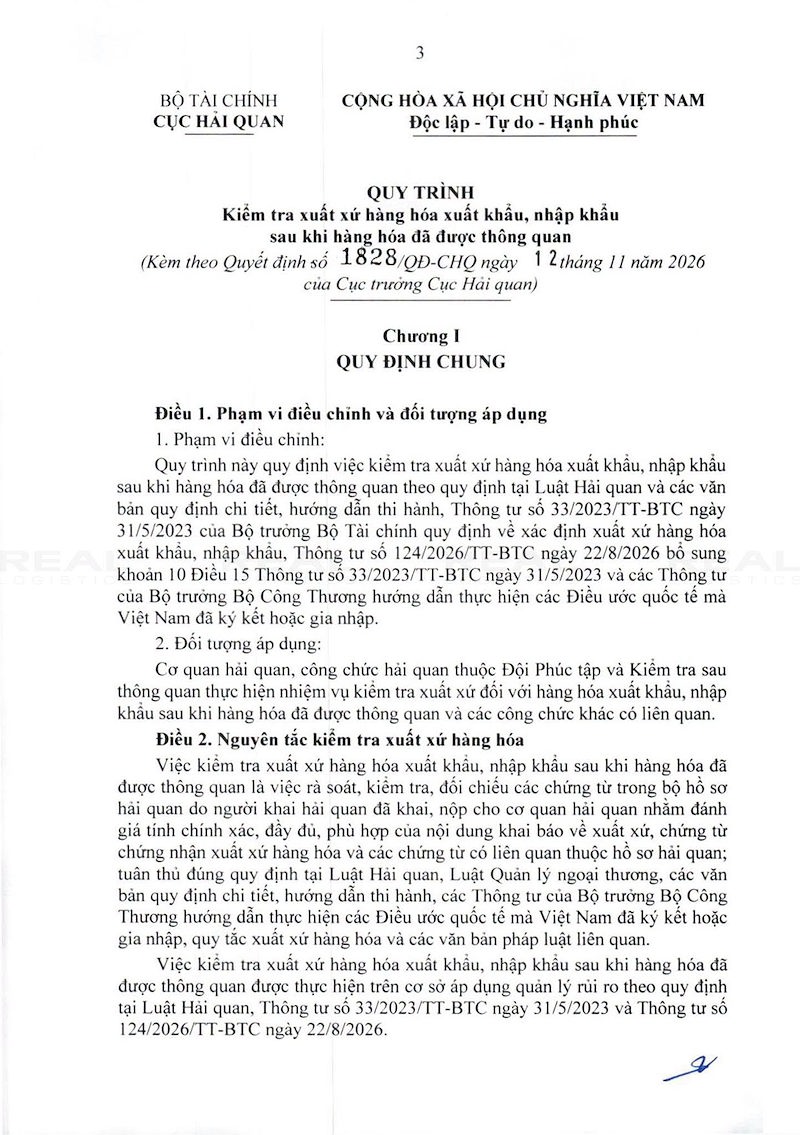
On November 12, 2026, the Customs Department issued Decision 1828/QĐ-CHQ on the Procedure for Verifying the Origin of Exported and Imported Goods After Customs Clearance. The procedure specifies the review of documents, recording of results, and transfer of information to continue carrying out professional operations upon detecting violations or doubts regarding origin.
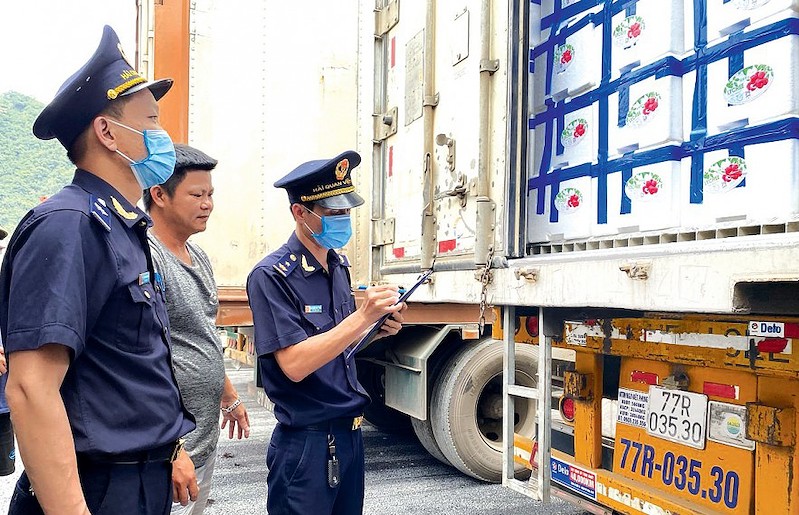
Under this new Decision, businesses do not have to carry out additional procedures. However, cleared declarations may be selected by the risk management system for re-verification of origin based on the very dossier the business has submitted.
Origin verification of goods on the basis of risk management
Pursuant to Article 2 of the Procedure, the customs authority reviews, examines, and cross-checks the documents in the customs dossier that the customs declarant has declared and submitted to the customs authority. The purpose is to assess the accuracy, completeness, and conformity of the declared origin content, the certificate of origin of the goods, and related documents.
The verification of the origin of exported and imported goods after customs clearance is carried out on the basis of applying risk management in accordance with the provisions of the Customs Law, Circular No. 33/2023/TT-BTC dated May 31, 2023, and Circular No. 124/2026/TT-BTC dated August 22, 2026.
Thus, cleared goods may still be subject to origin verification, but the procedure does not require re-verification of all shipments uniformly.
In which cases is post-clearance verification required?
For imported goods, the procedure distinguishes two cases: exemption from submission and mandatory submission of the certificate of origin.
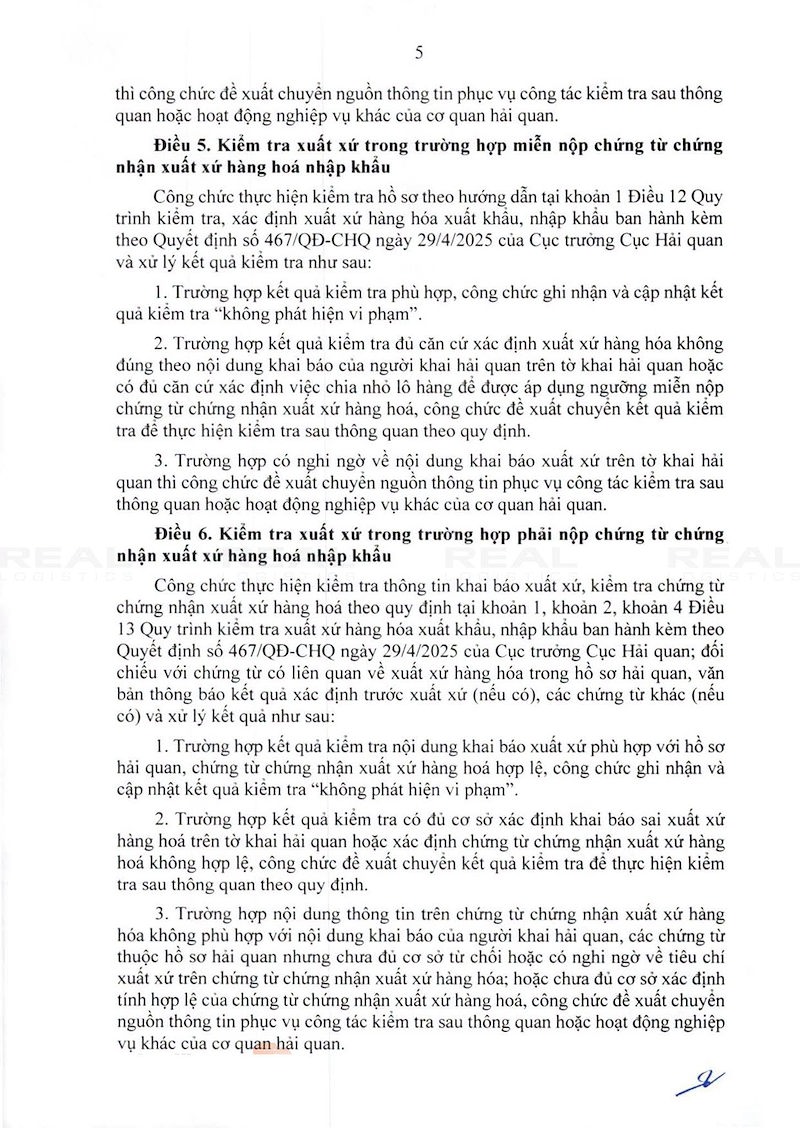
In the group of imports exempt from submitting the certificate of origin of imported goods, if there are sufficient grounds to determine that the business misdeclared the origin or split the shipment to fall under the threshold for exemption from document submission, the official shall propose transferring the results to carry out post-clearance verification.
In the event of doubt regarding the declared origin content on the customs declaration, the official shall propose transferring the information source to serve post-clearance verification or other professional operations of the customs authority.
For imported goods subject to submission of the certificate of origin, the official shall check the declared information, the certificate of origin, and cross-check against related documents.
If the verification results provide sufficient grounds to determine that the origin of the goods was misdeclared on the customs declaration or that the certificate of origin of the goods is invalid, the official shall propose transferring the verification results to carry out post-clearance verification in accordance with regulations.
The procedure also specifies how to handle cases where the information on the certificate of origin is not yet consistent with the declaration and dossier but there are insufficient grounds for rejection; there are doubts about the origin criteria; or there are insufficient grounds to determine that the document is valid. In these cases, the official shall propose transferring the information source to continue serving post-clearance verification or other professional operations.
Thus, the procedure distinguishes between cases where there are already sufficient grounds to determine misdeclaration or invalid documents and cases that remain doubtful with insufficient grounds for conclusion.
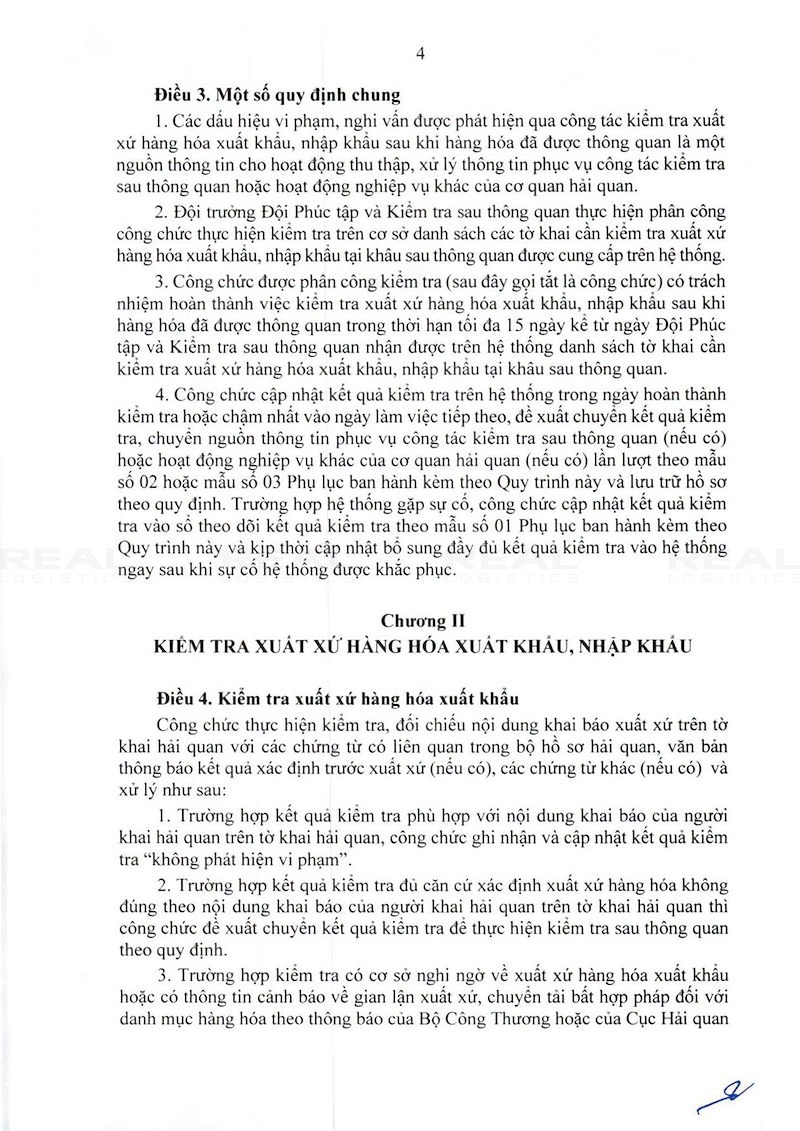
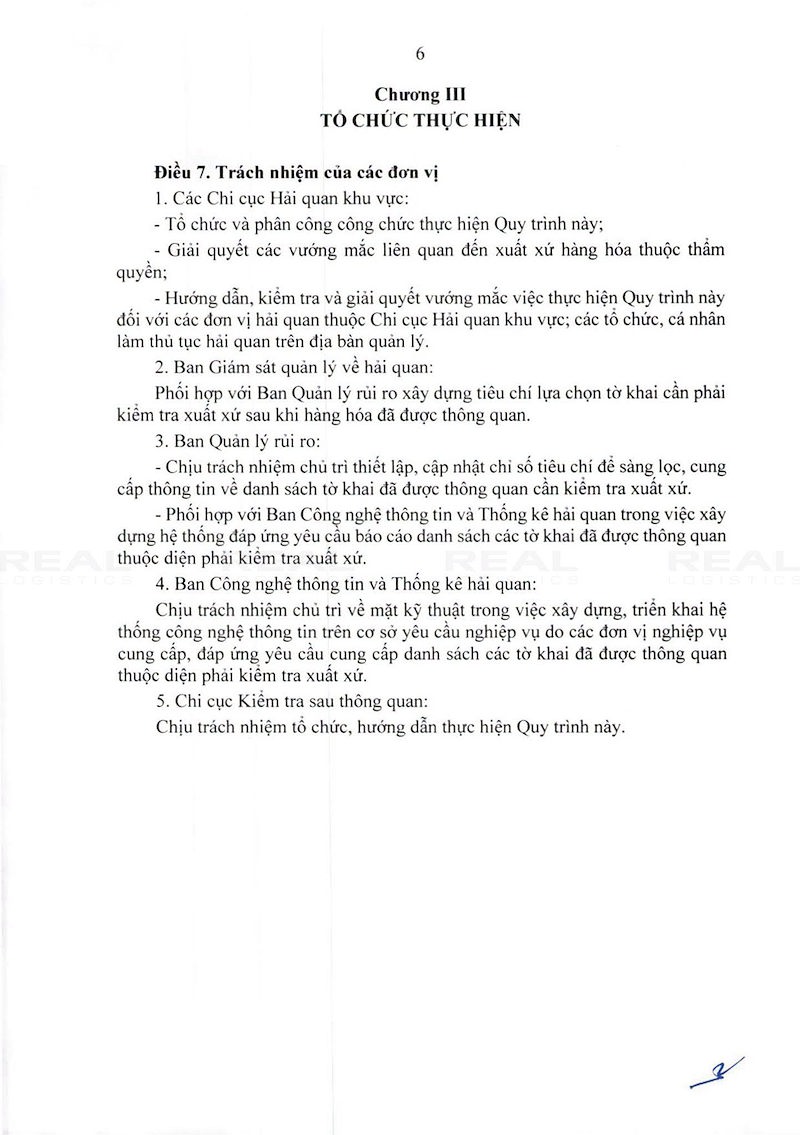
For exported goods, the customs authority shall cross-check the origin declared on the declaration against the documents in the dossier, the written notice of the advance ruling on origin, and other documents, if any.
If there are sufficient grounds to determine that the origin of the goods does not match the declared content, the official shall propose transferring the results to carry out post-clearance verification.
If there are grounds for doubt regarding origin, or there is information warning of origin fraud or illegal transshipment for the list of goods under notices from the Ministry of Industry and Trade or the Customs Department, the official shall propose transferring the information source to serve post-clearance verification or other professional operations.
What is the verification deadline? What should businesses note?
The assigned official must complete the verification within a maximum period of 15 days from the date the Post-Clearance Audit and Verification Team receives the list of declarations to be verified on the system.
Businesses should note that this is the deadline for the official to carry out the verification, not a deadline counted from the date the goods were cleared.
The results must be updated on the system on the day the verification is completed or no later than the next working day. When the verification results are consistent according to each prescribed case, the official shall record “no violation detected”.
Thus, inconsistencies between the customs declaration, commercial invoice, bill of lading, and certificate of origin may give rise to doubts during verification.
To proactively review and explain when necessary, businesses should review the consistency between the declaration, invoice, bill of lading, and certificate of origin; and fully retain documents proving the origin of exported goods for explanation when needed.