Author: Master of Architecture Pham Hoang Phuong
He is an expert in research, theoretical criticism of architecture, urban planning, and development management with nearly 25 years of experience; former Deputy Editor-in-Chief of Vietnam Architecture Magazine. He currently works at the National Institute of Architecture (Ministry of Construction).
In recent times, the installation of elevators in low-rise residential buildings has become increasingly familiar and widespread. Elevators are gradually becoming an essential electromechanical technical solution for many low-rise family home designs. The reasons for their effective contribution are multidimensional and multifaceted.
In the context of Vietnam's strong regional and international integration, the influx of numerous elevator manufacturers and distributors has enabled users to access a wide variety of elevator models "specifically designed" for low-rise family homes. Along with technology transfer, scientific innovation, and increasing localization rates, Vietnamese users can now access a vast array of elevator products with reasonable installation, operation, and maintenance costs.


The in-house elevator arrangement allows every family member to enjoy the entire garden system on the upper floors and rooftop - at the Bach Plateau residence, 143 Trich Sai (Hanoi). (Photo source: Author and Sunjin Vietnam Joint Venture Company)


Common living areas, bathrooms, and bedrooms are placed on high floors with impressive natural landscapes, yet remain accessible to all family members, including the elderly and children - at the Bach Plateau residence, 143 Trich Sai (Hanoi). (Photo source: Author and Sunjin Vietnam Joint Venture Company)


The 2nd and 3rd-floor plans feature the elevator and staircase system in the central area - at the Bach Plateau residence, 143 Trich Sai (Hanoi). (Photo source: Author and Sunjin Vietnam Joint Venture Company)


The project is located on Trich Sai street with an open view.

The elevator solution transporting family living spaces to upper floors has allowed for a café layout on the 1st floor and courtyard area - at the Bach Plateau residence, 143 Trich Sai (Hanoi). (Photo source: Author and Sunjin Vietnam Joint Venture Company)
Therefore, as citizens have more abundant financial resources for construction, and family homes grow taller (currently averaging 5–7 stories, with some reaching 8–10 stories, compared to the previous 2–4 stories), the demand for living amenities has risen. Consequently, it is understandable that more residential projects are designed with elevators. However, it is no longer rare to see even 2–3 story family homes installing elevators.
From an architectural design perspective, several key benefits arise from installing elevators in family homes, even though it requires dedicating space and incurring additional costs for installation, operation, and maintenance.
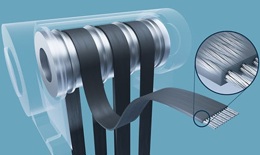
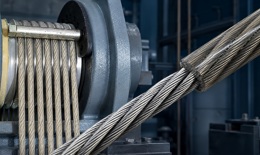
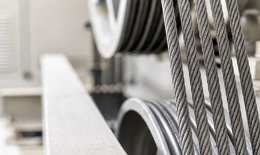
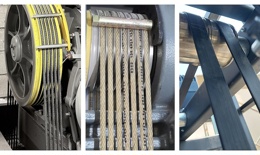
- Optimization of Spatial Organization: Unlike in the past, when elevator systems required massive shafts and machine rooms that occupied significant space inside and outside the building, today's situation is different. Thanks to scientific and technological advancements—such as the use of advanced hydraulic lifting systems replacing traditional winches and cables—auxiliary spaces for elevators have been minimized, offering optimal savings on construction area for residential buildings.


The Bach Plateau residence, 143 Trich Sai (Hanoi) features soft, fluid curves. (Photo source: Author and Sunjin Vietnam Joint Venture Company)
- Optimization of Economic Efficiency: In the context of high population density and limited land, especially in inner-city areas of major metropolises like Hanoi and Ho Chi Minh City, elevators allow families to optimize the value of their "golden" or "diamond" land by building higher than usual at a reasonable cost. Reality shows that through independent elevator solutions, many families utilize upper spaces for household business purposes such as cafés, restaurants, or even office rentals, generating auxiliary income. Many systems, based on highly localized technology, also minimize operation, maintenance, and replacement costs. Power consumption averages only around 1.1 - 2.2 kWh, significantly lower than before, fitting the affordability of households.

- Optimization of Usage Utility: Practical examples show that in conventional existing houses, the elderly and children often find it very difficult to access upper floors via stairs, especially the highest levels. Meanwhile, in many designs, these floors house important family spaces like the worship room, dining room, or common living room. Installing an in-house elevator allows vulnerable family members to easily access every floor. Advanced technology also maintains noise levels at just around 47-48dB, protecting sleep quality while saving on monthly electricity bills.
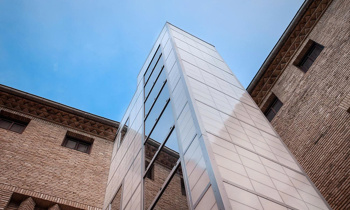
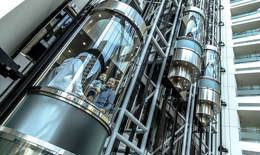
- Aesthetic Efficiency: Elevator systems are now manufactured with a wide range of equipment, both traditional and modern, such as glass systems, steel frames, stainless steel cabins, or glass cages. In some cases, decorative wallpapers, films, and decals with eye-catching patterns are applied. Some lines even integrate wide-format LED screens on cabin walls, bringing a distinct beauty and personality to the family living space.


Elevator cabin embedded with millions of Swarovski crystals, elevating the beauty, value, and class of the homeowner.
- Safety Efficiency: In a context where fire and explosion accidents causing significant loss of life and property in residential homes are evolving complexly, elevator systems—especially those meeting standards for fire resistance and smoke prevention—will allow family members to escape safely in emergency situations.
In general, the design and installation of elevators for family homes, after a period of mass adoption, has demonstrated significant contributions in terms of safety, aesthetics, utility, and economy. With abundant strengths and potential, this will be a strong development trend in the upcoming era of Vietnam's national and urban ascent.
https://tapchithangmay.vn/xu-huong-lap-dat-thang-may-kinh-tron-tai-cac-biet-thu-nha-pho/