



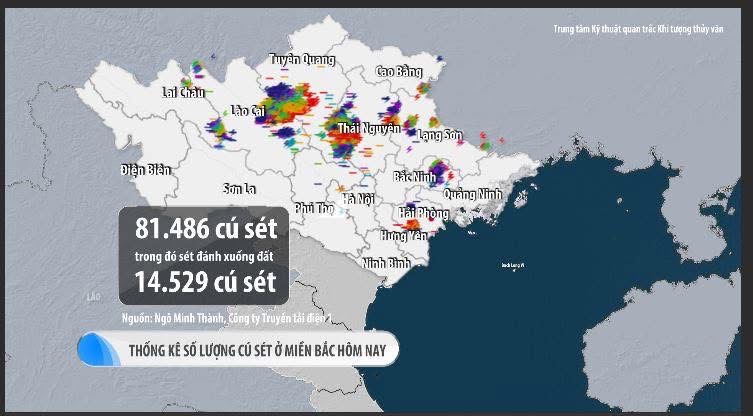
Statistics from 15:00 to 17:45 on July 30, 2025: Northern Vietnam recorded 81,486 lightning strikes (including 14,529 cloud-to-ground strikes). The most powerful strike reached an intensity of 143 kA (in Phu Tho Province), containing enough energy to power over 8,000 20W light bulbs continuously for 24 hours.
- Tuyen Quang Province: Highest activity with 34,392 strikes (6,608 cloud-to-ground).
- Thai Nguyen Province: 19,500 strikes (2,825 cloud-to-ground).
- Lao Cai Province: 13,955 strikes (2,277 cloud-to-ground).
Elevators "On Strike" After Thunderstorms
Elevators being affected by lightning is not a rare occurrence in Vietnam or around the world.
It is estimated that Vietnam endures 2 million lightning strikes annually during the thunderstorm season (March – October). According to the Institute of Geophysics, Vietnam is located at the center of the Asian thunderstorm activity zone, one of the three major lightning hotspots in the world.
Real-world Incidents: In May 2022, a household in Dong Da District (Hanoi) had to spend over 20 million VND to repair their elevator after a power surge caused by lightning. Damaged components requiring replacement included the 24V power supply unit, the leveling sensor (horseshoe sensor), and the main control board. Along with the repair costs, the elevator was out of service for over a week.
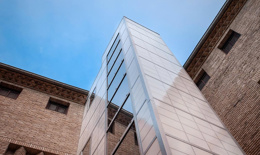
Similarly, an apartment complex in Thu Duc City (HCMC) suffered lightning damage to elevator components, leading to repairs that lasted over two months, causing significant inconvenience for residents.
 An apartment building in Thu Duc City where the elevator was damaged by lightning.
Due to their connection to the electrical grid and the presence of numerous metal and electronic components, elevators are highly susceptible to lightning damage.
How to Ensure Elevator Safety During Thunderstorms?
In extreme weather conditions like thunderstorms, any electrical or electronic device is vulnerable. Since it is impossible to predict exactly where lightning will strike, and considering the risk of surge propagation through power lines, the following recommendations are issued to ensure elevator safety:
1. Do Not Use the Elevator During a Thunderstorm
First and foremost, this is to ensure human safety.
During a storm, the power system may be cut off unexpectedly or attacked by lightning causing a short circuit. The elevator may stop abruptly, trapping passengers if safety features are insufficient or malfunction.
If the power is simply cut, the elevator's backup power system (UPS/Battery) and features like ARD (Automatic Rescue Device) or SRS (Self Rescue System) may function to bring the cabin to the nearest floor. However, if lightning strikes the electrical system causing a fire or short circuit, these safety features are highly likely to be compromised. Furthermore, electrical surges traveling through the elevator's metal components pose a risk of electric shock, threatening health and life.
Therefore, avoid using the elevator during thunderstorms to prevent dangerous situations.
2. Disconnect the Elevator Power Supply
Experts recommend turning off the main power and unplugging electrical devices in the house during thunder and lightning.
During storms, lightning can hit the house and overload the electrical system; unplugging devices reduces the risk of fire or electric shock. Even if the house is equipped with lightning rods, it is still advisable to disconnect sensitive electronic equipment, including the elevator.
3. Prevent Flooding and Water Leakage
Thunderstorms are often accompanied by heavy rain, which can cause flooding or water leakage into the elevator system, leading to damage. You should prevent this by:
- Moving the cabin to a high floor to avoid water damage.
- Cutting off the elevator power supply.
- Checking for potential leak points and covering them.
Read more: Guide to handling elevators during flooding
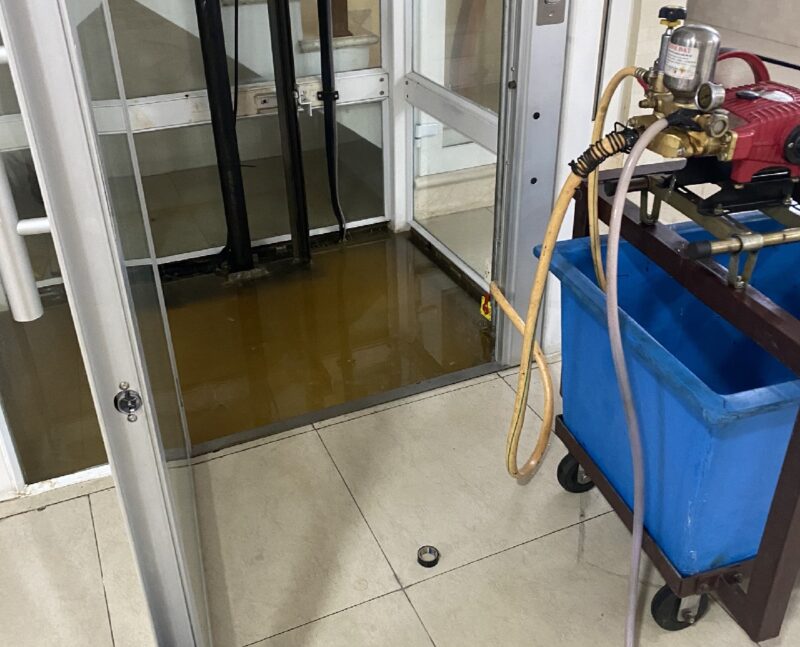 Hố thang máy có thể bị ngập do mưa dông
4. Check the Elevator Before Reusing After Nearby Lightning Strikes
Thunderstorms often happen when you are away. If lightning strikes your home or the immediate vicinity directly, equipment damage can still occur.
To avoid dangerous malfunctions, if you suspect the electrical system or elevator might have been affected, or if the elevator signals appear unstable/flickering, do not use it immediately.
Contact a technician to inspect, repair if necessary, and test-run all features before resuming normal use.
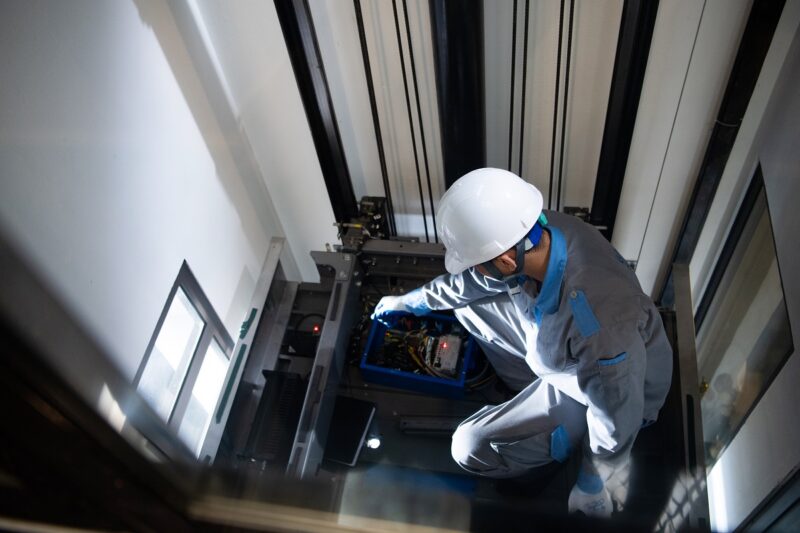 Elevator inspection is necessary if there are signs of damage.
5. Equip Preventive Features
"Better save than sorry", to avoid dangerous situations and damage caused by lightning, elevators should be equipped with lightning protection systems.
A complete protection system consists of two parts: Direct lightning protection (for the building structure) and Surge protection (for the equipment).
For the elevator specifically, surge protection devices (SPD) or surge filters should be installed to prevent transient voltage spikes from destroying sensitive electronics.
Additionally, the building's grounding system should be inspected annually to ensure safety.
Read more:
https://tapchithangmay.vn/de-thang-may-tranh-duoc-con-thinh-no-cua-ong-thien-loi/