



The Ministry of Industry and Trade is drafting a project to amend and supplement a number of articles of the Commercial Law, the Competition Law, the Foreign Trade Management Law, and the Consumer Rights Protection Law. Within this, the Ministry proposes policies to remove difficulties and bottlenecks in regulations concerning counterfeit goods in the Commercial Law.
According to the Ministry of Industry and Trade, the current Commercial Law only mentions counterfeit goods in some related provisions but lacks a clause explaining what constitutes "counterfeit goods." Meanwhile, the concept and criteria for determining counterfeit goods are primarily stipulated in Decree No. 98/2020/ND-CP on administrative penalties for violations in commercial activities.
The concept of "counterfeit goods" is currently defined in Clause 7, Article 3 of Decree No. 98/2020/ND-CP dated August 26, 2020, of the Government stipulating administrative penalties for violations in commercial activities, production, and trading of counterfeit goods, prohibited goods, and consumer rights protection. Accordingly, Decree No. 98/2020/ND-CP defines "counterfeit goods" to include:
+ Goods with use value or utility not matching their natural origin, nature, or name; goods without use value or utility, or with use value or utility not matching the declared or registered use value or utility;
+ Goods with at least one quality indicator, basic technical characteristic, or quantity of the main substance constituting the use value or utility of the goods reaching only 70% or less of the minimum level stipulated in the applicable technical regulation or registered/declared quality standard, or as stated on the label or packaging;
+ Counterfeit drugs as defined in Clause 33, Article 2 of the 2016 Pharmacy Law and counterfeit medicinal ingredients as defined in Clause 34, Article 2 of the 2016 Pharmacy Law;+ Veterinary drugs and plant protection products without active ingredients; without the full types of registered active ingredients; with active ingredients different from those stated on the label or packaging; with at least one active ingredient content reaching only 70% or less of the minimum level stipulated in the applicable technical regulation or registered/declared quality standard;
+ Goods with labels or packaging bearing forged indications of the name, address of the manufacturing, importing, or distributing organization or individual; forgery of circulation registration numbers, declaration numbers, barcodes of the goods, or forgery of packaging of other organizations or individuals; forgery of the origin, provenance of the goods, or place of production, packaging, assembly;
+ Counterfeit stamps, labels, or packaging of goods.
This approach leads to a paradox: A socially dangerous act that seriously infringes upon market order has not been fully "defined" at the law level. This results in inconsistent legal application across different fields, especially in the relationship between administrative and criminal handling, as well as among market management, customs, police, and other functional agencies.
Given the above situation, during the development of the Draft Law amending and supplementing a number of articles of the Commercial Law and related laws, the Ministry of Industry and Trade proposes adding one clause to Article 3 of the Commercial Law to explain terms related to counterfeit goods, specifically:
"Counterfeit goods" include:
a) Goods with use value or utility not matching their natural origin, nature, name, or intended use value or utility of the goods; goods without use value or utility, or with use value or utility not matching the declared or registered use value or utility;
b) Goods with at least one quality indicator, basic technical characteristic, or quantity of the main substance constituting the use value or utility of the goods reaching a ratio below the level prescribed by the Government compared to the minimum level stipulated in the applicable technical regulation or registered/declared quality standard, or as stated on the label or packaging;
d) Veterinary drugs and plant protection products without active ingredients; without the full types of registered active ingredients; with active ingredients different from those stated on the label or packaging; with at least one active ingredient content reaching only 70% or less of the minimum level stipulated in the applicable technical regulation or registered/declared quality standard;
đ) Goods with labels or packaging bearing forged indications of the name, address of the manufacturing, importing, or distributing organization or individual; forgery of circulation registration numbers, declaration numbers, barcodes of the goods, or forgery of packaging of other organizations or individuals; forgery of the origin, provenance of the goods, or place of production, packaging, assembly;
e) Counterfeit stamps, labels, or packaging of goods, including: decals, product labels (including electronic labels, product digital passports), packaging, various quality stamps, quality marks, traceability stamps, warranty cards, shrink wraps, or other items of business organizations or individuals bearing forged indications of the name, address of another organization or individual; forgery of the trade name, product name, barcode, circulation registration number, declaration number of the goods or packaging of another organization or individual.
g) Other goods that are defined as counterfeit by Laws, Resolutions of the National Assembly, or Ordinances of the National Assembly Standing Committee".
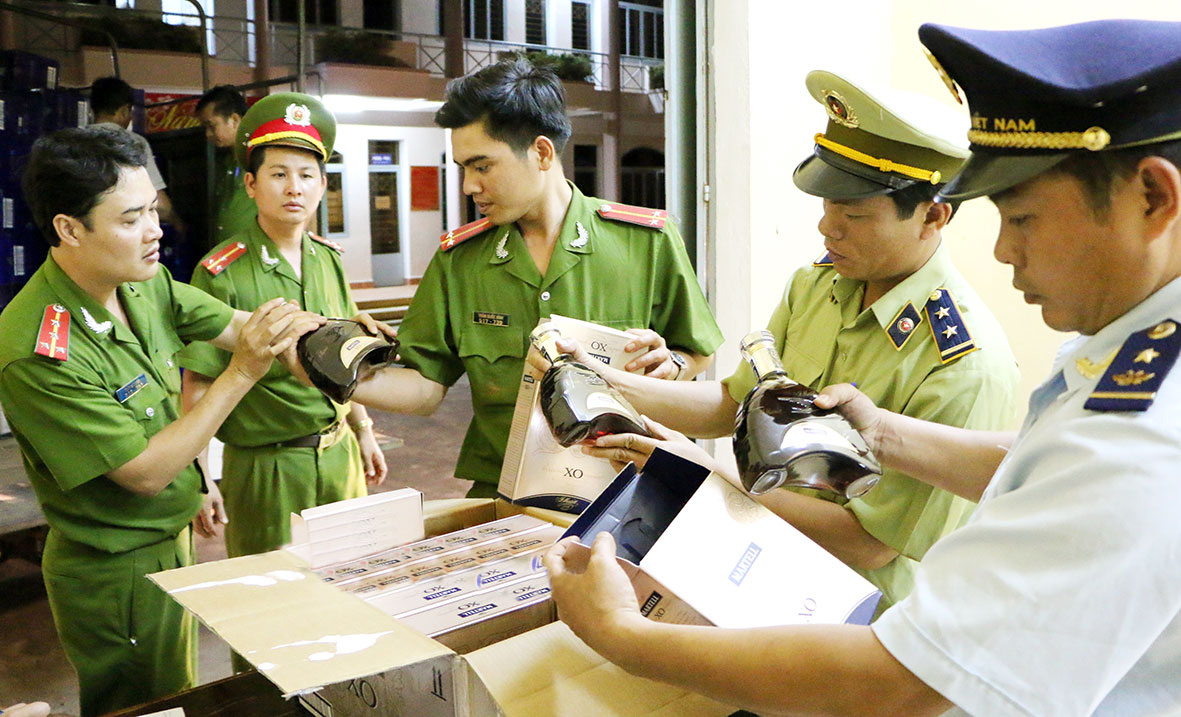
The Ministry of Industry and Trade stated that defining the concept of "counterfeit goods" at the Law level helps consolidate the legal basis and validity of the concept, thereby enabling consistent application, not limited to handling violations but also creating a foundation to promote management measures, science and technology, and innovation in detecting "counterfeit goods." This enhances the effectiveness of the fight against and prevention of the production and trading of counterfeit goods, protects the legitimate rights and interests of the people and businesses, safeguards the security and health safety of the people, and contributes to serving the country's rapid and sustainable development.
For businesses: Regulating the concept of "counterfeit goods" in the Commercial Law is significant and directly contributes to ensuring market stability, thereby protecting the legitimate rights and interests of businesses in production and business, especially genuine enterprises whose goods are counterfeited. It creates a fair competitive environment, ensuring the reputation, quality, and development of enterprises in the economy.
For organizations and individuals: Regulating the concept of "counterfeit goods" in the Commercial Law provides a basis for the fight against and prevention of the production and trading of counterfeit goods, thereby contributing to ensuring the people's and consumers' right to protection of health, life, and legitimate rights and interests.