




The accident occurred on August 16, 2026, at Sai Surya apartment building, near the old market area in Ongole city, Prakasam district.
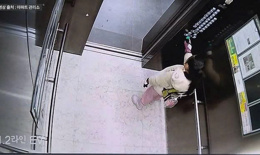
According to Indian media, the victim was Mrs. Vanitha. The incident took place while the victim was in the elevator with her daughter and grandchild. When the cabin stopped at the desired floor, the daughter and grandchild stepped out first.
As Mrs. Vanitha was about to leave the cabin, the elevator suddenly moved downward even though the doors had not closed. The victim tried to step out but became trapped between the descending cabin and the edge of the floor.
Footage from the surveillance camera showed the daughter immediately trying to assist and call for help. Residents in the apartment building then brought the victim out and transported her to the hospital. Due to severe injuries, she did not survive during treatment.
According to the images and initial accounts, the cabin had stopped at the floor and opened its doors to let passengers out. After the two people left the cabin, the device suddenly moved downward while the victim was stepping through the doorway. As a result, the victim became trapped in the gap between the cabin floor and the floor level – a position with a particularly serious risk of crushing and shearing.
From a technical perspective, two main possibilities need to be considered:
First, unintended car movement (UCM). The cabin had stopped but drifted downward on its own without any control command. The cause may be related to the brake not generating sufficient holding force, the brake being stuck or worn, a traction machine fault, the drive system, or the control system. If the elevator has UCMP, the system must detect abnormal changes in position or speed, then activate the stopping mechanism and hold the cabin.
However, in this case, the cabin moved downward when only one passenger remained inside. With traction elevators, if the counterweight is heavier than the cabin side and the brake does not have sufficient holding force, the cabin typically tends to drift upward rather than downward.
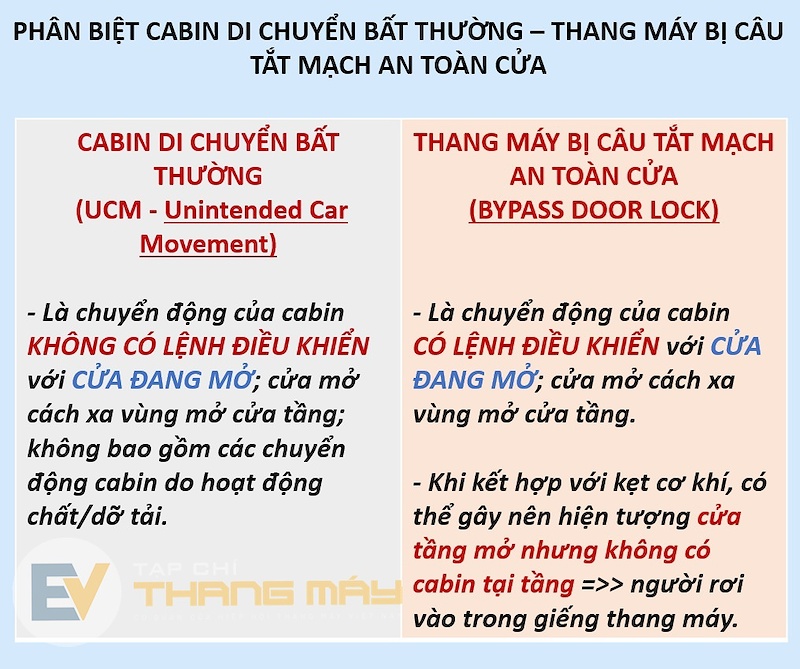
Second, the cabin received a run command when the doors had not closed and locked in the proper state. According to safety principles, an elevator is only permitted to operate when the landing doors and car doors have fully closed and locked in the proper state. If the door safety circuit is bypassed or disabled, the elevator can still receive a run command while the doors are open, putting people stepping into or out of the cabin at risk of being trapped between the cabin and the floor.
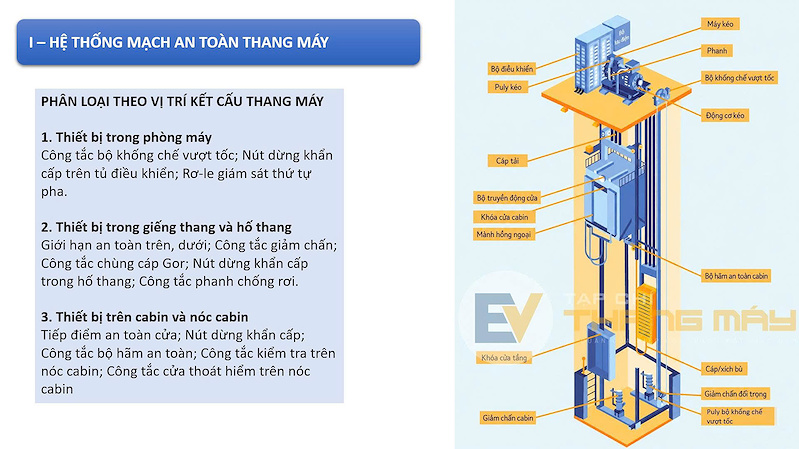
However, the accident in India has not yet reached a conclusion regarding whether the safety circuit was tampered with. Investigators need to examine the door locks, safety chain, controller, brake system... and maintenance records to determine the cause. See more: Warning of consequences from bypassing elevator safety circuits