



According to data from China's National Bureau of Statistics (NBS), production of elevators, escalators, and lifting equipment in the first six months of 2026 reached 653,000 units, up 3.2% compared to the same period in 2025.
On a monthly basis, manufacturing activity in the early months of 2026 was relatively subdued. Production in March and April 2026 even declined year-on-year, partly due to delays in infrastructure projects and the real estate market still bottoming out.
However, China's production of elevators, escalators, and lifting equipment returned to growth from May and reached 9.0% in June. In June 2026 alone, output reached 145,000 units, up 9% compared to the same period in 2025 and the highest growth rate since the beginning of the year.
(*) The statistical scope covers industrial enterprises with main business revenue of 20 million yuan/year or more.
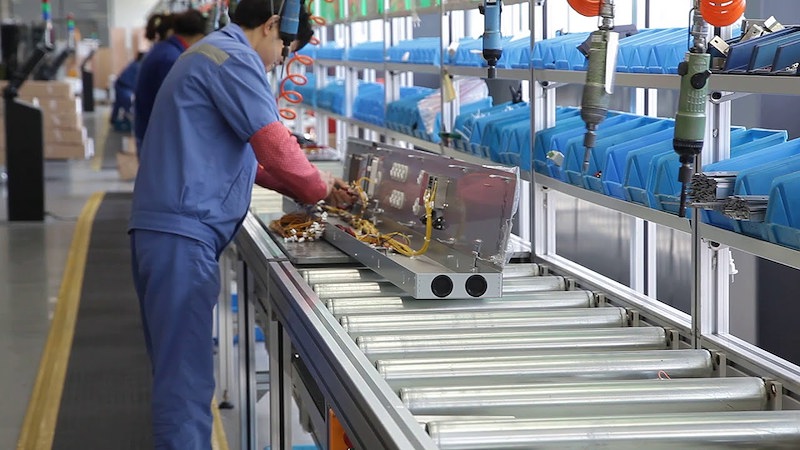
The decline of the domestic market has prompted many Chinese elevator companies to step up their search for and expansion into markets in other countries,
Waning confidence, real estate bottoming out
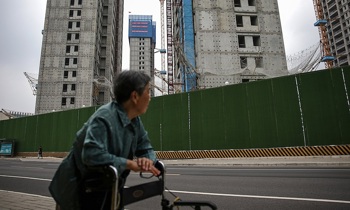
The above developments show that manufacturing activity has shown signs of recovery after a prolonged downturn. However, this recovery is taking place against the backdrop of China's real estate market - a sector that directly impacts elevator industry growth - which has yet to overcome its difficulties.
In a broader context, over the past two years, China's economic growth has relied mainly on exports and infrastructure investment. To date, consumption remains the weakest link in the economy of 1.4 billion people.
Public confidence has not recovered after the real estate crisis that has dragged on for years.
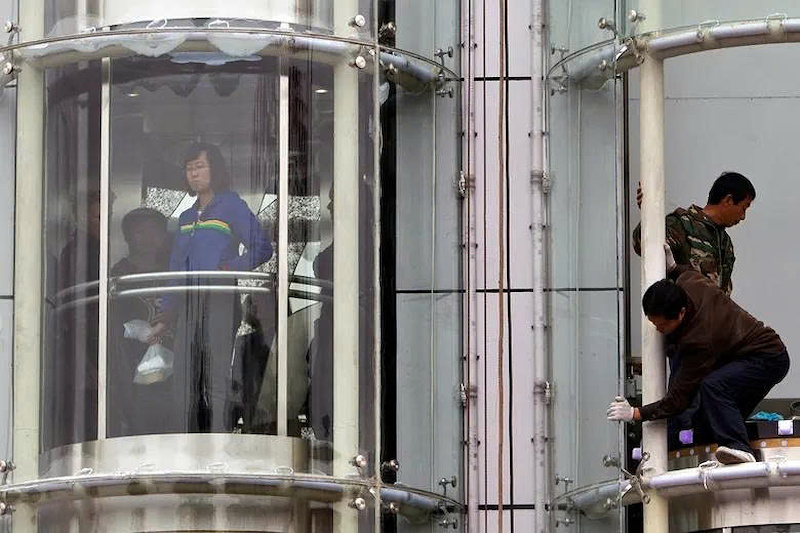
From interest rate cuts and credit easing to "trade-in" campaigns - The stimulus packages from the Chinese government, though rolled out intensively, still seem unable to awaken the domestic consumption engine that was once the pride of the nation of 1.4 billion people.
China's consumer confidence index currently remains below 90 points, reflecting cautious sentiment among the public despite many support measures having been implemented. Meanwhile, before the real estate market collapse, this index almost always stayed above 100 points.
Previously, a report by the China Elevator Association showed that in 2025, demand for traditional new elevator installations fell 12.9%. China's total production of elevators, escalators, and lifting equipment in 2025 reached approximately 1.401 million units, marking the second consecutive year of decline.
Exports are becoming the 'pressure release valve' of China's elevator industry
China's economic data also clearly reflects the macroeconomic pressures that this economy is bearing.
Retail sales in June 2026 edged up only 1% compared to the same period last year. Fixed asset investment in the first half of the year fell 5.7% year-on-year, widening the decline from the 4.1% drop in the first five months.
A rare bright spot in the economy was industrial production, which recorded growth of 5.3% in June 2025 compared to the same period last year.
Meanwhile, customs data for June 2025 showed that the country's export turnover surged by 27%.
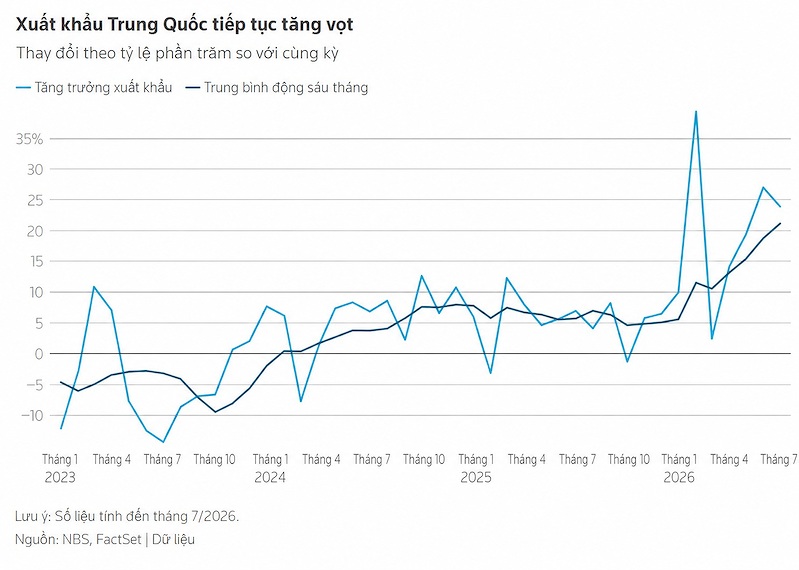
The stark contrast between these two indicators highlights a reality: China's economy is becoming increasingly heavily dependent on selling goods abroad, as Beijing struggles to stimulate consumer demand and attract domestic investment flows.
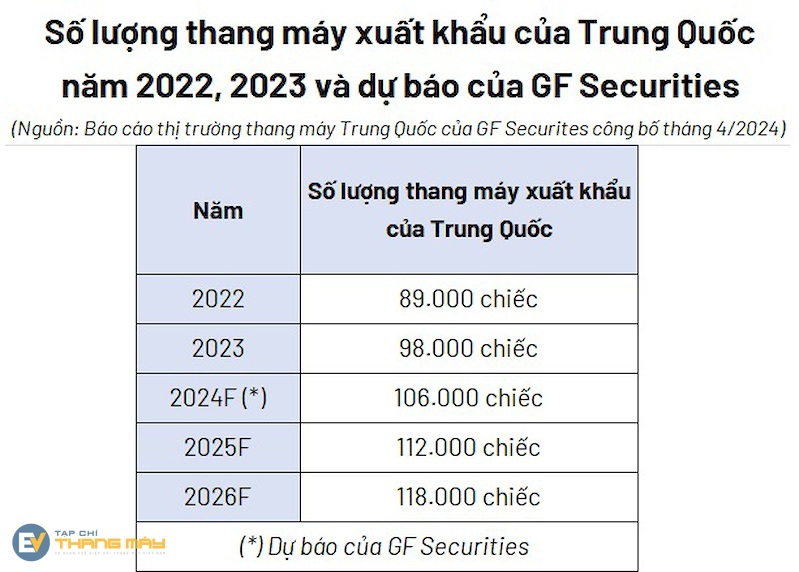
In 2023, a report by GF Securities (China) estimated that exports accounted for only about 9% of demand in China's elevator industry. At that time, the institution forecast that exports would increase from 98,000 units in 2023 to 112,000 units in 2025 and 118,000 units in 2026.
Reality unfolded faster than forecast.
For passenger elevators alone, according to data from China's General Administration of Customs, the country exported 126,833 units in 2025. Thus, exports in 2025 were about 20% higher than GF Securities' forecast and nearly 29.4% above the 2023 result.
According to data from China's General Administration of Customs, in the first six months of 2026, the country exported 65,724 passenger elevators, along with 6,364 escalators and passenger conveyors. The total export output of the two product groups reached 72,088 units.
Thus, while the production output of China's entire elevator, escalator, and passenger conveyor industry increased by only 3.2% in the first six months of 2026, exports of this product group rose by 16.5% compared to the same period in 2025, an increase of approximately 10,200 elevators, escalators, and passenger conveyors.
This export growth rate shows that exports are no longer a minor supplement to the domestic market. It is becoming one of the important channels for factories to maintain output.
GF Securities also stated that countries such as Russia, Saudi Arabia, the United Arab Emirates, etc. are key export markets for China. As much as 70% of elevator exports come from countries with which China has promoted trade.
Vietnam is also emerging as one of the notable export markets for China's elevator industry. In 2024, China exported 2,578 passenger elevators to Vietnam. By 2025, these figures increased by nearly 50%, reaching 3,838 units. Vietnam ranks eighth among the largest import markets for passenger elevators from China.