



A study published in Automation in Construction, based on data from 25,548 incidents across 5,400 elevators in Hong Kong, shows that the useful lifespan of elevators can reach approximately 30 years with an appropriate preventive maintenance strategy.
The study also indicates that failures related to controllers, car doors, landing doors, and in-car equipment are notable incident groups during operation. This suggests that the overall system lifespan can be long, but certain equipment groups still require monitoring, evaluation, and earlier replacement.
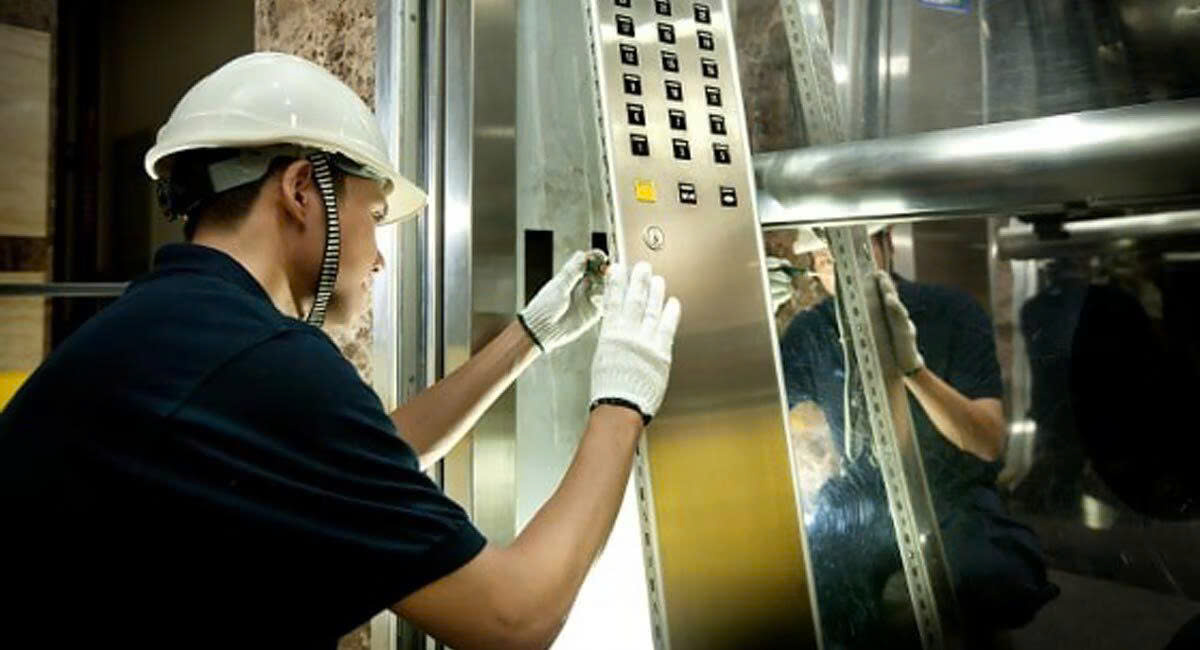
Design lifespan, replacement timing, allowable wear levels, and inspection requirements for each piece of equipment should be determined according to the manufacturer's documentation.
Main Components of an Elevator
The main component groups of an elevator include:
Traction machine and motor: Responsible for generating vertical movement for the elevator. This is the equipment group that directly affects smoothness, noise, travel speed, power consumption, and operational quality.
Control cabinet and electrical system: Acts as the "brain" of the elevator, coordinating the process of receiving commands, processing signals, controlling travel, stopping at floors, opening and closing doors, and coordinating with safety devices.
Landing doors, car doors, and door drive system: Ensure safe entry and exit from the elevator. This is a component group with high operating frequency, prone to issues such as slow opening/closing, jamming, vibration, noise, or unstable sensor operation.
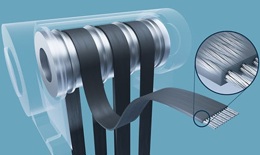
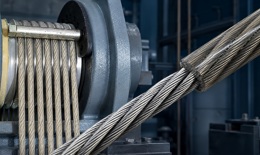
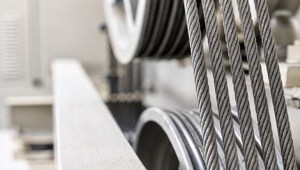
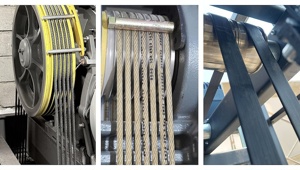
Hoisting ropes and suspension system: Provide load-bearing capacity and support for the elevator's moving structure. This component group is directly related to operational safety and requires strict inspection and maintenance.
Generally, the design lifespan, replacement timing, allowable wear levels, and inspection requirements for each piece of equipment should first be determined according to the manufacturer's documentation. Each elevator model, each type of equipment, and each operating condition may have different technical requirements.
In cases where the manufacturer's documentation does not specify, the unit responsible for managing, using, and maintaining the elevator may refer to TCCS 01:2023/VNEA – General Safety Requirements in the Management, Use, Maintenance, and Repair of Elevators, issued by the Vietnam Elevator Association.
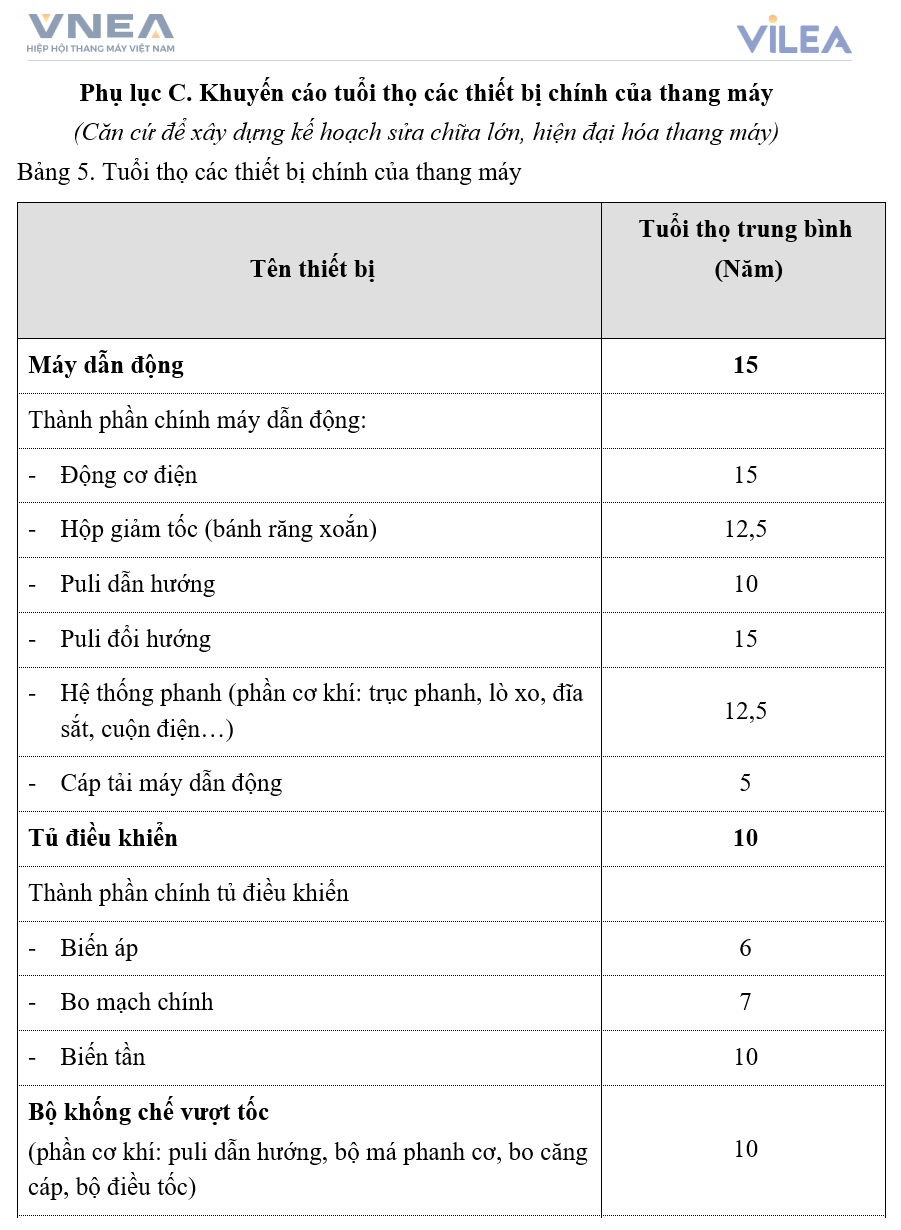
Recommended lifespan table for main elevator equipment in the TCCS 01:2023/VNEA Base Standard, intended as a basis for developing overhaul and modernization plans for elevators
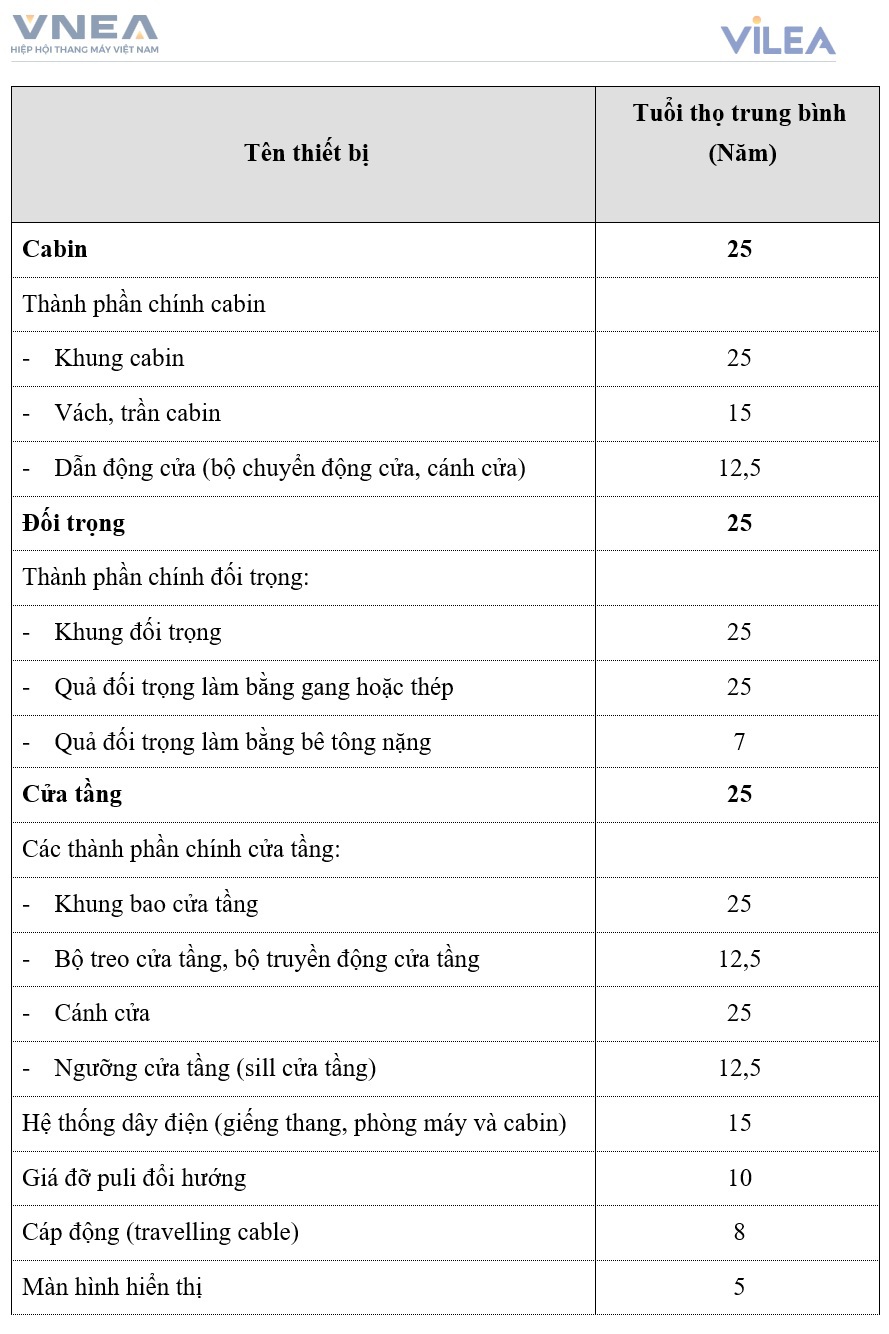
Recommended lifespan table for main elevator equipment in the TCCS 01:2023/VNEA Base Standard, intended as a basis for developing overhaul and modernization plans for elevators
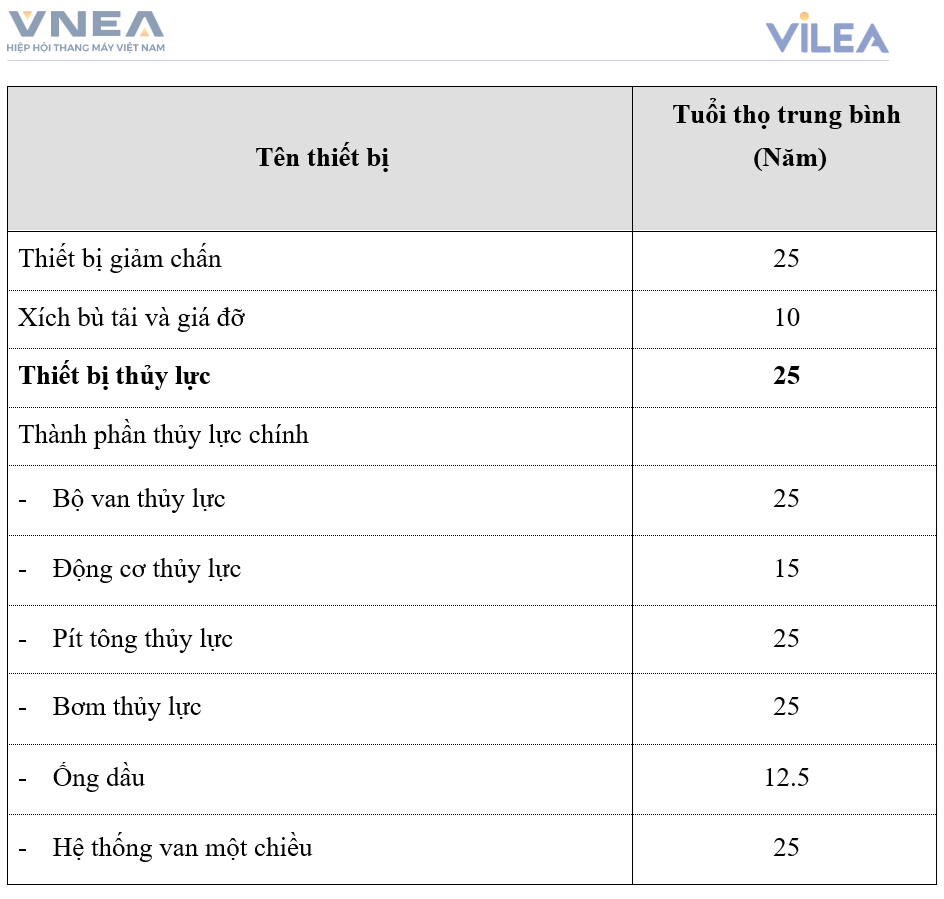
Recommended lifespan table for main elevator equipment in the TCCS 01:2023/VNEA Base Standard, intended as a basis for developing overhaul and modernization plans for elevators
Classification of Equipment Groups by Replacement Lifespan
Group with Lifespan Under 10 Years: Upgrading Individual Components
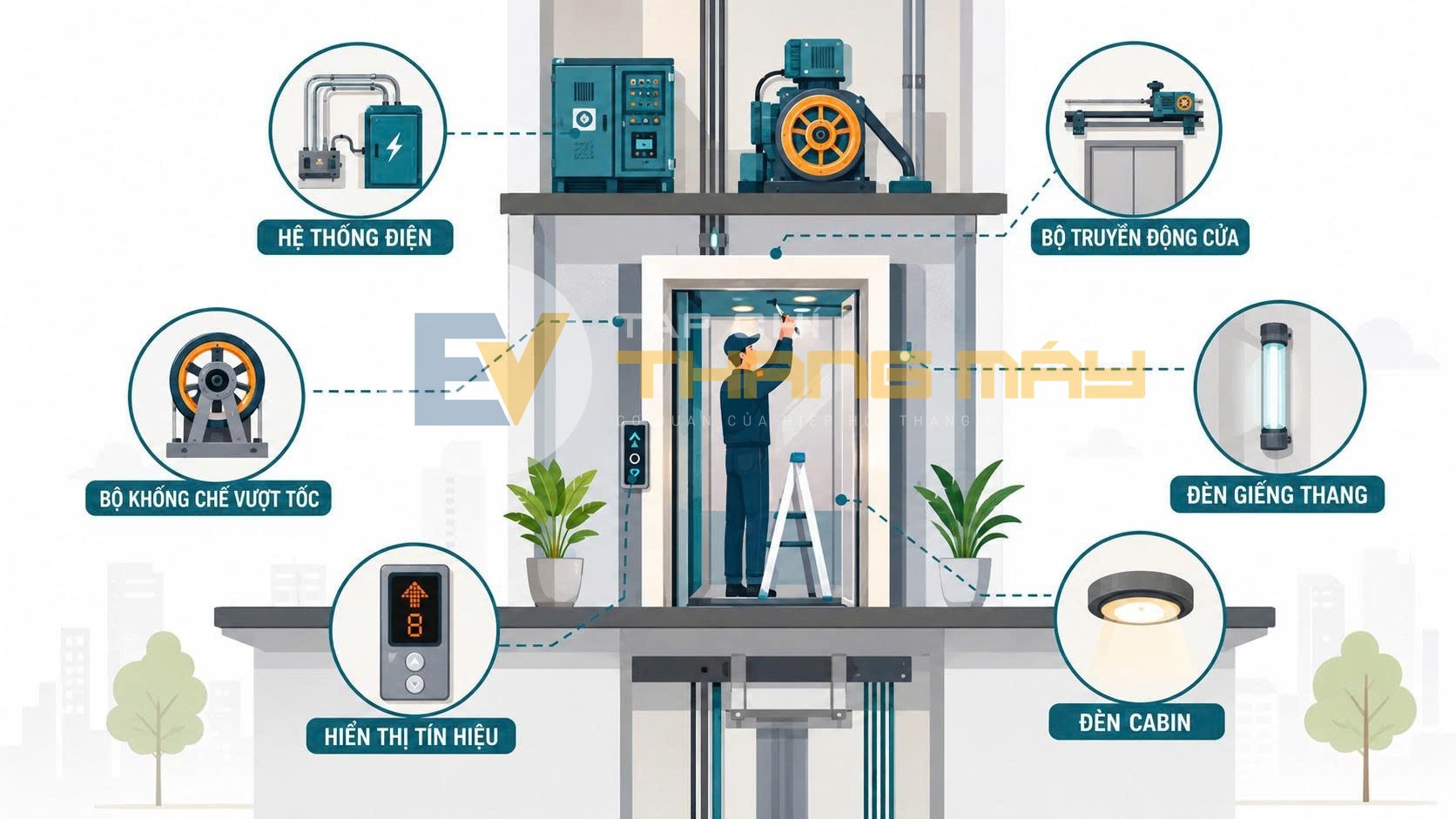
When an elevator has been in operation for over 10 years, items such as door drive systems, signal systems, display screens, or lighting systems may begin to require upgrades. This is a component group that typically does not require replacing the entire system but directly affects the daily user experience.
Common signs include noisy door operation, unstable opening/closing, outdated floor call/display systems, and inefficient car or hoistway lighting. For this group, upgrading individual components is a fast, less disruptive, and lower-cost option compared to major modernization.
The main goal of component-level modernization is to maintain the efficient operation of the elevator system.
Group with Lifespan of 10 - 20 Years: Developing a Phased Modular Modernization Plan for Main Equipment Such as Control Cabinets and Traction Machines
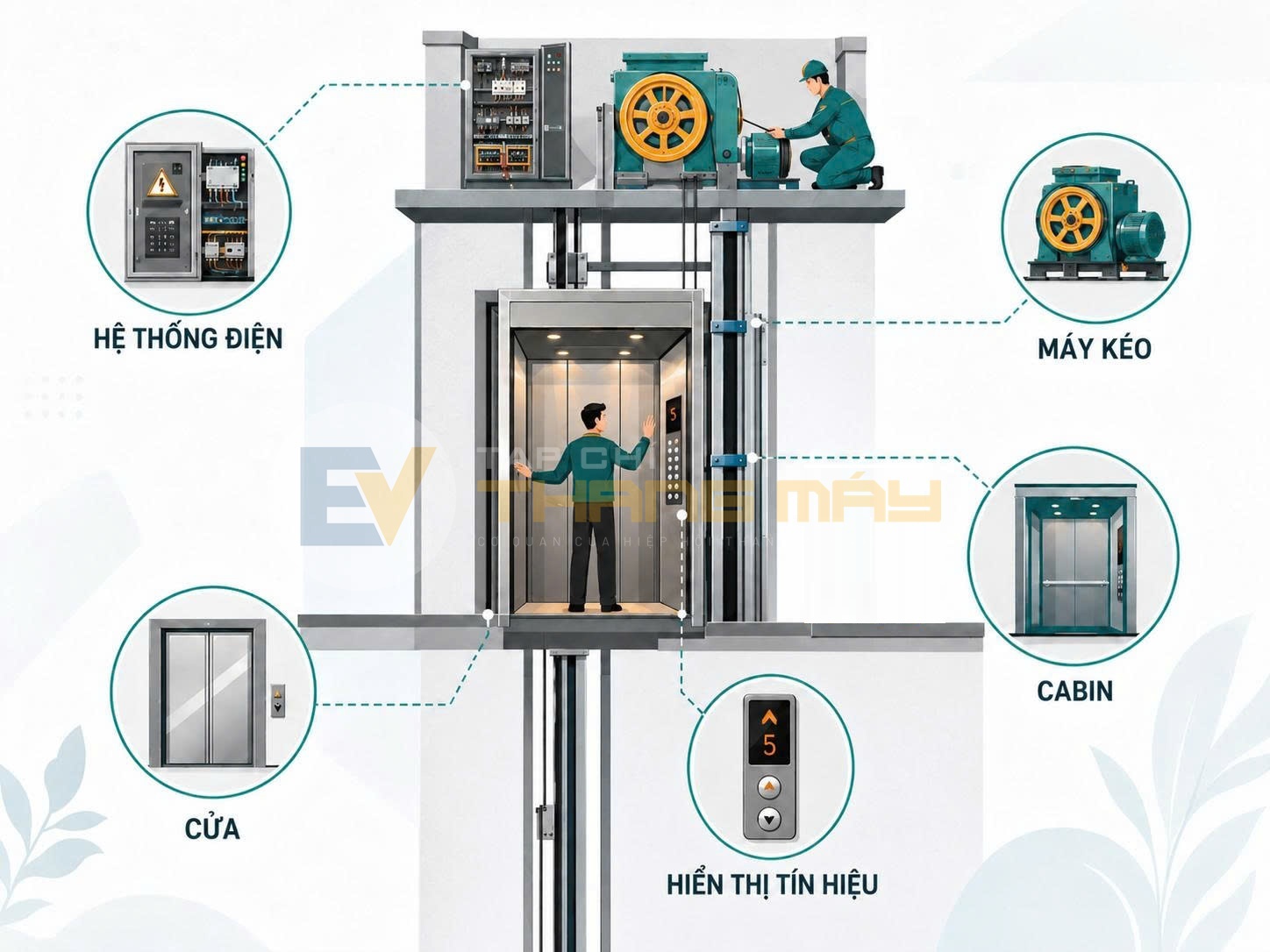
At the 10 - 20 year stage, the elevator needs to be thoroughly assessed to plan the modernization of larger systems such as control cabinets, electrical-control systems; traction machines; door systems, door drive systems, signal equipment, and certain main electromechanical assemblies.
According to TCCS 01:2023/VNEA, control cabinets have an average lifespan of approximately 10 years; traction machines have an average lifespan of approximately 15 years. These are equipment groups that directly affect operational efficiency, smoothness, floor-stopping accuracy, power consumption, and elevator reliability.
The appropriate approach at this stage is typically modular modernization, meaning upgrading an entire system assembly rather than just replacing a few small components. For example: replacing the control system, upgrading the traction machine, renovating the door system, or synchronizing the signal – electrical – control systems.
The stage when an elevator begins operating beyond 10 years requires thorough assessment, because if multiple modules degrade simultaneously, the cost of partial upgrades can increase rapidly and needs to be compared with a major renovation option.
Group with Lifespan Over 20 - 25 Years: Mechanical Equipment That Can Be Assessed and Retained During Upgrades and Renovations
This is the group with a longer lifespan, primarily mechanical components and main structural parts of the elevator. Equipment may include car frames, cars, counterweights, counterweight frames, cast iron or steel counterweight blocks, landing doors, landing door frames, buffer devices, guide rails, elevator door sills, and certain other mechanical items.
For hydraulic elevators, equipment with longer lifespans may include hydraulic valve assemblies, hydraulic pistons, hydraulic pumps, and check valve systems.
These parts do not necessarily need to be replaced if they still meet technical, safety, and aesthetic requirements. This is the basis of the principle of "retaining what is still in good condition" in elevator modernization.
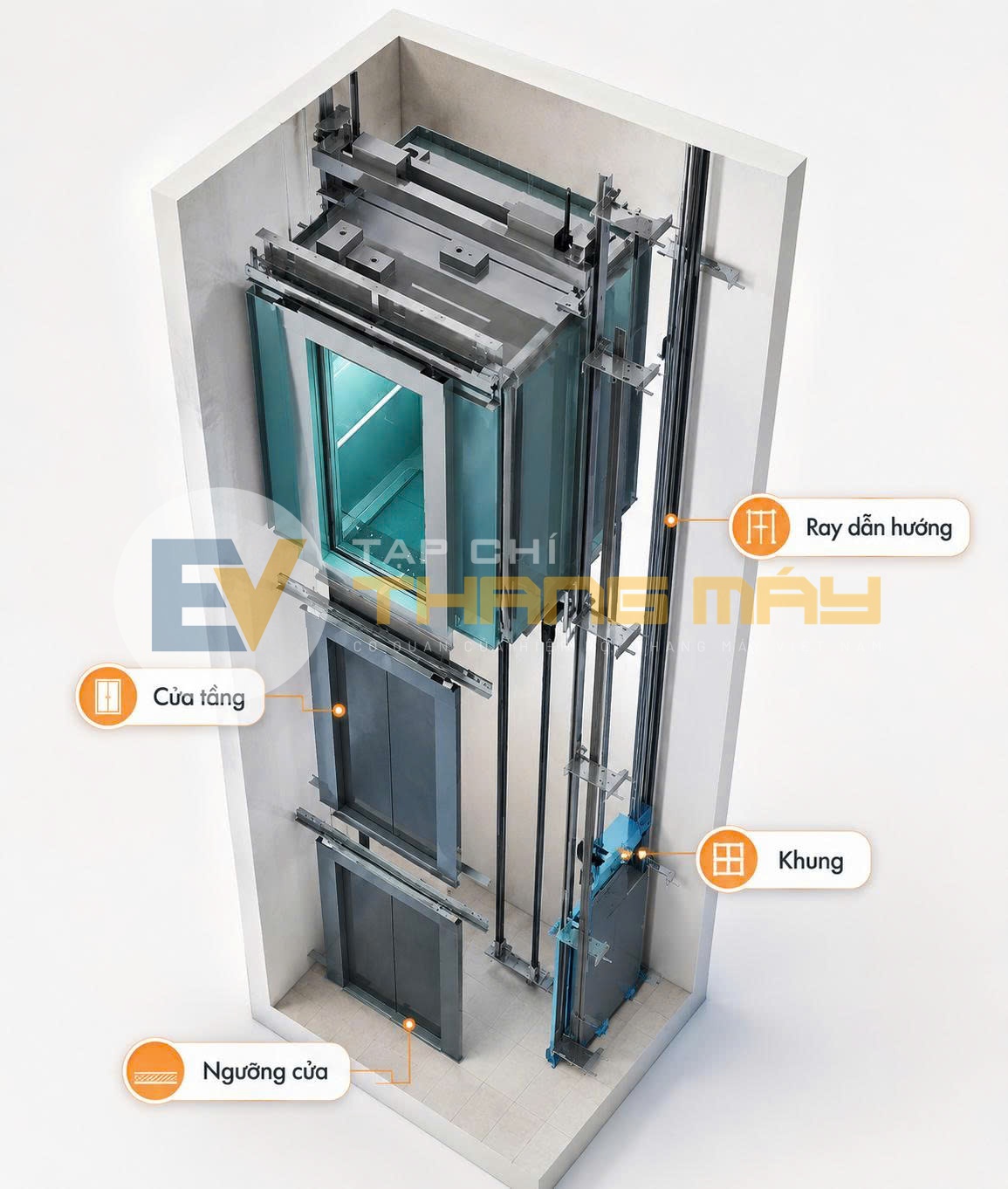
Depending on the condition of the elevator and ensuring compliance with safety standards, parts that may be retained include landing doors, door sills, door frames, guide rails, and counterweights. Retention is determined specifically on a case-by-case basis during the survey process.
In many cases, a modernization plan can retain mechanical components that still meet requirements while replacing outdated systems such as control cabinets, traction machines, doors, signals, or cars.
This approach helps reduce costs, shorten construction time, and minimize disruption for users. However, retaining equipment must be based on actual inspection, not merely on theoretical lifespan. If mechanical components have deformed, worn beyond limits, are no longer compatible with the new system, or affect operational safety, they should be replaced.
Notes:
Lifespan milestones are for reference only. The replacement timing for each piece of equipment should be determined based on the manufacturer's documentation, technical records, operational history, and actual inspection results. Classifying by lifespan helps owners develop appropriate maintenance and modernization plans, avoiding premature replacement or reactive handling when the elevator has severely degraded.