



With a series of social housing projects under construction and preparing for investment, significant development room is opening up for the elevator industry
Development Room from Hundreds of Thousands of Apartments
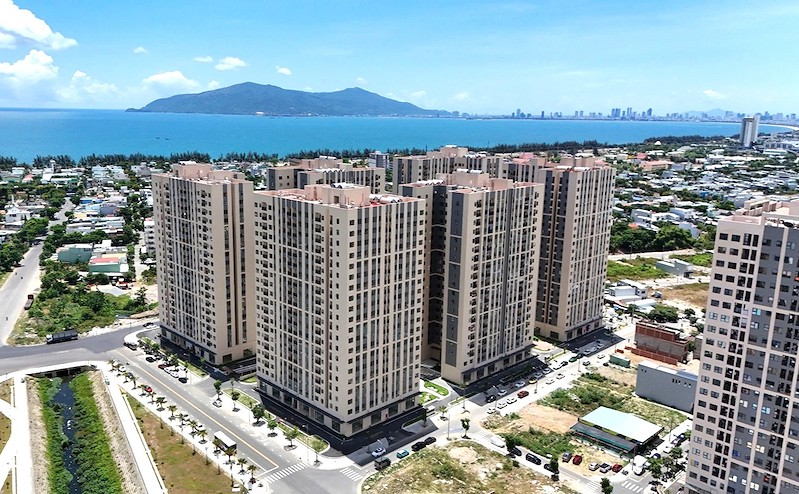
According to a report by the Ministry of Construction, as of the end of July 2026, the country had 875 social housing projects with a total scale of 773,457 units. Of these, 197,805 units have been completed, 270,409 units are under construction, and 305,243 units have been approved for investment policy.
The scale of these projects indicates considerable demand for new equipment installation and elevator services. For buildings already in use, demand shifts to maintenance, inspection, repair, and replacement of components.
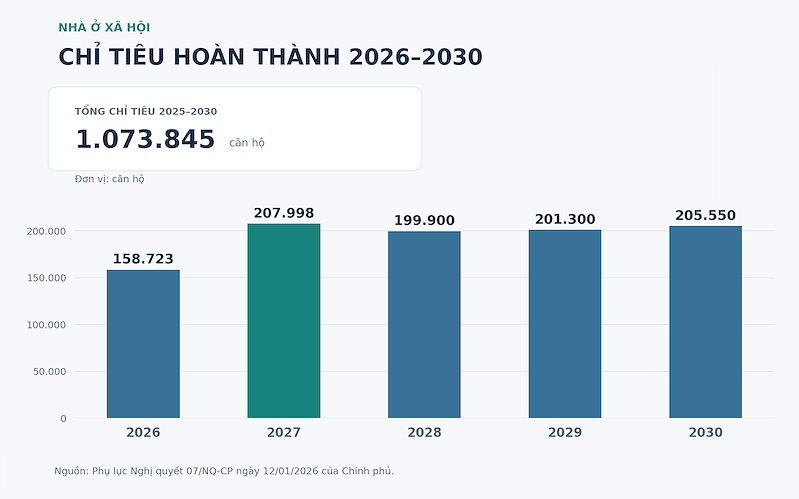
The investment project to construct at least one million social housing apartments for low-income people and industrial park workers in the 2021–2030 period was approved under Decision 338/QD-TTg dated April 3, 2023. Resolution 07/NQ-CP dated January 12, 2026 continues to assign targets to localities, with 158,723 units required to be completed in 2026 alone.
For elevator businesses, specific opportunities need to be identified from the design and procurement schedule of each project. A project under construction may have already selected an equipment supplier; a project newly approved for investment policy still needs time to complete procedures and begin implementation.
Wide-Open Demand for New Installations
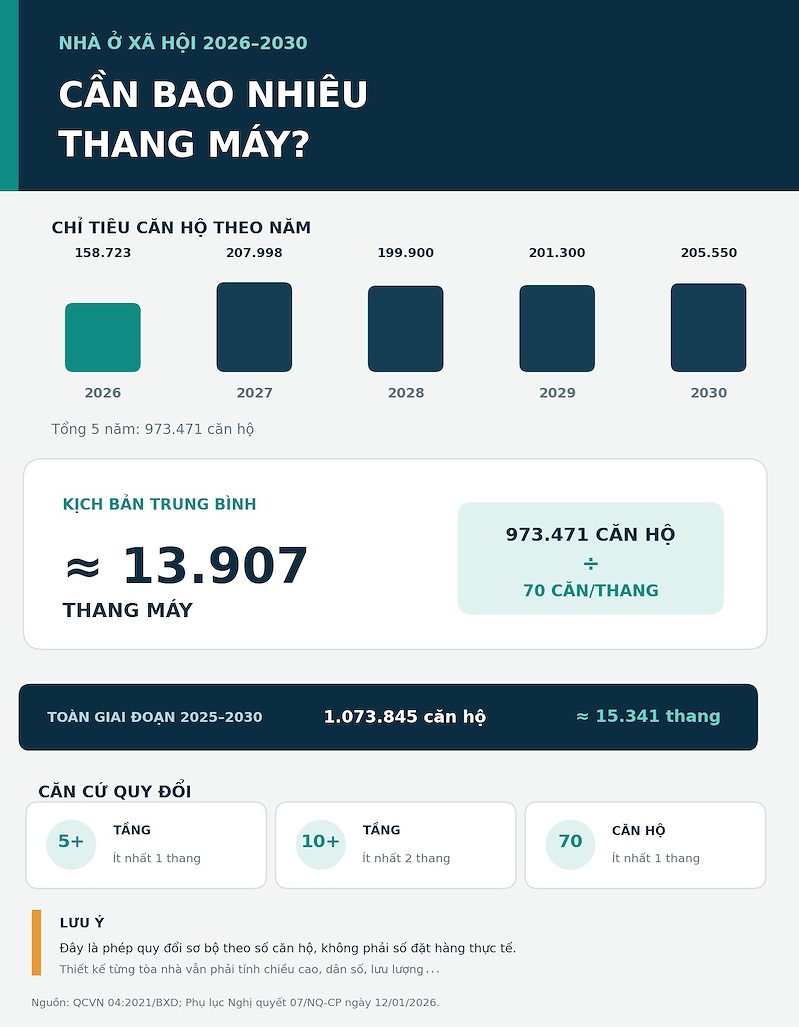
The number of elevators in an apartment building must simultaneously meet requirements regarding height and service scale. According to Section 2.4.1 of QCVN 04:2021/BXD on Apartment Buildings, buildings of 5 stories or more must have at least one elevator, buildings of 10 stories or more must have at least two elevators, and the usage flow rate must be ensured according to the applicable standard selected.
Section 2.4.2 stipulates a minimum of one elevator per 200 residents, excluding those on the ground floor; if calculated by number of apartments, a minimum of one elevator per 70 units is required. Apartment buildings with elevators must also have at least one dedicated elevator with cabin clear dimensions that accommodate the transport of emergency stretchers, as noted in Section 2.4.1.
On the basis of these requirements, the design plan needs to take into account the number of floors, number of users, peak-hour traffic flow, load capacity, speed, and door opening/closing time. With the same number of apartments, arranging them into multiple buildings or different elevator groups can lead to different equipment needs.
Service capability when one elevator is stopped for maintenance or repair also needs to be considered. If evaluated only under conditions where all equipment is operating, the plan may not fully reflect the waiting time and level of inconvenience residents experience when an incident occurs.
Taking the ratio of one elevator serving 70 apartments according to QCVN 04:2021/BXD, the target of 1,073,845 social housing units in the 2025–2030 period corresponds to a preliminary demand of approximately 15,341 elevators. Considering only the total target of 973,471 units in the 2026–2030 period alone, the corresponding scale in the coming period is approximately 13,907 elevators.
Accessible design is a requirement that must be factored in from the outset. According to the United Nations Population Fund (UNFPA), Vietnam is forecast to transition from the aging population stage to an aged population by 2036. For housing areas operated over the long term, the ease of use for elderly people and wheelchair users needs to be factored into elevator plans from the time of construction.
The Elevator Services Market Grows
An estimated 13,900 elevators for the social housing program in the 2026–2030 period indicates substantial demand for installation, inspection, maintenance, rescue, repair, and spare parts supply.
Service demand does not end when the building is handed over. Throughout the operational period, equipment must be maintained, inspected, and repaired; worn components need to be replaced, and old elevators may need to be renovated or modernized.
For social housing, these costs are ultimately allocated into management fees and living costs of residents. A design plan lacking traffic capacity, equipment with hard-to-source spare parts, or high maintenance costs can become a long-term burden after the project goes into operation.
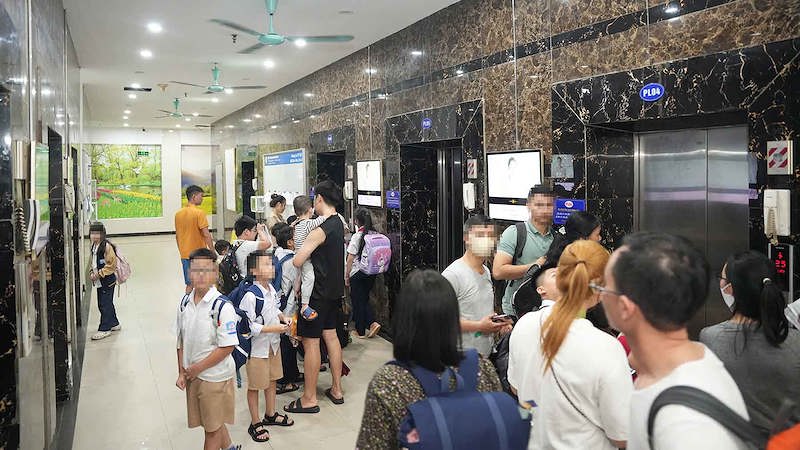
In design, selecting elevators for buildings with high usage frequency requires particular attention to elevator density/number of apartments and residents; handling capacity within 5 minutes during peak hours; waiting time, travel time...
For social housing, elevator selection also needs to be placed within the cost equation that residents must pay after receiving their homes. In addition to equipment and installation prices, items to be assessed include electricity, maintenance, inspection, repair, and component replacement.
Investors should require suppliers to clarify these costs at the time of selecting a plan. Quotation documents need to specify the warranty scope, work included in the maintenance fee, items charged separately, incident response time, and spare parts supply capability.
A low purchase price will be unlikely to bring long-term benefits if accompanied by high component replacement costs or prolonged elevator downtime due to waiting for spare parts.
Standards in Elevator Design, Selection, and Management for Buildings
Safety requirements for elevators must be applied uniformly, regardless of whether it is social housing or commercial housing. What needs to be added is not a lower set of safety standards, but rather guidelines for designing, selecting, and managing elevators suited to the characteristics of social housing.
These guidelines should focus on vertical transportation calculation; number, load capacity, and speed of elevators; accessibility; stretcher transport requirements; durability of high-frequency components; energy efficiency; spare parts supply capability; rescue and repair time; maintenance conditions; and total lifecycle cost.
The Vietnam Elevator Association can propose and coordinate with management agencies, investors, consulting firms, elevator businesses, inspection organizations, and user representatives to develop these guidelines. Technical records, inspection, maintenance, and repair history also need to be handed over and updated throughout the operational process.
The scale of the social housing program opens up substantial demand for the elevator industry. However, the most important value does not lie in the number of equipment units sold, but in the ability to ensure safe, convenient, and stable travel for residents throughout the building's service life.