



Nearly 3 months waiting for Chinese components, many Korean escalators halted
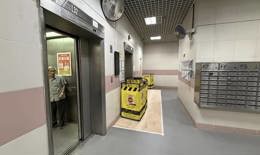
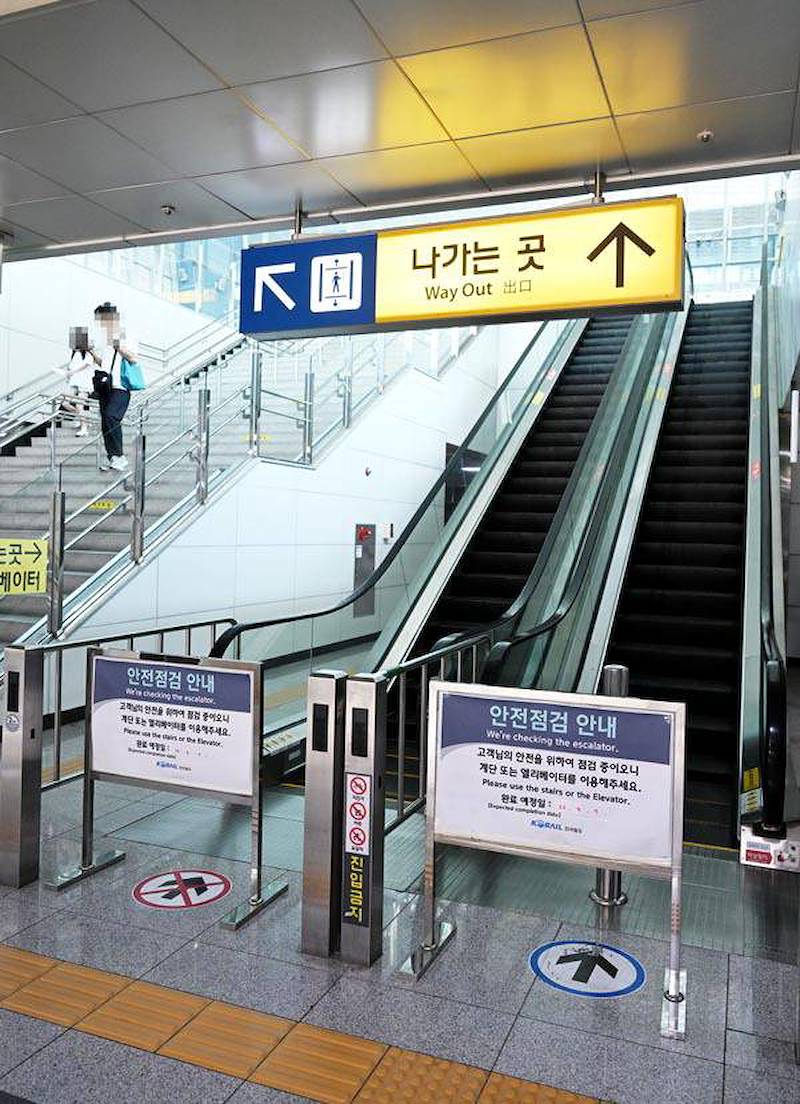
As of August 25, three of the 10 escalators at Sinhaeundae Station (Busan, South Korea) have been out of operation since June 11 due to damaged handrails. At Songjeong Station (Busan, South Korea), two of the four escalators have also stopped operating for the same reason.
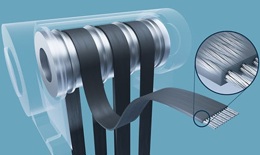
The handrail moves in sync with the steps, helping passengers maintain balance during transit. When this component is damaged, the surface or structure of the handrail may no longer ensure operating conditions, while also creating risks of entrapment and jamming. The Korea Railroad Corporation (KORAIL) has therefore halted the equipment until replacement is completed.
The escalators at these two stations were installed in 2013. When equipment operates for many years, the need to replace consumables and other components can increase. However, the problem is that the necessary spare parts cannot always be supplied immediately.
A KORAIL representative said that each escalator system has different spare part specifications, making it difficult to prepare adequate replacement equipment in advance.
Suitable handrails must be ordered from China and meet safety certification requirements. Sea freight and customs clearance procedures take a long time, pushing the repair plan back to early September 2026.
The suspension of escalator operations has also caused considerable inconvenience for passengers. Korail has received a total of 15 complaints since the incident occurred. In hot weather, elderly people and tourists carrying luggage must switch to using stairs or elevators.
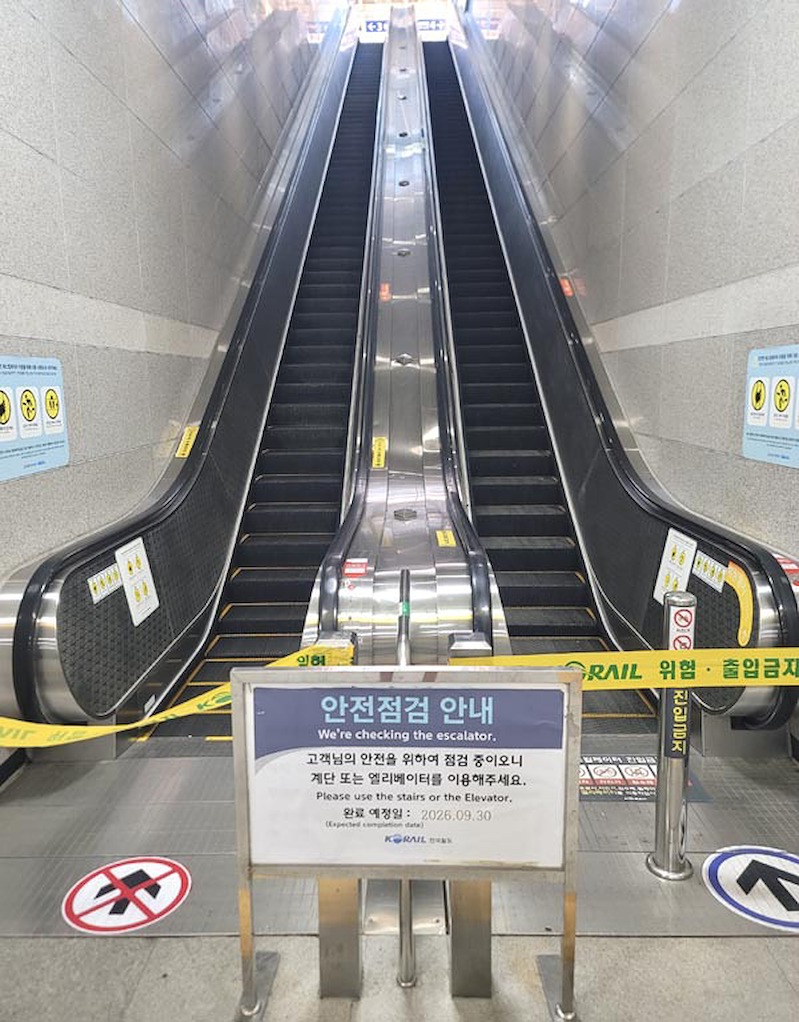
Escalators having to stop operating due to equipment damage are also occurring simultaneously at a number of other subway stations, causing difficulties for people with disabilities and reduced mobility.
At Songjeong Station, an elevator also recently stopped operating due to an abnormality in the braking system. Several escalators at Geojehaemaji, Geoje, Gyodae, Allak, BEXCO, and Gijang stations are also stopped due to equipment faults; at Allak and BEXCO stations specifically, the cause was identified as related to the chain system.
Public criticism is also growing regarding the quality of maintenance and Korail's facility management. A resident of Haeundae District commented: "It is understandable that aging equipment causes delays in spare part supply, but should we really have to go looking for parts to repair it every time something breaks?"
Mr. Shin Byung-ryun, a council member of the Haeundae District Council, argued that spare parts need to be proactively stockpiled to respond to recurring breakdowns, while also strengthening preventive maintenance, including replacement before incidents occur. "First and foremost, we need to properly manage the facilities that serve the basic travel needs of residents and tourists," he emphasized.
While KORAIL depends on imported spare parts according to each equipment configuration, another metro operator such as Busan said it is signing annual unit-price contracts with domestic suppliers to proactively secure a source of replacement handrails when incidents occur.
The above incident once again raises the issue of dependence on escalator spare parts imported from China. Previously, Tap chi Thang may (Elevator Magazine) had reported on escalator safety incidents that caused South Korea to repeatedly express concern about the heavy dependence of Korean railway operators on cheap Chinese escalator components.