



The nature of the regulation has 3 clear rules: clear work - clear people - clear ways of doing things
– Clarity: Enterprises need to standardize activities in stages to ensure that every position in the business can grasp their work to be implemented and implemented.
– Clear people: Leaders of the enterprise need to decide on the selection and designation of key personnel positions of each department to form a group of personnel to develop and apply standards, these personnel need to know clearly understand the work, responsibility and authority of each individual in their department to develop specific procedures/instructions that are best suited to each job position.
– Clear how to: The operating procedures/instructions need to be specific, accurate and organized into steps that are easy to deploy and implement for each position in the organization.
Principle of continuous improvement PDCA
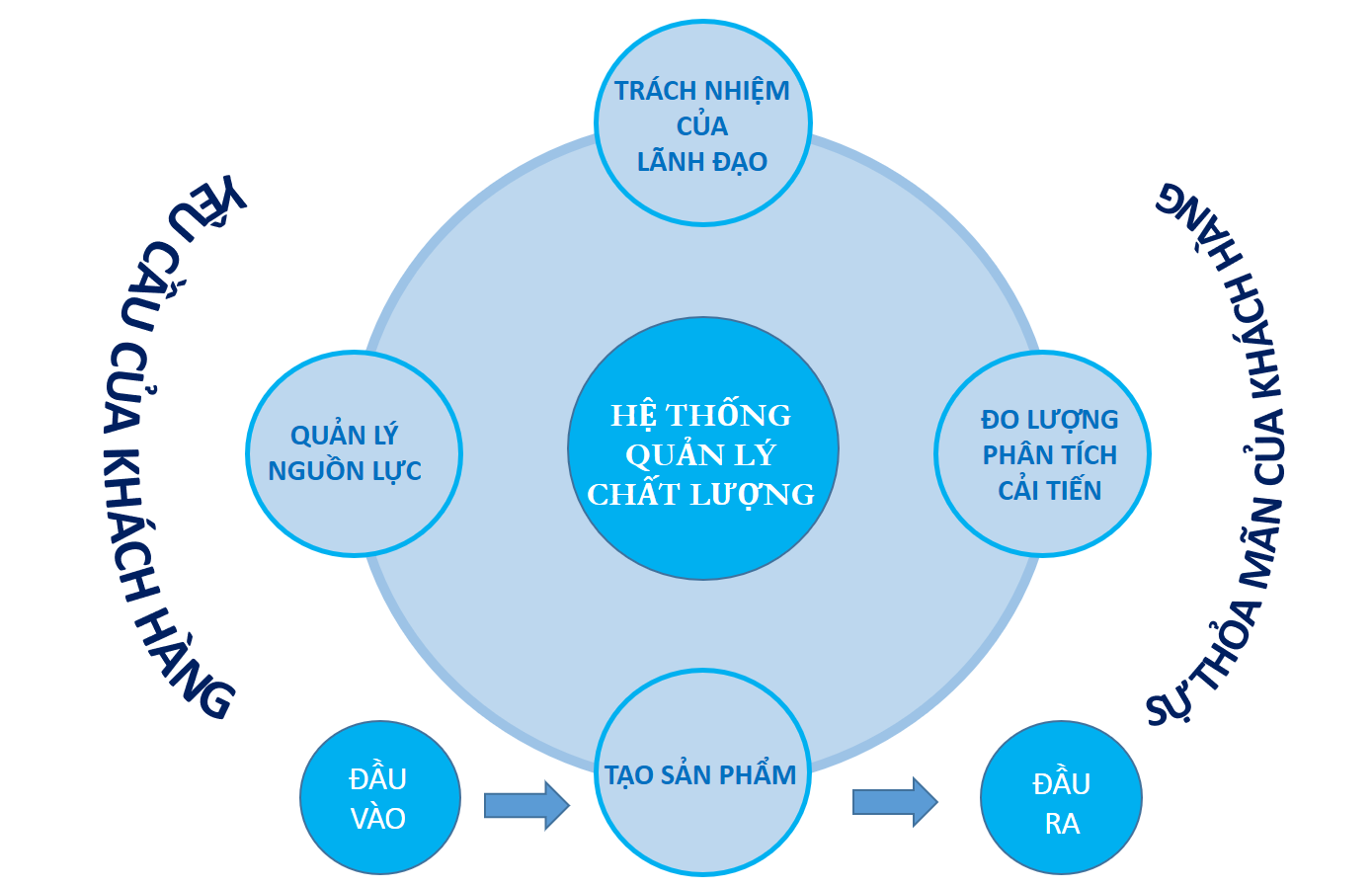
The content of the ISO 9001 standard is practically aimed at helping businesses have a simple quality management model that focuses on the essentials, avoiding wasting resources. This model is not only necessary for large-scale enterprises, but also suitable for micro, medium and small enterprises.
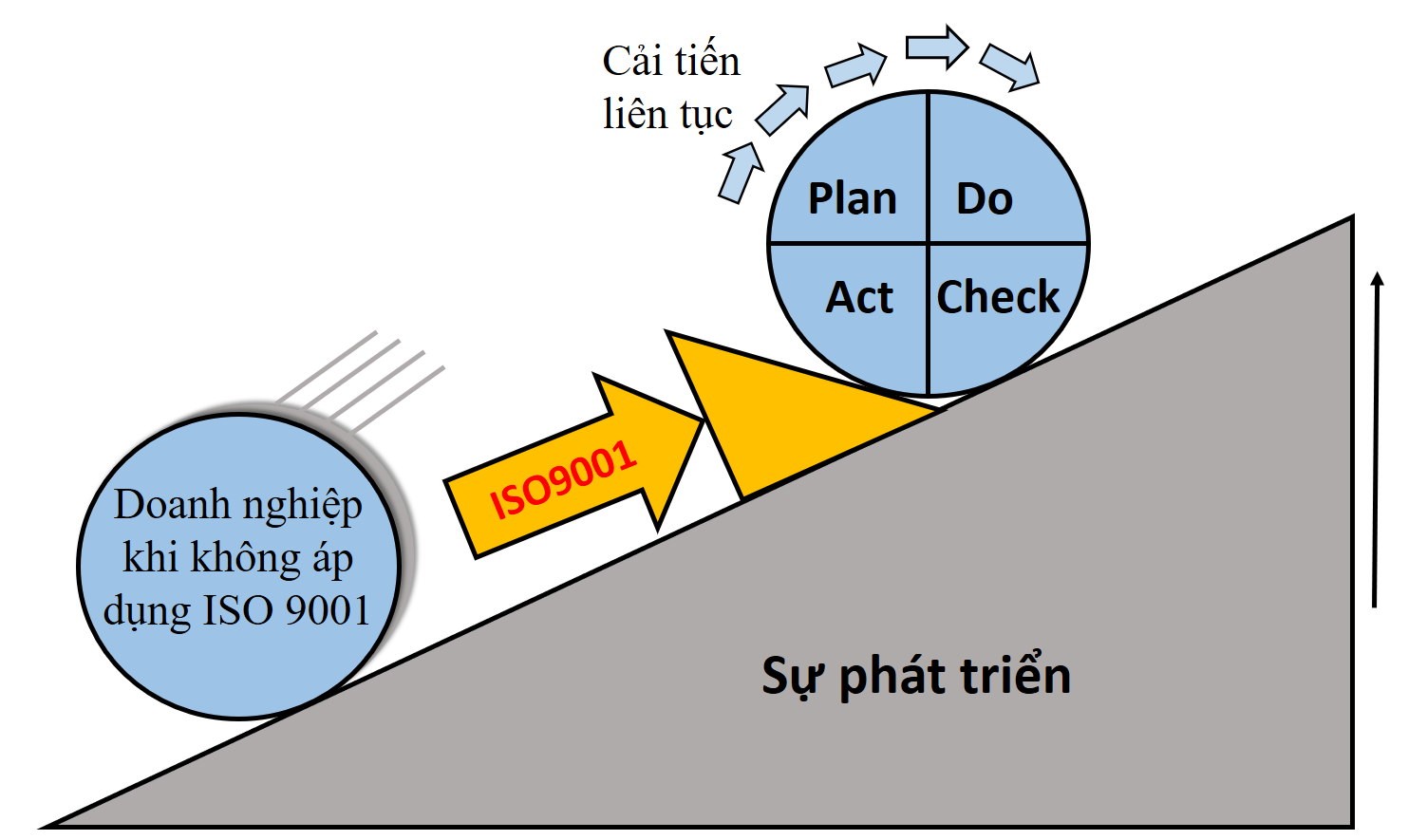
Information needs to be stored not for the purpose of inspection and testing, but to follow the Plan (Plan) – Do (Do) – Check (Check) – Action (Act) process, in which it should be stored. Pay attention to possible risks as well as exploit potential opportunities. It is this process that helps each individual in the process and the whole business to find the inadequacies so that continuous improvement can be made.
A visual description for the effect of this ISO 9001 management system is the stopping point for the deterioration of the business without a reasonable and effective working process.
In many cases, the problem is not only the standard but also the opacity of the quality management system. It may be due to the misconception that obtaining certifications is only to increase the reputation of the business or only for the purpose of selling products. We should utilize the quality management system as an investment. This investment is not so much for commercial prestige but for more efficient operation, which is why the ISO 9001:2015 standard is becoming more and more popular.
Principle 4M – 1I – 1E
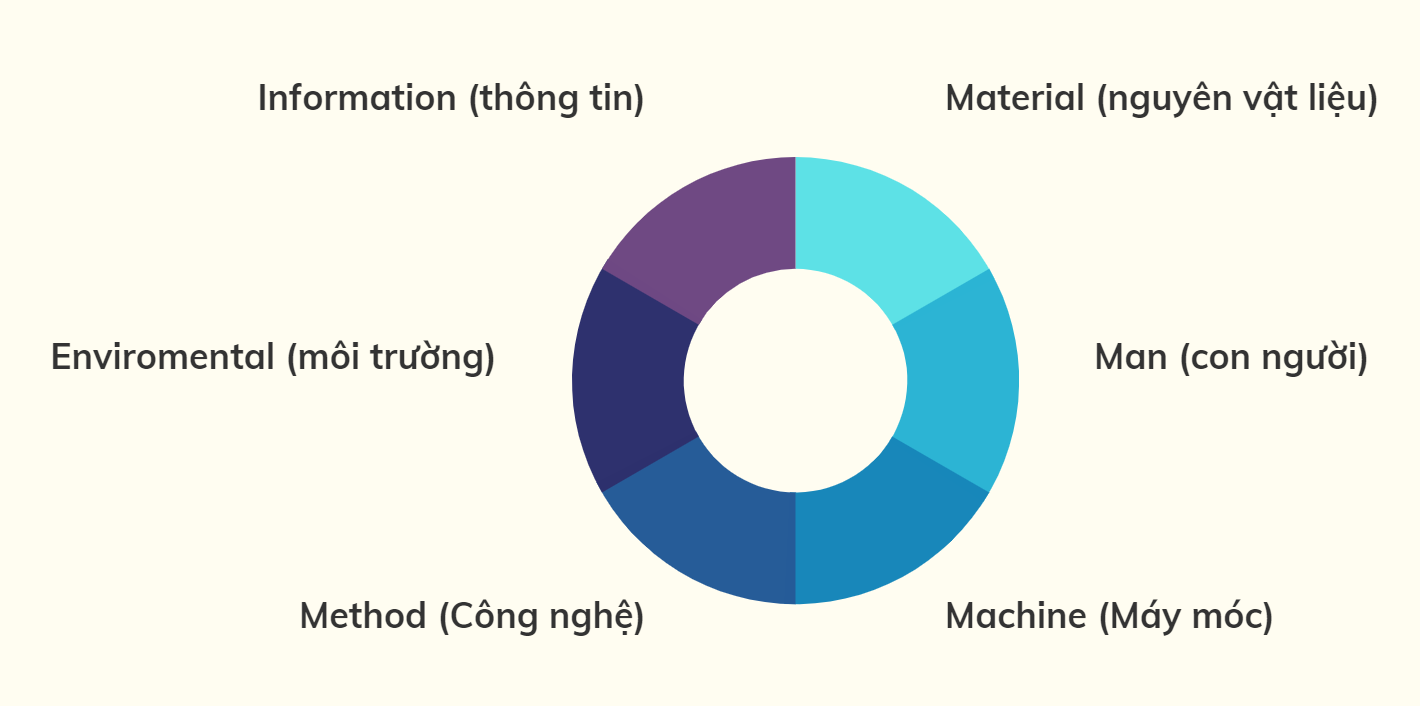
A quality management system can be built on many principles depending on the specificity of the industry. However, the principle of 4M - 1I - 1E has been evaluated by many economists as suitable for all systems. Specifically:
– Materials – Materials;
– Man – Human;
– Machine – Machinery and equipment for production and business;
– Method – Technology or production process;
– Enviromental – The environment for operating production or providing services;
Information – Exchange and receive information internally as well as externally.
Focus on the essential information
Below is a list of necessary information according to the ISO 9001 standard set forth for the construction of a maintenance quality management system shared by José María Compagni in the Italian Elevator Magazine (November 6). December 2019):
- All the stakeholders whose requirements are going to be taken into account and their needs should be listed. In our opinion, it should include customers, employees, suppliers, the society and shareholders, but we understand that a “minimum” approach might consider only the customer.
- A company could determine that its scope is exclusively focused on preventive maintenance service and leave other activities aside. Furthermore, it could justify the non-application of some of the standard requirements with arguments like the company size, as long as they are minor issues that do not affect its capacity to provide its services responsibly and increase customer satisfaction.
- Processes must be clearly recorded with a series of elements, such as the sequence or process flow, performance indicators, necessary resources, accountable person, and the associated risk and opportunitieis. Likewise it is required to keep a record of the services provided in order to feed the above mentioned PDCA cycle.
- Quality policy and quality goals. Documents reflecting the commitment to quality and the quality goals, which must be relevant, specific and measurable.
- Training certificates, recruitment and outsourcing of competent people, and any other actions enhancing the company’s competence must be recorded.
- Customers contracts. Orders and customer contracts must be retained, as well as every change made after the signing.
- Supplier control/ A document reflecting assessment and selection criteria, supplier follow-up, and any possible incident.
- Basic conditions to provide the service. This important point would require the elevator company to document the characteristics of the services to be provided and the desirable outcomes. This involves specifying the characteristics of each elevator maintained and the mmaintenance service it requires, in a separate Maintenance Plan, as well as a risk prevention plan, for each elevator. If the elevator has a manufacturer maintenance manual, there is no problem. But what if there is no such documentation? Here, policymakes would do well to oblige manufacturers to provide the necessary documentation to every owner who requests it.
- Traceability of the products used. Each product used in maintenance or modernization must have its traceability and the authorization of the people in charge documented.
- Customer information. The ISO standard includes an obligation to retain the documented information relating to any incident involving a product or service.
- Any commissioning needs a protocol that must be documented.
- Non-conformities. Incidents must be described along with their corrective actions so that they do not happen again, stating the name of the people responsible for deciding these actions.
- The required assesssments on the quality management system must be documented, including customer satisfaction surveys, supplier performance, improvements.
- Internal audits. The internal audits required by the ISO 9001 standard must keep a record of the audit programme and outcomes.
- Management revisions. Every improvement opportunity and need for changes or resources must be managed.
Of special interest is the decision on the format to be used to document the information. In our experience, priority should be given to the format that makes communication among members of the team easiest and not necessarily to the most formal or uniform one.
Quality documents should be adjusted to a distinctive layout and design that can be rapidly consulted on the wall of an office or a smartphone.
It would only be necessary to reference the corresponding document and version
More important than format is information automation. The documented information required by the system must be generated throughout the natural development of operations and automatically embedded in digital format in a cloud archive, without needing to devote resources or additional steps. The real costs that overload and severely slow down organisations are these complenetary resources or activites that can deprive a small company of its main advantage: agility and customer focus.

Through this, it can be affirmed that the quality management standard certificate is not only a "beautiful shirt" but also helps the operation apparatus of each enterprise to operate smoothly, continuously improve towards product quality. better products, saving a lot of costs and resources. Therefore, businesses should actually invest in this quality management system, thereby creating their own sustainable value to help increase competition in the market.