



According to the Chinese Ministry of Commerce, in March 2024, the country issued an action plan to promote the replacement and upgrading of large-scale equipment and implemented a "trade-in" program.
The goal of the program is to upgrade China's household and industrial equipment, eliminating old machinery that consumes a lot of energy or causes significant pollution. At the same time, Beijing also wishes to encourage consumers to spend and businesses to invest more heavily.
The program spans from heavy industries such as steel and petrochemicals to the installation of new elevators in apartment buildings and encouraging consumers to discard old washing machines to buy new, more water-saving ones... Stimulating consumption is one of the major policies and an important driver to help the world's second-largest economy achieve its GDP growth target of 5% in 2025.
Mr. Guo Chaoxian, a researcher at the Institute of Industrial Economics under the Chinese Academy of Social Sciences (CASS), said that the above measures have promoted the development of the circular economy, attracted foreign investment and innovation resources, and formed new business models. Thereby, the process of green and smart upgrading is accelerated, helping to improve safety levels as well as the resilience of the industrial and supply chains.
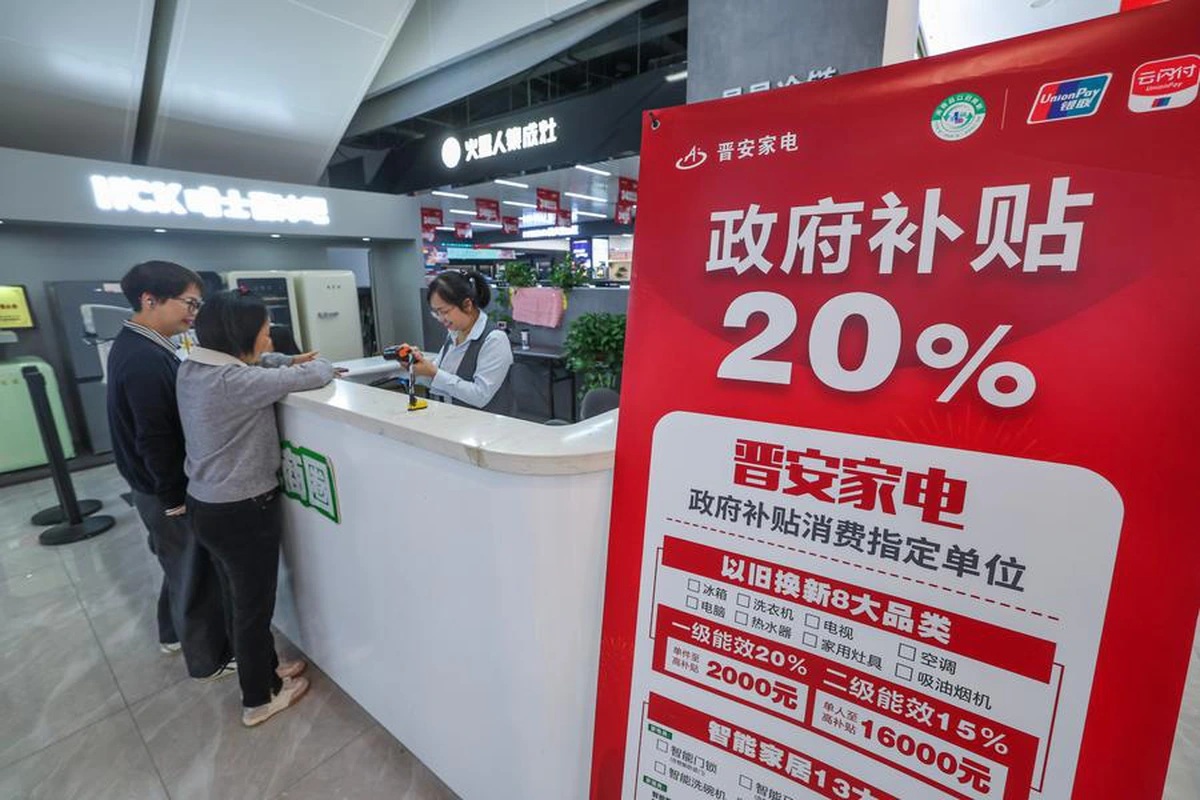 Customers apply to participate in the Chinese government's trade-in program at a store in Fuyang District, Hangzhou City, Zhejiang Province, East China - Photo: Xinhua News Agency.
Elevator industry benefits clearly from the wave of urban renovation
In this trend, the elevator industry is assessed as one of the sectors benefiting clearly, especially from the wave of renovating old housing areas.
Kone Corporation (Finland), with more than 60,000 employees globally, is actively participating in national-level programs in China through the modernization of elevators according to new standards, focusing on old residential areas – where the elderly face many difficulties in daily travel.
Mr. Joe Bao, Executive Vice President of Kone China, said: "Last year, Kone implemented one of the largest elevator modernization programs in China funded by bonds, in Kunshan city (Jiangsu province). This project set a new benchmark for the industry and became a reference model at the national level. Currently, the model has been replicated in more than 40 cities across China."
According to Mr. Bao, the integration of smart technologies such as monitoring by artificial intelligence (AI) allows for early risk detection, while the application of big data and AI analysis helps transition from reactive maintenance to predictive maintenance. Besides, digital connection with management platforms of state agencies also contributes to enhancing supervision and transparency.
Thanks to these factors, Kone recorded double-digit growth in elevator modernization orders in China this year.
 At the end of 2020, China also announced a Plan to install elevators for three million old apartments with the expectation of creating tens of millions of jobs and boosting the economy.
Otis expands in the field of renovation and upgrading
Also appreciating the potential of the Chinese market, Ms. Judy Marks – Chair, CEO and President of Otis Worldwide Corp (USA) – affirmed that China remains one of the group's most dynamic and promising markets, especially in the field of elevator services and renovation.
In early September 2025, Otis signed a contract to upgrade 106 elevators at a residential area in Baoshan District, Shanghai. Just a few days later, this enterprise continued to win bids for elevator renovation projects in Shijiazhuang (Hebei province) and Hefei (Anhui province).
According to the plan, nearly 200 degraded elevators in these two cities will be comprehensively modernized, marking a new expansion step in Otis's equipment renewal activities in China.
Ms. Judy Marks said that from improving accessibility, promoting urban reconstruction to enhancing safety thanks to AI and improving operational experience, Otis aims to develop mobility solutions closely linked to user needs, thereby contributing to a safer and more sustainable urban environment.
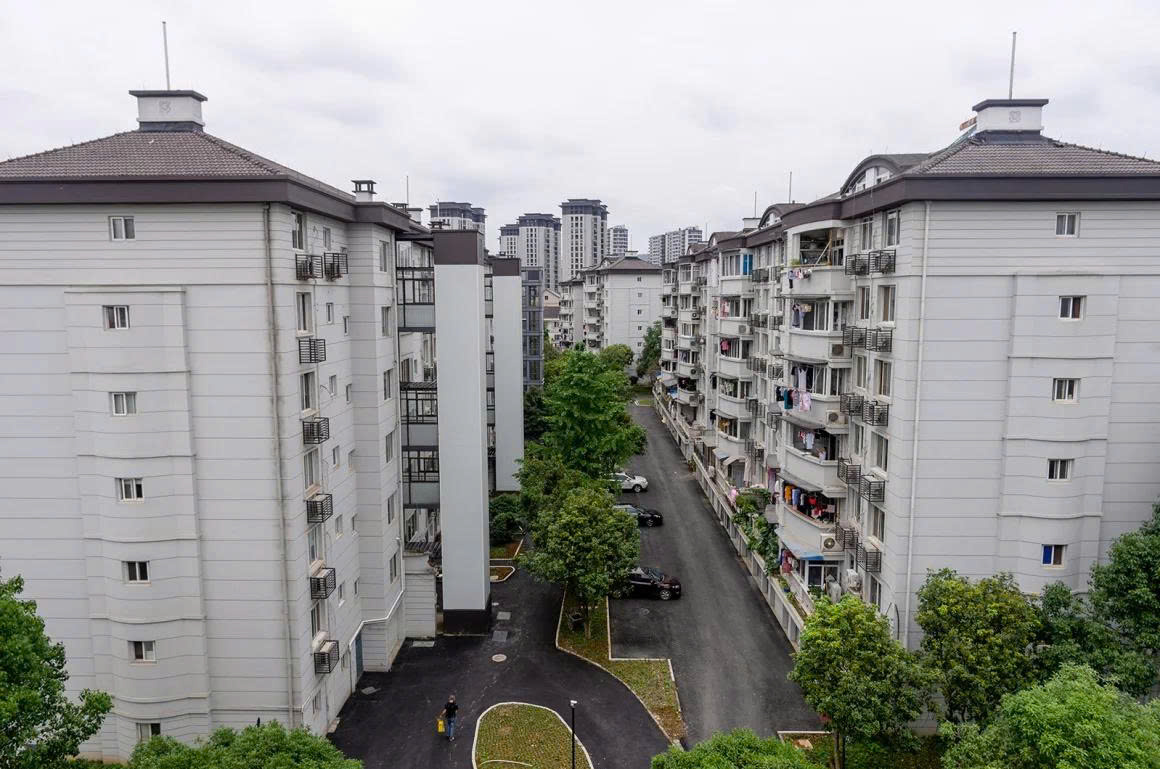 According to the China Elevator Association, the country is currently operating about 15 million elevators and escalators, adding nearly 1 million new units each year.
Confidence of international corporations in China's policy direction
Not only the elevator industry, but many other international enterprises also appreciate China's policy direction. Ms. Adele Tao, CEO of Lixil Water Technology Greater China (Japan), specializing in water technology and building materials, believes that China's promotion of "new quality productive forces" is changing the development methods of many industries.
According to her, these policies create a strong motivation for businesses to innovate and upgrade. "The new initiatives of the Chinese Government are sending a positive and clear signal to the global business community," emphasized Ms. Adele Tao – who is also Senior Vice President of Lixil.
She also said that China is currently not only a manufacturing and innovation center but also a large consumer market with increasing demand for quality, smart, and sustainable products. Lixil will continue to develop and launch products suitable for local needs first, many of which have been and are successful in the international market.
Last July, this Tokyo-headquartered group opened an International Competence Center in Guangzhou (Guangdong province), aiming to support new product development and shorten the time to market, especially for components and assemblies supplied from key suppliers in China.
'Trade-in' - Short-term driver or future barrier?
China has long repeatedly mentioned the concept of "dual circulation strategy", in which growth is led by two "circulations": the external cycle linked to global trade and investment, and the internal cycle based on domestic demand and autonomy in key technologies.
Stimulating consumption is seen as an important factor helping China achieve its 5% GDP growth target in 2025. According to the International Monetary Fund (IMF), this growth rate is still within a feasible scenario.
However, moving into 2026, the outlook becomes more cautious. Investment bank ING (Netherlands) believes that to achieve the GDP scale target of about 170 trillion yuan by 2030, China needs to maintain a growth rate of 4-5% in the coming years. Therefore, Beijing may continue to set a growth target of "around 5%" for 2026, marking the fourth consecutive year maintaining this level.
Nevertheless, the possibility of the target being adjusted down to "above 4.5%" is increasing, because since 2011, China has never kept the same growth target for more than three consecutive years.
ING forecasts China's economic growth will decrease slightly to about 4.6% in 2026. The main cause comes from weak consumer confidence, linked to the prolonged decline of the real estate market, while the outlook for external demand remains uncertain.
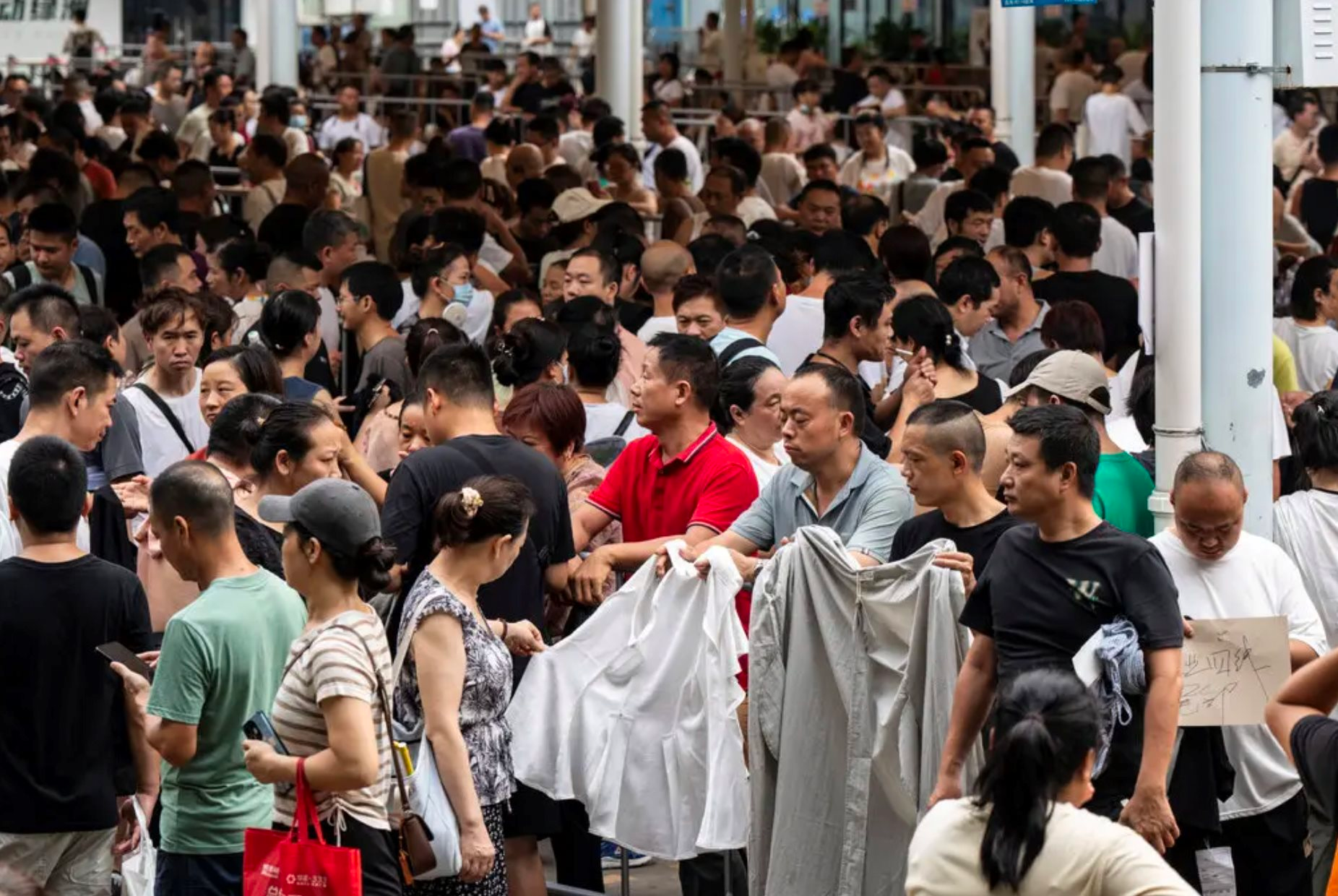 After more than three decades playing the role of a key growth engine, investment in China is facing a new turning point as the fixed asset investment index - including housing, infrastructure, and factories - declined for the first time since the late 1980s. From January to October 2025, this index decreased by 1.7% compared to the same period, with October alone recording a double-digit decrease.
According to ING's analysis, consumption is showing signs of slowing down as the positive impact of the "trade-in" policy gradually weakens, even risking shifting from a push force to a drag force. In the past few years, this program has contributed to strongly stimulating demand for cars, household appliances, consumer electronics, and furniture. However, in essence, this is a policy of "pulling future consumption to the present" and is difficult to maintain long-term effectiveness.
Reality shows that households may decide to buy a new car or washing machine when subsidized, but it is difficult to repeat this behavior in subsequent years. Typically, in the auto industry, after a period of strong sales growth in the early years of policy implementation, consumption volume has stalled in subsequent years. A similar pattern is appearing in the home appliance segment in the fourth quarter of 2025 and will likely spread to consumer electronics and furniture in 2026.
Conversely, ING also pointed out that China is facing clearer deflationary pressure in 2025, as overcapacity triggers fierce price competitions.
Declining profit margins force businesses to cut costs, lower wages, and lay off workers, thereby eroding household confidence. Weakened confidence causes the propensity to save to increase, domestic consumer demand to decrease, and this spiral turns back, exacerbating the state of overcapacity.
Other factors contributing to this negative spiral include the real estate recession and the "trade-in" policy, which, although supporting consumption in the short term, also contributes to creating additional downward pressure on prices for many groups of goods. According to ING, most of the above problems are likely to remain challenges in the coming years.
It can be seen that the "trade-in" policy has been playing the role of an effective stimulus tool, contributing to supporting consumption and growth in the context of weak confidence. However, when fundamental factors such as overcapacity, deflationary pressure, and the weakness of the real estate market are not resolved, "trade-in" is likely to only have an impact in the short term, instead of creating a sustainable driver for the medium-term phase of the economy.








![[Photos] Impressions of Vietnam Elevator Expo 2025](https://media.tapchithangmay.vn/share/web/image/2026/1/mobi6703639038935945497270_350x210.webp "[Photos] Impressions of Vietnam Elevator Expo 2025")