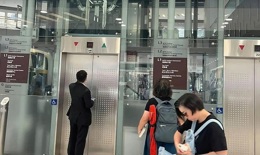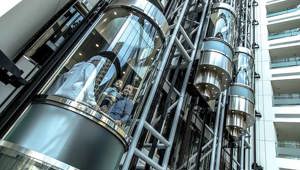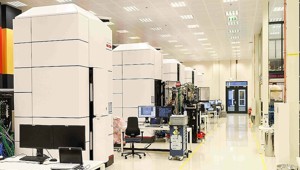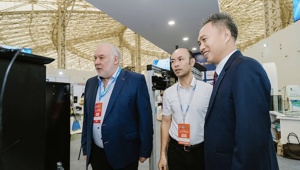




From the 2000s, cheap imported escalators from China began pushing Korean-made products out of the market. In 2014, Hyundai Elevator, the last domestic escalator manufacturer, also ceased production in South Korea. Engineers scattered into various fields, while many small-scale suppliers disappeared as well.
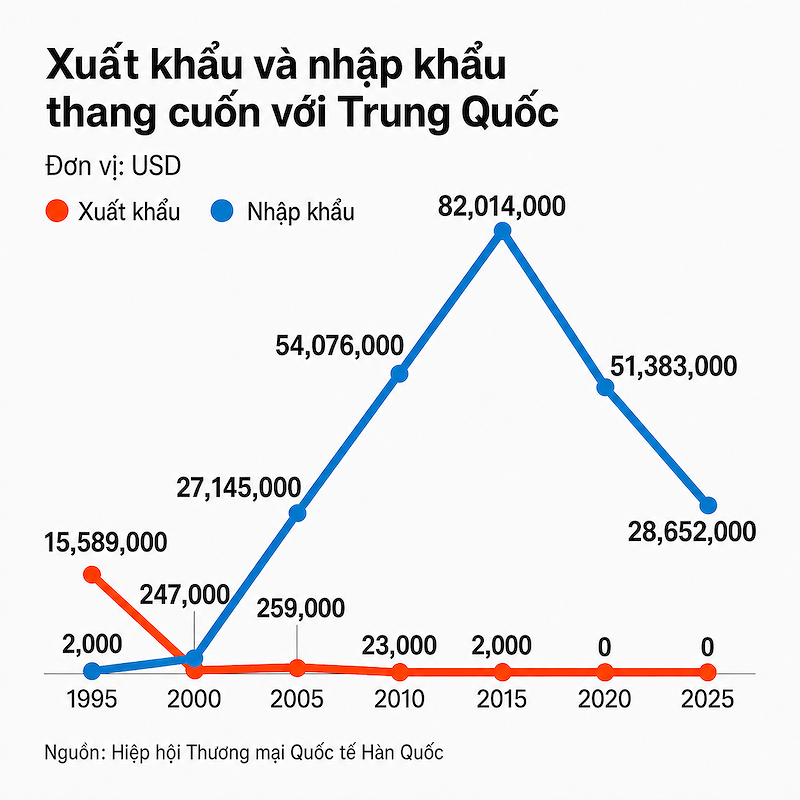
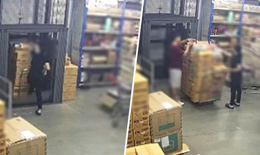
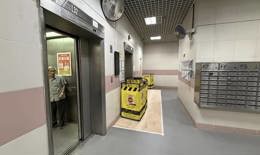
The loss of domestic manufacturing capacity has raised safety concerns. Small businesses imported Chinese escalators for installation, but when equipment malfunctioned, replacement parts were often very difficult to find.
An accident at Yatap Station in 2013, when an escalator suddenly reversed direction injuring 39 people, was later determined to be linked to a counterfeit Chinese component.
“With Chinese products of unknown origin, repairs often involve using components that look similar,” an industry source said. “But differences in durability or materials can lead to accidents.”
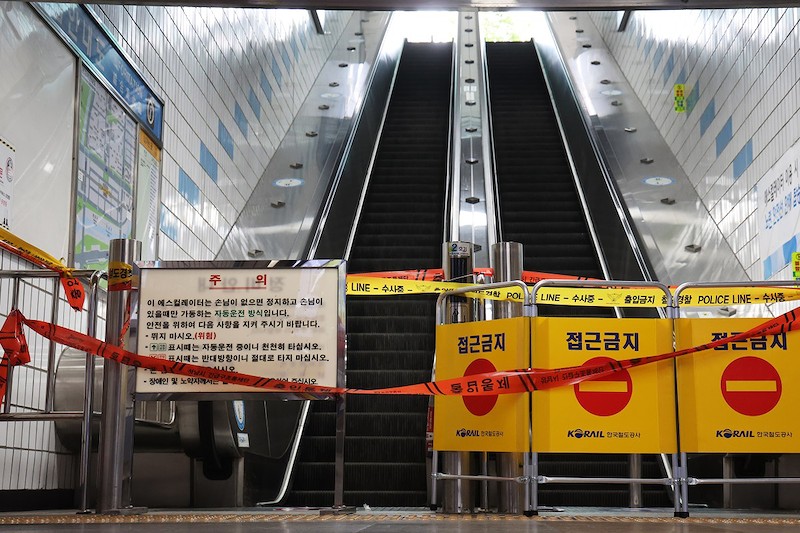
Serious escalator accidents have heightened concerns about the safety of equipment and components imported from China.
A long-awaited return
A decade after domestic production disappeared, Korean-made escalators are making a comeback.
Several companies operating in the elevator, escalator, and moving walkway sectors in South Korea jointly established a joint venture named K-Escalator to manufacture escalators in 2024 in Geochang County, South Gyeongsang Province.
All with the goal of reducing dependence on escalators and components imported from China; continuing to sustain the domestic escalator and component manufacturing industry.
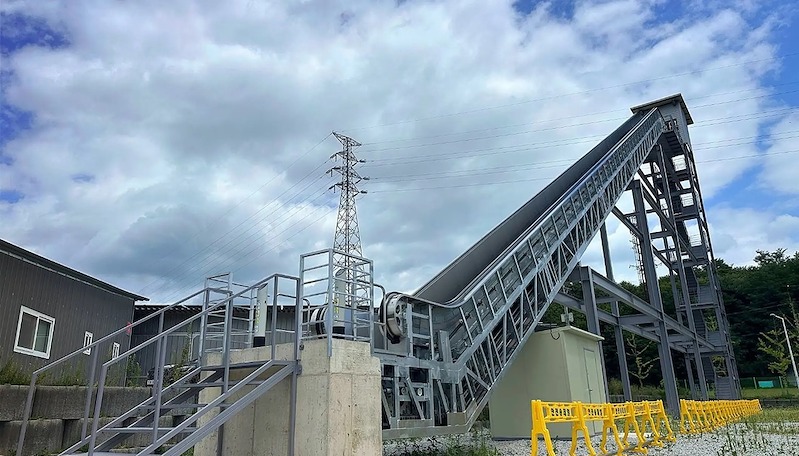
A 21-meter (69-foot) high escalator installed next to K-Escalator's factory in Geochang County, South Gyeongsang Province.
Within the factory premises, a 21-meter-high escalator stands tall as a symbol of the industry's revival. This product recently received type certification from the Korea Elevator Safety Agency, thereby allowing the company to manufacture escalators with a rise height of up to 21 meters.
“Essentially, this certification proves that we can manufacture any product with a rise height of up to 21 meters in South Korea,” shared Lee Jun-seob, CEO of K-Escalator.
K-Escalator began delivering its first products last year and achieved revenue of 4.5 billion won, equivalent to approximately 3.2 million USD.
However, whether this revival can be sustained remains an open question.
The decade-long production gap has also led to a shortage of skilled technical labor. At K-Escalator, the youngest engineer is already in their 50s, while a new employee in their 20s has only just begun learning the trade.
Had the disruption lasted longer, the industry could have faced the complete loss of its capabilities and technical know-how.
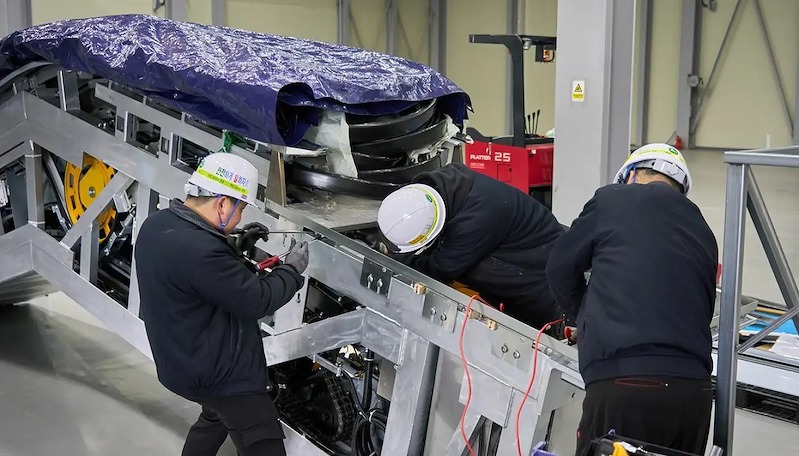
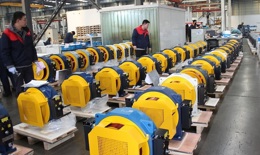
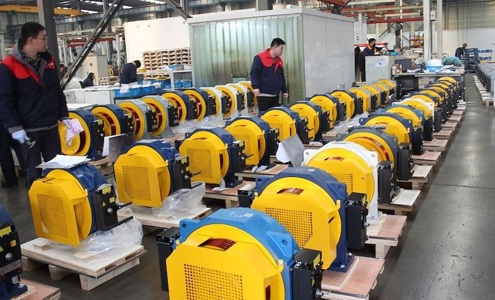
Workers assembling escalators at K-Escalator's factory in Geochang County, South Gyeongsang Province.
A difficult comeback
Many escalators installed in shopping malls and subway stations during the 1990s and 2000s are entering the replacement phase.
However, Korean manufacturers still struggle to compete with cheaper Chinese products in the private market.
K-Escalator has sought to expand orders from public projects by emphasizing safety. However, the economic downturn has reduced replacement demand in the public sector to fewer than 200 units per year, significantly lower than the approximately 400 units the company anticipated, making business targets even harder to achieve.
The company is now targeting the US market for a breakthrough and has begun obtaining the necessary certifications for exports to North America.
Chinese manufacturers dominate the global market, but growing tensions between Washington and Beijing have made it more difficult for them to enter the US market.
“These barriers to entering the US market are opportunities for us,” Lee said. “In the US escalator market, 'Made in Korea' products genuinely have a competitive chance.”
Global trade war becomes an opportunity for Korea
The disappearance and subsequent revival of Korea's escalator manufacturing industry reflects a broader structural shift that the country's industrial sector is facing.
South Korea's trade surplus with China reached 55.6 billion USD in 2018 before rapidly shrinking. By 2023, the trade balance turned to a deficit of 18 billion USD – the first time in 31 years – and continued to record deficits for three consecutive years through the end of 2025.
South Korea is projected to return to a surplus this year thanks to a surge in semiconductor exports. However, many other key manufacturing industries continue to face difficulties.
Experts suggest that Korean manufacturers need to target weak points in China's industrial dominance.
The video surveillance equipment market is one example. Chinese companies long dominated the CCTV surveillance camera industry, but supply chain reliability has become increasingly important as cameras evolve into networked devices.
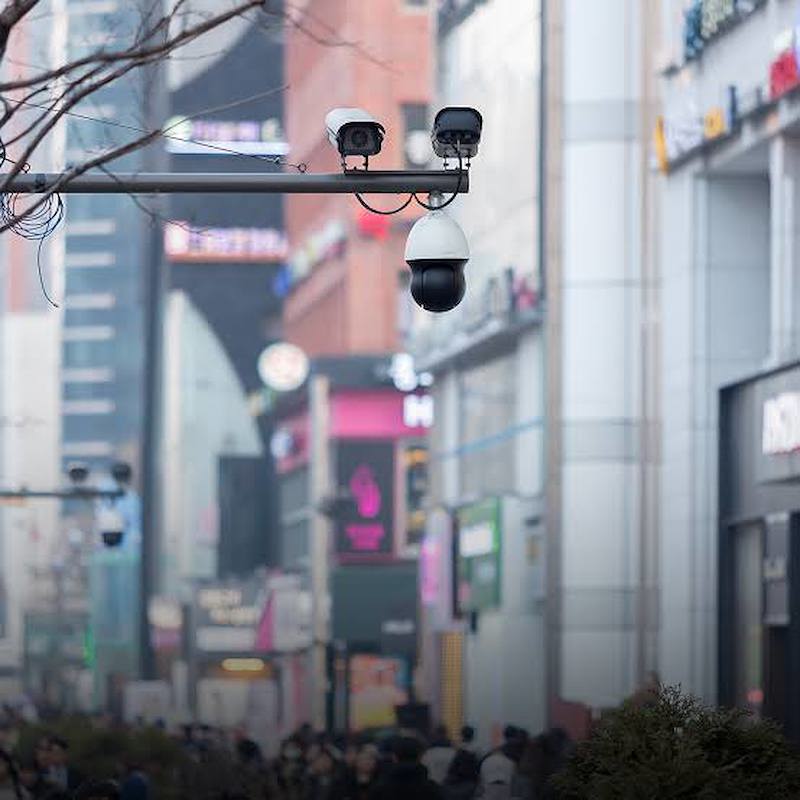
Amid cybersecurity concerns, Korean-made CCTV devices have captured significant market share in the US market.
Since 2019, the US government has begun tightening restrictions on surveillance equipment manufactured in China. This opened opportunities for Korea's Hanwha Vision, a company that already had core component technology along with a sales and service network in the US.
According to market research firm Omdia, Hanwha Vision holds a 3.9% share of the global surveillance equipment market, ranking 5th worldwide. Specifically in the Americas market, the company's market share reaches 7.8%, double its global average, ranking 3rd in the region.
Competing on value instead of price
Some Korean manufacturers have also benefited by establishing production facilities in the US as Washington increases regulatory barriers and tariffs on China.
When the US imposed anti-dumping duties on wind turbine towers to curb competition from China, CS Wind acquired a plant in the US in 2021 and gained the position of a domestic manufacturer.
Stricter US restrictions on Chinese electrical equipment have also benefited Korean companies such as Hyosung Heavy Industries and HD Hyundai Electric – both of which operate manufacturing facilities in the US.
Some argue that South Korea should leverage the period when the US and Europe are increasing restrictions on Chinese companies to accelerate its transition toward higher value-added industries.
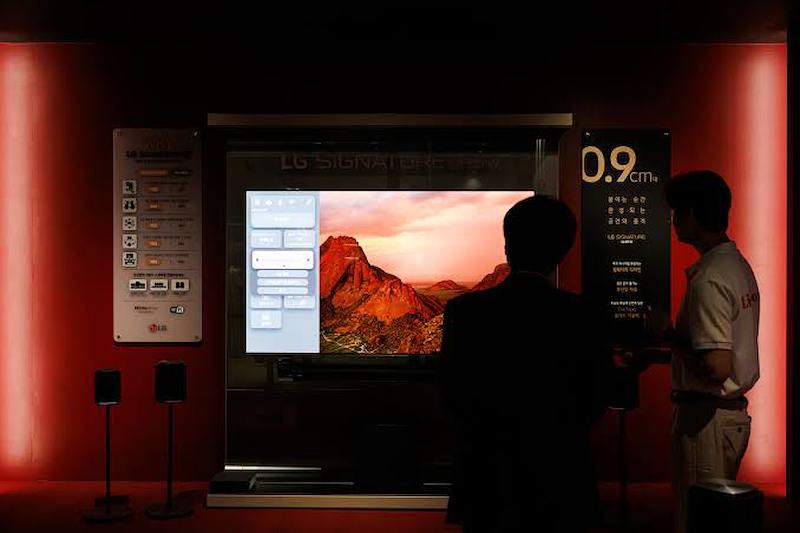
Moving toward higher-value segments is the path many Korean manufacturers are pursuing to escape the price war
Korean display manufacturers once fell into crisis when cheap Chinese LCD panels continuously eroded market share. Subsequently, Samsung Display and LG Display focused on OLED technology – a field requiring more advanced manufacturing capabilities – and the industry recovered.
The chemical fiber industry followed a similar path. Korean manufacturers gradually lost ground to cheap Chinese products in the 1990s. However, Hyosung concentrated its technology and production capabilities on high-performance spandex fiber rather than commodity products, thereby rising to lead the global market.
“Efforts by Western countries to contain China are creating opportunities for South Korea to become an alternative supplier,” remarked Lee Keun, Distinguished Professor in the Department of Economics at Chung-Ang University.
“Even in industries that have been lost to China, South Korea needs to shift into higher value-added segments where it can maintain competitiveness.”