



Patient N.M.T (65 years old, Hanoi) was brought to the hospital in a state of trauma with complex wounds in the maxillofacial region. The patient's face featured a long wound extending from the lip to the left temporal area, accompanied by comminuted fractures of the mandible, maxilla, and left zygomatic bone, effectively "splitting" the left half of the face to one side "like opening a book."
Of greater concern was the associated damage, including complete severance of critical facial components such as the root of cranial nerve VII, the parotid salivary duct, and the nasolacrimal duct. If not addressed promptly, this could lead to severe consequences for the patient's functionality and quality of life.
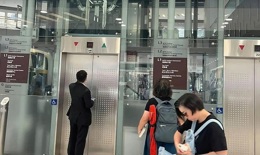
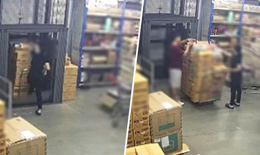
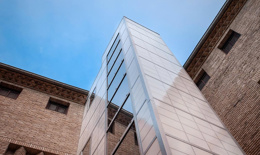
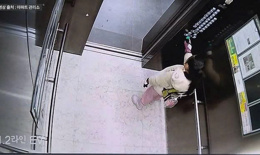
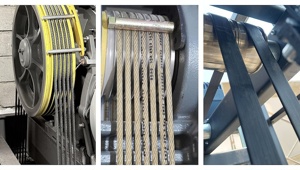
The patient's family reported that while working, Mr. N.M.T unfortunately slipped into a freight elevator shaft, resulting in a direct impact to his face against the metal edge on the top of the elevator cabin as it continued to move, causing extensive maxillofacial injuries.
Faced with this critical situation, Associate Professor Dr. Nguyen Hong Ha, Head of the Department of Maxillofacial Surgery, Plastic and Aesthetic Surgery, directly oversaw an emergency consultation involving multiple specialties: Anesthesiology and Resuscitation to ensure airway control and intraoperative safety; Cardiothoracic Surgery to address chest trauma; and the Maxillofacial Microsurgery team to manage the complex wounds and restore damaged neural structures, ducts, and glands under high-magnification microscopy.
The expert panel unanimously agreed on immediate emergency surgery that night to control bleeding, preserve function, and prevent long-term complications for the patient.
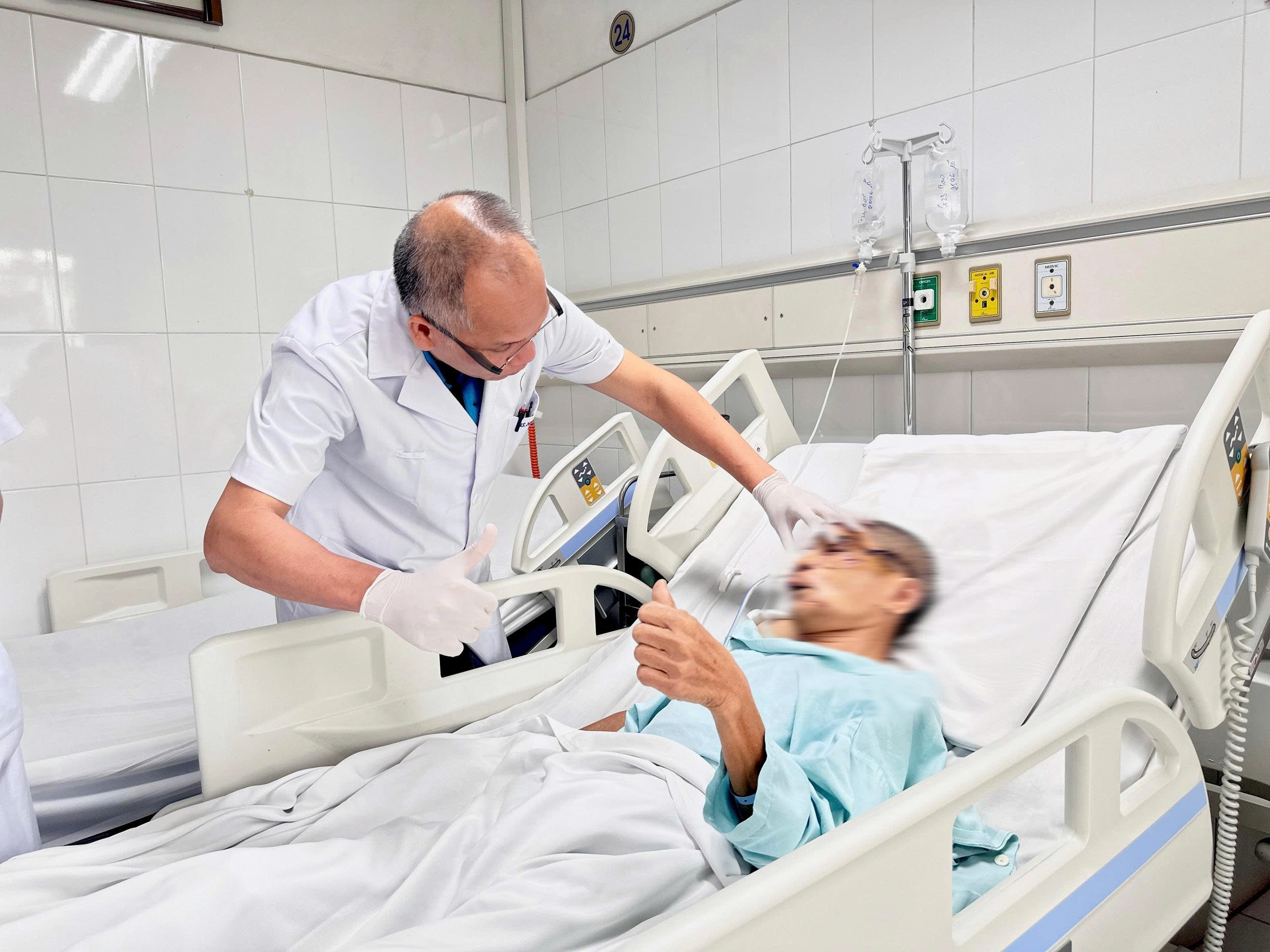
The patient's face was restored after five simultaneous surgeries.
Master's Degree Doctor To Tuan Linh, from the Department of Maxillofacial Surgery, Plastic and Aesthetic Surgery, and a member of the surgical team, explained that during the multi-hour operation, the team performed fixation of the maxilla and mandible using specialized plate and screw systems, debridement and management of the complex maxillofacial wounds, and restoration of facial anatomical structures. Notably, microsurgery was employed to anastomose cranial nerve VII right at its root near the exit point from the mastoid bone, while also reconnecting the parotid salivary duct and left nasolacrimal duct. This helped preserve facial muscle movement, minimize the risk of post-traumatic facial paralysis, and prevent complications such as salivary or lacrimal duct obstruction or fistula formation after surgery.
The surgery proceeded safely, with controlled blood loss and no intraoperative complications recorded. Postoperatively, the patient was alert with stable hemodynamics; critical structures such as cranial nerve VII, lacrimal gland, and salivary gland were preserved, paving the way for comprehensive recovery in both functional and aesthetic aspects for the patient.
https://tapchithangmay.vn/ha-noi-bi-thang-may-de-mot-nguoi-tu-vong/