The collapse of the World Trade Center Twin Towers during the 9/11 attacks was not only a historic tragedy for the United States but also a systemic failure in the engineering and safety codes of that era.
James von Klemperer, President of Kohn Pedersen Fox (KPF)—the firm responsible for designing four of the world's ten tallest skyscrapers—once shared: "We thought that 9/11 would put an end to the long-held ambition of building tall."
In reality, nearly 25 years later, supertall buildings remain symbols of national development and prosperity. Not only has their quantity increased, but the height of skyscrapers has also risen significantly.

One World Trade Center, also known as 1 WTC, began construction in 2006 directly on the site of the former Twin Towers. The structure stands 541 meters tall with 104 floors
The construction of the Burj Khalifa, the world's tallest building at 828 meters, began in 2004—just three years after the 9/11 attacks. Similarly, One World Trade Center (also known as 1 WTC), standing at 541 meters, broke ground on the exact site of the former Twin Towers, five years after the tragedy.
These are testaments to the fact that the construction industry did not surrender but evolved to become stronger and safer.
A Shift in Design Philosophy
As mentioned in the article "The 9/11 Terrorist Attacks in the US and the Vulnerabilities in Building Design and Structure," the collapse of the WTC Twin Towers exposed two critical weaknesses that led to the catastrophe: (1) Impact force and (2) Fire. The aircraft severed the load-bearing steel columns and dislodged the fireproofing on the steel floor trusses and columns. Consequently, the intense heat from the jet fuel fire rapidly weakened the steel structure, triggering a progressive collapse.

The entire load-bearing steel structure of the WTC Twin Towers collapsed during the September 11, 2001 attacks
Post-9/11, the construction industry realized the necessity of shifting the design philosophy of high-rise buildings from merely focusing on resisting conventional loads to a new, more comprehensive approach.
The National Institute of Standards and Technology (NIST) recommended adopting a "robust and redundant design philosophy."
This requires individual structural components to be designed to maintain sufficient load-bearing capacity even after deformation, and the entire structure must be built to provide multiple redundant load paths. The goal is to ensure that the failure of a few individual components does not lead to a disproportionate or progressive collapse of the entire structure, shifting the focus from conventional static and dynamic loads to unexpected, extreme events.
Material Transition – From Steel to High-Performance Concrete
Since 9/11, skyscraper construction has transitioned from using exclusively steel structures to hybrid structures combining steel frames with high-performance concrete.
The lesson learned from the WTC Twin Towers was that when fire temperatures reached 200°C, the load-bearing steel columns rapidly lost their strength. In contrast, concrete not only possesses superior fire resistance but also helps the building withstand extreme pressures from explosions or impacts, thereby preventing progressive collapse.
This shift is clearly embodied in the design of One World Trade Center (One WTC), built on the site of the former Twin Towers in 2006. One WTC features a massive reinforced concrete core, up to 0.9 meters thick. This core is constructed from High-Strength Concrete (HSC), with a compressive strength of up to 14,000 psi (96.5 MPa), the highest ever used in New York at that time.
This figure is significantly higher than the traditional concrete used in the WTC Twin Towers, which had a compressive strength of only 3,000–6,000 psi (20.7–41.7 MPa).

Simulation of One WTC's high-strength reinforced concrete core system, reaching a thickness of 0.9m
The transition to a high-strength concrete core is not only a direct solution to fire protection but also provides superior stiffness and load-bearing capacity, making the structure more resilient against unexpected incidents. This represents a fundamental shift from a "steel structure" philosophy to a "hybrid structure" approach—combining various materials to create sturdier and safer supertall buildings.
*(Compressive strength of concrete is the maximum compressive stress that concrete can withstand before failure, calculated by dividing the load by the cross-sectional area of the specimen, typically expressed in MPa or psi).
Ultra-High Performance Concrete and Fireproofing Coatings
Today, to enhance durability and blast resistance, researchers have developed Ultra-High Performance Concrete (UHPC) and Ultra-High Performance Fiber-Reinforced Concrete (UHPFRC).
Millions of microscopic steel fibers or high-strength fibrous materials are mixed into the concrete, improving cohesion and preventing the propagation of cracks caused by explosions or strong impacts. The compressive strength of these concrete types has increased significantly, reaching 15,000–30,000 psi (103.4–206.8 MPa).

Fiber-reinforced concrete is a composite material consisting of concrete and reinforcing fibers, which may include steel fibers, glass fibers, asbestos fibers, or carbon fibers. Each type of fiber imparts different properties to the material.
Additionally, fireproofing materials have been improved. Fire-resistant coatings (spray-on fireproofing) and mortars have been upgraded for better adhesion (bond strength), ensuring they do not easily delaminate upon impact. These new coatings can withstand temperatures up to 1,000°C and maintain protection for several hours.
Improvements in Emergency Egress and Evacuation Systems
Following the 9/11 attacks, design standards for egress systems and evacuation methods were also significantly elevated:
Emergency Staircase Design:
New regulations require increased separation distance between stairwells (remoteness), a greater number of stairwells for very tall buildings, and an increase in the minimum width of stairs to 66 inches (approx. 167.6 cm) to facilitate simultaneous occupant evacuation and firefighter access. Stairwell construction materials were also improved, utilizing better load-bearing and fire-resistant materials like reinforced concrete instead of easily destructible drywall (gypsum board).
Other improvements include:
- Stair Pressurization Systems: Maintaining positive air pressure to prevent smoke infiltration into stairwells.
- Photoluminescent Markings: Guiding evacuees in case of power failure.

The costly lesson of overcrowding and congestion in the WTC stairwells led to radical changes in egress design standards.

A simulation of One WTC's core structure demonstrates how this new building addresses the limitations of the former Twin Towers through a high-strength reinforced concrete core, zonally arranged emergency stairwells, and the incorporation of occupant evacuation and fire service elevators for emergency scenarios.
Occupant Evacuation Elevators (OEE)
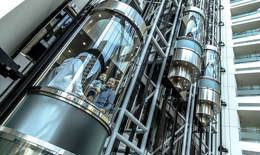
For decades, the fundamental safety rule was "In case of fire, use stairs, do not use elevators." However, NIST reports following the 9/11 attacks proposed a revolutionary concept: Occupant Evacuation Elevators (OEE).
This concept was driven by the realization that evacuating thousands of people from supertall buildings via stairs is extremely time-consuming and could take over 2 hours for a 50-story building. OEEs are designed to operate during emergencies, featuring resistance to heat, smoke, and water, along with a backup power supply.

The building's fire alarm system will automatically activate these elevators, providing clear audible instructions to users. The elevators will evacuate people floor by floor, prioritizing floors furthest from the exit discharge level. This change not only expedites the evacuation process but also provides a safe egress route for people with disabilities and those unable to use stairs.
The Legacy of 9/11 and the Future of Supertall Architecture
The lessons from the tragedy have been institutionalized and integrated into building codes worldwide (such as the International Building Code - IBC), creating a solid foundation for the development of safer and more resilient skyscrapers.
From the shift to high-strength concrete cores and progressive collapse resistance to the improvement of stairwells and the advent of evacuation elevators, each change represents a technical solution to challenges once deemed insurmountable.

Average height of the world's 100 tallest buildings.
These lessons have fostered innovation, interdisciplinary collaboration, and a deeper understanding of the relationship between architecture, engineering, and human safety. Modern supertall buildings like the Burj Khalifa, Merdeka 118, Shanghai Tower, or One WTC are living proofs of this transition.
The future of supertall design will continue to be a complex balance between safety, cost, and aesthetic vision, while remaining ever-ready to face new challenges in a constantly changing world.
https://tapchithangmay.vn/vu-tan-cong-11-9-thay-doi-hoat-dong-so-tan-tai-toa-nha-cao-tang-ra-sao/