




EM – Regardless of the business, when the organization is small, the operation is relatively easy in the form of mutual protection. But as the organization becomes larger and larger, the movements of its members need to be governed by written or unwritten rules, collectively known as corporate culture. There will be no stops on this unique cultural development journey.
Much influenced by the village culture
One of the "four pillars" of contemporary Vietnam's history, Professor Tran Quoc Vuong once commented: "In the past and even until recently, Vietnamese civilization - still belongs to the category of wet rice civilization, Vietnamese culture is village culture”. Therefore, the two basic characteristics that embrace throughout the traditional Vietnamese village culture are community and autonomy.
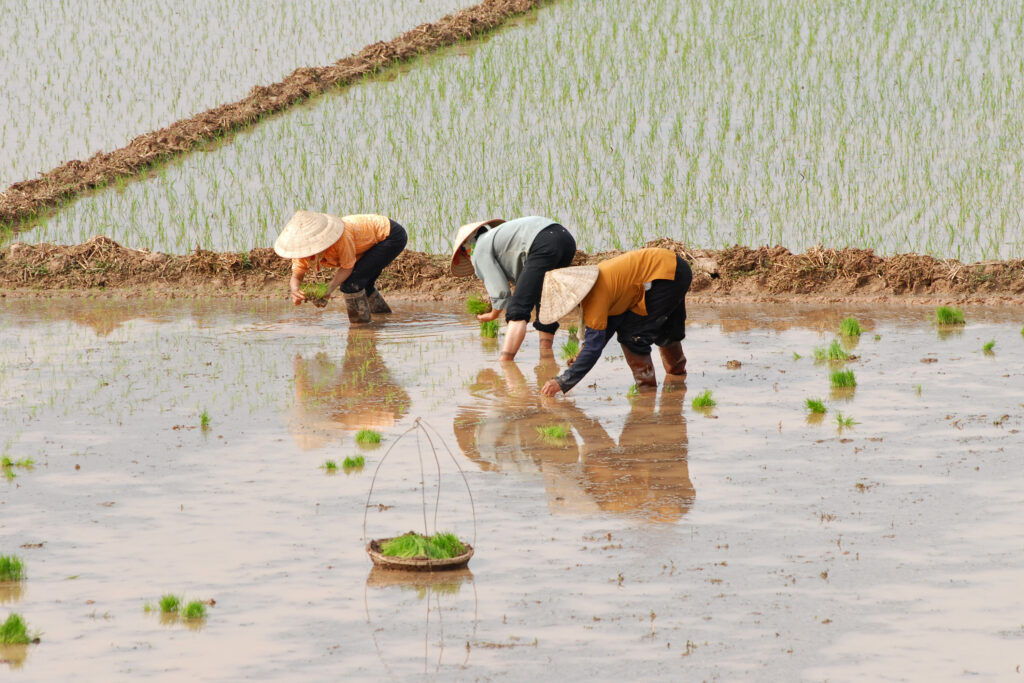
Community is the basis for creating homogeneity in many fields such as ethnicity, same age, compatriots, or colleagues. Homogeneity on a larger scale will create compatriots. It is this feature that has helped the Vietnamese people to become united, attached, and treat each other as brothers in the family.
However, besides the positive side, the homogeneity of village culture also revealed many limitations. Because of the emphasis on homogeneity, it is possible that in many cases the individual will be destroyed and dissolved into social relationships. It spawned a state of mind that has even been passed down orally as a life experience: The wise cannot win a group of idiots!
Therefore, when all factors are leveled in a collective, it will result in dependence leading to thoughts of peace, respect, and lack of decisiveness when solving problems.
In addition, when forming each hamlet, there will be a separate system of rules of conduct established called "village regulation", essentially forming different interest groups. This will lead to local thinking.
It is these thoughts that are deeply ingrained in the Vietnamese culture, so it is not difficult to understand when these attributes enter Vietnamese corporate culture so naturally that it is difficult for people to recognize. Even when people do recognize, it is still hard for them to change.
Those who work for a long time in an enterprise often have a mentality of looking down on and bullying parts of the company that are young or new to the company. This dangerous mentality will hinder the contribution efforts of new members who are in the process of integration, which results in the organization not receiving valuable and important comments for improvement, change that gradually becomes stagnant.
On the other hand, new employees, instead of being sympathized, supported, and guided, stumble upon an invisible wall of scrutiny, leading to a lack of motivation to devote, no more excitement, and a gradual decrease in connection and at some point will leave the organization.
If we want to change, what should we base on?
Must bring benefits?
As analyzed, it is not difficult to realize that the village culture has been deeply rooted in the cultural roots of the Vietnamese people, having a great impact on the culture of businesses. But is it easy to change to overcome these limitations? Instead of looking for a basis based on some theory, follow the story of the HH’mong culture.
"There is no mountain higher than the knees of the H'H’mong" is a saying that shows the cultural habits of the H’mong people living in the highest and most remote places.
Ngai Thau Thuong is probably the highest village when it is located next to the top of Ma Cha Va mountain which is cold all year round, at an altitude of 2,300 m above sea level. With such a harsh climate, the H’mong people cannot plant rice but can only grow one crop of corn and graze cattle in the forest. Poverty is like wind and clouds, and poverty covers the whole village from generation to generation.
"Why don't you go down the mountain? You will be happier there.", I turned to ask Thao Lu, the village chief. He did not answer immediately, but took a sip of hot tea, narrowed his eyes, and looked into the distance, then let out a sigh: "I have persuaded our children to go down, but there is too little land, because they are not familiar, so they left there again". He just said that, but I understand that it is because of cultural differences that the H’mong people are discouraged.
This is also the reality that many H’mong people go down the mountain and then return to their villages. The cause stemming from the lack of means of production is only a part, but perhaps the main one lies in the vulnerability when the collision of cultures occurs. The H’mong feel lost in the new land when the old cultural habits have been ingrained in the subconscious and passed down through generations. Meanwhile, if the H’mong people have not yet seen the practical benefits, they will return to their original culture to rely on.
Back to the story of corporate culture, it is not simply the rules that are promulgated in writing such as "village regulations" or wall slogans that can create a homogenous cultural flow. Those rules only "mold" people into the framework to a certain extent, but the characteristic of "finding the roots" always appears and pulls people in the organization to the instincts of the village culture, like the H’mong people.
There are many cases when there is no management, the department or organization of the business becomes lack of discipline, does not work with full responsibility, ignores the process, and lacks coordination, …
Obviously, if in such an organization, what employees "fear" is afraid of managers with strict and serious supervision, rather than voluntarily implementing the rules in the working environment. Just like the story of the H'H’mong, when individuals in an organization do not see the benefits when they seriously implement the common rules, it is only forced, "willing speech but unwilling heart” which make the gears of the organization operate will be out of sync, which is dangerous in enterprises.
That's why we need a corporate culture. It is like a directional guide, guiding the thought flow of organizational members in one direction to create strength in action, and accelerate business.
Action from the captains?
In an organization, it is divided into many smaller organizations that take on separate roles and functions. At the head of each sub-organization are department heads, responsible for leading and directing the work of individuals to achieve the expected goal: Target!
"The movement of the group will depend on the leader of that group", this saying is seemingly drawn from a whole process, to see the important role of each position at the top of the department in building culture. Therefore, management positions need to pioneer in rethinking the orientation to contribute to building corporate culture.

Firstly, the higher you go, the lonelier you are. That is the feeling that leaders will have to experience at each level. That's because no one is knowledgeable enough, big and strong enough to comfort and share difficulties with them. Those are many problems without precedent, do not know who to ask. They have to be on their own, make their own decision and bear its consequence. If you succeed, you will become a hero, if you fail, you will be a criminal in everyone's eyes, this is very clear.
Therefore, if you want to become a good manager, you must actively train yourself, know how to inject yourself with "vaccines" to avoid being too emotional, sensitive, and vulnerable in relationships that affect your capability of solving problem. They must be able to self-heal. Successful leaders all have this resilient quality.
Secondly, build cross-cultural management capacity. Multinational companies are very difficult to manage cross-cultural. This increases conflicts between offices due to differences in original cultures, ways of addressing issues, and thereby causing misunderstandings, internal rifts, and ineffective coordination.
Even within a country, the cultures of the three regions of the North, Central and South are also different, so the way problems are raised, language communication, etc. can also create significant misunderstandings. Therefore, managers must understand and master these situations. At that time, how to skillfully connect all cultural areas to solve work without friction and solve work goals.
Thirdly, it is necessary to have the right perception to have the right "ego". That is self-respect. If you can't control your ego, it's easy to become narcissistic, lack of control leads to winning and losing, and aggressiveness, which negatively affects work result. This leads to a decrease in the value contribution to the organization due to inefficiencies from the department that the leader is managing. It will also make them isolated, lost, and disadvantaged. If this goes on for a long time, it will create a working environment with a gloomy, "toxic" atmosphere.
President Ho Chi Minh once stated that culture is the totality of material and spiritual values created by mankind with the way in which they are used, in order to make ends meet, and at the same time, it is also the purpose of the human race. This concept has covered and influenced the development of corporate culture in Vietnam. Therefore, building corporate culture is a journey with no end, but each step of the journey, businesses adjust themselves to create a unique and bold culture that is suitable to become developing incentives.
Culture drives behavior, which is directly proportional to the effectiveness of organizations and businesses. Therefore, building corporate culture is a journey with only a beginning and no end.
Just like the journey – Gama (*).
(*) Gama in Sanskrit means journey.