



Seminar: Paving the Way for Art in Elevators
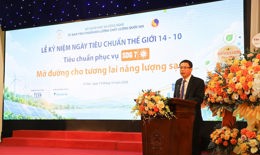
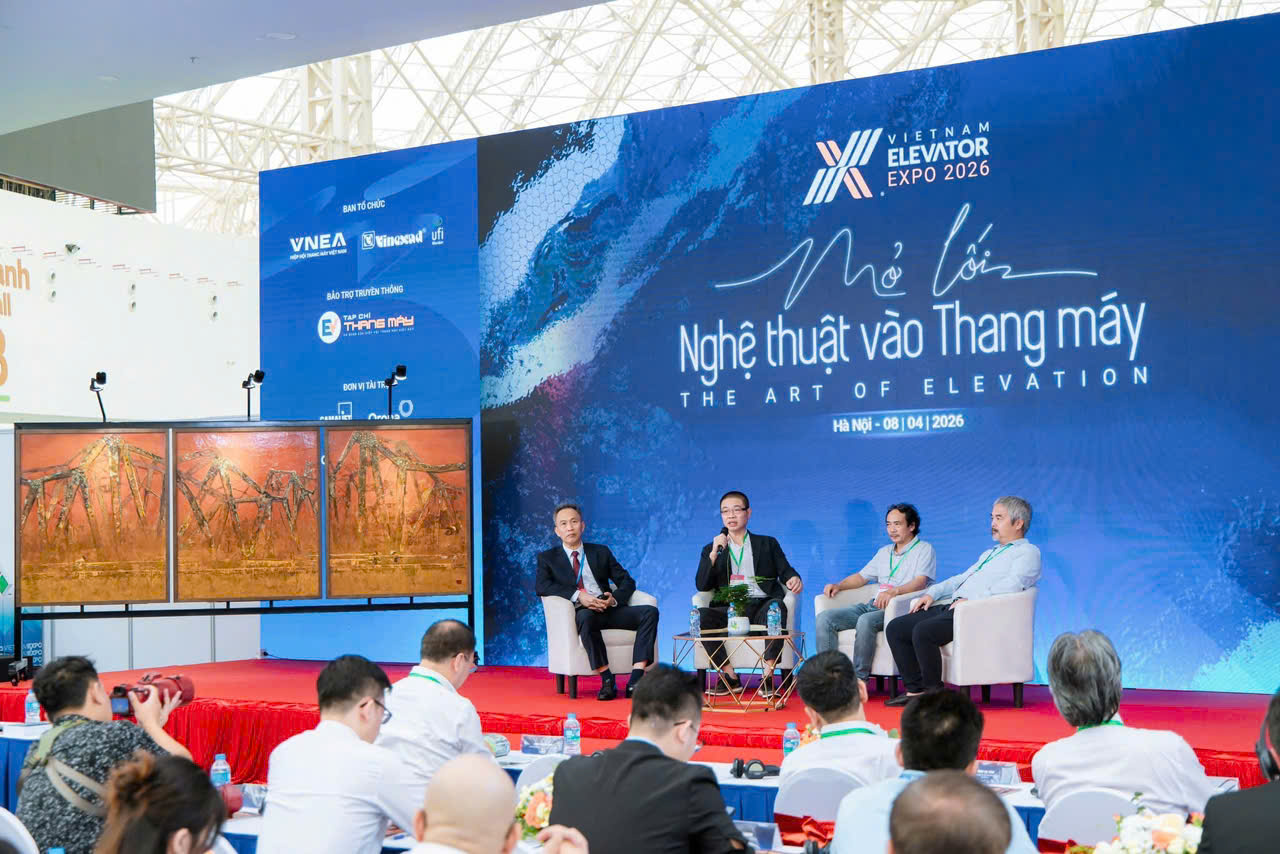
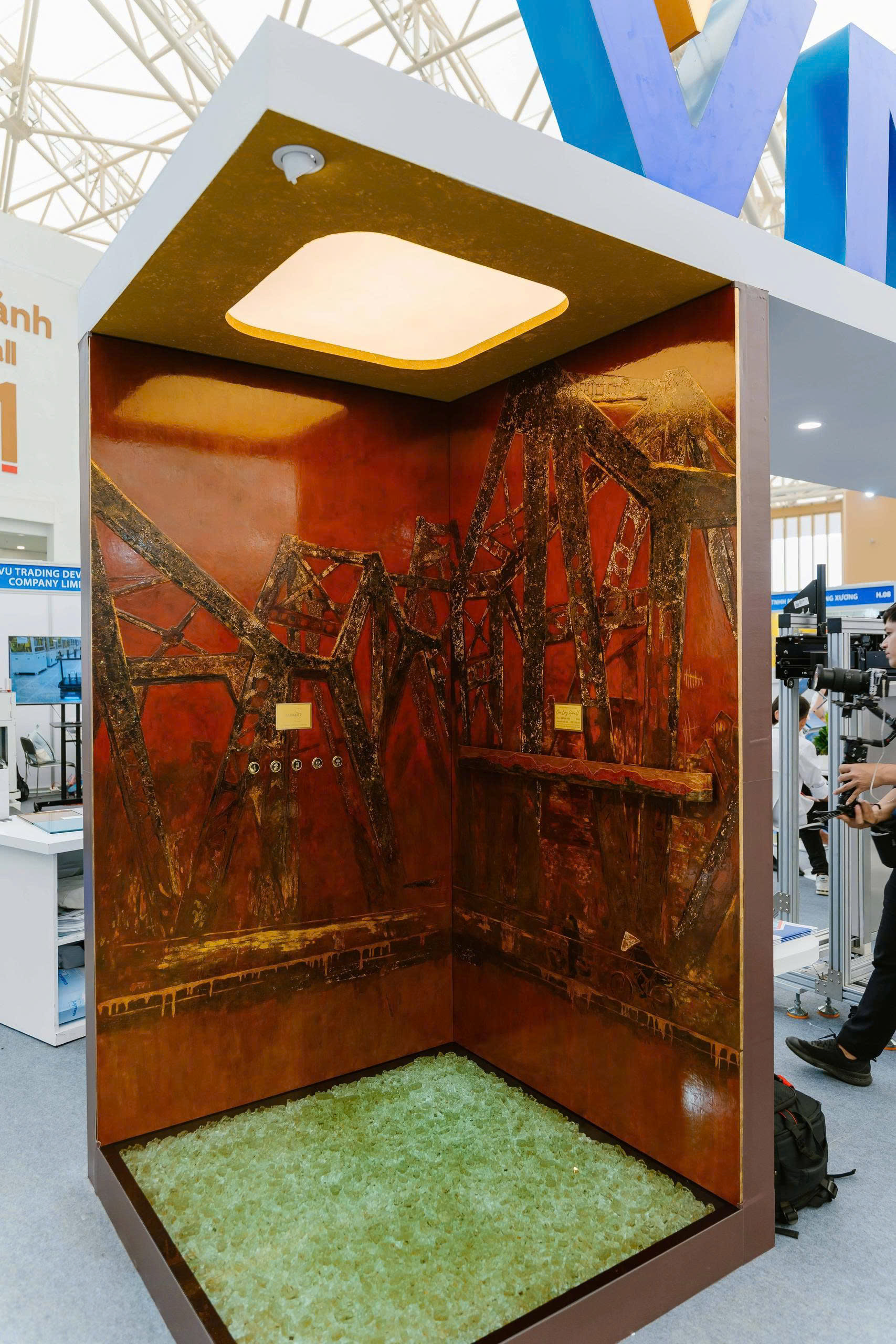
At the seminar "Paving the Way for Art in Elevators" held on April 8, 2026, within the framework of the Vietnam Elevator Expo 2026 Hanoi, the first elevator design in Vietnam applying lacquer art was introduced to the public. The project was carried out under the guidance of the Vietnam Elevator Association and implemented by the GamaLift brand.
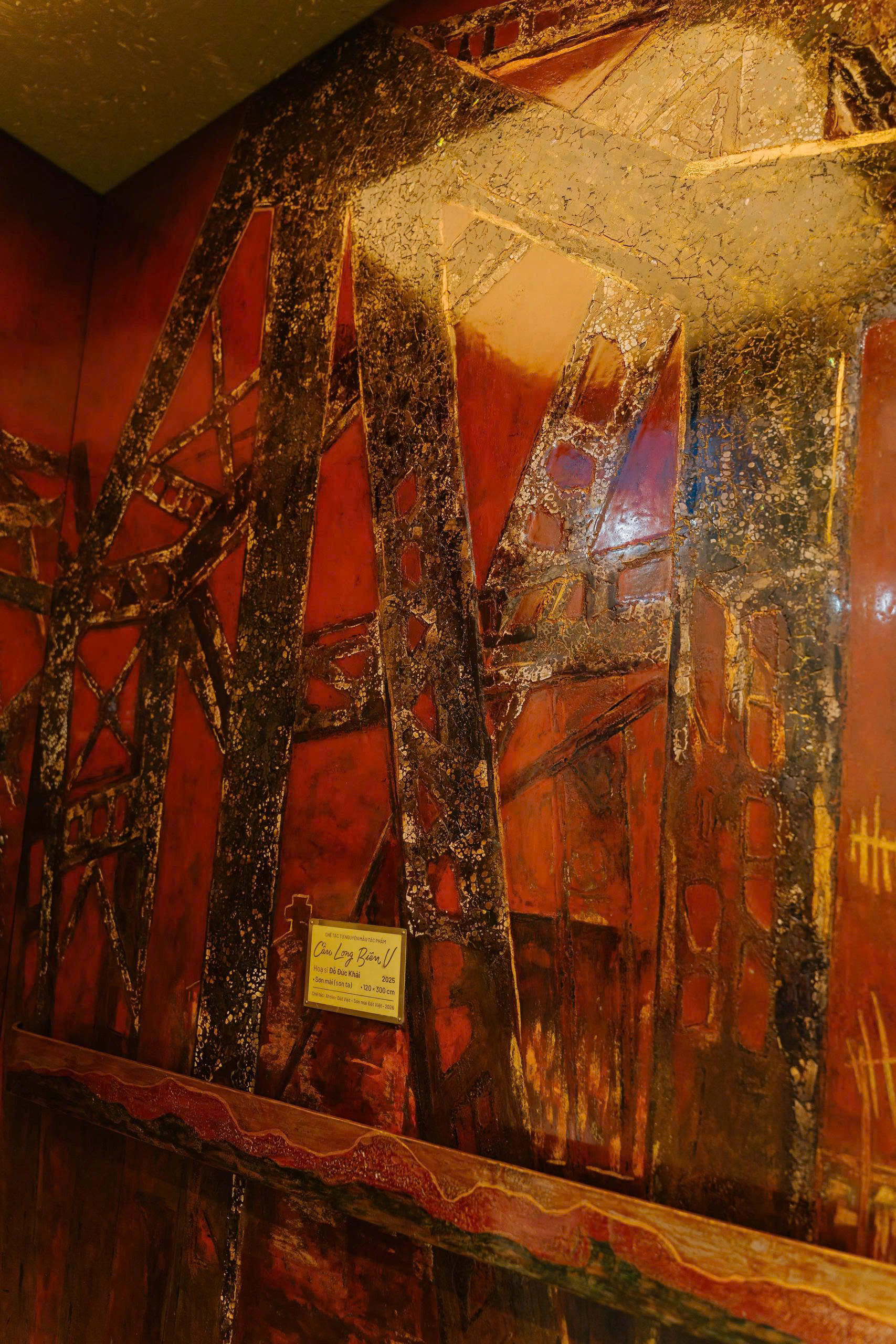
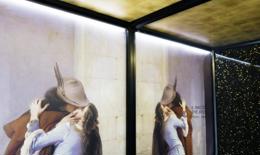
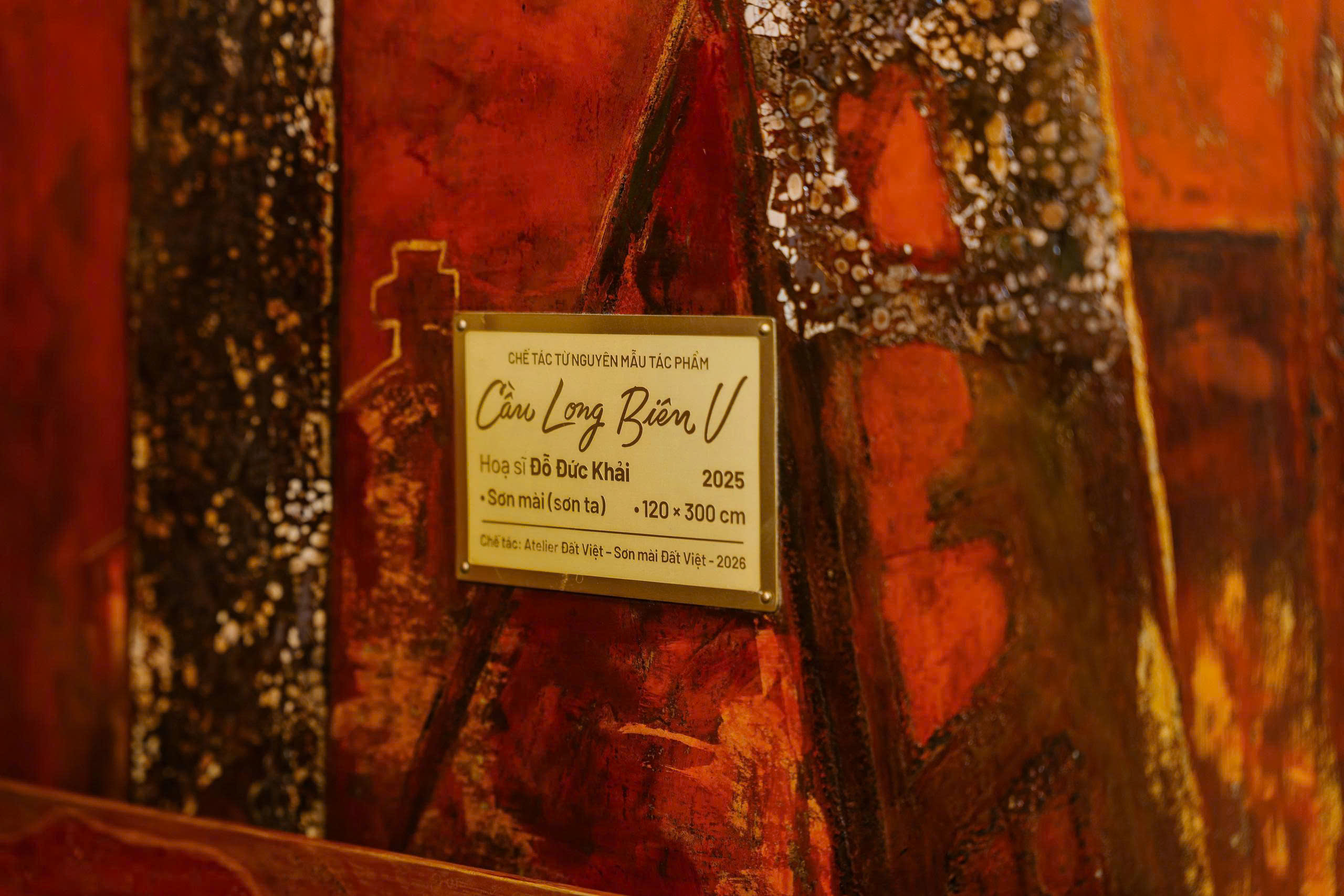
The elevator cabin was crafted based on the original artwork "Long Bien Bridge V", created in 2025 by artist Do Khai; adapted through the collaboration of the design team: VNEA, GamaLift, and Son Mai Dat Viet
Choosing 'son ta' (Vietnamese lacquer) – a material rich in the depth of Vietnamese fine arts – as the primary design language, the lacquer art elevator design project effectively exploited the characteristics of multiple layers, visual depth, and interaction with light, thereby creating new aesthetic experiences within the elevator space.
The project team gathered renowned lacquer artisans and artists such as painter Do Khai, painter Tran Dan, and the unit Son Mai Dat Viet. From a material traditionally familiar in exhibition spaces, lacquer was researched and transformed to suit the specific operational environment of an elevator, requiring a combination of aesthetics, technique, and durability.
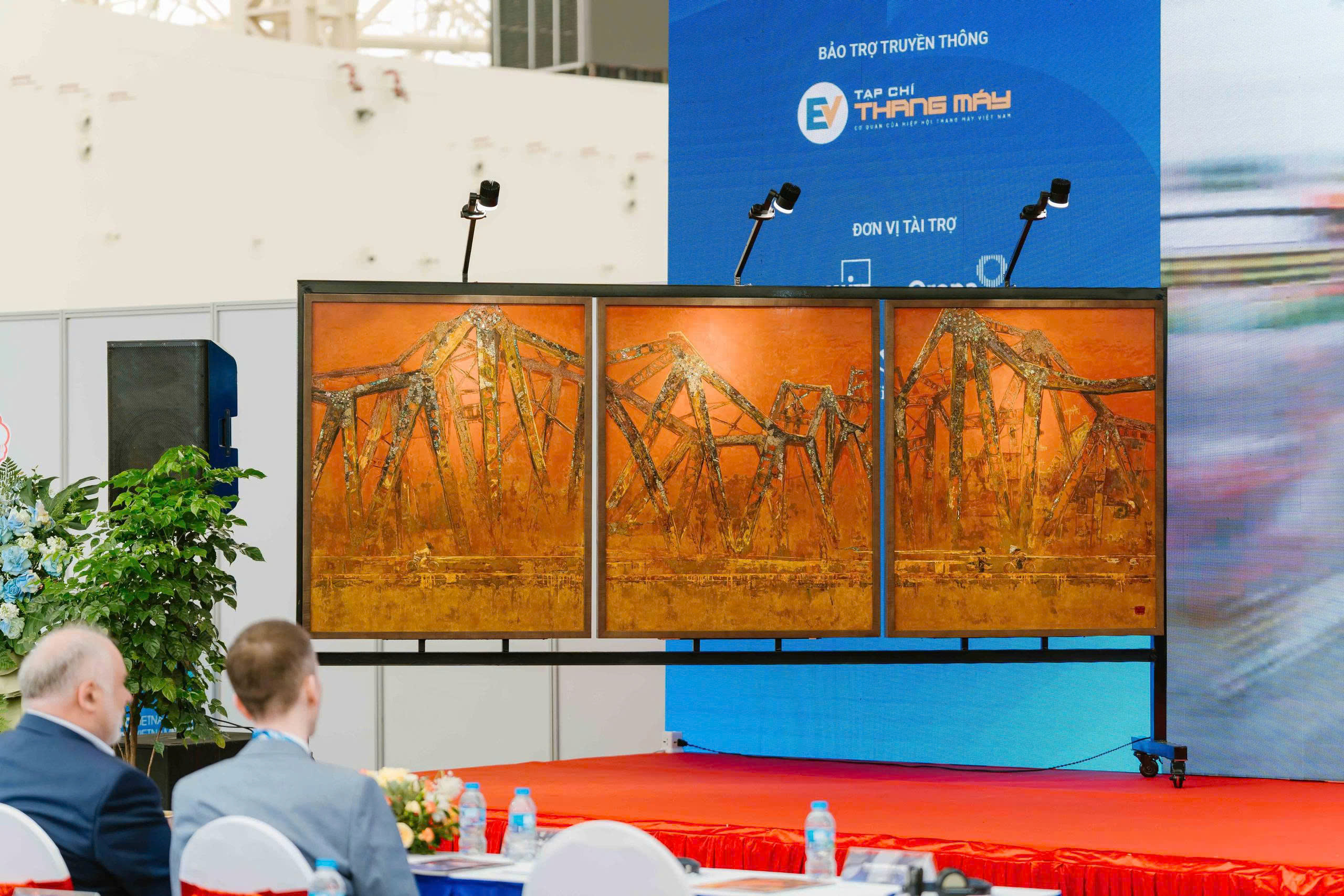
The artwork "Long Bien Bridge V" by lacquer artist Do Khai was also exhibited and introduced to the public
Assessing the project, Mr. Ma The Anh, Director of the Department of Fine Arts, Photography, and Exhibition, highly appreciated the initiative of the Vietnam Elevator Association in opening a new approach, integrating traditional Vietnamese art into products serving daily life like elevators. This not only contributes to enhancing aesthetic value but is also an effective way to disseminate culture.
"Integrating art into construction projects is a practical direction, helping art to be directly present in daily life," emphasized Mr. Ma The Anh.
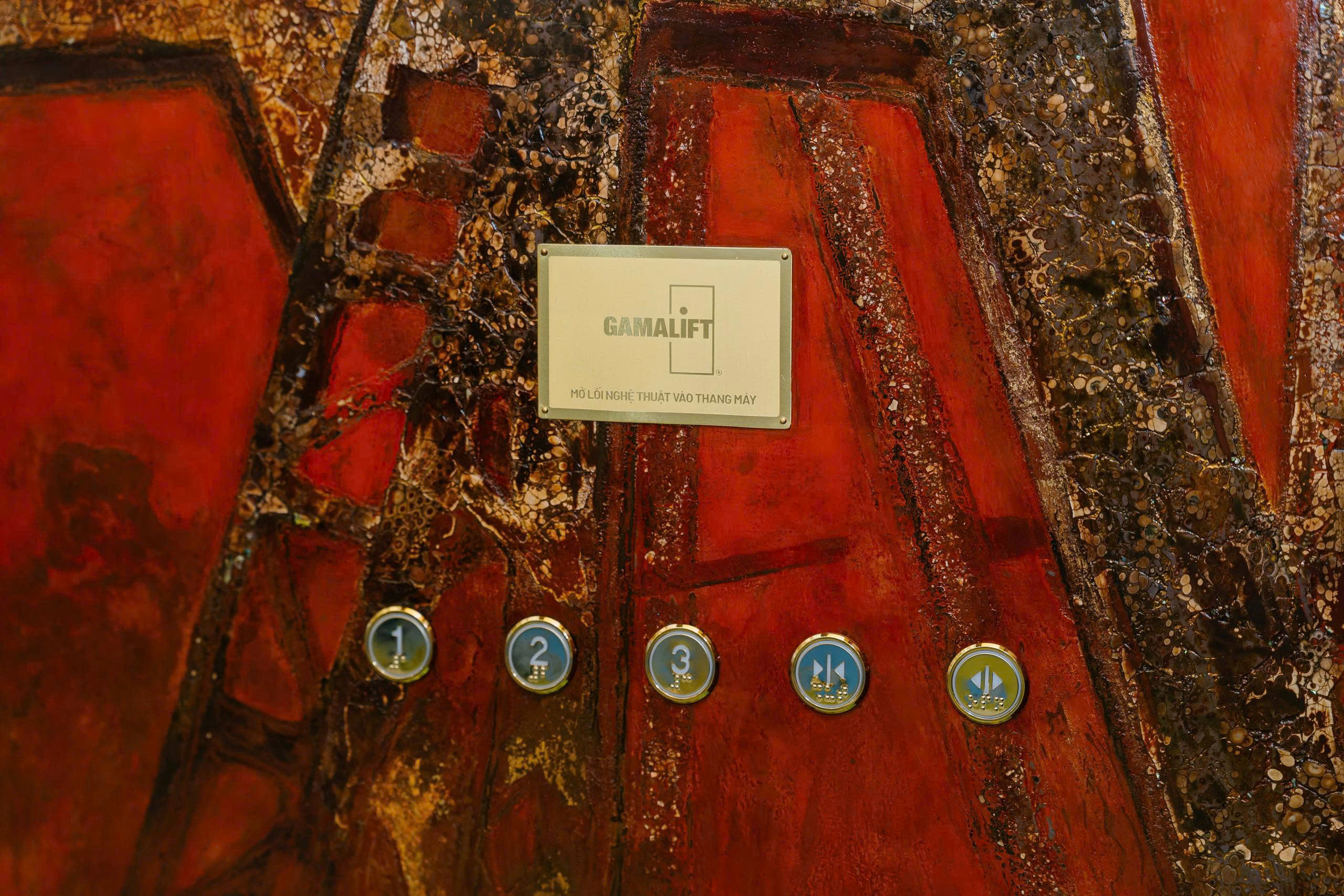
Each elevator design developed by the Vietnam Elevator Association follows a "bespoke" approach, where materials, patterns, and layouts are not repeated but are intrinsically linked to the unique story of each project. Thus, the elevator not only serves the need for movement but also becomes part of the living experience, helping the building and its owner affirm their imprint and personal identity.
Sharing about the project, Mr. Nguyen Hai Duc - Chairman of the Vietnam Elevator Association - stated that Vietnamese lacquer possesses unique value, from its materials to crafting techniques and aesthetic depth. It is precisely this distinctiveness that makes lacquer not just an artistic material, but a crystallization of cultural identity.
"The journey of realizing an artistic elevator design is also the journey of the project team – whom we call 'listeners to tell stories' – to perceive and listen to the deep layers of hidden concepts about the values and messages that the owner or the project wishes to convey.
From that process, the story of the project is gradually 'rewritten' in the language of light, color, and materials, accurately reflecting the spirit of the owner and the unique imprint of the project," shared Mr. Nguyen Hai Duc.
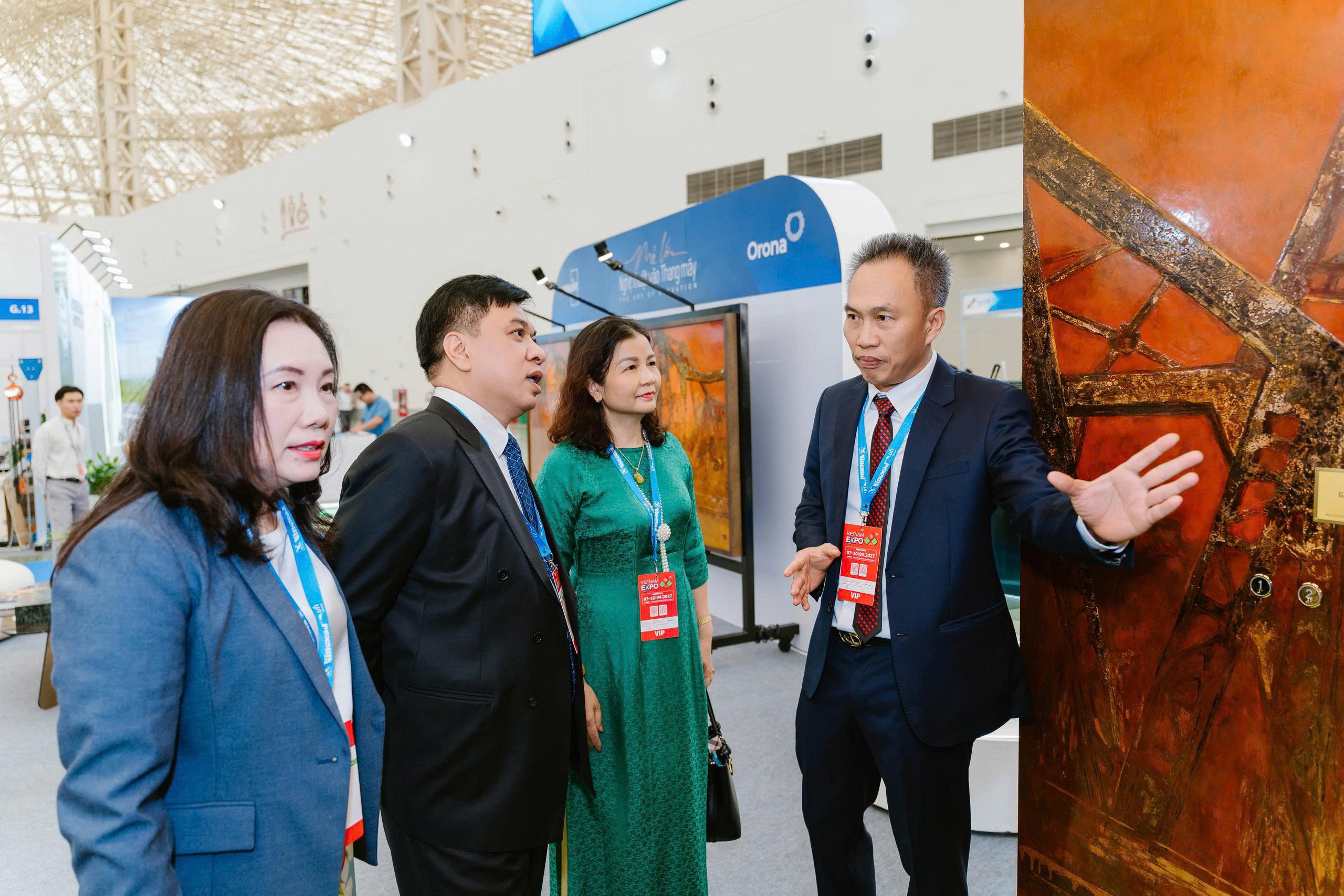
According to Mr. Nguyen Hai Duc - Chairman of the Vietnam Elevator Association, the greatest challenge of this direction lies not in technique or materials, but in the capacity for understanding and interpretation – how to transform intangible layers of concepts into a tangible space with emotional depth.
At the seminar, Mr. Nguyen Anh Minh - Director of the Vietnam Fine Arts Museum - noted that the elevator is a space that each user repeats daily, even thousands of times throughout their life, but is often seen as an 'indifferent', enclosed space lacking experience. Integrating art into this space not only changes visual perception but also creates new experiences, turning each journey into a moment of art appreciation.
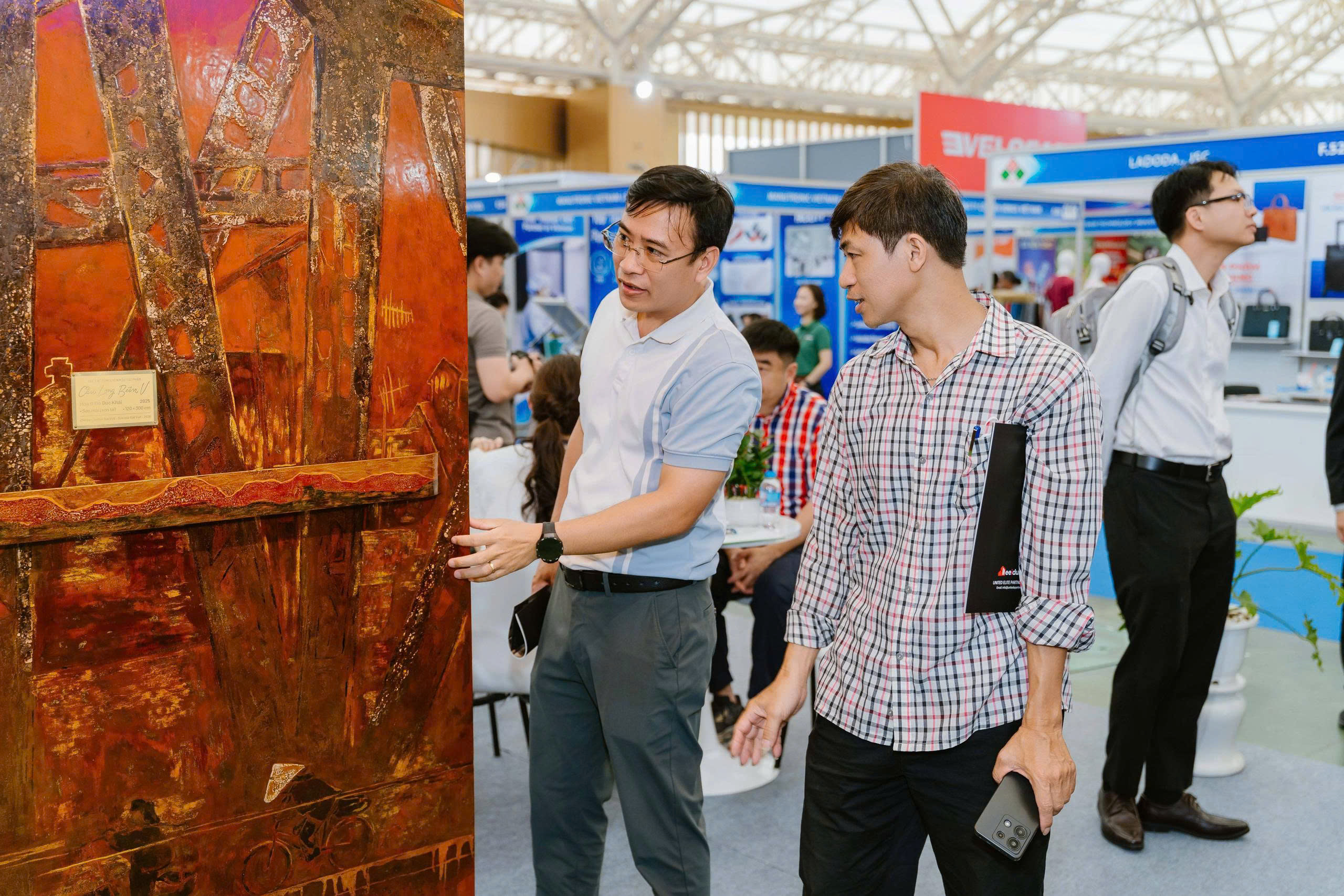
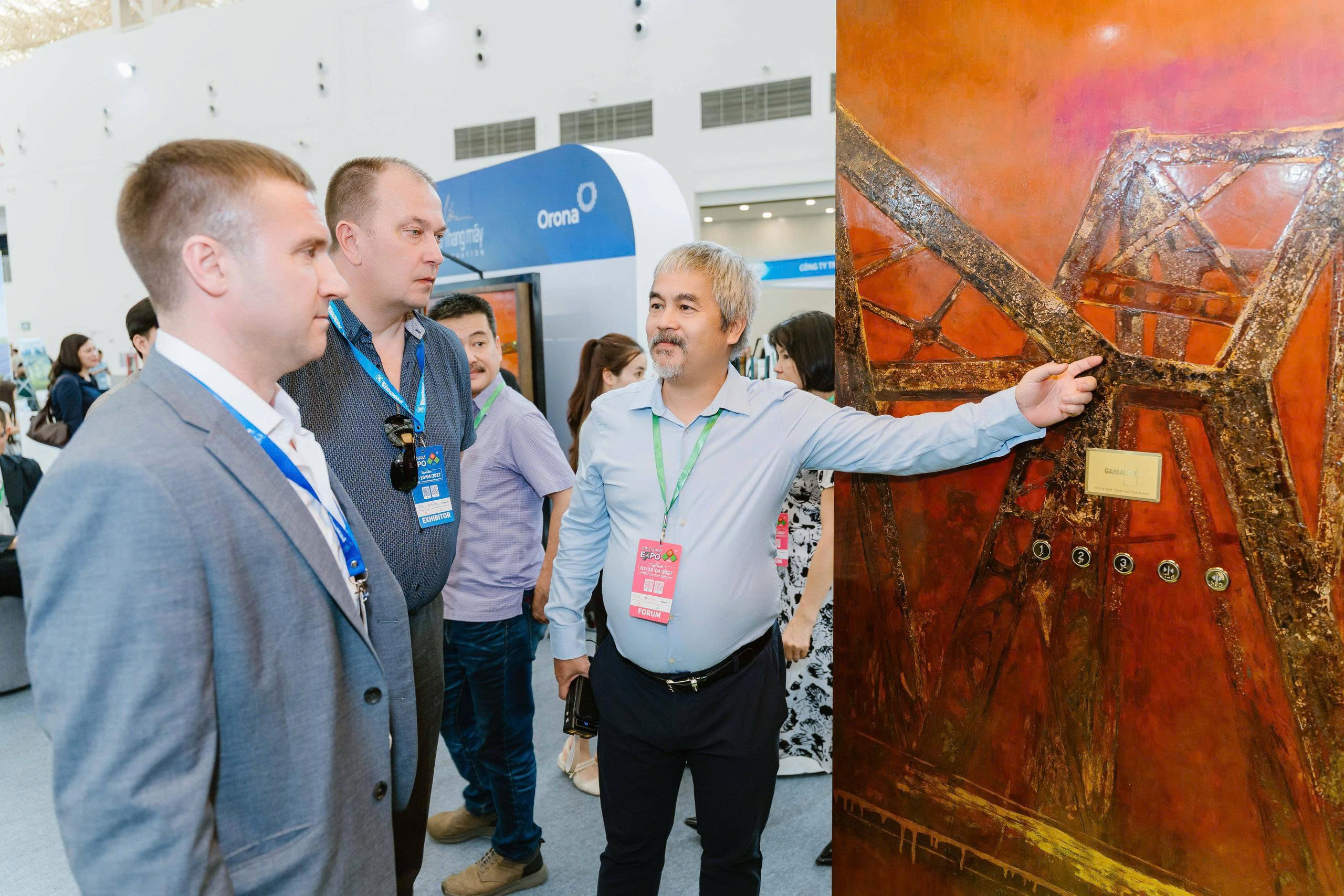
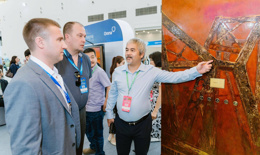
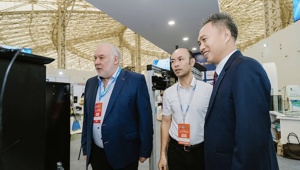
The lacquer art elevator design attracted the attention of many visitors
Mr. Nguyen Anh Minh emphasized that this is also an effective approach to bring art closer to the public, beyond the confines of museums or galleries. Works present in elevators not only carry decorative value but also contribute to spreading cultural values, promoting Vietnamese art to a wide range of users, both domestic and international.
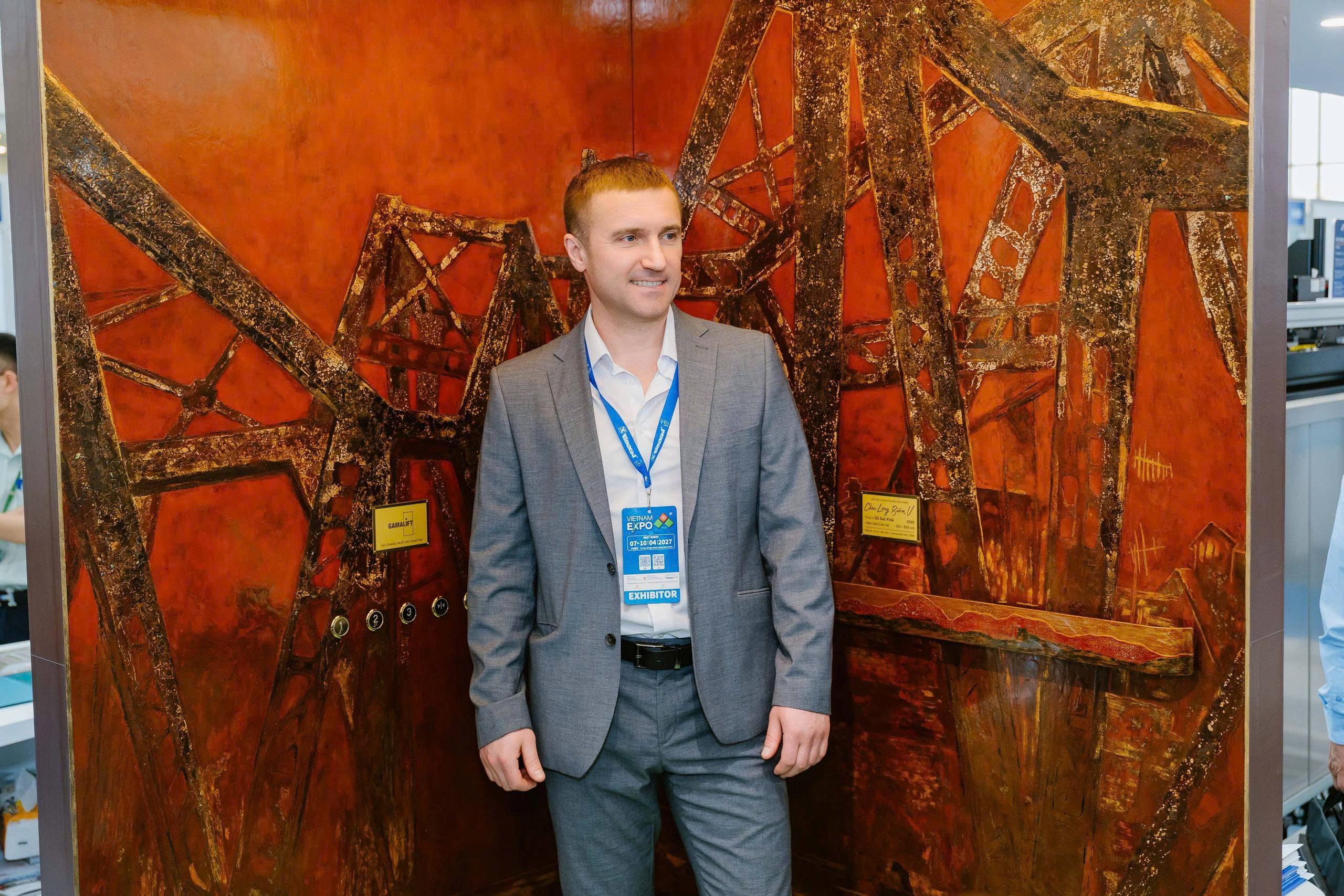
International visitors expressed their impression and appreciation for the lacquer elevator design, seeing it as a unique combination of modern technology and Vietnamese cultural identity
From the perspective of the Vietnam Fine Arts Museum – which preserves tens of thousands of valuable works, including many national treasures – he expressed the desire to accompany the Vietnam Elevator Association in selecting, adapting, and integrating artworks into elevator spaces, thereby multiplying intangible value.
He hopes this combination will contribute to expanding the space for art appreciation while creating new values, enabling art and technology to develop together, not only domestically but also towards the international market.
From these pioneering steps, the Vietnam Elevator Association is gradually shaping a new approach for the Vietnamese elevator industry – where elements of technology, design, and traditional artistic identity can go hand in hand, creating sustainable values in contemporary architecture.