



By MSc. Arch. Pham Hoang Phuong, Vietnam Institute of Architecture (Ministry of Construction)
MSc. Arch. Tran Van Bo
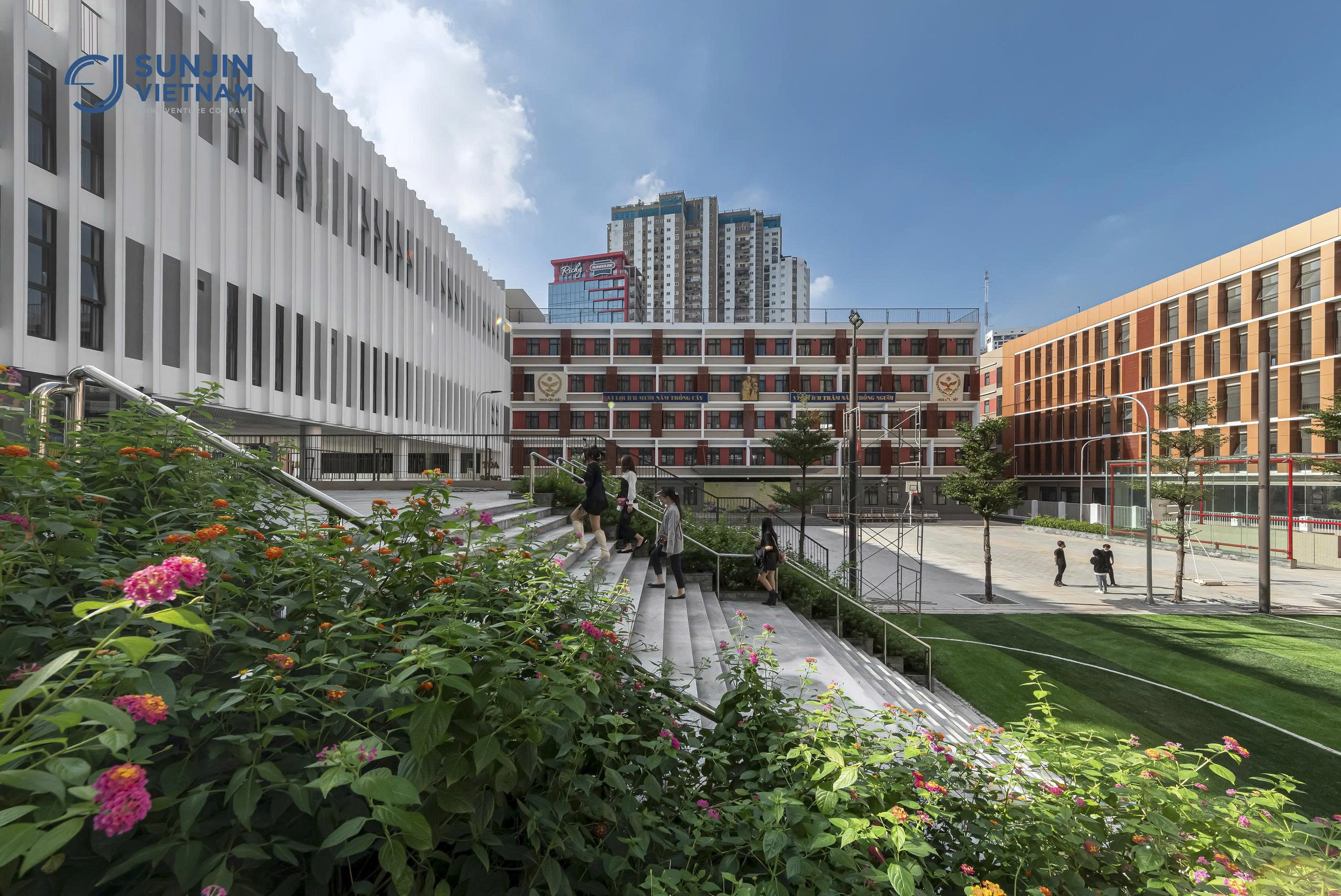
Figure 1: The space of Cau Giay Secondary School (Hanoi), a project that won the National Architecture Award in 2021 for achieving the synchronization of multiple criteria in innovating school architectural design according to national education standards, while approaching several advanced regional and international educational trends. (Image source: Authors and Sunjin Vietnam JV Company)
An Item Rarely Seen in Previous School Buildings
Previously, elevators were rarely encountered in older school buildings. This limitation imposed significant constraints on school architecture, such as low quality of user comfort and an inability to keep pace with or allow for rapid transitions to new educational methods. The causes for this stem from various groups of objective and subjective reasons.
Regarding objective reasons, this primarily originated from difficulties in project investment finance. In the past, investment resources for most types of civil works, especially educational facilities, were limited. Furthermore, the supply of quality elevators was scarce for many years, mainly relying on imports with a complete lack of domestic autonomy. Consequently, elevators appeared almost exclusively in key national projects or high-end buildings and were completely absent from schools.
Regarding subjective reasons, school architecture in previous periods was heavily influenced by the subsidy era, resulting in rigid, stereotypical L-shaped or U-shaped designs. The layout of functional spaces—including classrooms, administration areas, and physical education zones—mainly employed horizontal spreading solutions. The overall height of functional blocks was also modest, typically only 2–3 stories. Cases of 4–5 stories were very rare. Therefore, the vertical circulation system designed within the buildings consisted almost entirely of staircases, with virtually no presence of elevator systems.
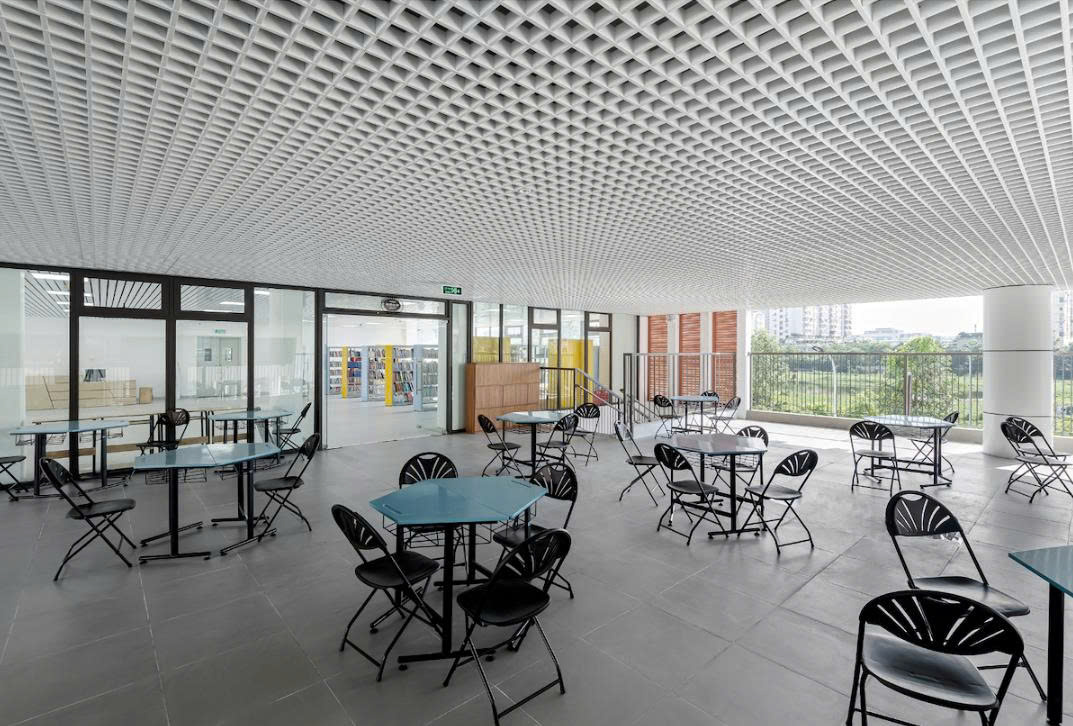
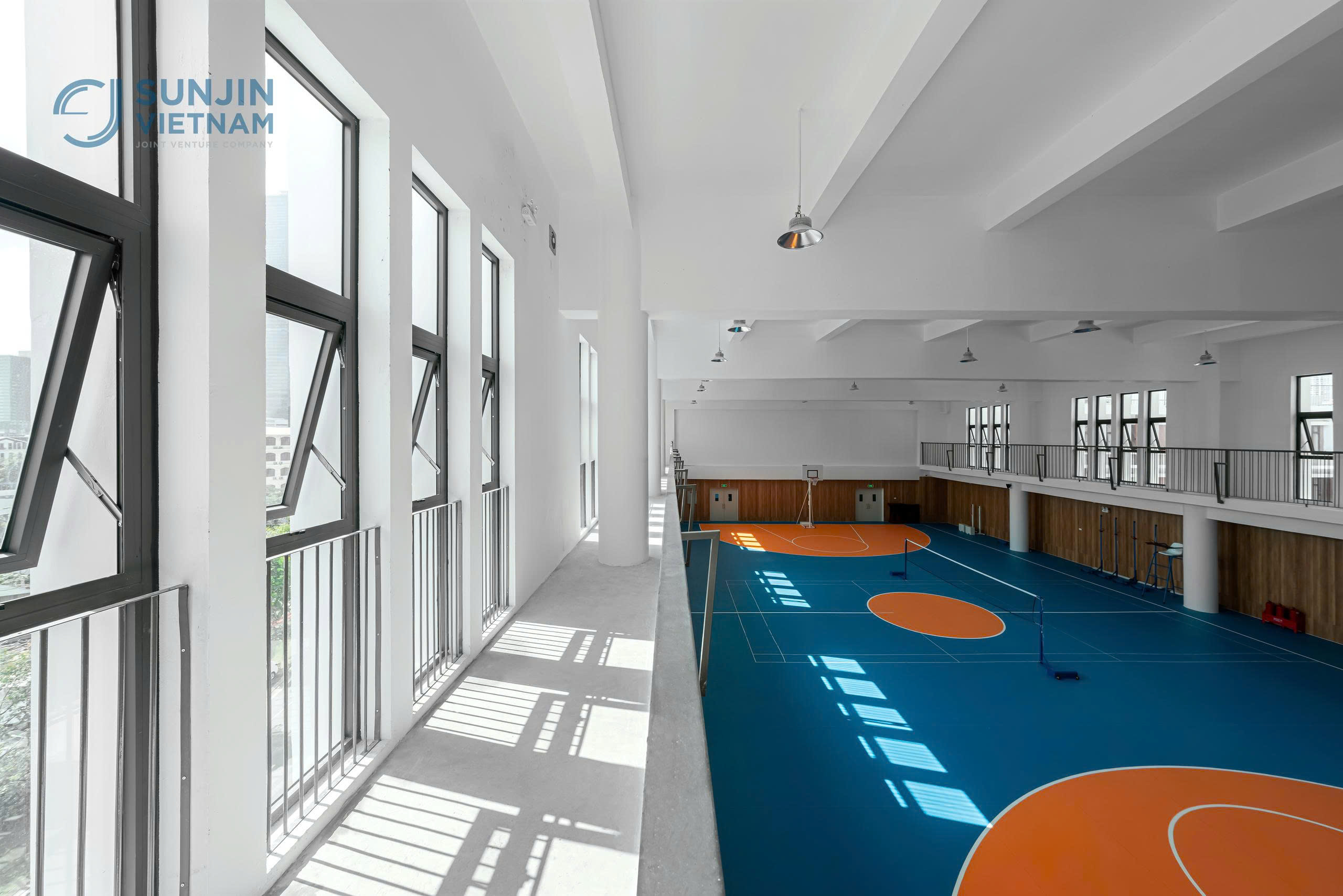
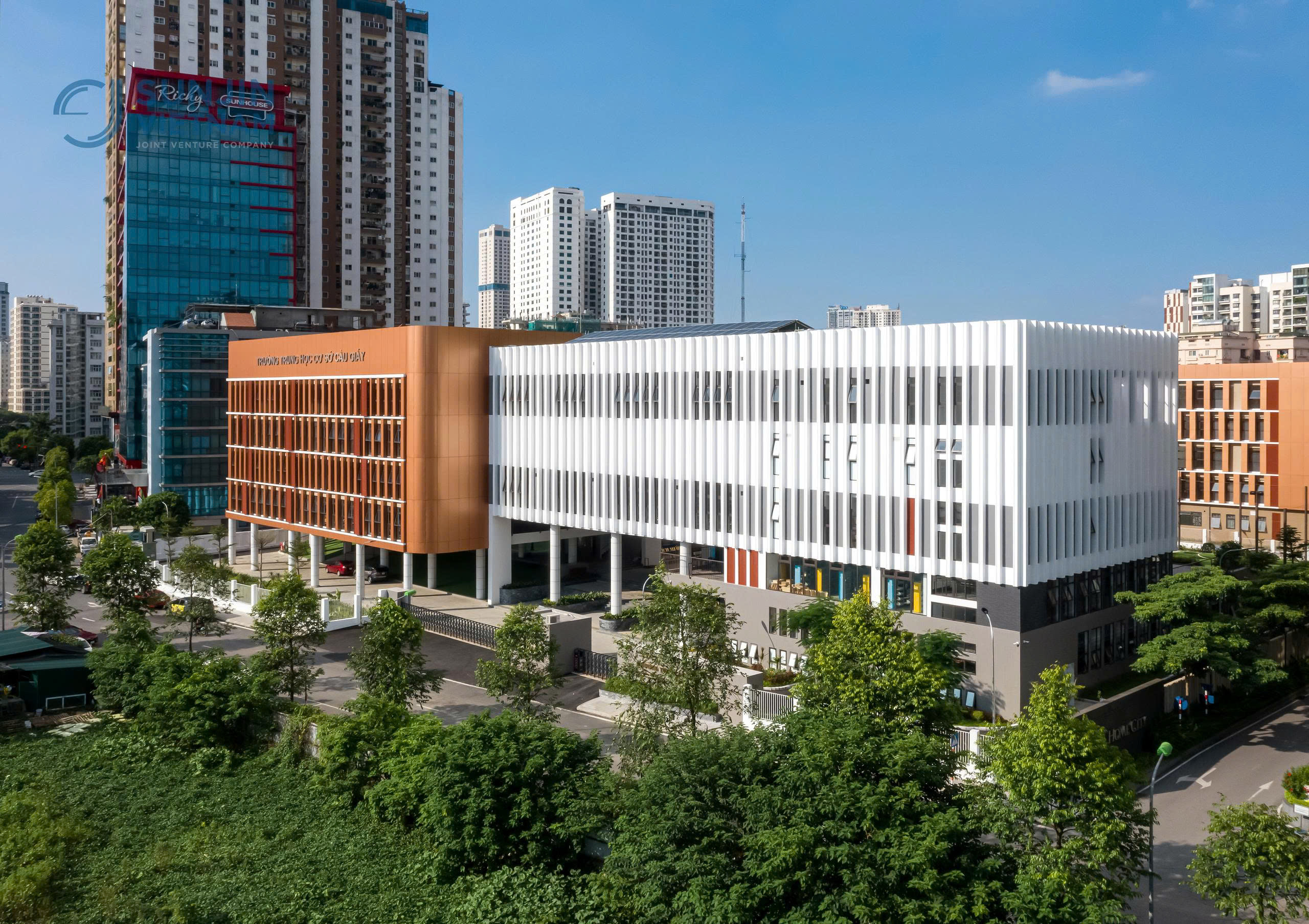
Figure 2: Architectural design of Cau Giay Secondary School (Hanoi) featuring an elevator structure integrated with staircases. This solution allows auxiliary spaces such as the multi-purpose gymnasium and library to be located on higher floors while still ensuring user comfort, thereby reserving the most convenient lower floors for classrooms that meet national education standards. The project won the National Architecture Award in 2021. (Image source: Authors and Sunjin Vietnam JV Company)
Elevators - A Key Solution Supporting Innovation in School Architectural Design
Since Vietnam's economy began its transformation and the cause of Industrialization and Modernization was promoted, the education sector has seen strong participation from non-public organizations alongside public institutions. This has fostered integration and increased the demand for comprehensive innovation in teaching and learning in recent years. Notably, with the Ministry of Education and Training officially announcing new national education standards, and many public and private schools adopting new educational methods from developed countries (such as STEM, Montessori, etc.), there is an urgent need to comprehensively innovate the approach to organizing school spaces.
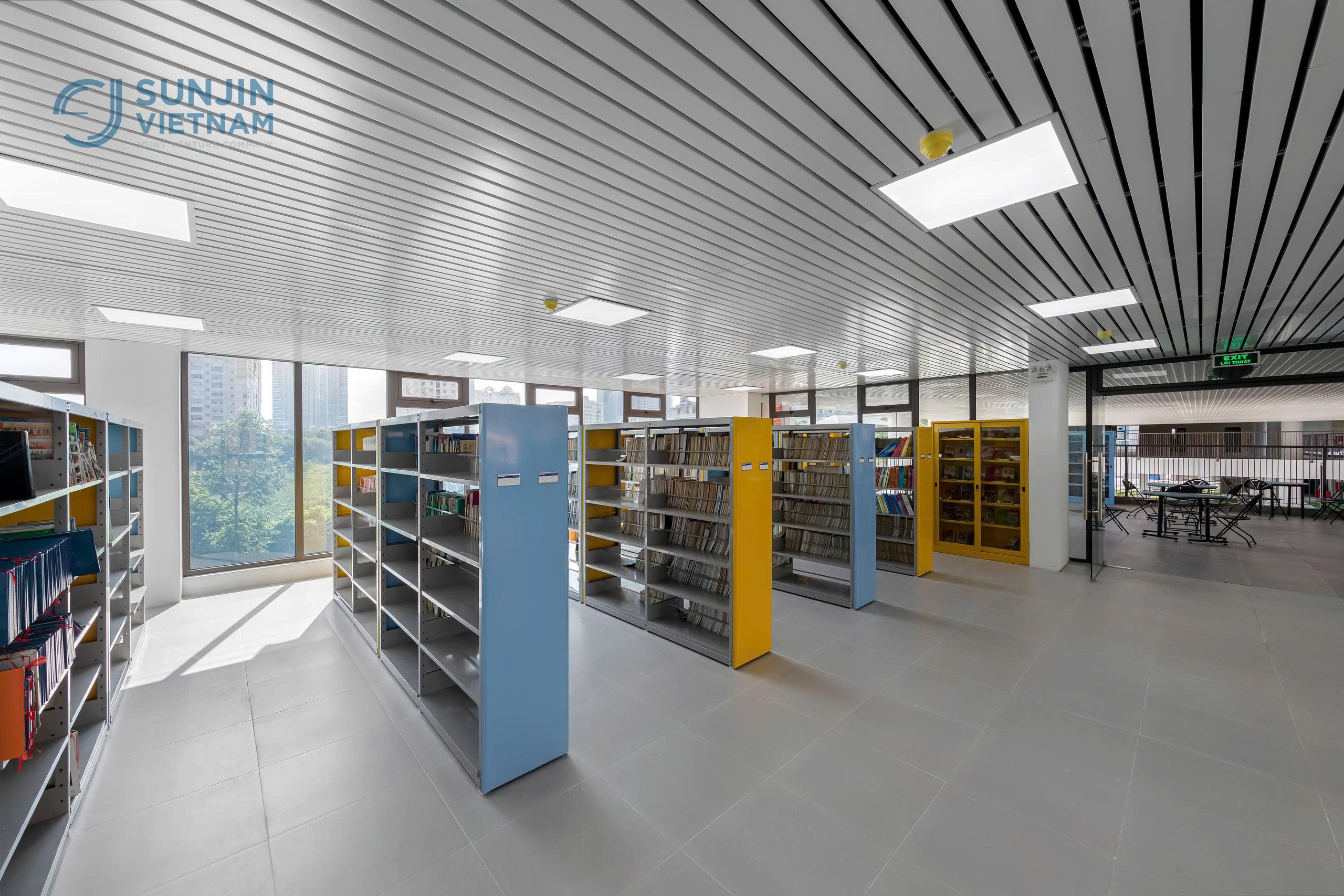
Figure 3: Although the library space of Cau Giay Secondary School (Hanoi)—the 2021 National Architecture Award winner—is arranged on the 3rd floor of the main building, it still achieves high user comfort thanks to the synchronized design of utility elevators and staircases, forming vertical circulation axes at adjacent traffic nodes. (Image source: Authors and Sunjin Vietnam JV Company)
In this context, the criteria of "Student-centered" and "Every day at school is a happy day" have been set forth as the most important innovation goals, requiring corresponding improvements in school facilities. To achieve these criteria, instead of the old, rigid school design models, academic classrooms for students need to be placed in the most favorable locations, such as on lower floors to catch cool breezes and avoid areas with high thermal radiation or disadvantages in natural ventilation and lighting. Meanwhile, the height of functional blocks can be maximized as permitted (currently, some new inner-city schools in major cities are built with 5–6 stories).
Simultaneously, there is a shift towards moving auxiliary functional spaces—such as the administration area, library, laboratories, and even the multi-purpose hall—to upper floors, or even the top floor. Today, there is no shortage of newly built schools that feature sports halls on high floors while still maintaining comfort and efficiency. To ensure full accessibility, emergency escape safety in case of accidents, and fire safety, the synchronized design and installation of school evacuation elevator systems alongside standard staircases is considered a crucial solution.
Regarding design solutions, a reasonable number of elevators can be arranged adjacent to staircases to create vertical circulation axes within the building. This allows for convenient, safe, and comfortable connections from the ground floor to the upper levels. Additionally, specific standard freight elevators and emergency elevators can be designed at key traffic nodes to optimize usage efficiency. Freight elevator systems, besides transporting people, play a practical role in transporting goods to essential auxiliary functional spaces (such as the canteen, library, and administration block) located on higher floors.
Regarding types and selection criteria, prioritizing high-quality types with high durability, appropriate installation costs, and maintenance will allow for significant savings in investment and upkeep resources. In particular, durable elevator systems with multiple usage modes (peak and off-peak hours) will suit the frequency and usage patterns of students and teachers across various time frames and service functions.
Regarding aesthetics, school elevator systems with eye-catching decorative forms will also create a cheerful atmosphere, suitable for the psychology of school-age children.
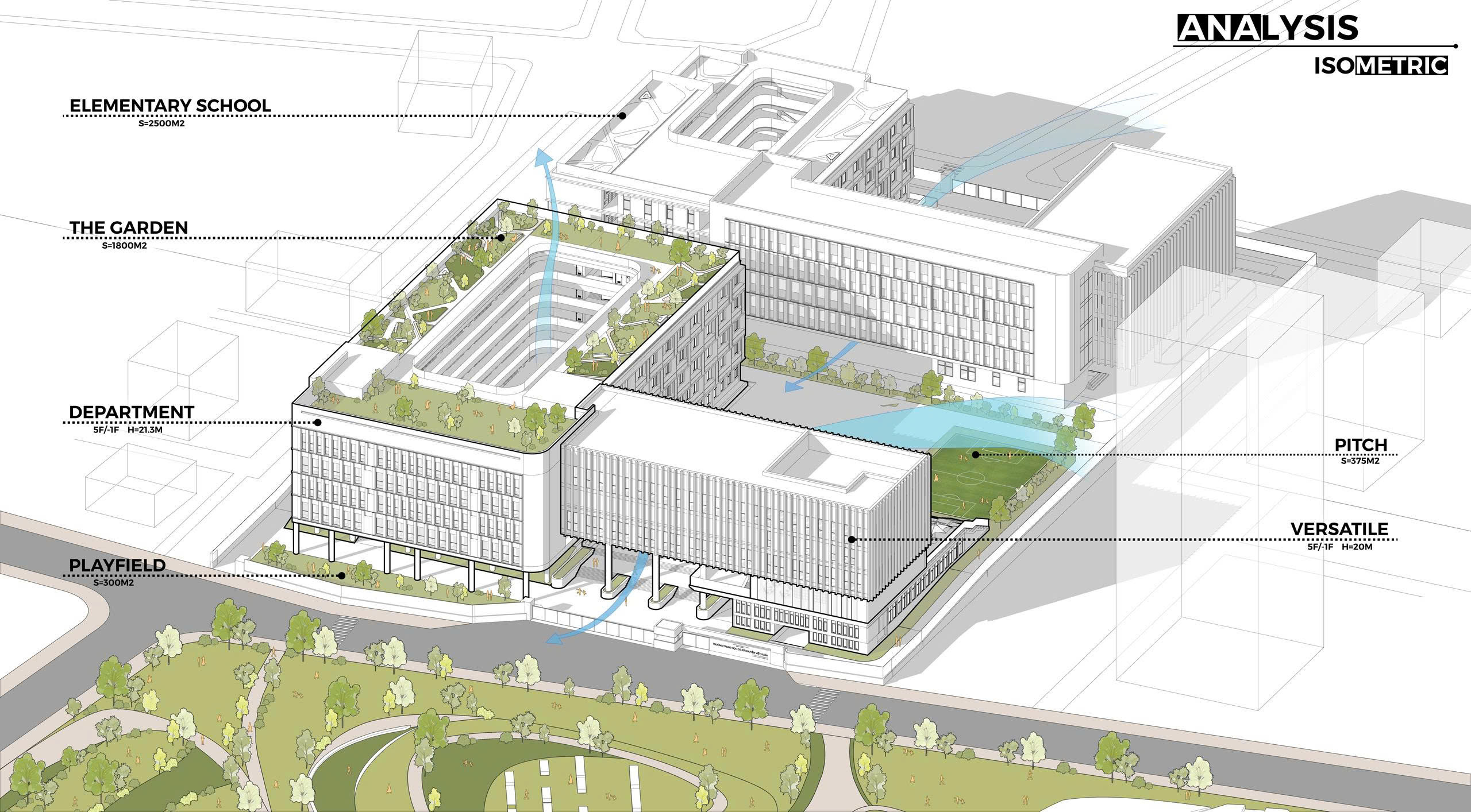
Figure 4: Structural diagram of the spatial organization of Cau Giay Secondary School (Hanoi), showing auxiliary spaces such as the library, administration area, and multi-purpose gymnasium arranged on high floors while still ensuring safety and comfort through layout solutions. (Image source: Authors and Sunjin Vietnam JV Company)
Conclusion
The introduction of elevators as a mechanical and electrical category in architectural works has significantly enhanced the quality of comfort in civil buildings in general. In particular, the promoted application of elevator systems in schools at all levels, tested through many practical projects in recent times, can be seen as one of the key solutions supporting the comprehensive innovation of school architectural design. This aligns with new national education standards and approaches advanced educational methods in the world during this era of integration and rising development.