



In recent years, when the economies integrate, the act of trading in counterfeit goods and brand imitations rages in the market, creating disadvantages for both customers and genuine businesses.
As the incident happened that VLP company (headquartered in Binh Duong) is a victim. VLP is offering for sale 4 elevators of Mitsubishi. Sadly, these elevators are … Fake!
It is worth mentioning that this incident was discovered only after the purchase and installation process was completed and the customer checked the customs documents, including CO and CQ, and detected counterfeiting. It is too late to claim rights and legal complications when suing. The supplier has "disappeared".
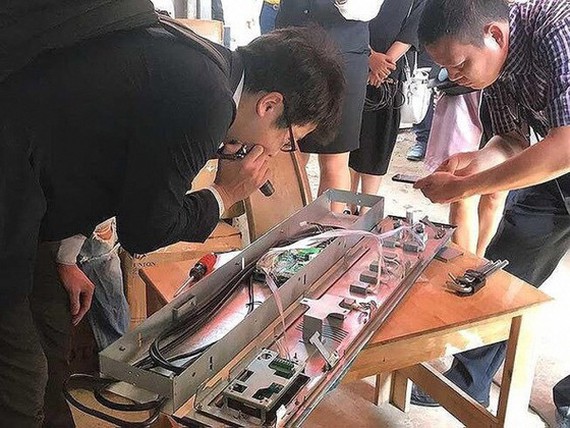
After importing a consignment, businesses will use that customs document to sell the goods according to the registration. Otherwise, they use customs documents to “make up” documents for other batches of products of unknown origin to deceive customers who do not have much knowledge or experience. If observant, check on the electronic CO issuing system from the exporting country, customers can completely detect this fraud.
As for the CQ, it is even easier to fake because there is no way to verify it. Dishonest businesses can take advantage of this gap and customers cannot verify.
For acts of counterfeiting CO, CQ, the provisions of Vietnamese law clearly state that, depending on the nature and consequences of the act, it may be administratively sanctioned or examined for penal liability.
Article 44 of Decree 98/2020/ND-CP and Clause 30, Article 3 of Decree 17/2022/ND-CP, stipulating a fine ranging from VND 10,000,000 to VND 70,000,000 for acts of erasing and repairing falsifying the contents of the Certificate, providing untrue documents, falsely certifying the origin of goods, etc.
Even this behavior is punishable by imprisonment up to 7 years in prison and a fine of up to 100 million VND in serious cases according to Articles 340, 341 of the Penal Code 2015.
There are already sanctions. However there are many companies that commit serious violations, add more products, and add HS codes (Harmonized Commodity Description and Coding System – A harmonized system of description and coding of goods) on certificates.
To control this problem, customers need to know how to check customs documents.
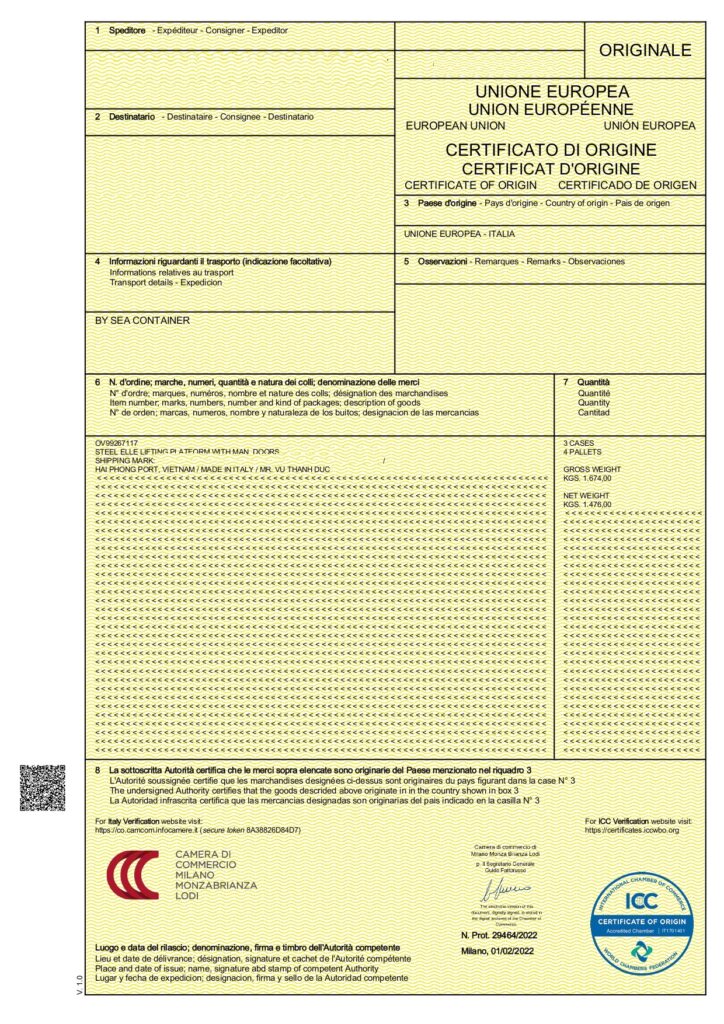
- Certificate of Origin (CO)
The purpose of the CO is to prove that the goods have a clear origin, legal in terms of tariffs and other provisions of import and export laws, helping the buyer to determine that the goods are not contraband or have no clear manufacturer and place of manufacturing.
CO is a document issued by a competent authority such as the Chamber of Commerce of that country. In Vietnam, CO is issued by the Vietnam Chamber of Commerce and Industry (VCCI). The information commonly found on a CO is:
- Name and address of the exporting and importing company;
- Criteria on transportation, means of transport, seaport, unloading place, ..
- Standards on how to pack goods (packaging, packing specifications, labels, quantity);
- And finally, the standard of origin and certification of the competent authority
Goods are considered to have origin when they fall into one of the following cases:
- Goods that are wholly obtained or produced in a country, group of countries, or territories as prescribed in Article 7 of Decree 31/2018/ND-CP; Goods considered to be purely originating, such as plants, live animals, products obtained from live animals, products obtained from hunting or trapping in the territory of that Party, or caught or cultivated in the internal waters or in the territorial sea of that Party
- Goods are not purely originating or are not produced entirely in a country, group of countries, or territories, but satisfy the provisions of Article 8 of Decree 31/2018/ND-CP. An imported good is said to be of non-pure origin but is originating in a Member State when it is not wholly produced in the territory of that Member State, but meets either of the following two criteria: the following common origin:
Criterion 1:
– Goods with a content of components constituting the value of goods in the ASEAN region in the FOB price of the goods must not be less than 40% of the FOB price of the goods. Also known as “regional value content (RVC)” must be ≥ 40%. The formula for calculating regional value content (RVC) is as follows:
RVC = (FOB – VNM)/FOB x 100%
VNM is the value of non-originating materials, namely:
– CIF value of raw materials, spare parts or goods at the time of importation; or
– The identifiable initial purchase price of raw materials, spare parts or goods of undetermined origin in the territory of the member country where the processing takes place
Criterion 2:
– All materials without origin used in the production of the good must be altered in nature from the finished good. According to the HS code, the HS code of materials without origin must be different from the HS code of the finished product at the 4-digit level. Also known as CTC criteria.
To obtain a certificate of origin in Japan, the regional value content must be 60%. For Korea, the ratio should be 50%.
- Certificate of Quality and Quantity (CQ)
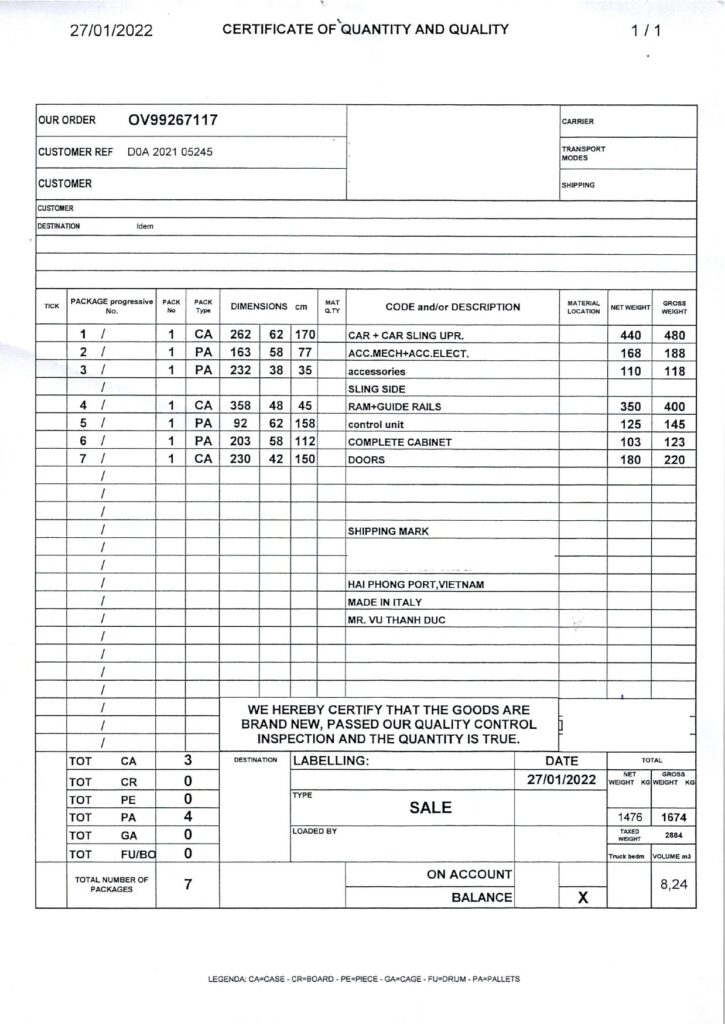
CQ helps to prove that the manufactured goods conform to the announced standards attached to such goods. Most product certification bodies are accredited to international standards.
CQ quality certificates are important for both manufacturers and customers. The certificate helps confirm whether the quality of the goods meets the specifications as announced or not.
CQ quality certificate provided by the manufacturer.
Information commonly found on a CQ certificate are:
- Name and address of the manufacturer
- Information of the purchaser: Clear name and address
- Quantity of goods: This is a general description of the quantity of goods, code, weight (tons, kg...)
- The quality information of the product is shown on the certificate such as ISO 9001, ISO 14000...
- Confirmation of the manufacturer
- Confirmation of authorities if any
How to check CO
In fact, there are many ways to check CO, CQ. Here are some basic ways:
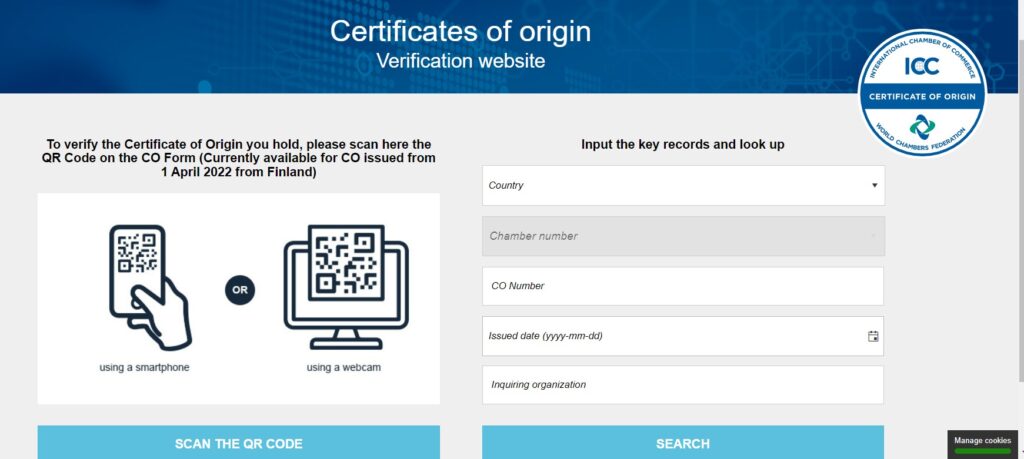
- Each copy of CO will have a different reference code and website (eg: https://certificates.iccwbo.org/) to look up (*). Users can enter the reference number and reference code of the CO on the website to have all the information about the CO.

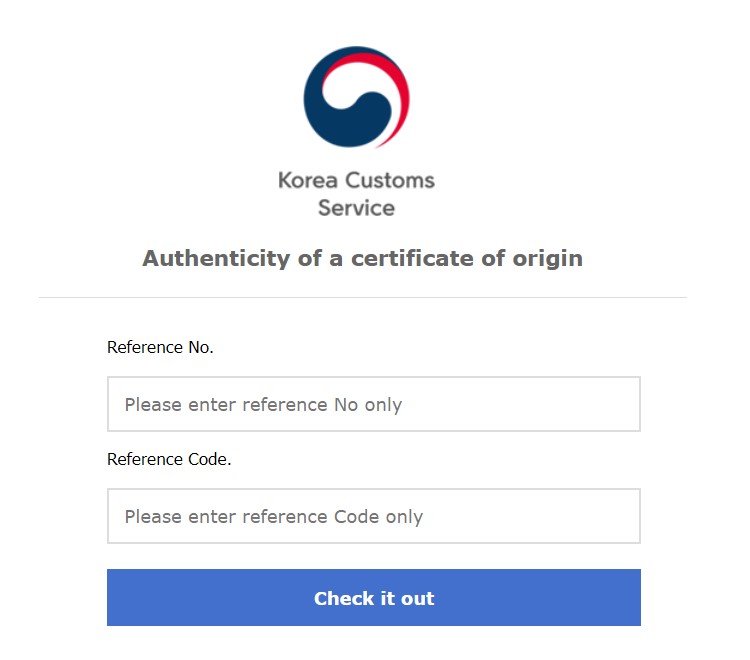
Check Korea electronic CO:
- Go to website: http://www.customs.go.kr/kcs/co/co.do
- Fill in CO information and reference number
Check Japan's electronic CO:
- Go to website: https://cts.jcci.or.jp/cec/origin.htm
- Fill in CO information and reference number
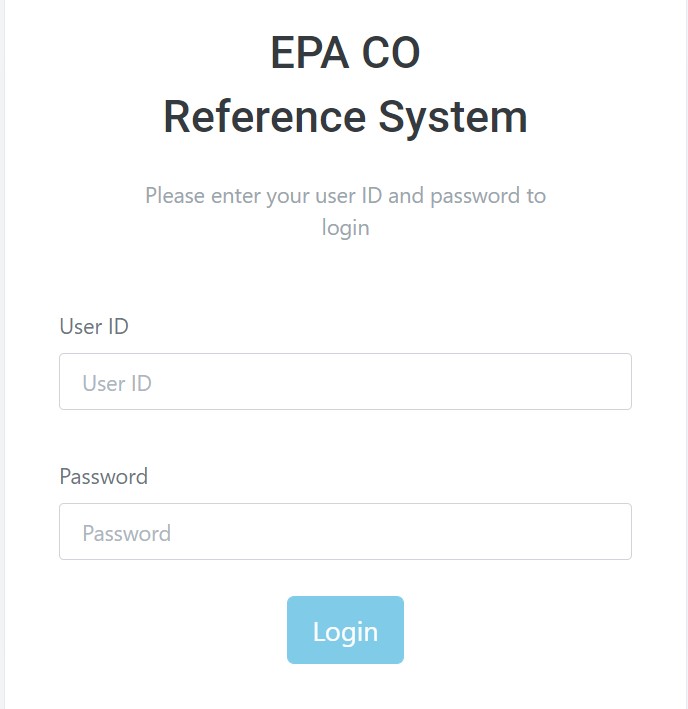
Check Finnish electronic CO:
- Go to website: https://iccwbo.org/
- Fill in CO information and reference number
In addition, when receiving CO, CQ we also need to:
- Compare the seals and signatures on the CO sample with the seals and signatures of individuals, agencies, and organizations responsible and authorized to issue CO certificates.
- Double-check that the certificate is valid for a specific period
- Check HS codes on CO and CQ certificates.
- Bill of Lading
A Bill of Lading is a transport document issued by a carrier or agent after the goods have been loaded on board. Bill of Lading is evidence confirming the signed contract of carriage and defining the legal relationship between the carrier and the consignee. This is the basis for customs declaration and import and export procedures.
The basic contents included in Bill of Lading are:
- Name and address of the carrier, other instructions as required,
– Port of Loading (POL)
– Port of Discharge (POD)
- Name and address of the consignor,
– Name and address of consignee (very important),
– Agent, the appointed notifying party,
– Name of goods, code, number of packages, gross weight or volume,
– Freight and surcharges paid to the carrier, terms of payment,
- Time and place of issue of Bills of Lading,
- Number of original Bills of Lading,
– Signature of the carrier (or of the captain or his representative, or agent).
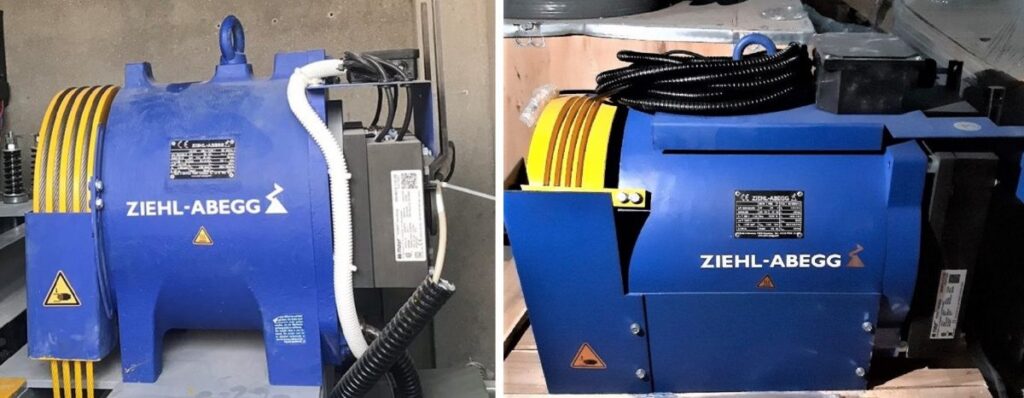
Vietnam's elevator market is mostly imported, so learning how to check customs documents is necessary not only for customs procedures but also for customers - who directly bear losses in case of buying counterfeit, poor-quality goods.
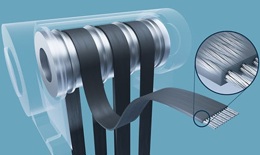
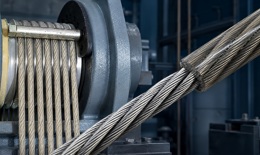
Elevator equipment and components are often counterfeited to sell together with the company's elevator traction machine to form a complete imported elevator. Therefore, tightening control of customs documents for elevators, components and equipment is extremely necessary. The best solution for users is to choose reputable distributors.
*Can be applied for 29 countries including Belgium, Brazil, Bulgaria, Canada, China, Denmark, Finland, France, Ireland, Iraq, Italy, Korea, New Zealand, Turkey, Singapore, Qatar, Slovenia, Slovakia, Sweden, Finland, Arabia, UK, USA