



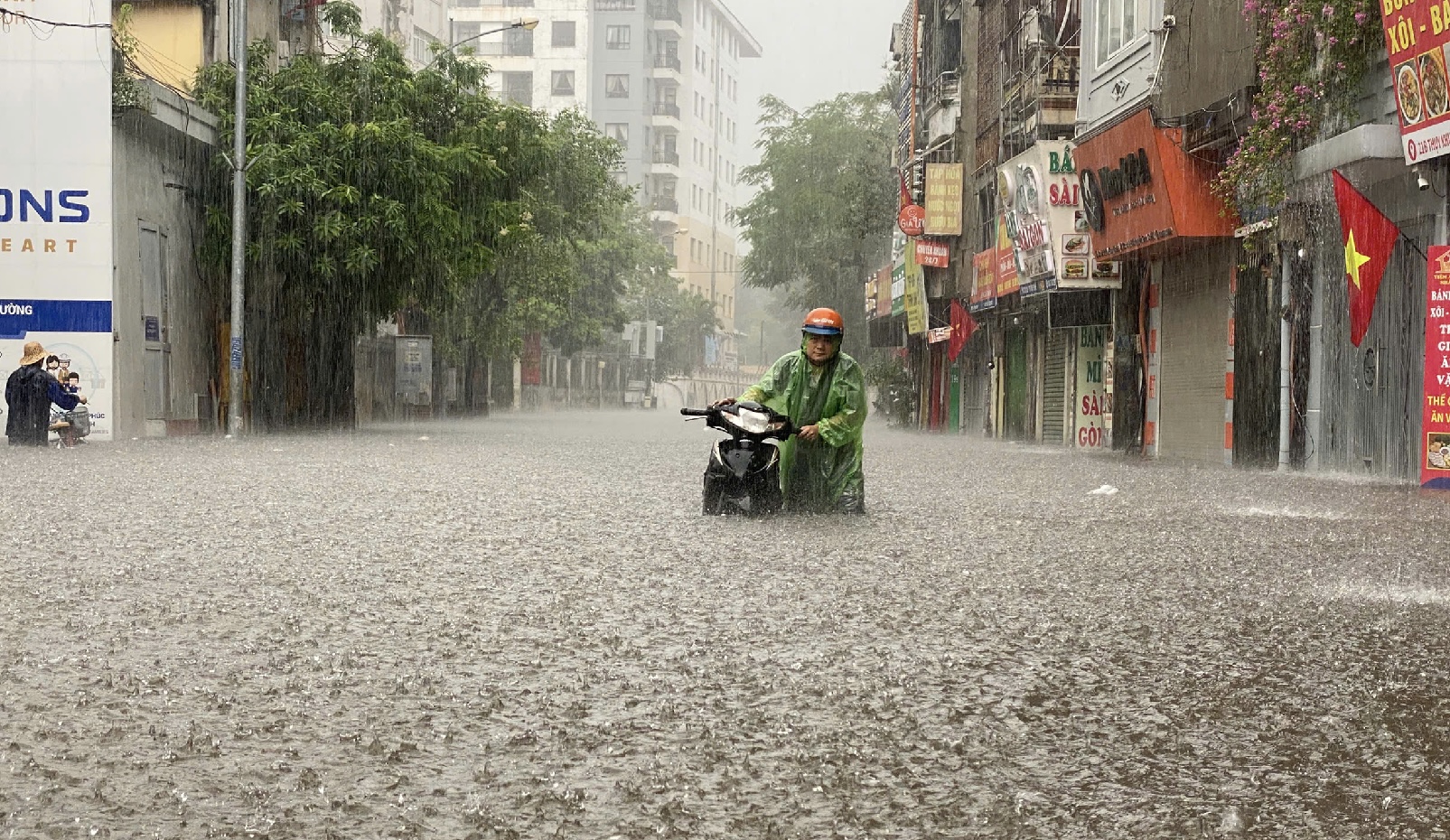
This bout of precipitation is expected to cause localized flooding on several streets, with inundation depths commonly ranging from 0.20 to 0.40 meters, and even deeper in certain areas. The flooding is projected to persist until noon or early afternoon, with some locations experiencing prolonged inundation.
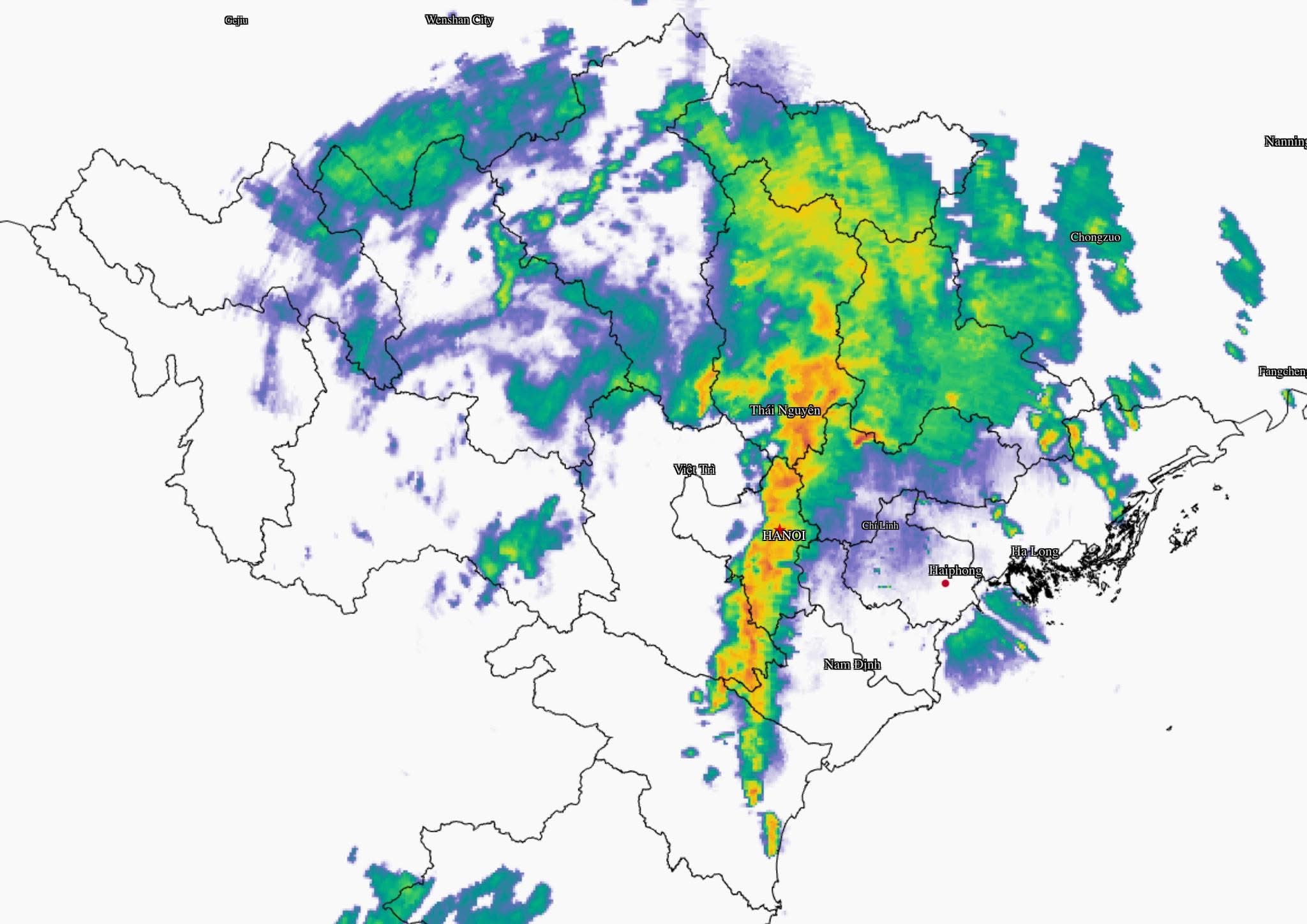
According to the 5:20 AM bulletin on October 7 from the National Center for Hydro-Meteorological Forecasting, the Hanoi area experienced moderate to heavy rain and thunderstorms early this morning, with locally intense downpours driven by the circulation of Typhoon Matmo combined with a wind convergence zone developing up to an altitude of 5,000 meters.
Rainfall accumulation over the past six hours commonly ranged from 40 to 80mm, with higher levels recorded at specific stations such as Soc Son (116mm) and Thuong Cat (91mm).
Forecasts indicate that Hanoi will continue to experience moderate to heavy rain and thunderstorms throughout this morning, with common rainfall levels of 40-70mm and localized accumulations exceeding 100mm. Precipitation is expected to decrease rapidly from the evening and overnight hours.
Residents are advised to remain vigilant regarding the risk of flooding in low-lying streets within the inner city.


Experts from the Institute of Applied Elevator Engineering also recommend that citizens take precautions to ensure safety when using elevators and preserving equipment. Elevator Magazine continues to publish these critical guidelines:
– Do not use the elevator when the equipment is flooded or the power source is unstable: In stormy and flooded conditions, absolutely avoid using the elevator to ensure safety. Such conditions can cause power instability or short circuits, leading to the elevator stalling mid-journey and endangering users.
In buildings and apartment complexes, the management board must assess the actual situation, issue clear notices, and guide residents to ensure safety.
– Move the elevator to a high floor and cut the power:
+ Move all elevator cabins to a high floor, ideally positioned in the middle of the shaft. This helps protect the cabin, counterweight, and cables from the risk of damage if the elevator pit at the bottom floor becomes inundated.
+ If the elevator has doors opening to the outdoors, move the cabin to the top floor to prevent water from spilling onto the cabin roof through the gaps of landing doors facing the outside.
+ Immediately after moving the cabin to a high floor, disconnect the power source to halt elevator operations, preventing risks of electric shock and short circuits in the event of flooding.
– After the storm ends:
+ Do not voluntarily use the elevator immediately.
+ Contact a professional elevator service unit immediately to inspect the elevator's condition before returning it to operation.
Residents need to remain vigilant to ensure safety during storms. Above are the recommendations from the Vietnam Institute of Lift Engineering Application to ensure elevator safety during the stormy season!
https://tapchithangmay.vn/khuyen-cao-su-dung-thang-may-mua-mua-bao/