



If you think you are having a bad workday, take a moment to consider poor Betty Lou Oliver, who narrowly escaped death twice in a single day at the age of 20.
First, an airplane crashed into the Empire State Building (New York, USA) where she worked, leaving her severely injured. After receiving first aid, she was placed in an elevator to be evacuated to the ground floor, only for the elevator to plummet freely from the 75th floor (approx. 300m) to the basement. Yet, miraculously, Betty cheated death, surviving both catastrophes with serious injuries.
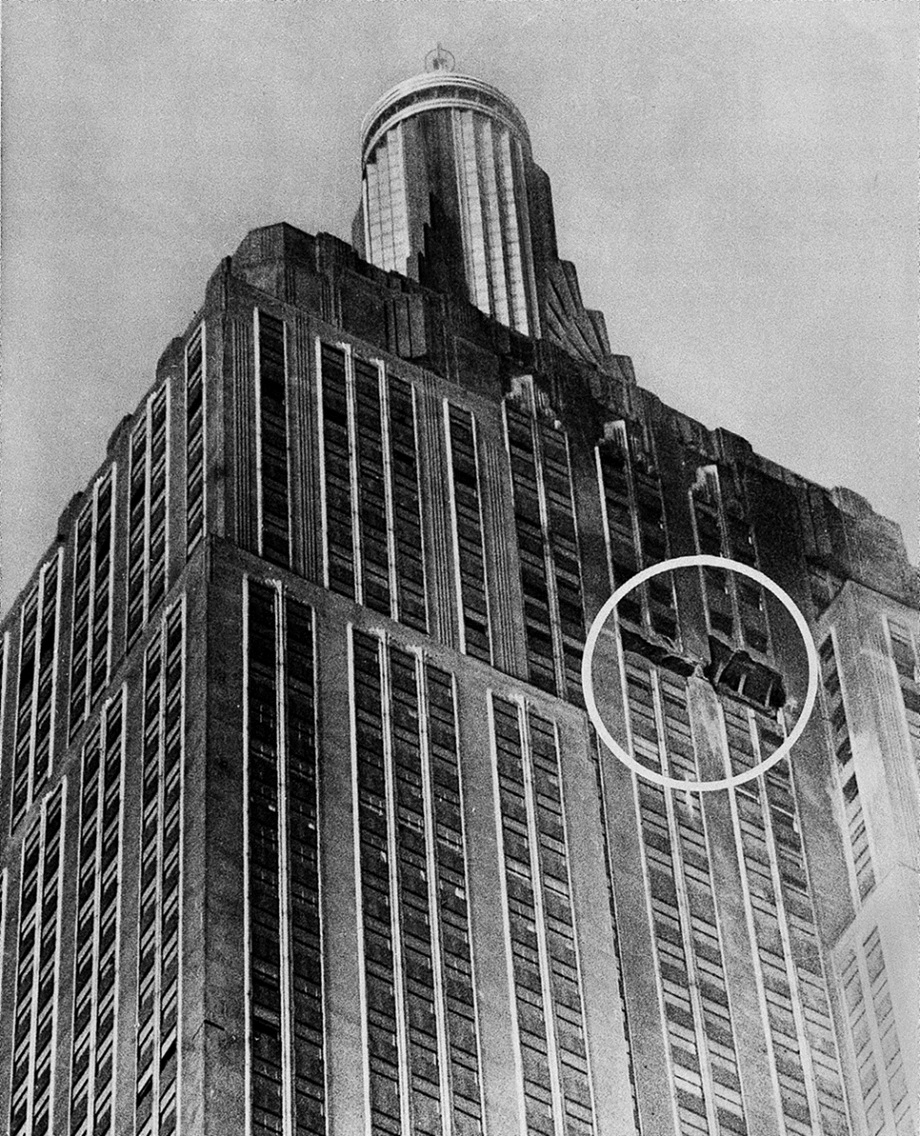
The point of impact where the B-25 struck the Empire State Building
The B-25 Bomber Crash at the Empire State Building, 1945
On July 28, 1945, Betty Lou Oliver arrived at the Empire State Building in Midtown Manhattan, New York City, where she worked as an elevator operator. It seemed like just another ordinary workday for the 20-year-old girl. Little did she know that the thick fog outside was about to turn her world upside down.
It was during the final months of World War II. Lieutenant Colonel William Franklin Smith Jr., a veteran pilot who had flown hundreds of combat missions, was piloting a B-25 Mitchell medium bomber from New Bedford Army Air Field in Massachusetts to LaGuardia Airport in New York City.
Due to dense fog, the plane could not land at LaGuardia as scheduled. The pilot requested a diversion to Newark Airport in New Jersey. This new flight plan forced them to fly over Manhattan. The last words the air traffic controller said to Smith were, "From where I’m sitting, I can’t see the top of the Empire State Building."
New York City was engulfed in thick fog. To gain better visibility, the B-25 flew relatively low. Instead of turning left after passing the Chrysler Building, Smith mistakenly turned right, putting him on a direct collision course with Midtown Manhattan.
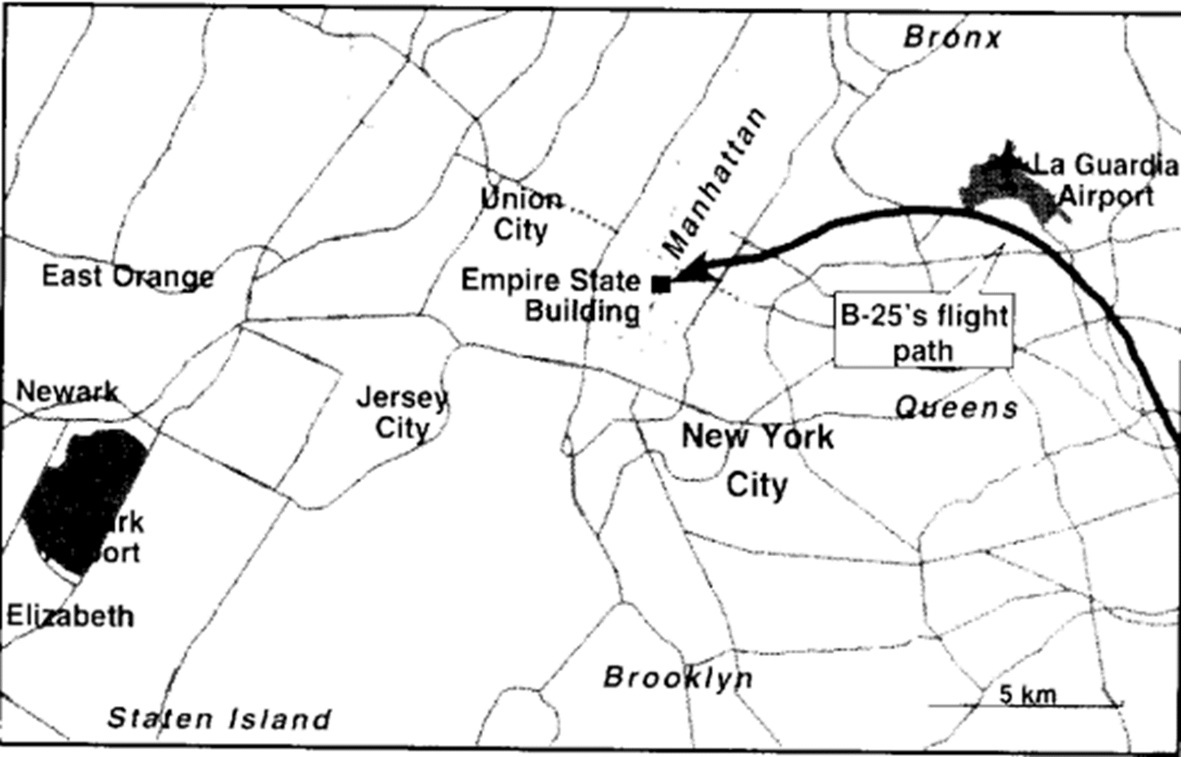
The flight path of the B-25 Mitchell piloted by Smith
Aviation regulations at the time required all aircraft to maintain a minimum altitude of 2,000 ft (609 m) over Manhattan, but Smith’s plane was flying at only 913 ft (278 m) above street level.
At 9:40 AM on Saturday, July 28, 1945, the aircraft slammed into the north face of the Empire State Building between the 78th and 80th floors at a speed of 200 mph (over 320 km/h).
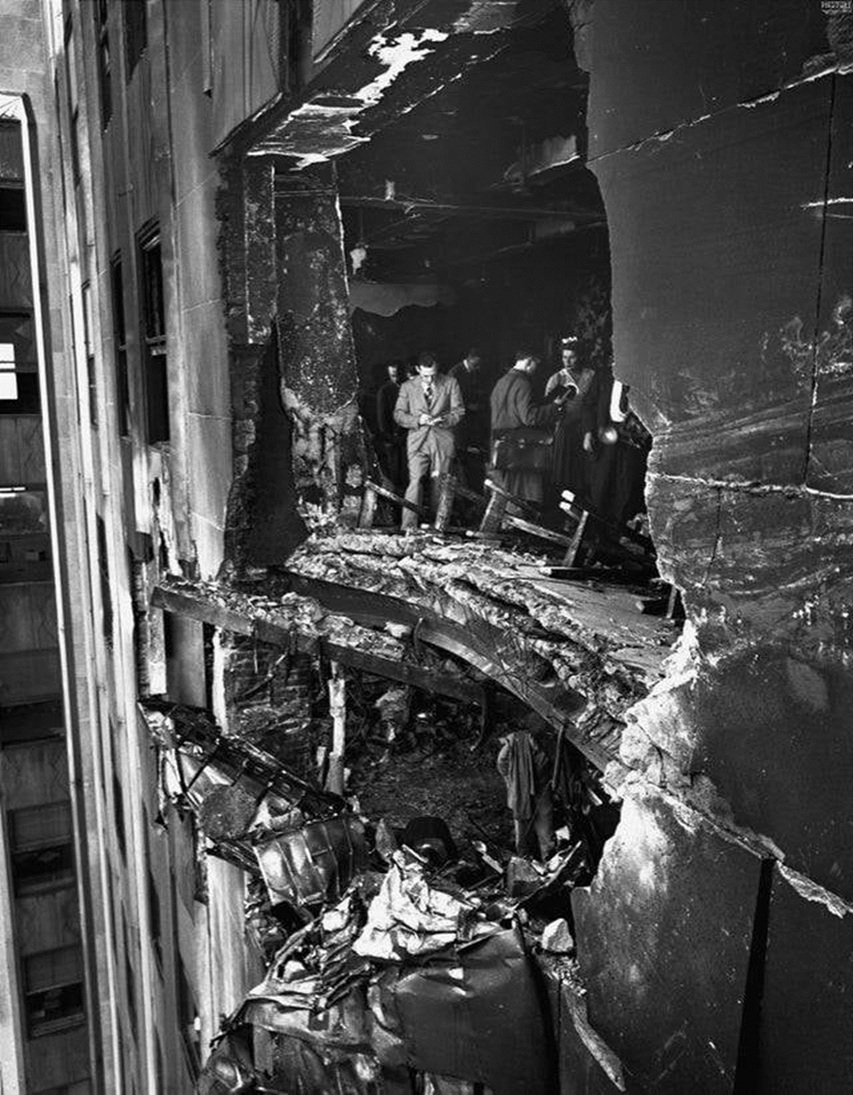
The B-25 bomber smashing through the building's wall
Devastating Damage
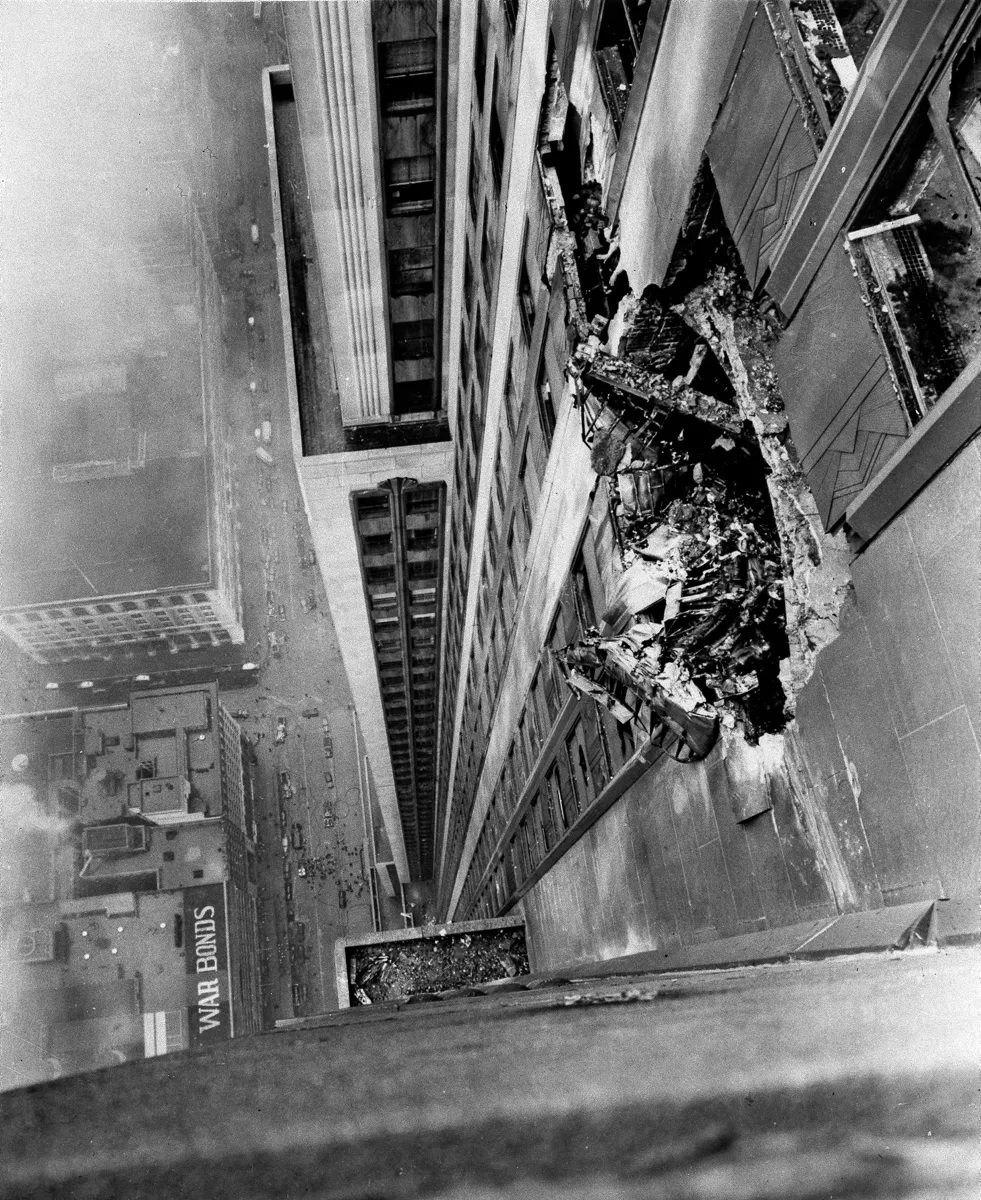
The impact caused severe damage to the Empire State Building and the surrounding area. The B-25 tore a massive 18 x 20 ft (5.5 m x 6.1 m) hole in the structure. One of the plane's engines tore through the building and crashed onto the roof of a neighboring building towards 33rd Street. Upon impact, the fuel tanks exploded, sending flames engulfing the 79th floor and spreading to adjacent levels. Other parts of the aircraft embedded themselves in the structure or landed on the roofs of nearby buildings.
Inside, chaos ensued as employees tried to escape as quickly as possible. According to Therese Fortier Willig, who worked on the 79th floor, all she could see was fire. She described the horrific sight of a man named Mr. Fountain engulfed in flames.
The shock of the crash reverberated throughout the building. On the 56th floor, Gloria Pall said it felt as if the building was about to topple over. Even though she was more than 20 floors away from the impact zone, the vibration was strong enough to throw her across the room.
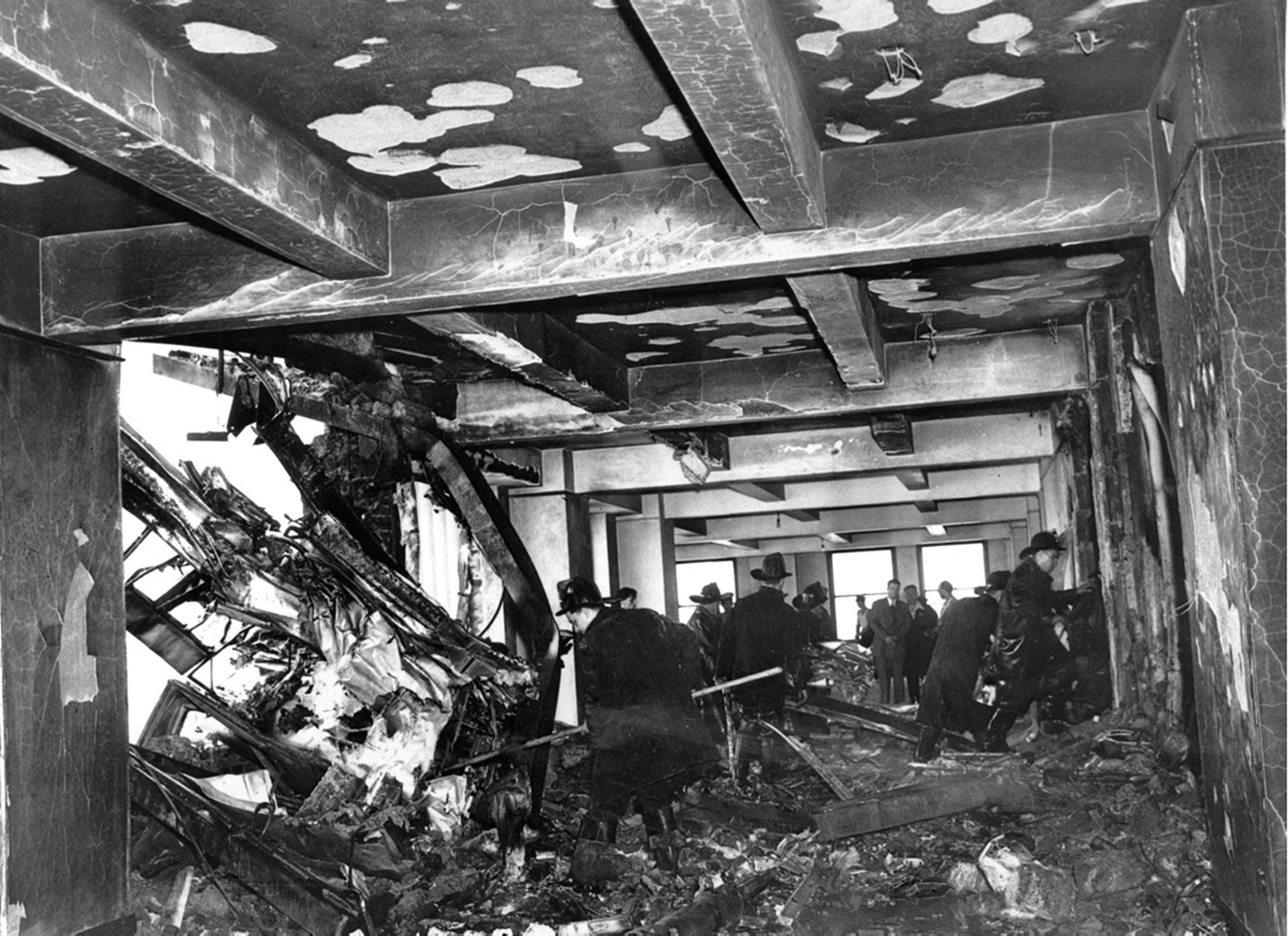
Raging fire on the 79th floor spreading to adjacent levels

Aircraft debris falling onto 34th Street (North face of the building)
Fortunately, the accident occurred on a weekend, so there were only about 1,500 people in the building, rather than the usual 10,000–15,000. Furthermore, had the B-25 bomber been fully loaded with bombs and ammunition like a standard combat aircraft, the destruction and devastation could have been catastrophic.
However, the toll was still heavy: the accident claimed 14 lives (including 3 crew members and 11 people inside the building) and injured approximately 24 others. Smith's body was not found until two days later at the bottom of an elevator shaft.
Regarding property damage, the crash caused over $1 million in losses, equivalent to roughly $10.5 million today. The damage could have been far worse had firefighters not responded so promptly; amazingly, they extinguished the blaze in just 40 minutes.
The Unbelievable Survival of the Elevator Operator
Amidst the chaos, many people had to walk down dozens of flights of dark stairs. Witnesses reported seeing burning debris falling down the elevator shafts. Remarkably, even though one of the plane's engines and part of the landing gear had fallen into the shafts, rescue workers initially used the elevators to transport the critically injured, unaware of the extent of the damage to the cabling system.
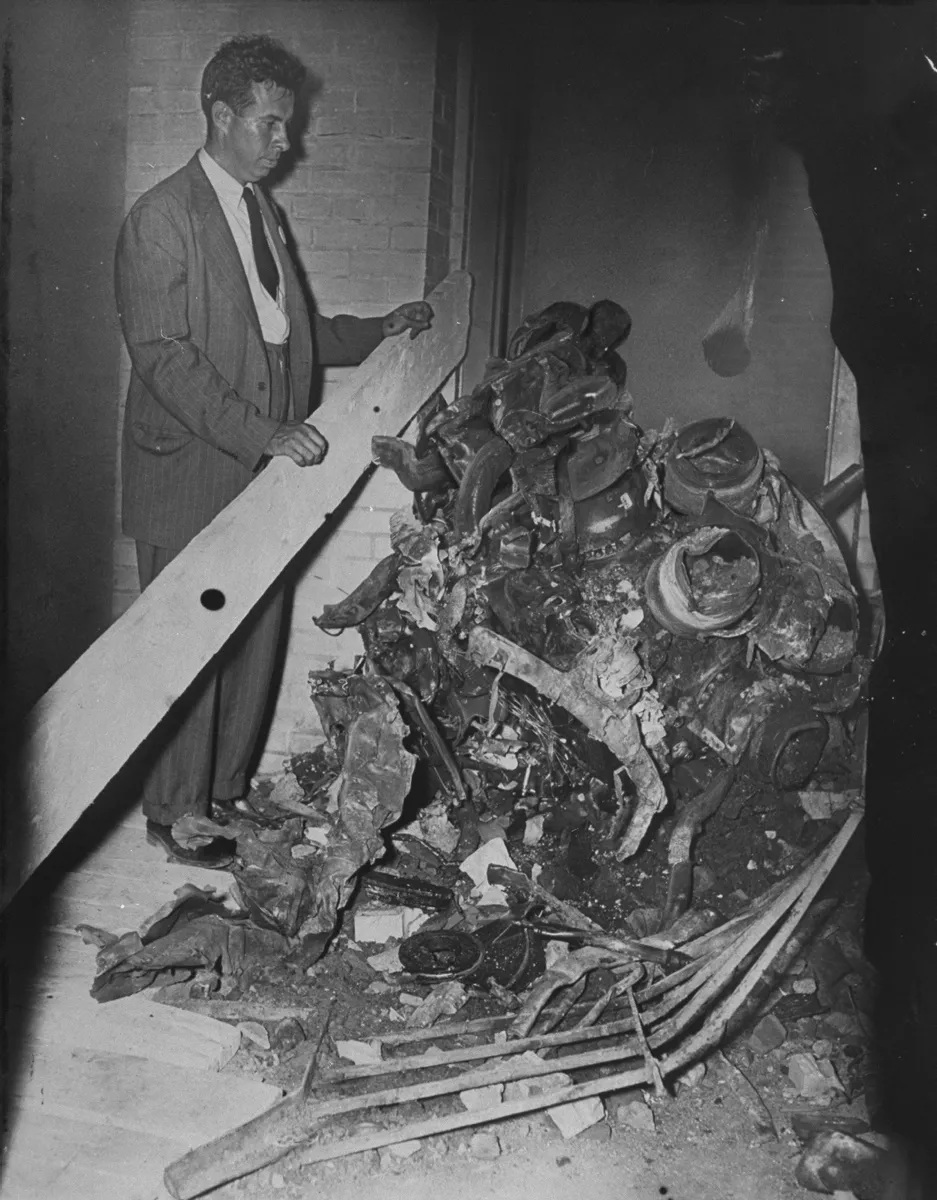
One of the aircraft's engines tore through the building and landed on the neighboring Waldorf Building on 33rd Street, while the other fell down the elevator shaft. Pictured: A man inspecting the aircraft engine in the lobby of the Empire State Building.
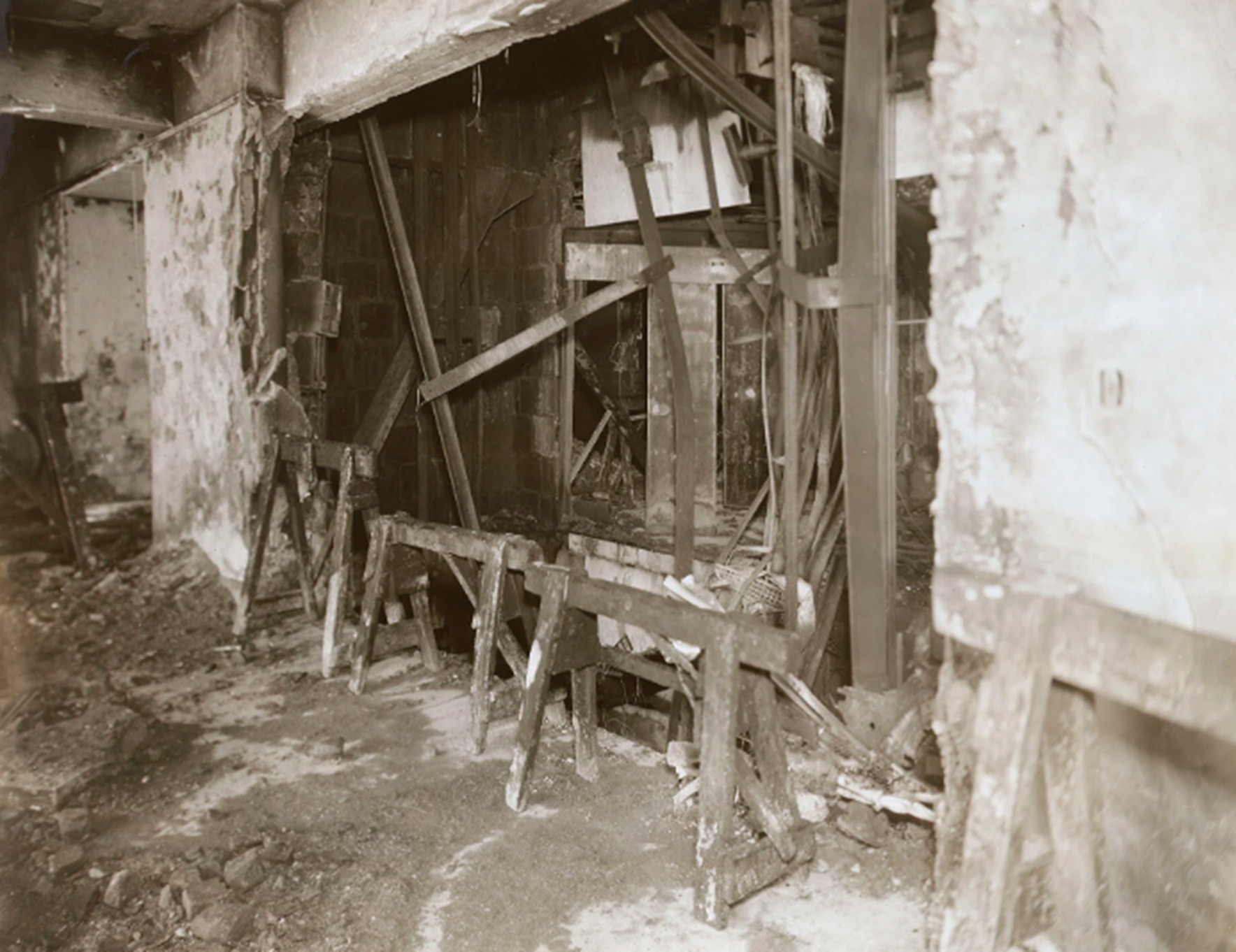
The gaping hole in the wall where the plane crashed into the elevator bank.
Amidst the rubble, the story of elevator operator Betty Lou Oliver became legendary. When the plane struck, she was stationed in her elevator car on the 80th floor, preparing for her shift. The force of the impact sent the elevator sliding down to the 79th floor and threw her out of the cabin. In addition to severe burns, Betty suffered a broken pelvis, back, and neck.
After receiving first aid, she was placed into another elevator car (No. 6) on the 79th floor for evacuation to the ground level. However, as soon as the doors closed, rescue workers heard a sound like a gunshot—which was actually the sound of the elevator cables snapping. The cabin carrying Betty, then at the 75th floor, plummeted straight down to the basement—a fall of over 1,000 ft (approx. 300m).
Miraculously, Betty Lou Oliver survived the free fall of over 300 meters. Rescuers had to cut a hole in the roof of the elevator cabin to reach her and pull her out.
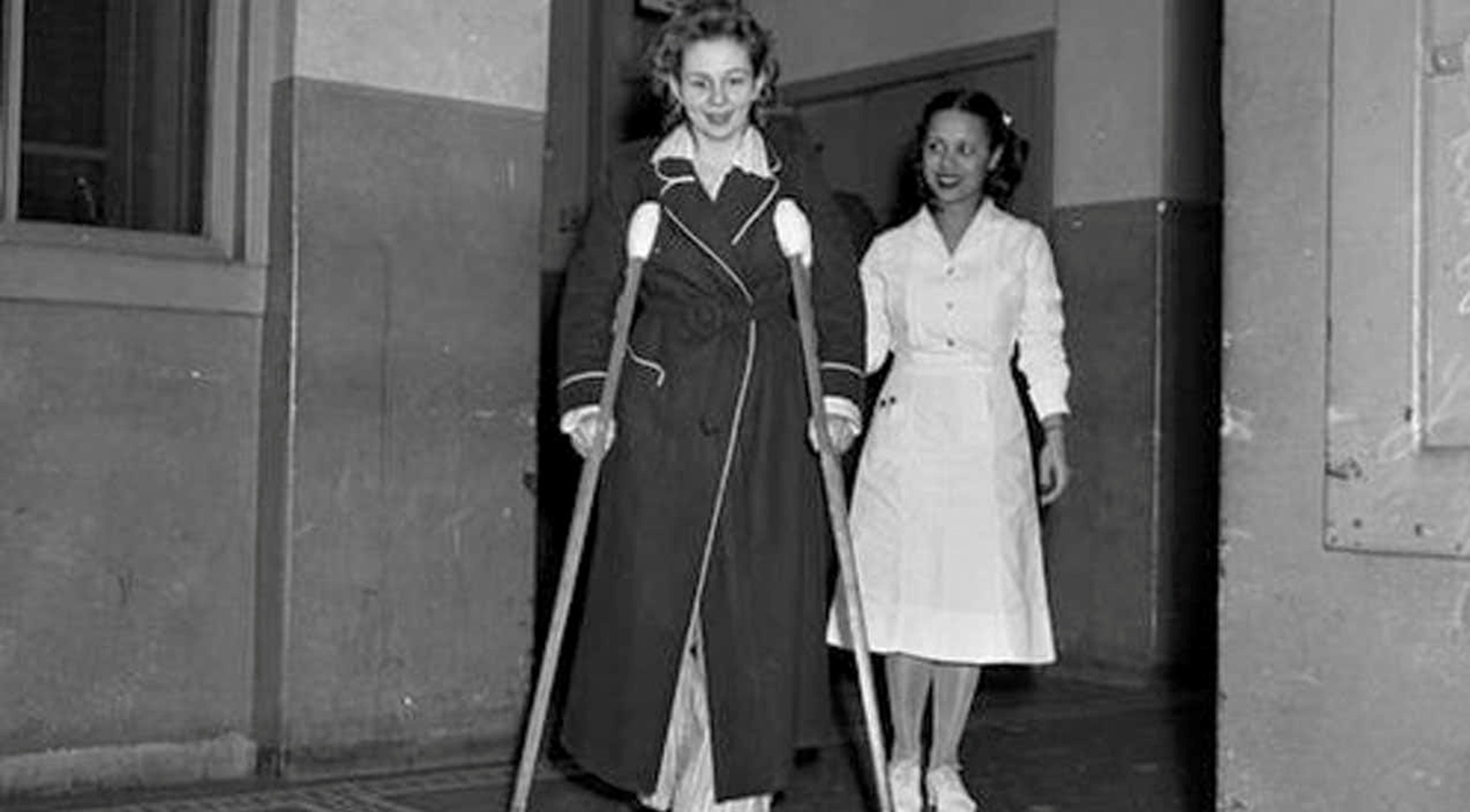
Ms. Betty Lou Oliver undergoing treatment at the hospital.
Betty remained fully conscious throughout the descent: "I began to scream and pounded on the floor. I was falling so fast that I had to hold on to the sides of the elevator to keep from floating," she recounted to her sister while recovering in the hospital, as reported by the Courier-News at the time.

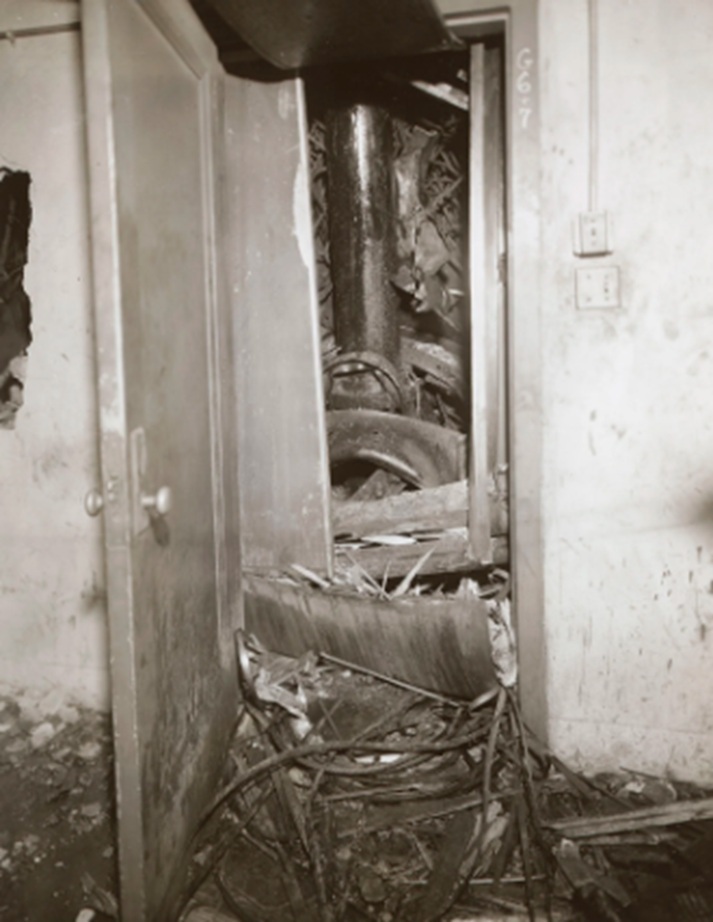
Image of the Empire State Building's elevator shaft after the crash.
Regarding Betty's life after the incident, she completely vanished from the media spotlight. It is unknown whether she suffered from psychological trauma requiring treatment.
All the world knows is that Betty was married at the time of the accident. After recovering eight months later, she returned to Fort Smith, Arizona, to live with her husband, Oscar Lee. She had three children with Oscar Lee and a total of seven grandchildren. Her husband passed away in 1986, and according to her obituary, Betty passed away in Fort Smith, Arizona, on November 24, 1999, at the age of 74.
To this day, Betty Lou Oliver remains the only person to have survived an elevator fall from the greatest height in the world. It is a record that remains unbroken.
https://tapchithangmay.vn/dieu-gi-da-cuu-song-nguoi-phu-nu-trong-cu-roi-thang-may-tu-tang-75-cua-toa-nha-empire-state/