From Abandoned Factory to a “Reborn” African Contemporary Art Museum
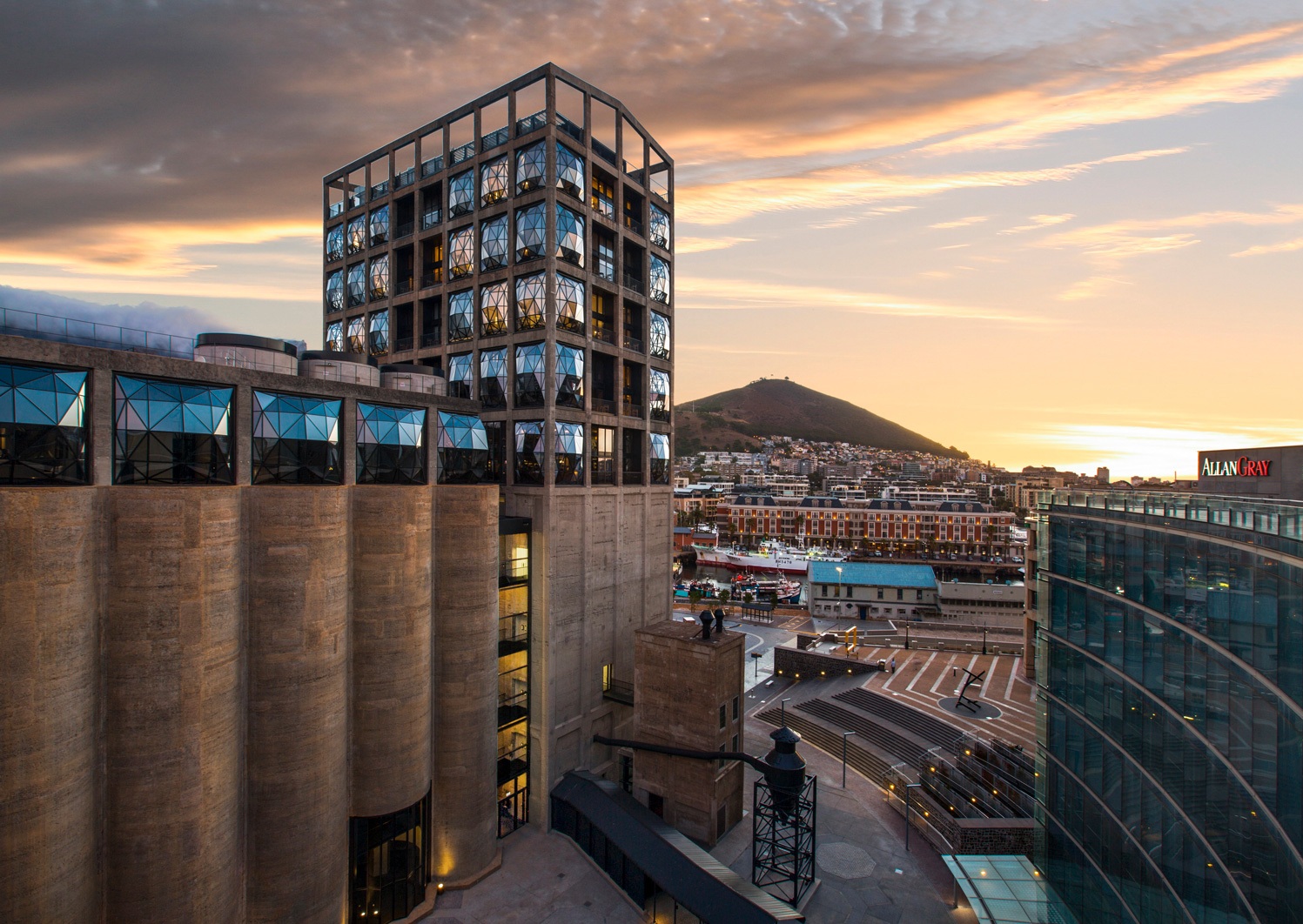
EM – In Cape Town, South Africa’s vibrant port city, adjacent to the bustling Victoria & Alfred Waterfront, a once-neglected concrete structure has been reborn as one of Africa’s premier art destinations—the Zeitz Museum of Contemporary Art Africa (Zeitz MOCAA).
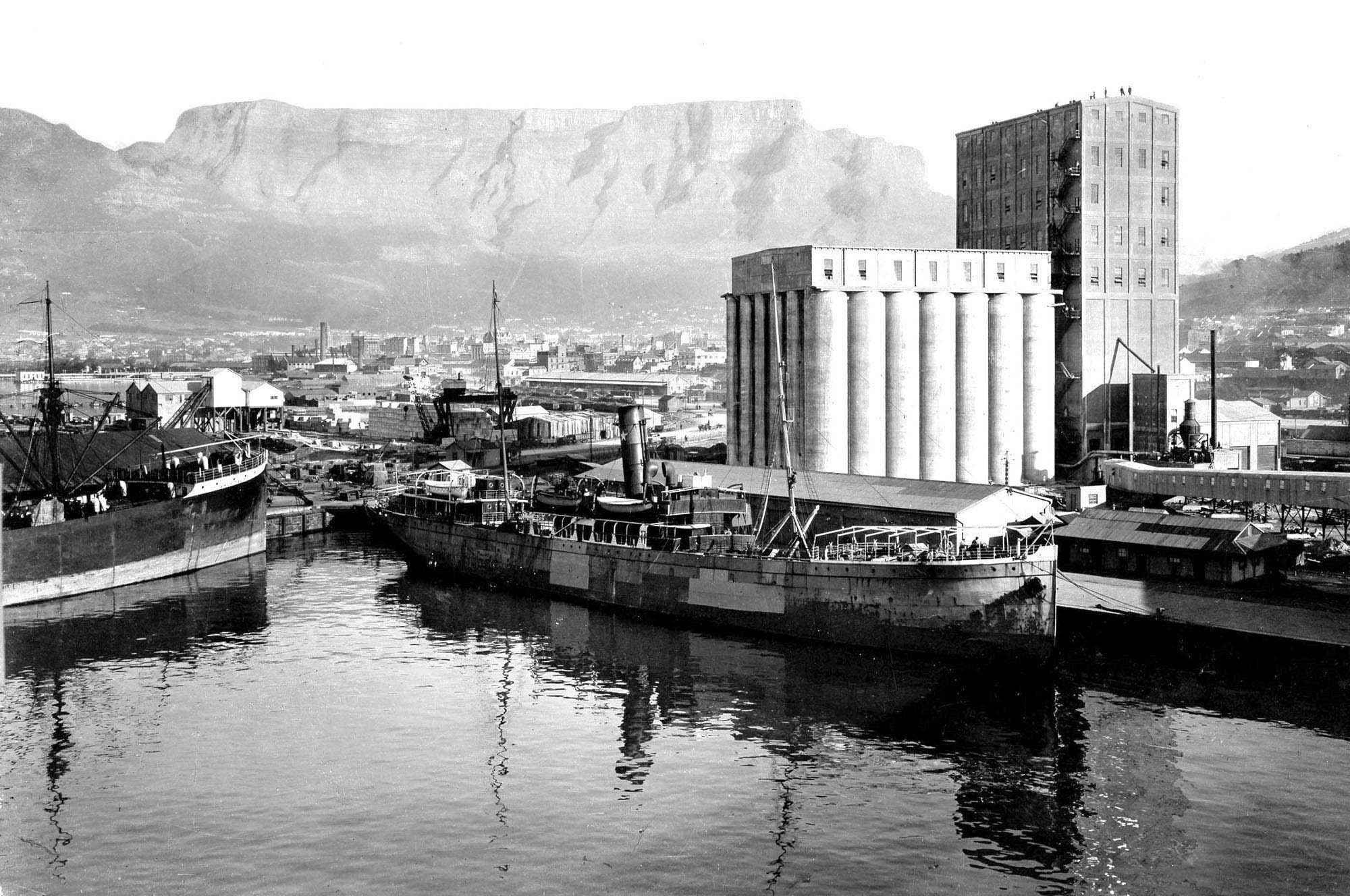
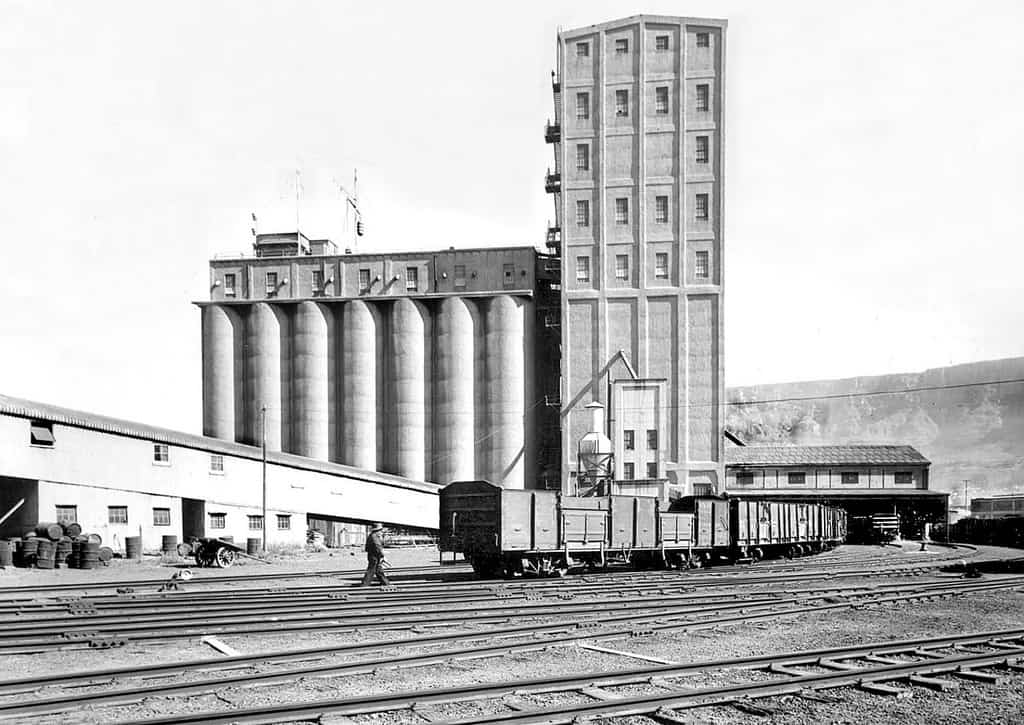
Originally constructed in the 1920s, the Grain Silo cereal plant in the port city of Cape Town was once the “heart” of South Africa’s wheat export industry throughout the 20th century. With the advent of container shipping, the grain storage silos became less useful, and the Grain Silo complex stood silent and derelict, like a forgotten industrial monument, in the 1990s.
Instead of demolishing the entire structure, a project to revive the Grain Silo complex was officially launched, transforming it into the Zeitz MOCAA Museum of Contemporary Art Africa. Construction began in 2011, and the museum officially opened its doors to the public in 2017. The project was designed by Heatherwick Studio, a renowned architecture firm from the United Kingdom, led by architect Thomas Heatherwick.
Standing 57 meters tall, the Grain Silo was once Cape Town’s tallest building
With a deep understanding of the relationship between form and function, Heatherwick has created many inspiring works that redefine how people experience space. This article will explore his striking design for the Zeitz Museum of Contemporary Art Africa, focusing in particular on the use of the glass elevator system, which both honors the historic grain silos and reinvents the experience of vertical circulation.
A New Spatial Identity Within an Industrial Heritage
A silo is a type of vertical cylindrical structure, usually made of concrete or steel, used for storing grain, cement, animal feed, or other industrial materials.
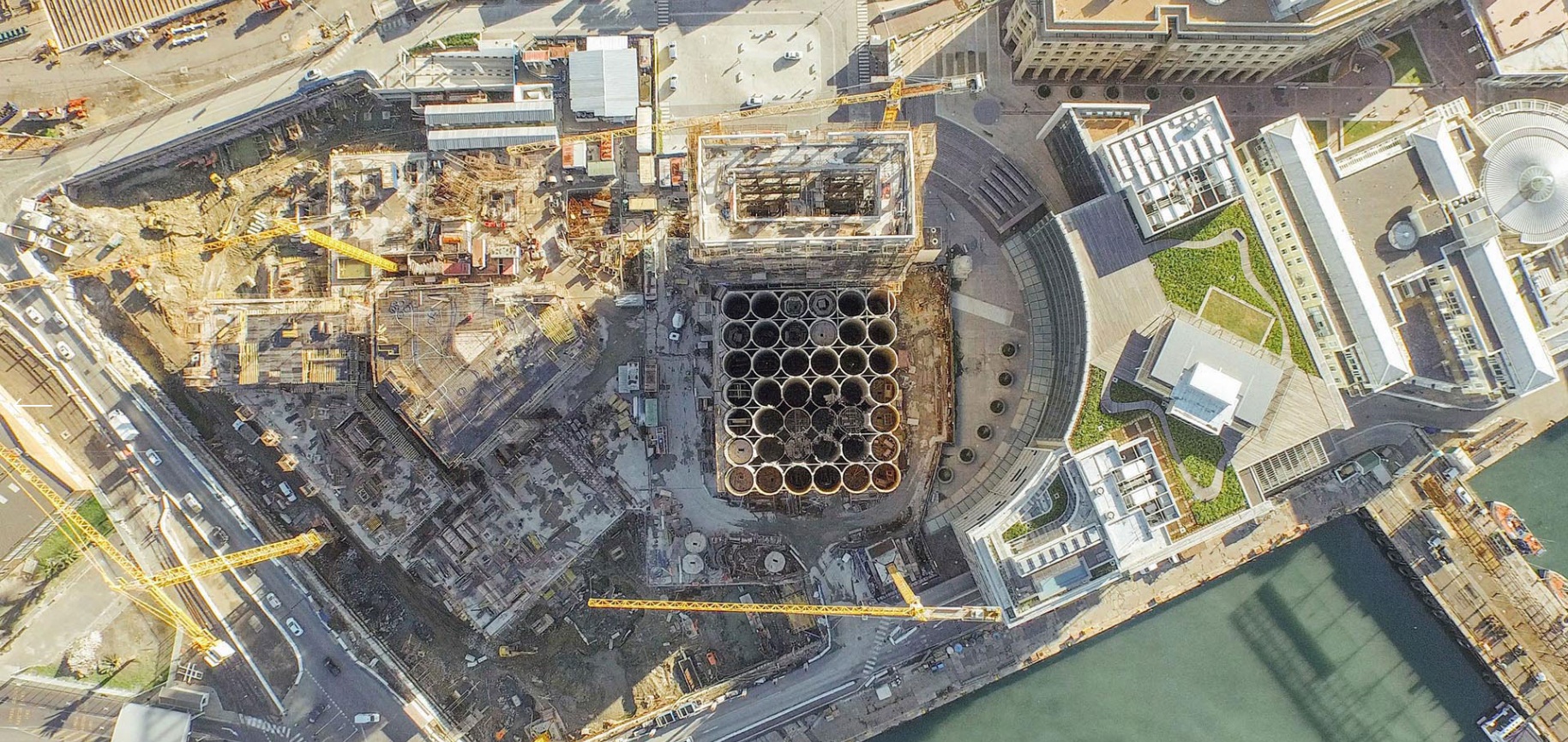
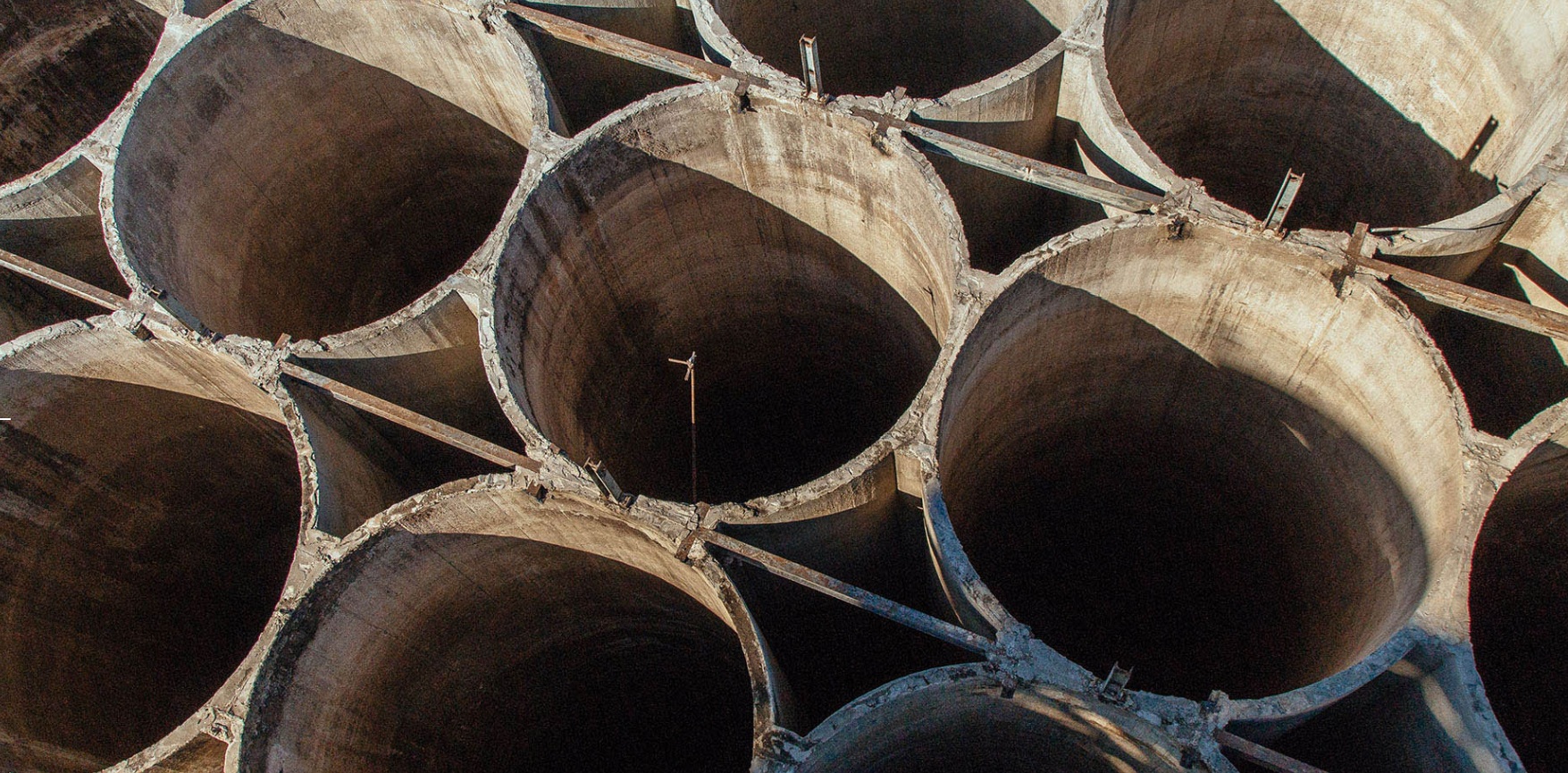
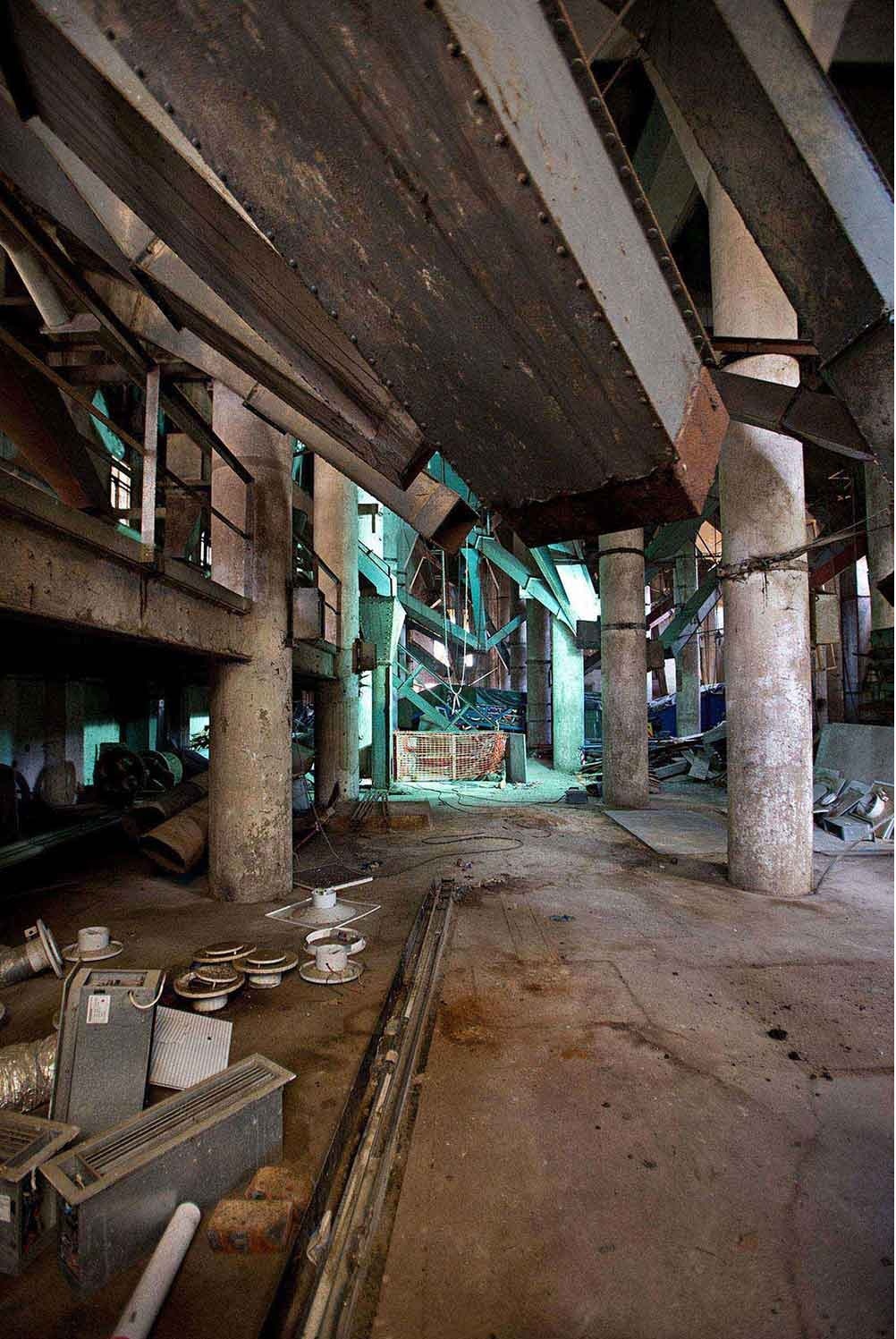
The original Grain Silo complex featured 42 concrete cylinders, each nearly 33 meters high, designed for the storage and transport of grain. The conversion from a grain storage warehouse into an art museum posed a major challenge: How to transform an enclosed, dark, and densely packed structure like the silo tubes into an open, bright, and easily accessible space for visitors, while still preserving its distinctive industrial character.
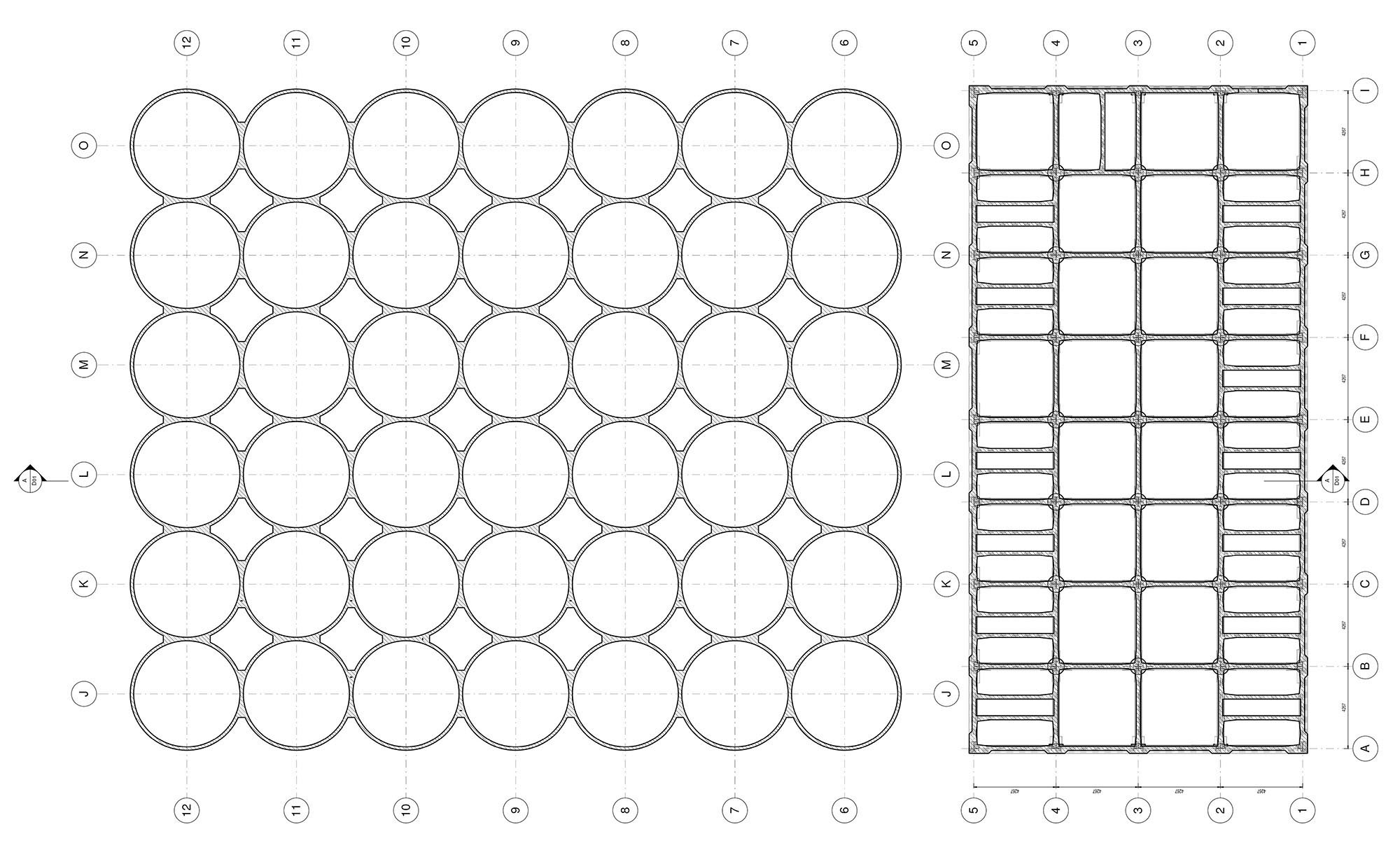
The existing floor plan revealed a dense cluster of silo tubes, forming a truly unique structure
In the world of architecture, very few designers possess a vision bold enough to reimagine space and challenge conventional norms. Thomas Heatherwick — the highly creative mind behind Heatherwick Studio — is one of them.
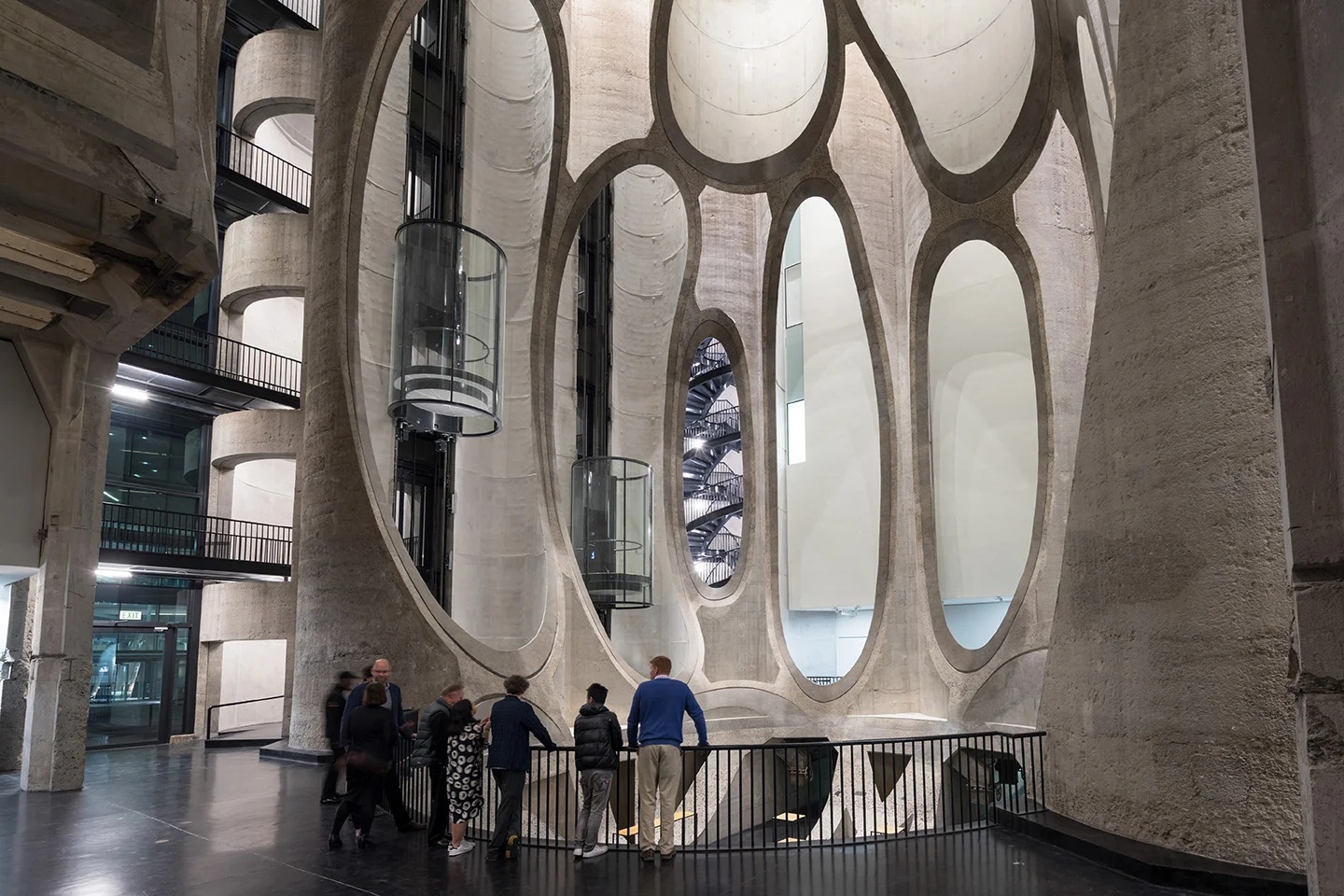
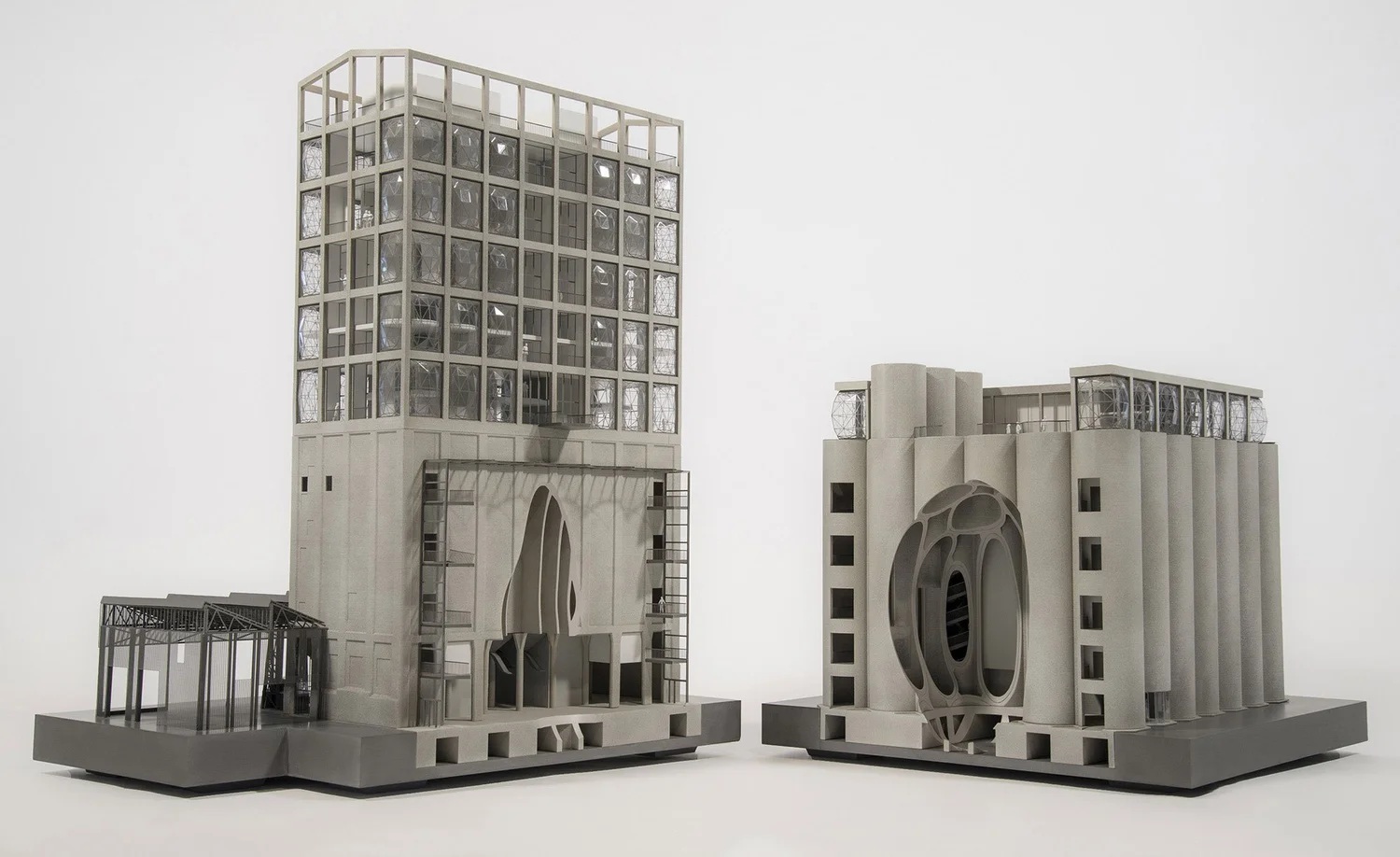
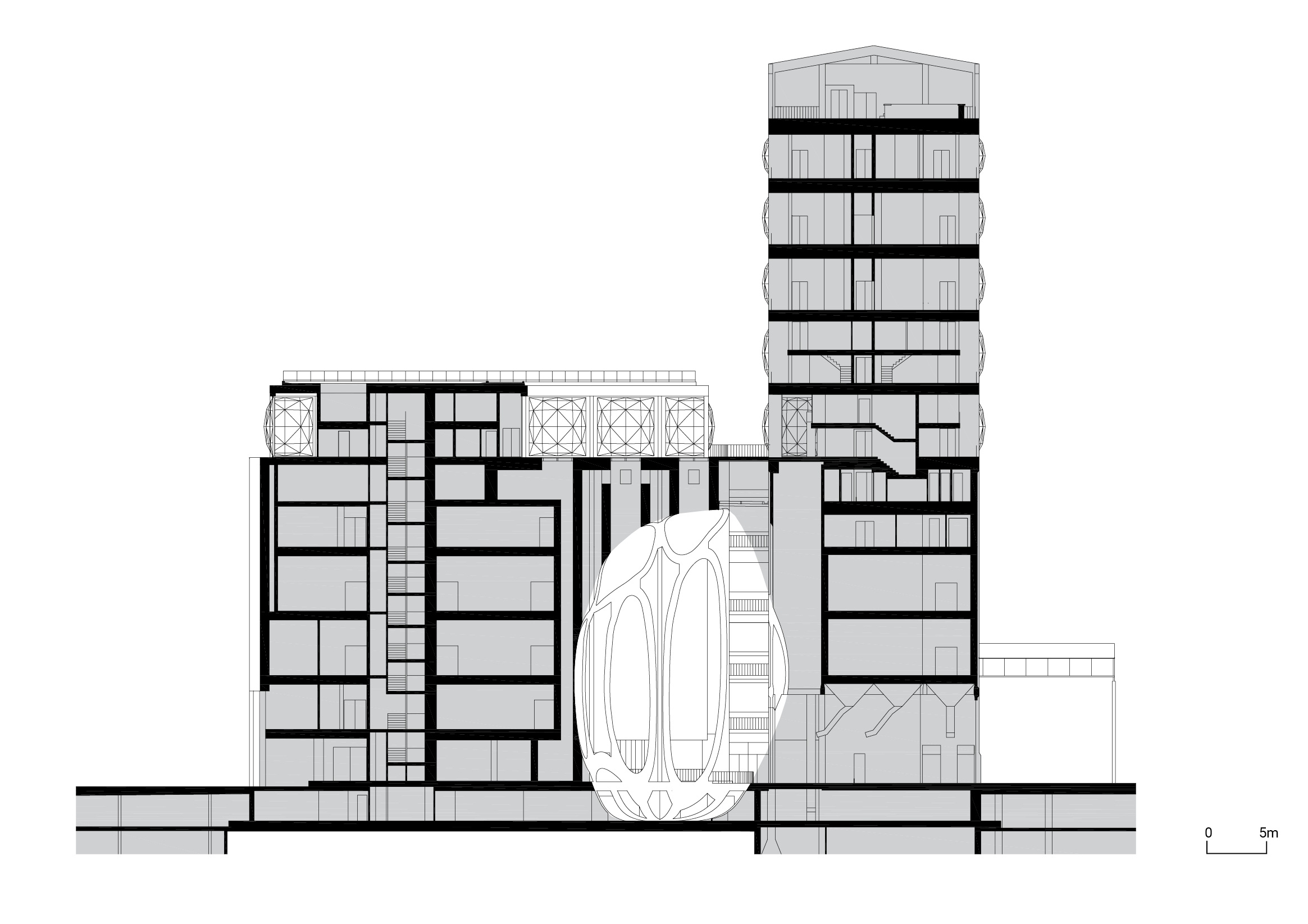
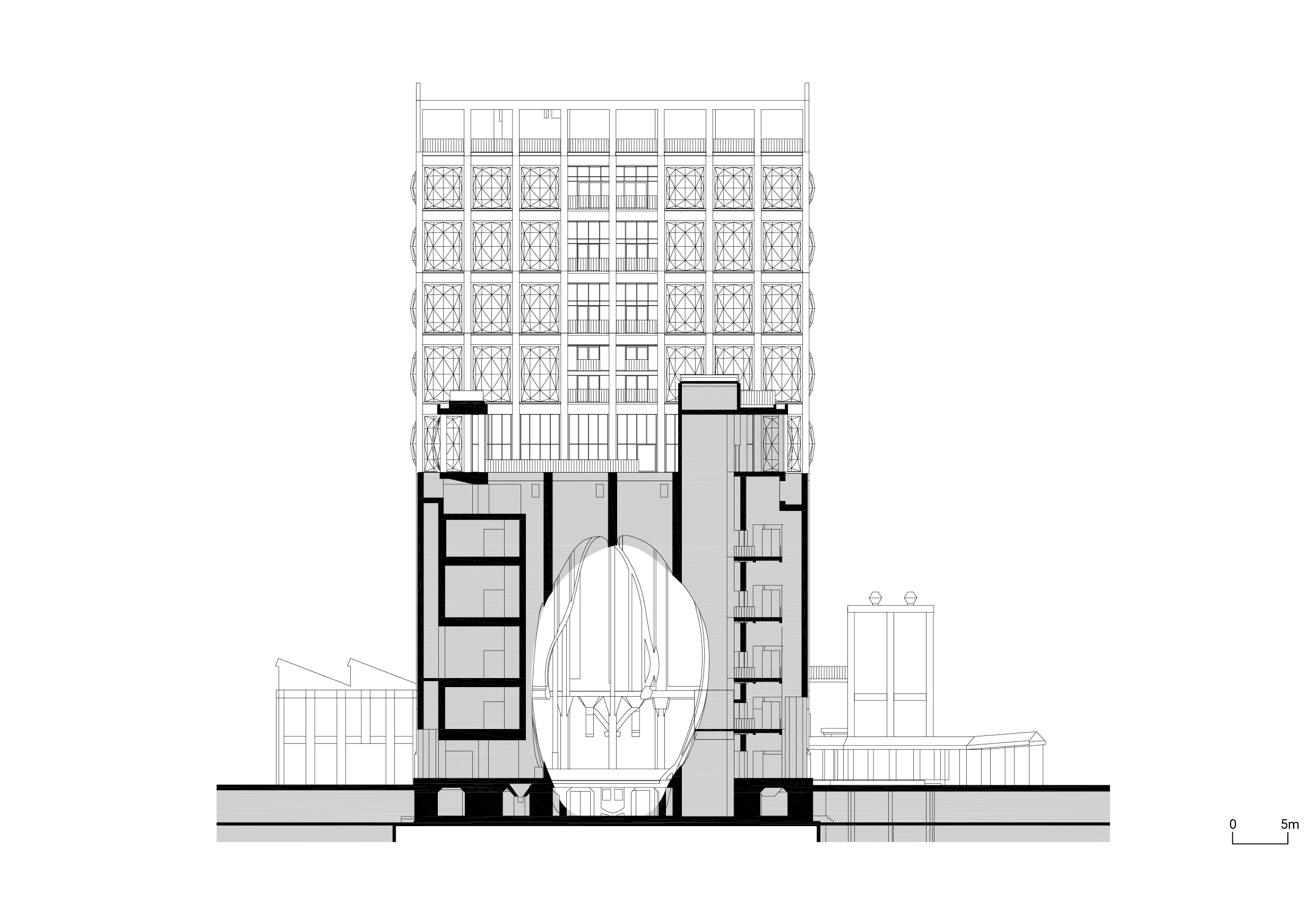
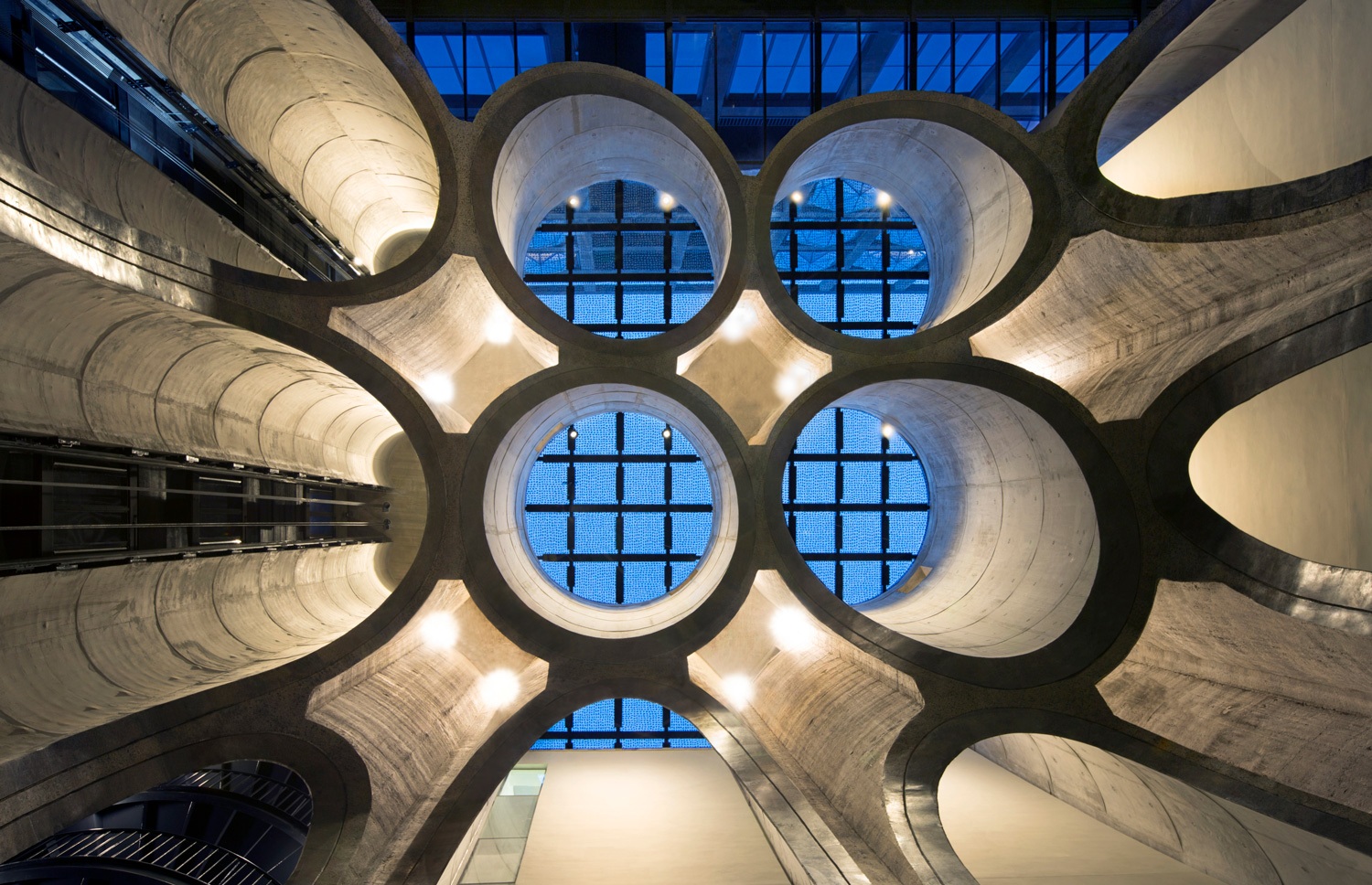
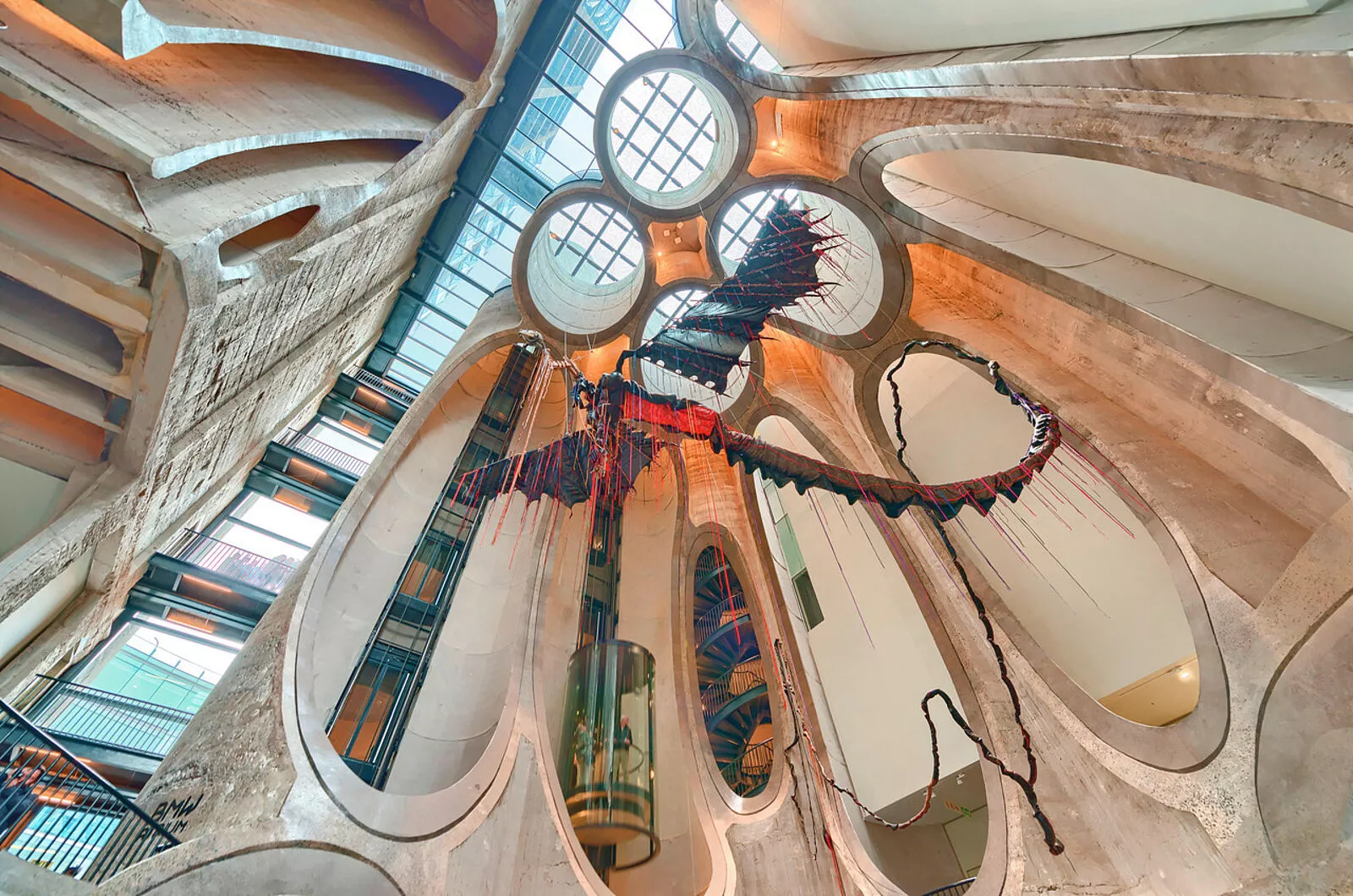
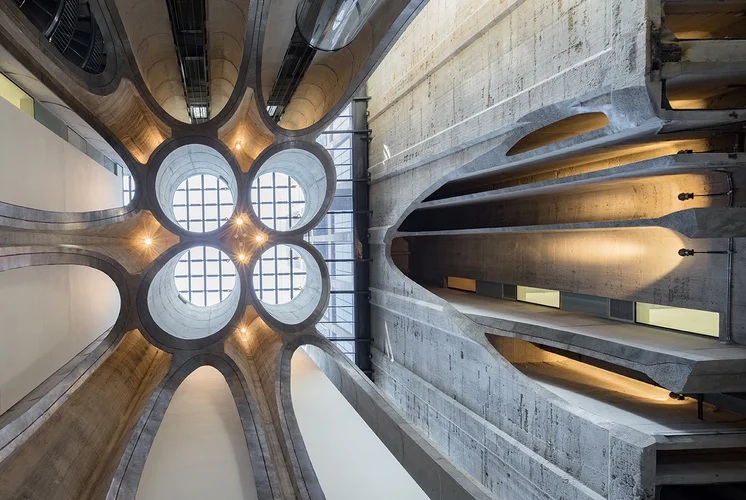
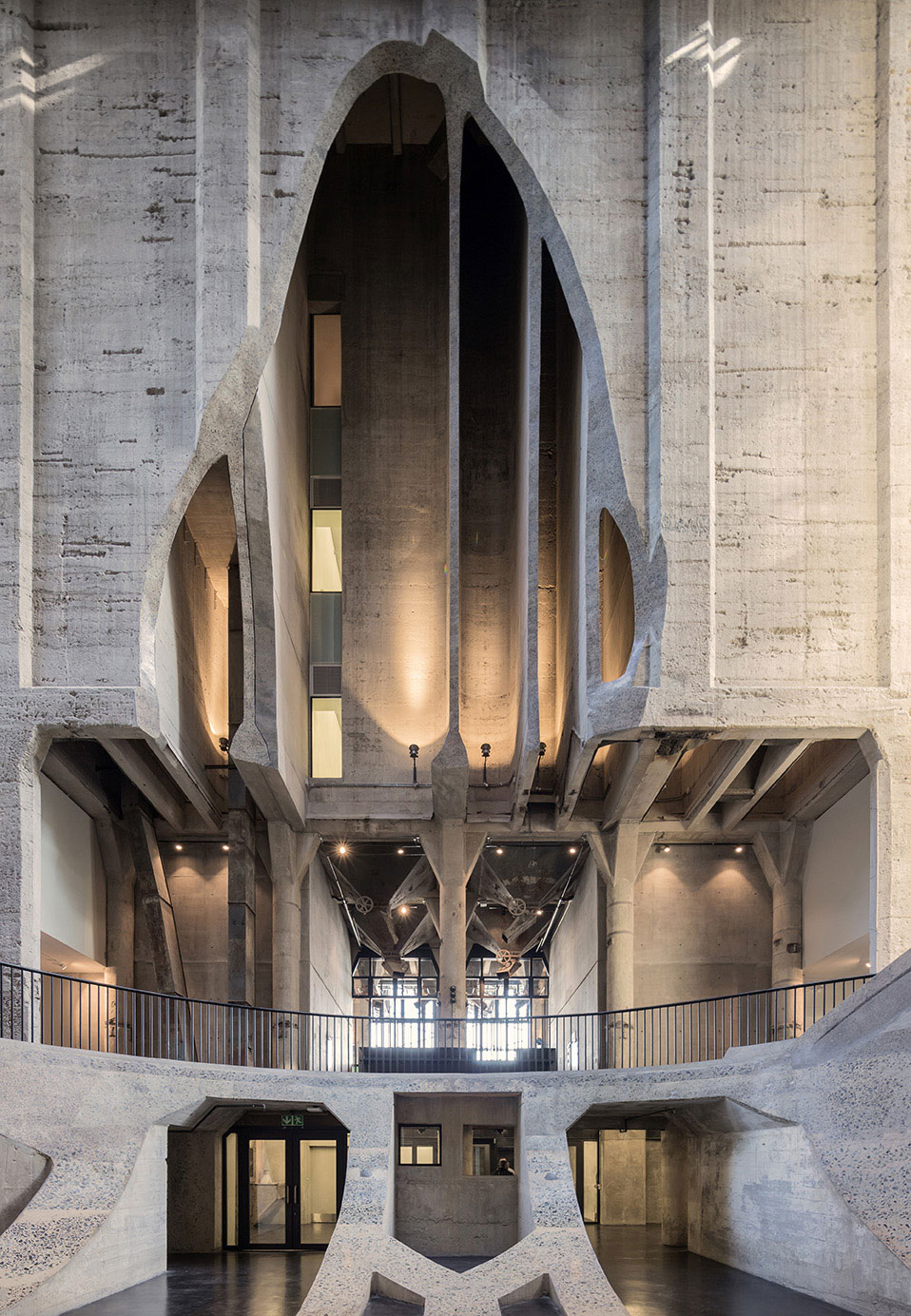
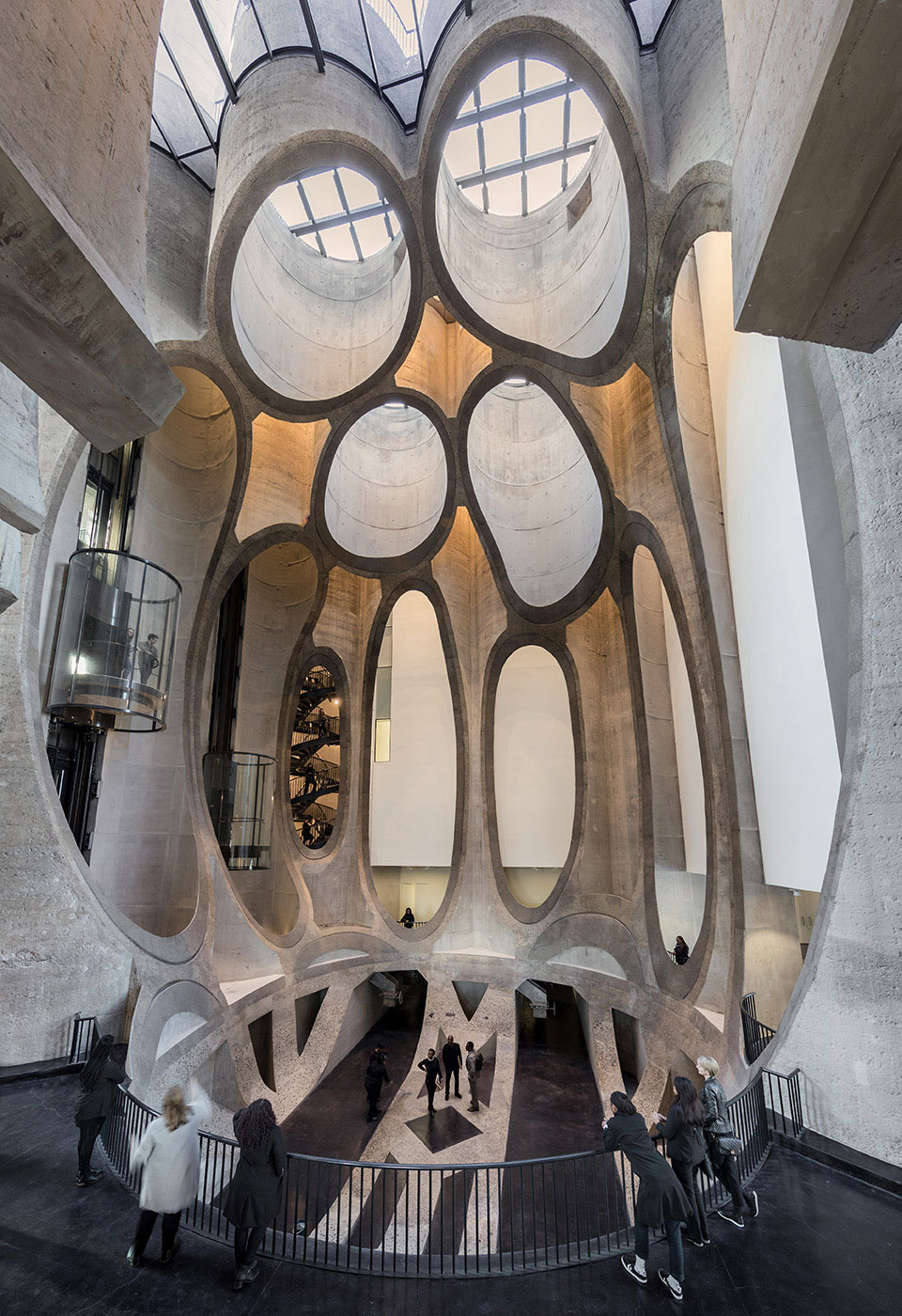
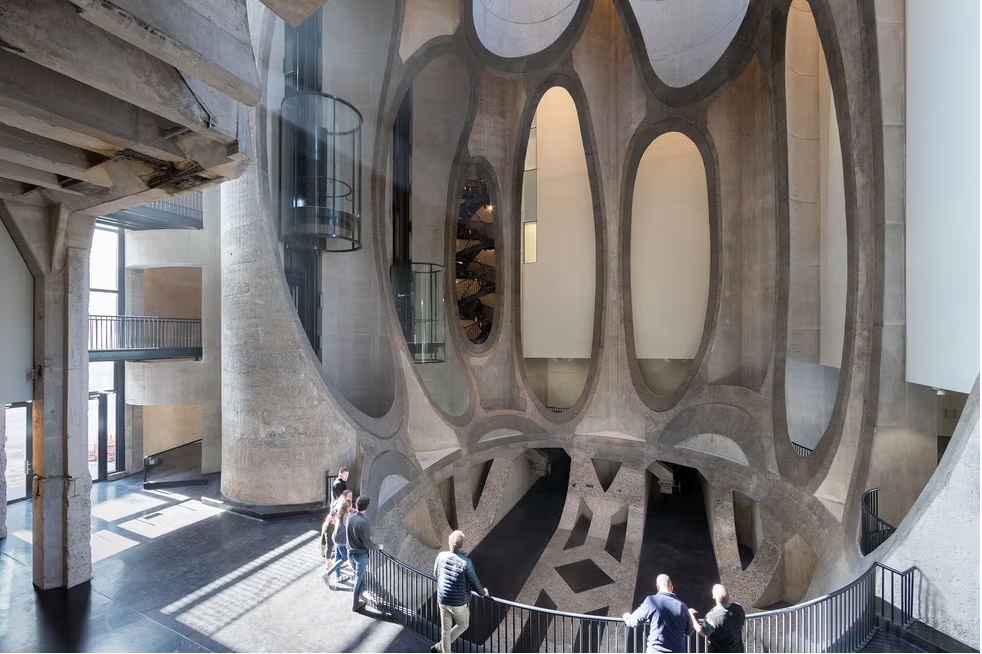
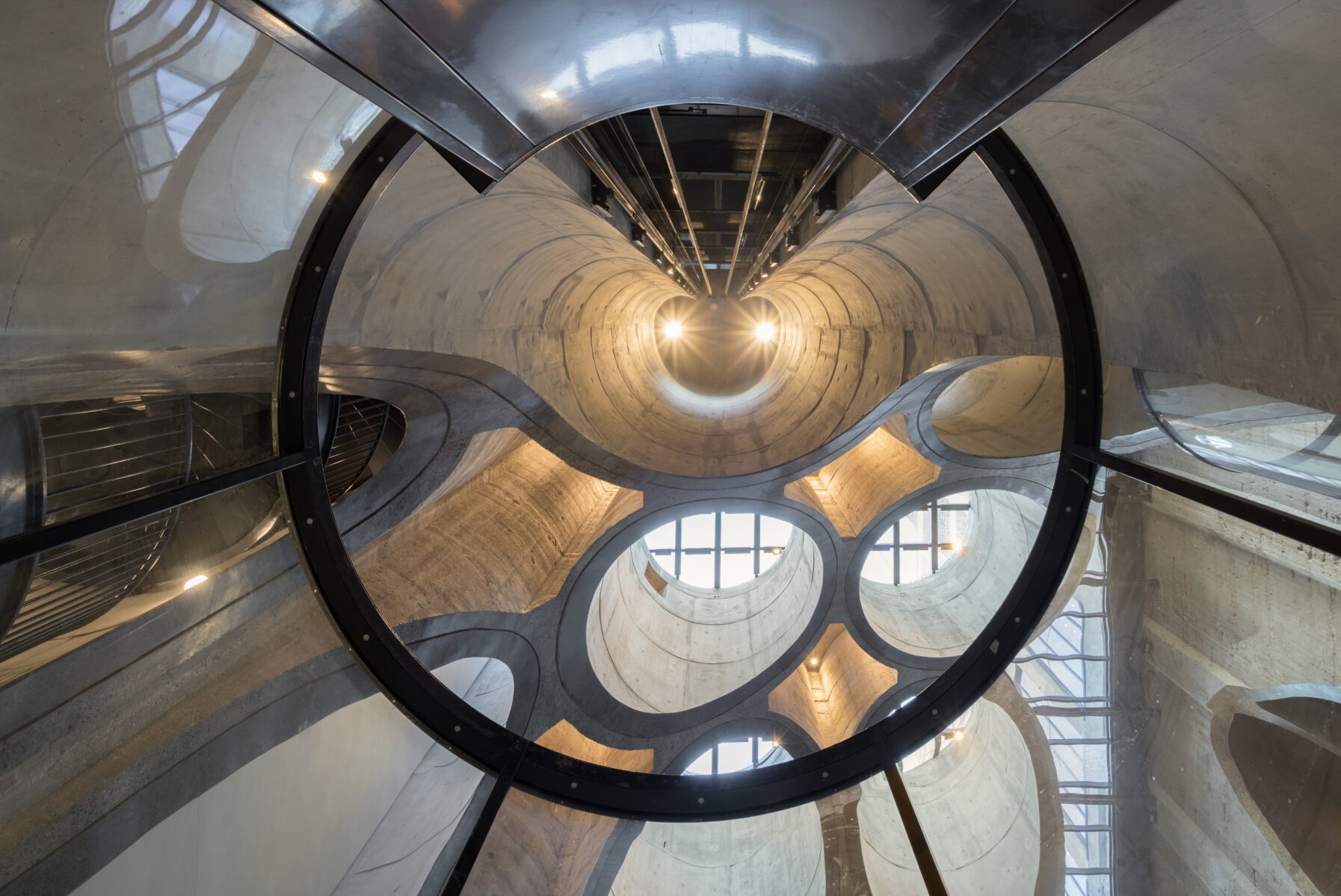
Heatherwick Studio solved this challenge by hollowing out a portion of the central silo tubes, creating an elliptical atrium with soft curves, soaring and hollow at the heart of the building — a space that functions as both a skylight and the main central lobby.
The remaining silo tubes were transformed into a complex network of galleries, staircases, and elevator shafts, ensuring full functionality while preserving the distinctive character of the original industrial structure.
The overall project comprises two main components: The Royal Portfolio Hotel (also known as The Silo Hotel) and the Zeitz Museum of Contemporary Art Africa.
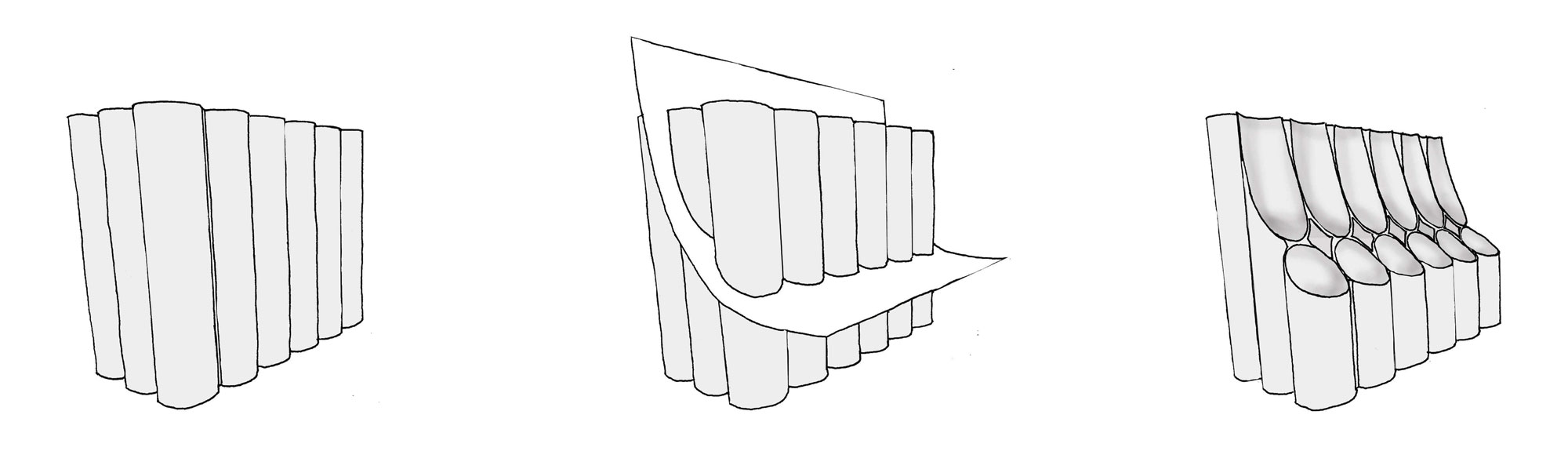
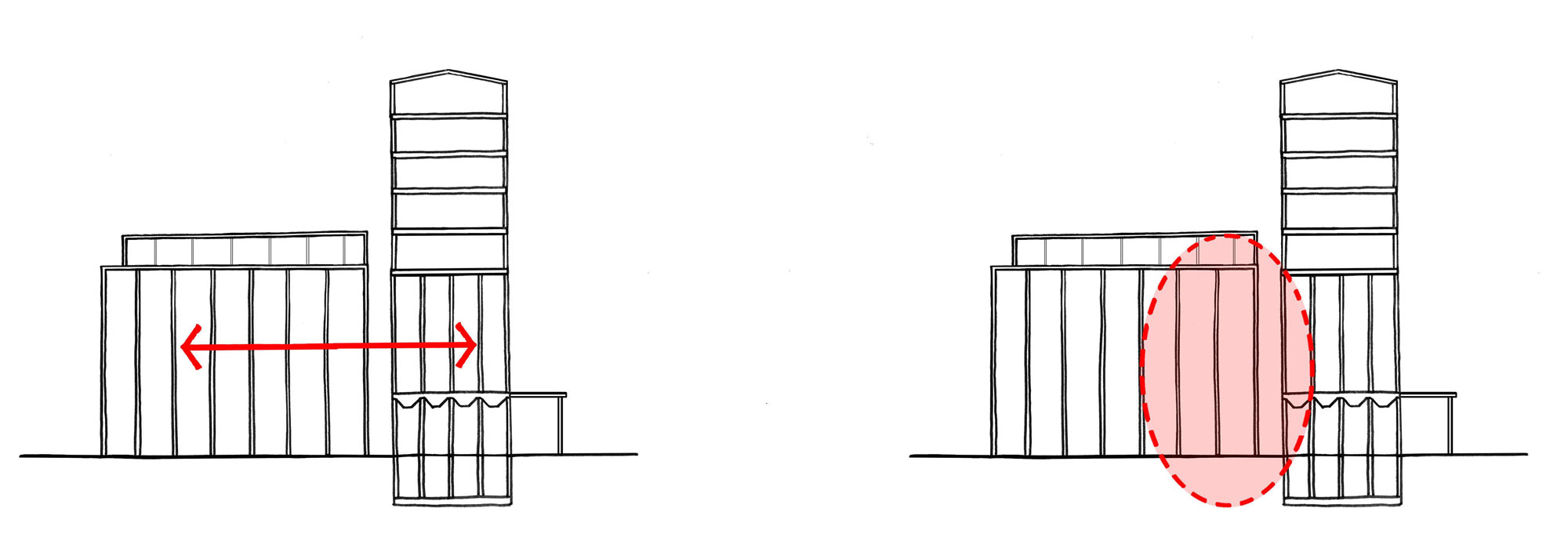
To break away from the rigid geometry of the original structure, Heatherwick drew inspiration from the soft curves of a corn kernel, subtly evoking the city of Cape Town’s grain-industry heritage. The diagram illustrates the architect’s approach: using a carved-out void to connect the two main functional volumes of the building.
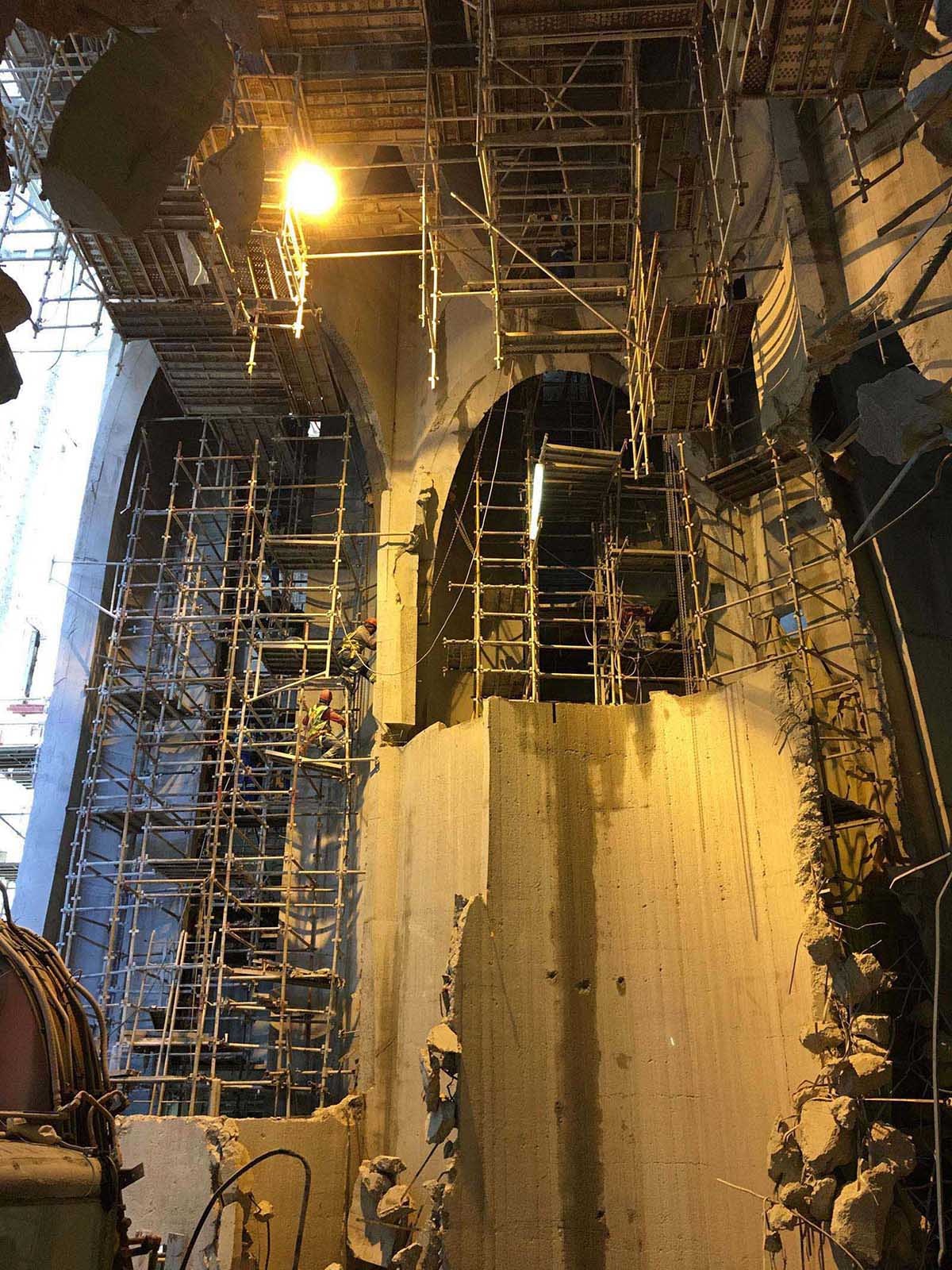
Không gian công trình trong quá trình thi công
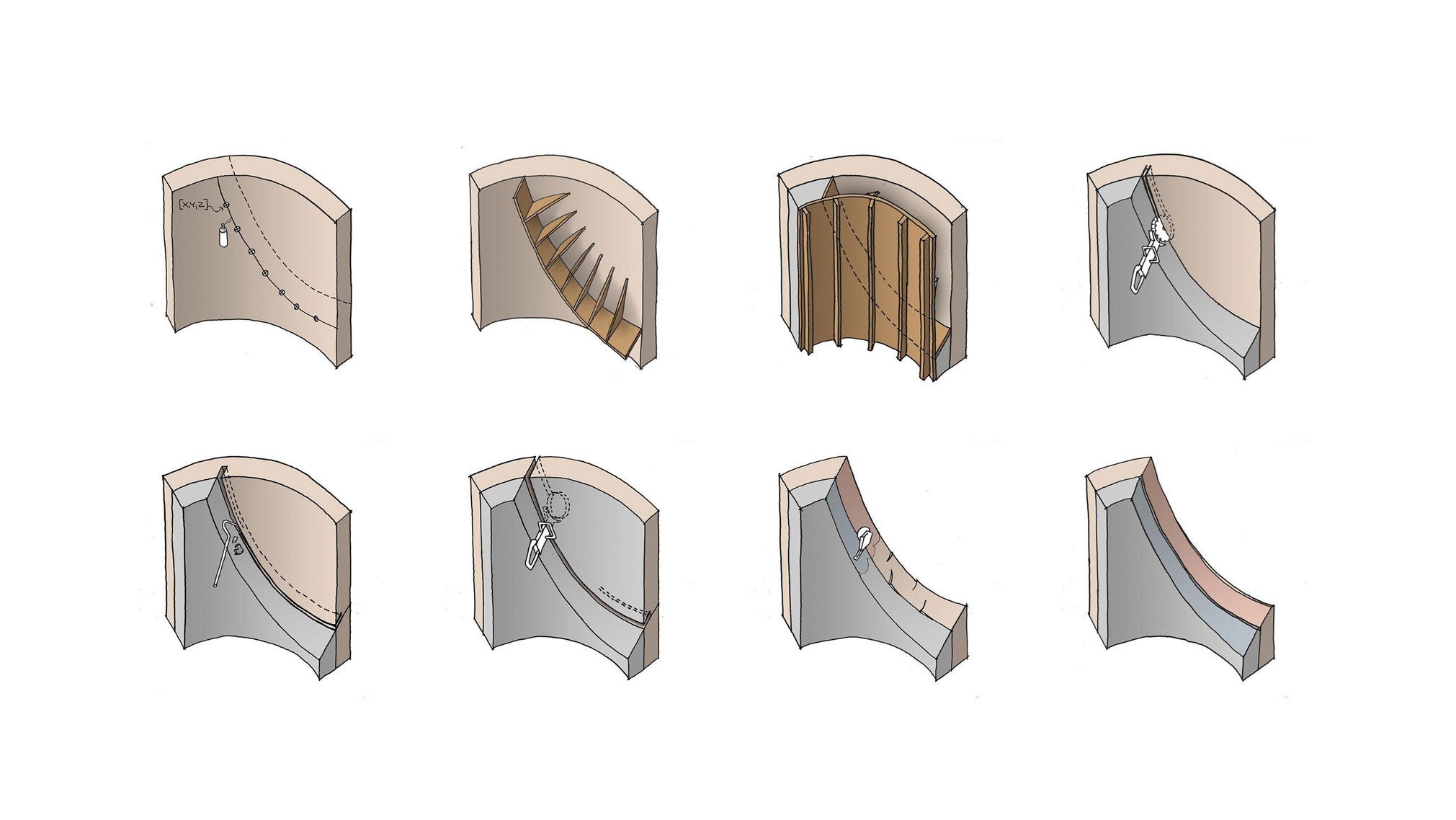
Because the silo tubes provided essential structural support for the entire building, the design team collaborated closely with structural engineers to ensure that carving into the concrete would not compromise the building’s integrity. Their solution was to reinforce each 5.5-meter-diameter silo with a 25-centimeter-thick layer of reinforced concrete before making any cuts to create the atrium.
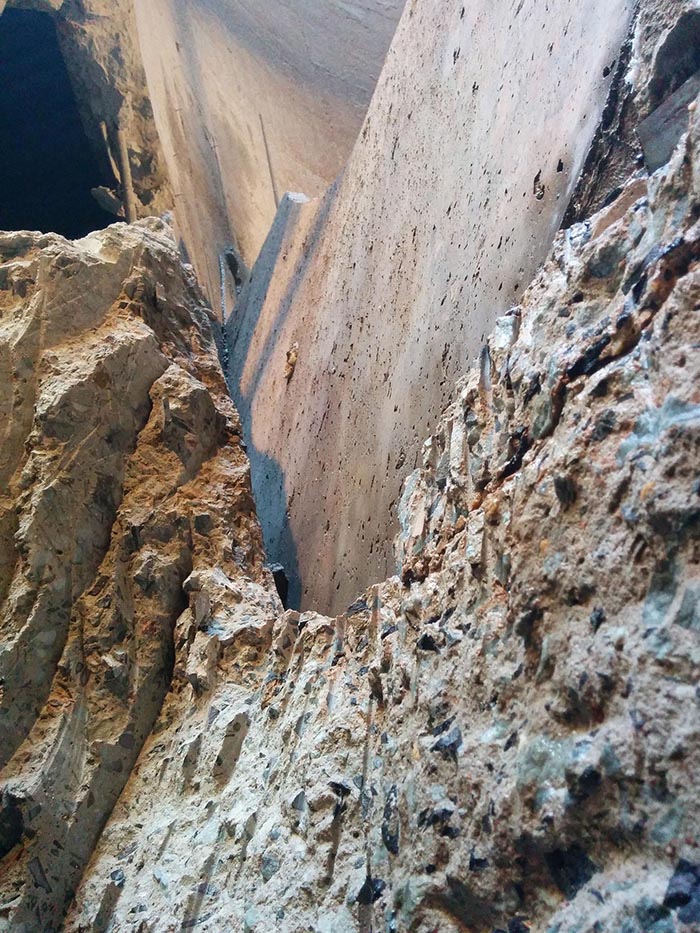
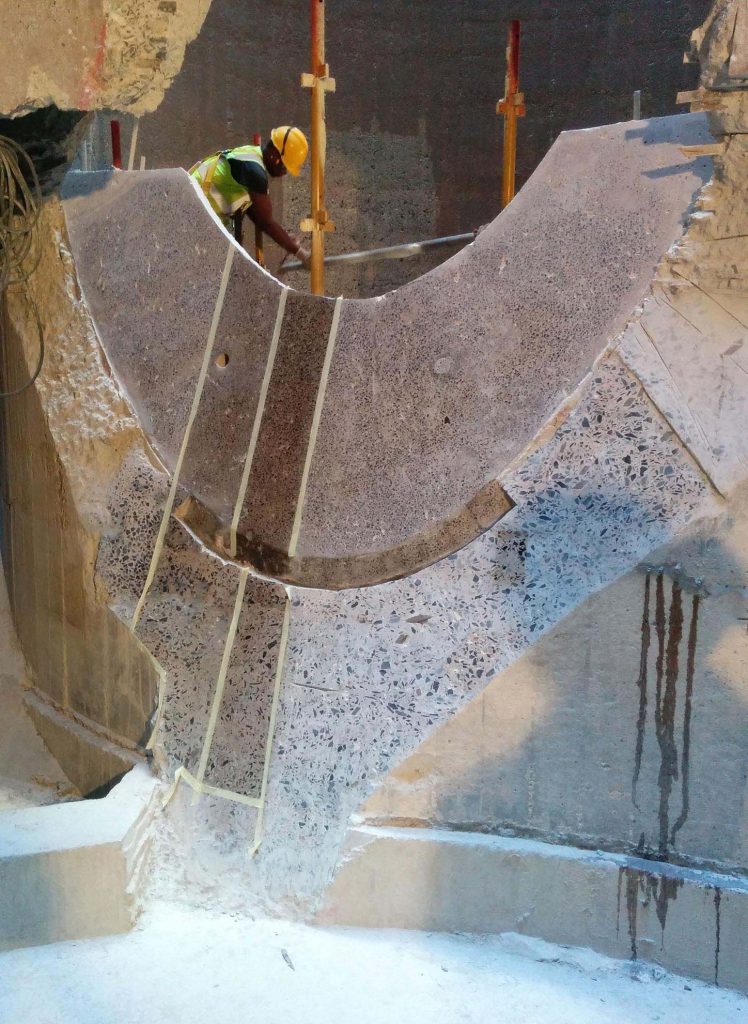
According to the project team, modifying an old concrete structure is never straightforward: some sections were extremely solid, while others had weakened over time, making the cutting process feel more like an archaeological dig than conventional construction work.
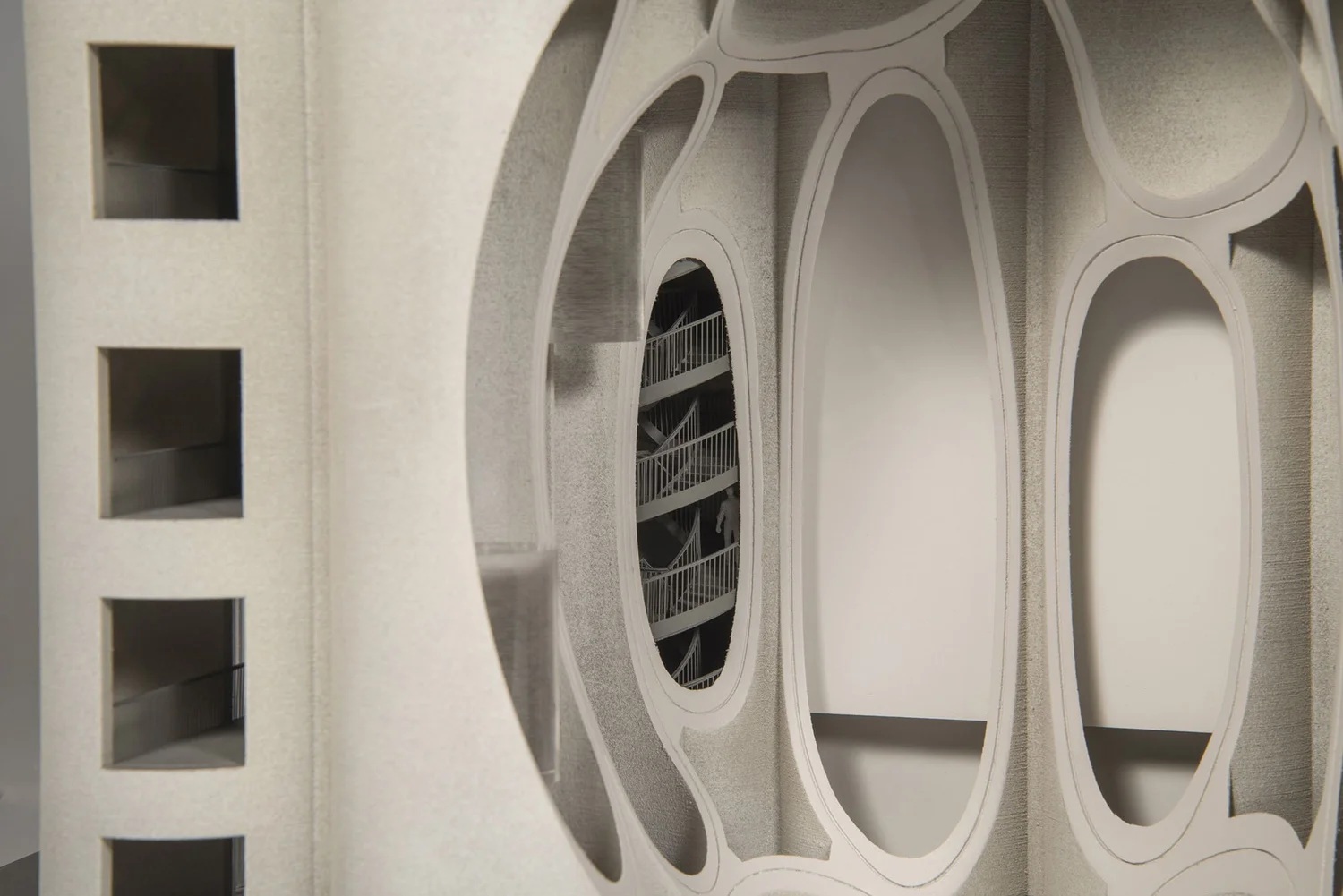
Models illustrating the process of assembling formwork, pouring new reinforced concrete, and cutting through old structural layers
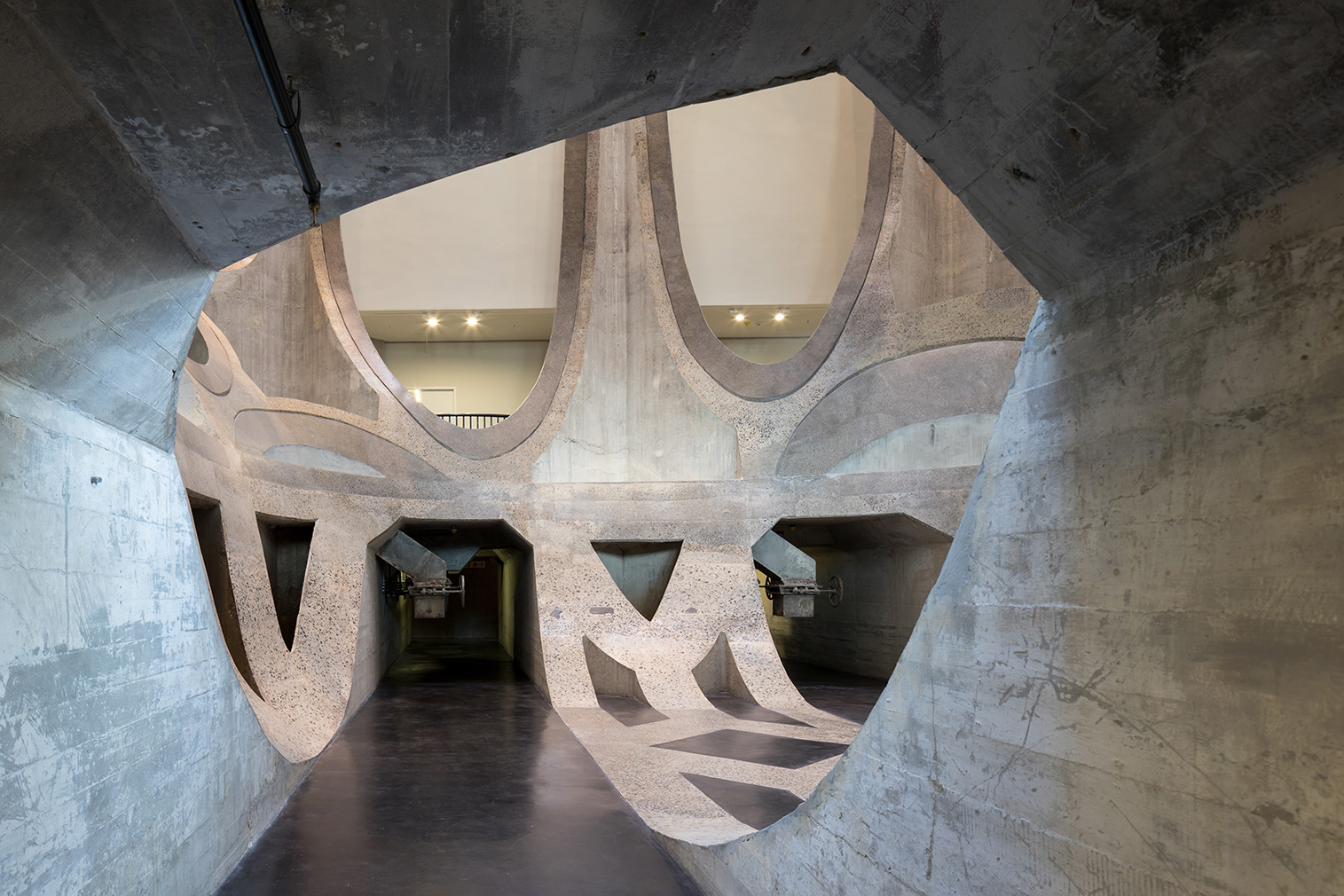
Rough cuts into the original structure, and the refined surfaces after completion
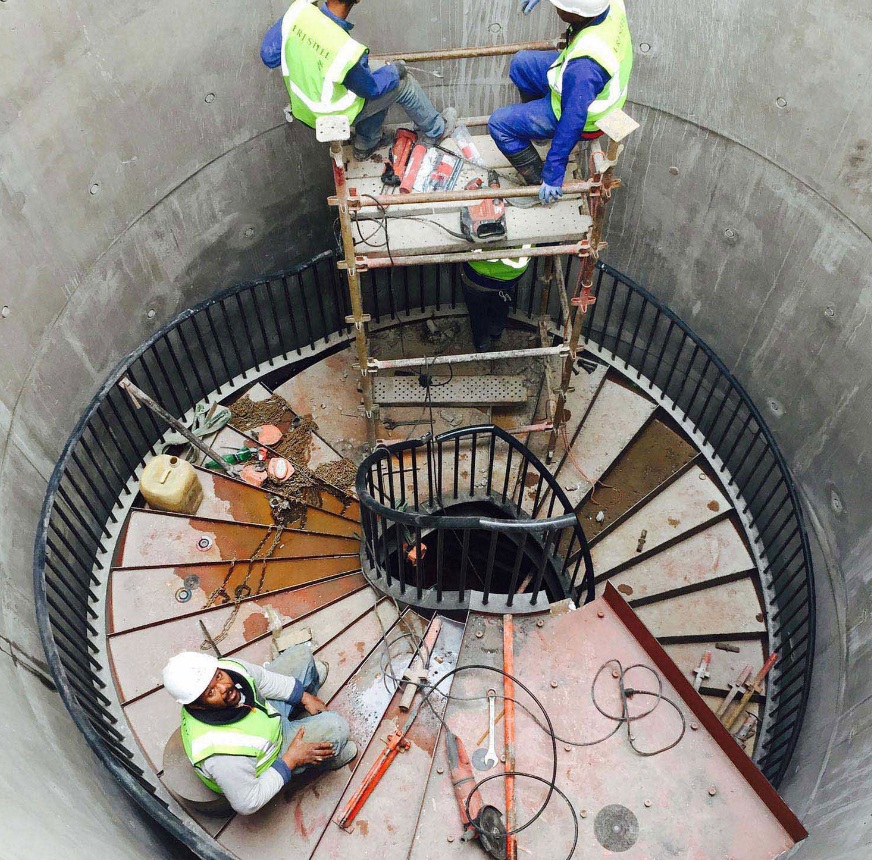
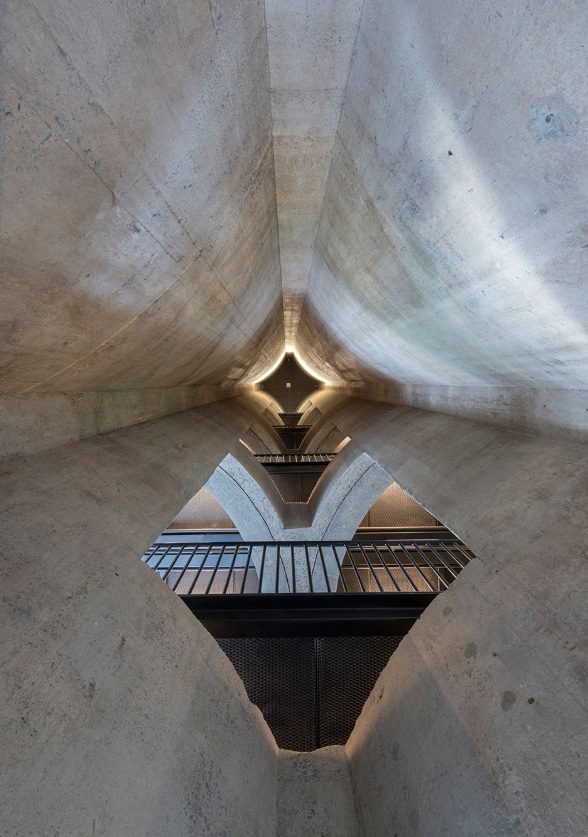
Some of the silo tubes were converted into stairwells.
Heatherwick described the resulting space as “cathedral-like.” Heatherwick describes the space as “like a vaulted cathedral.” He explains: “We were interested in how to breathe life into this building. The client was quite blunt in saying that these tubes looked like garbage for displaying art, so the challenge was how we could preserve the spirit of this tubular form while making it functional and creating Grade A exhibition space.”
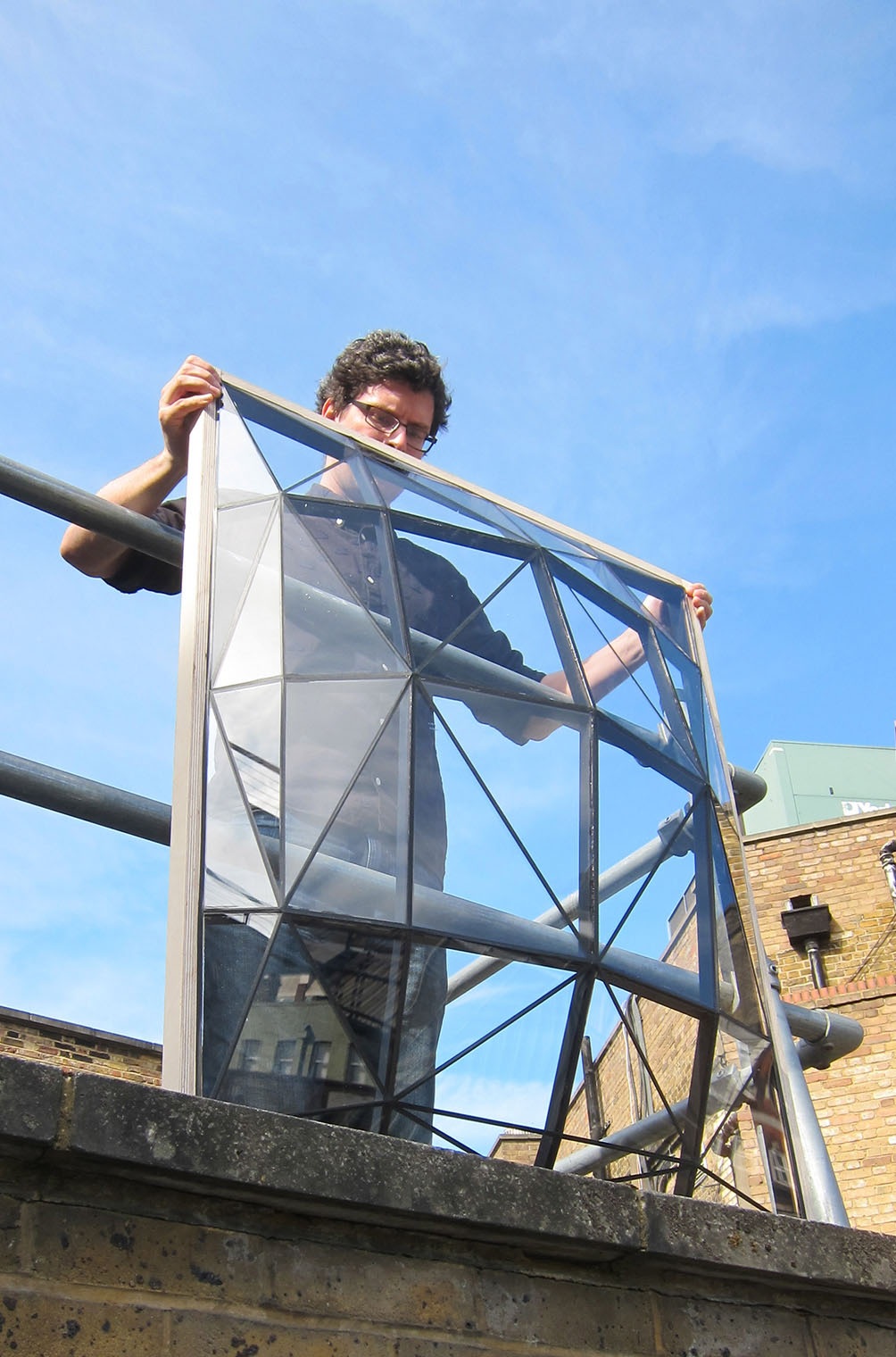
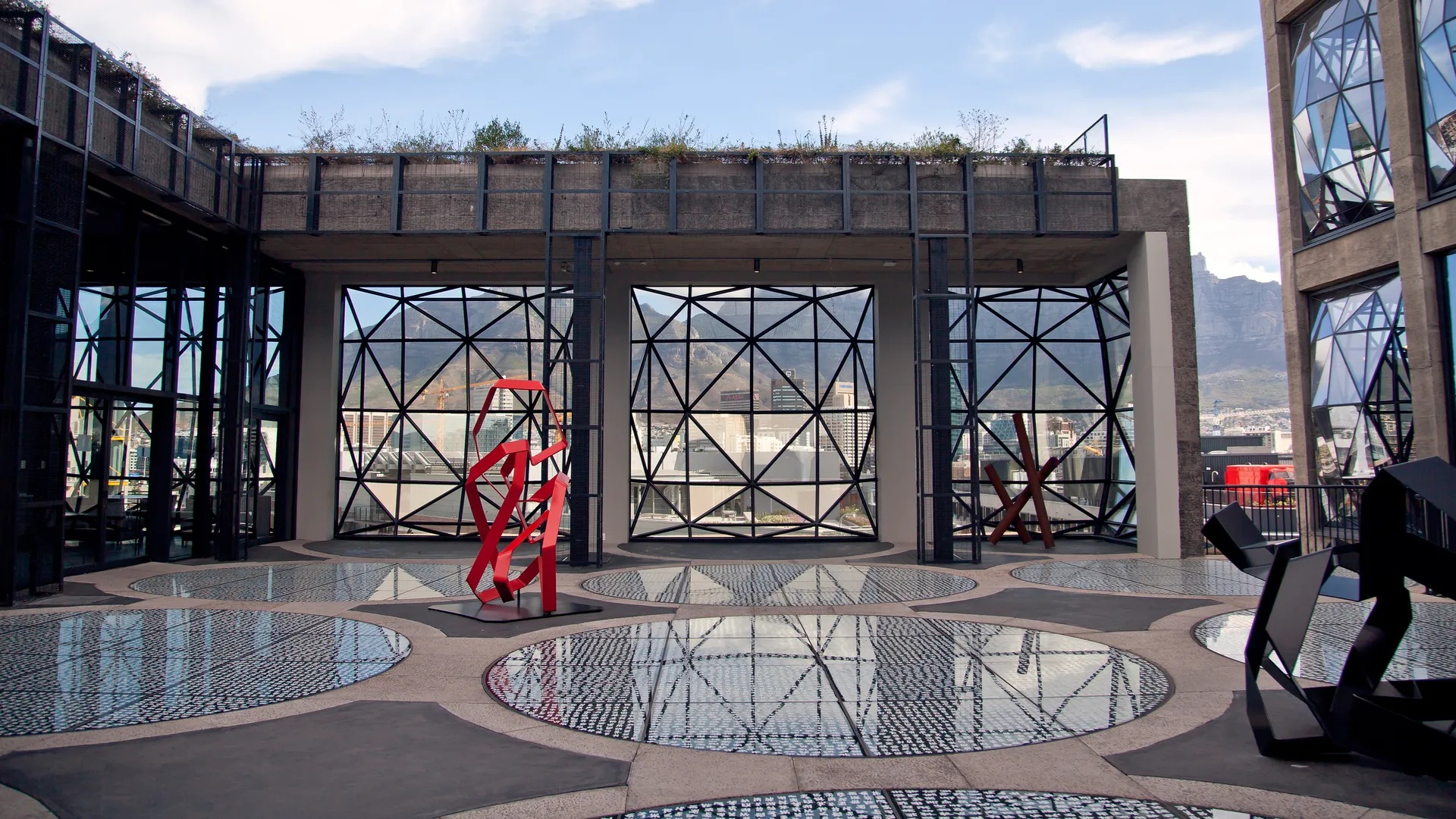
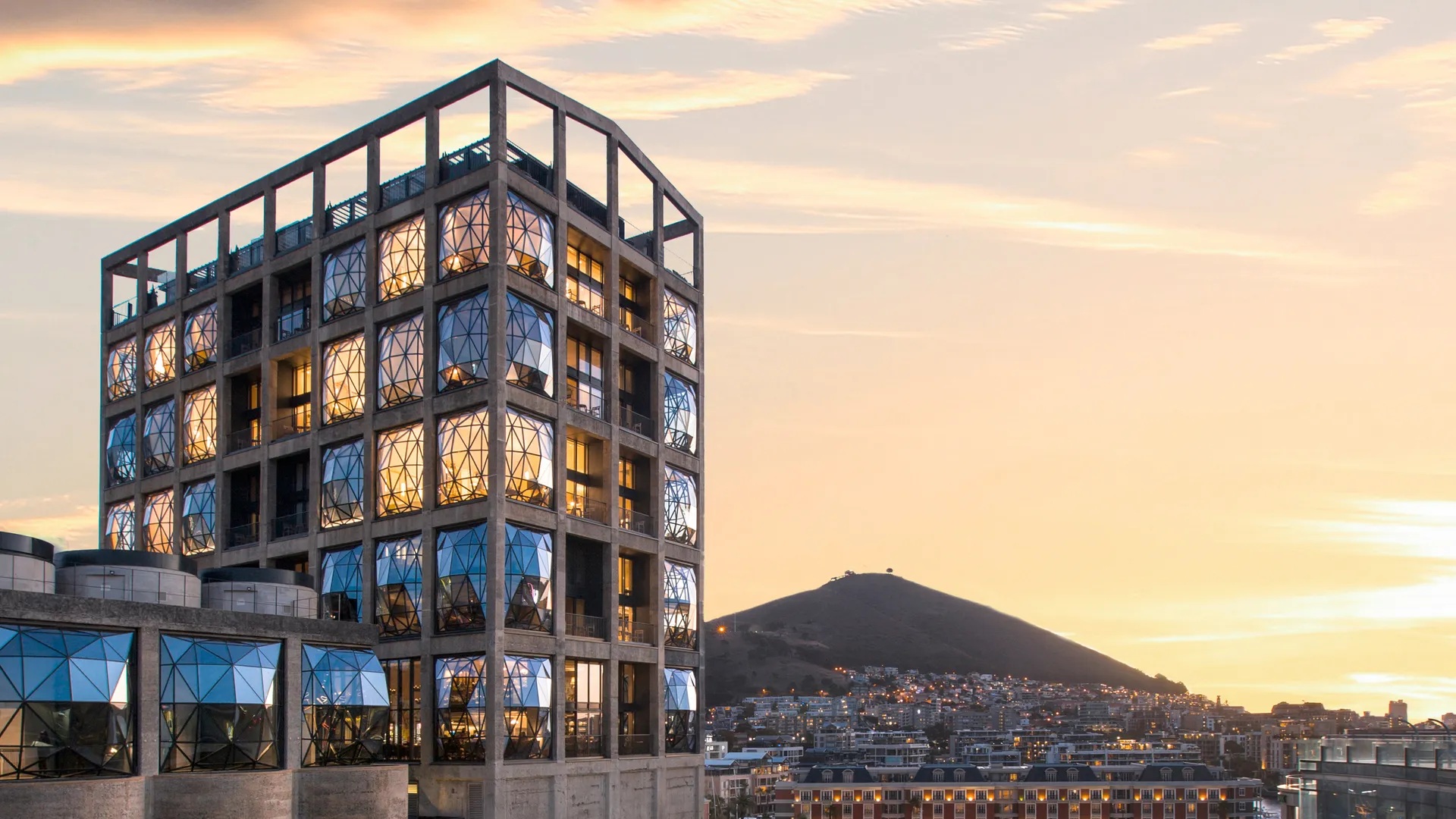
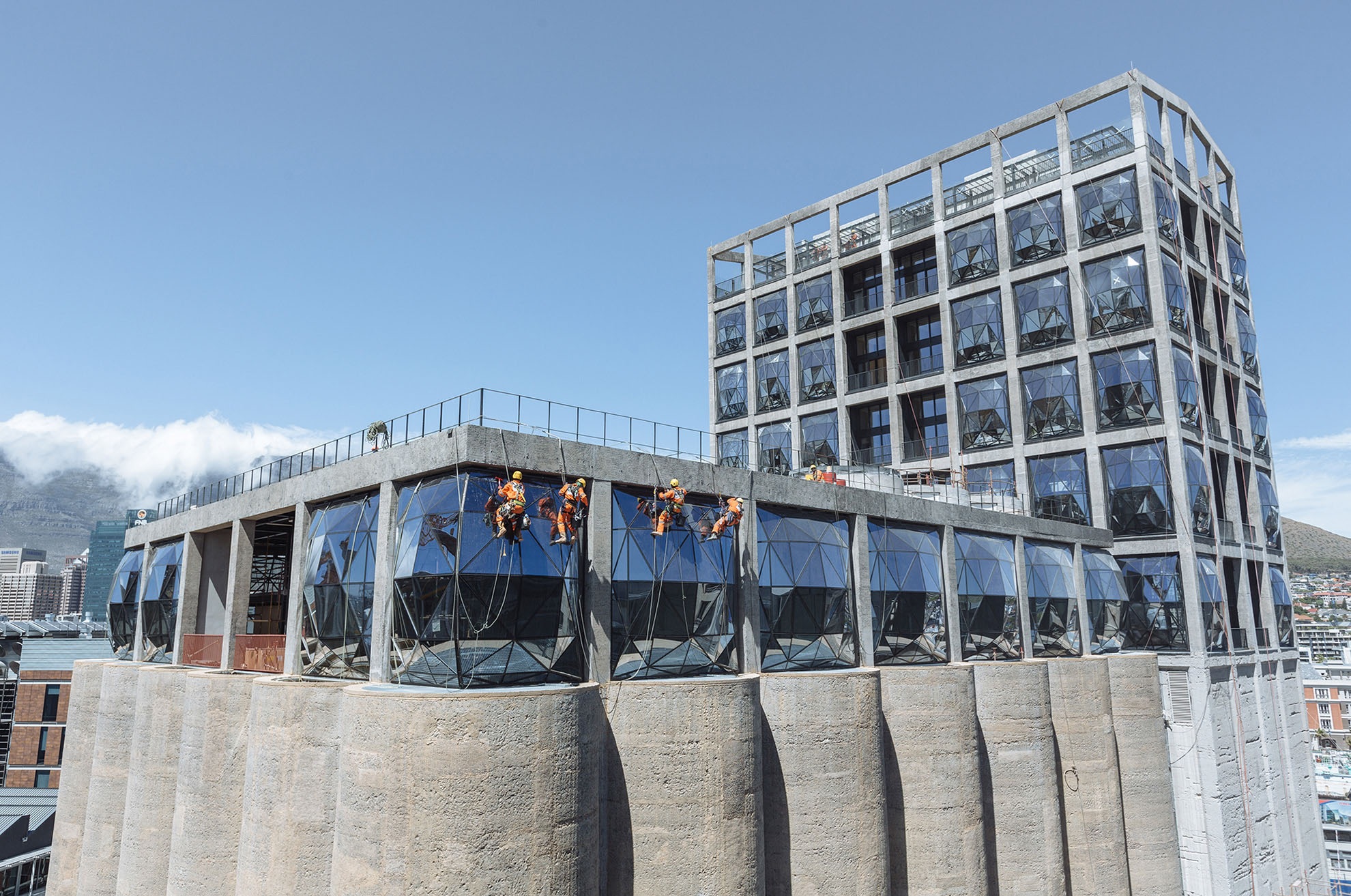
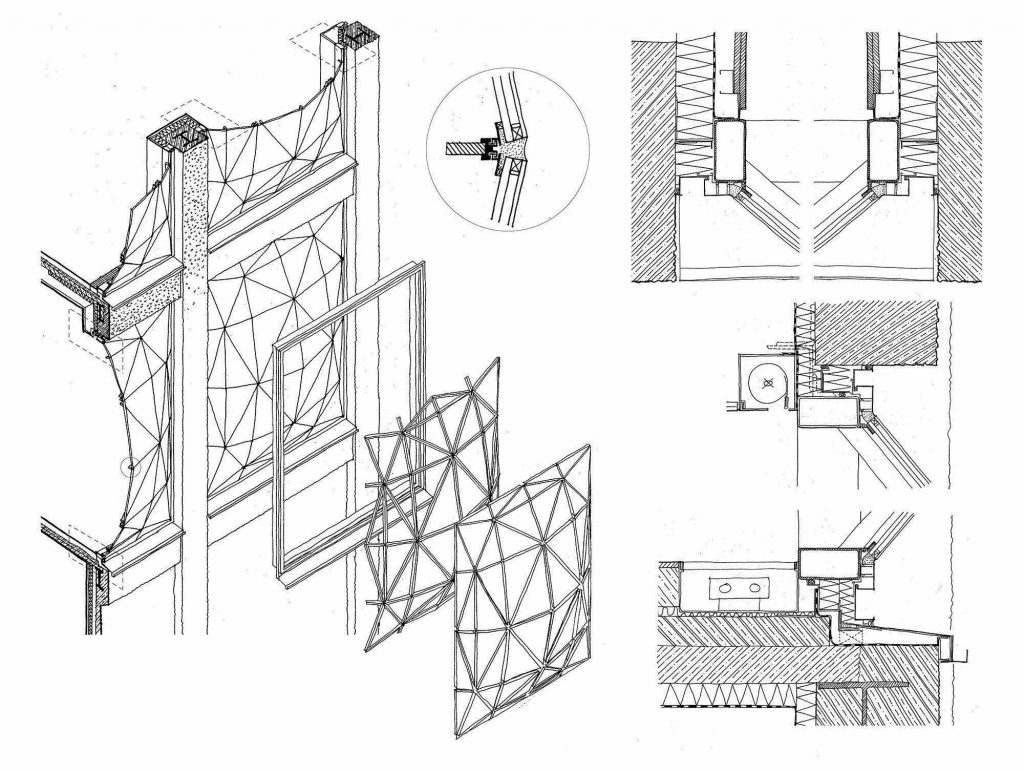
One of the main requirements was to introduce natural light deep into the building. Heatherwick collaborated with the Mazor Aluminum group to create large, pillow-shaped glass windows with diamond-cut detailing, carefully installed within the original high-level concrete frames. Each window is made up of 56 interlocking glass panes. As sunlight passes through them, the interior ambiance changes throughout the day.
Redefining the Vertical Journey
In many buildings, elevators are often tucked away inside dark shafts or hidden in a corner, with little consideration for enhancing the spatial experience. But at MOCAA, the elevators become “storytellers,” leading visitors on a journey of discovery and bridging the gap between the century-old concrete silo structure and the new contemporary architectural spaces.
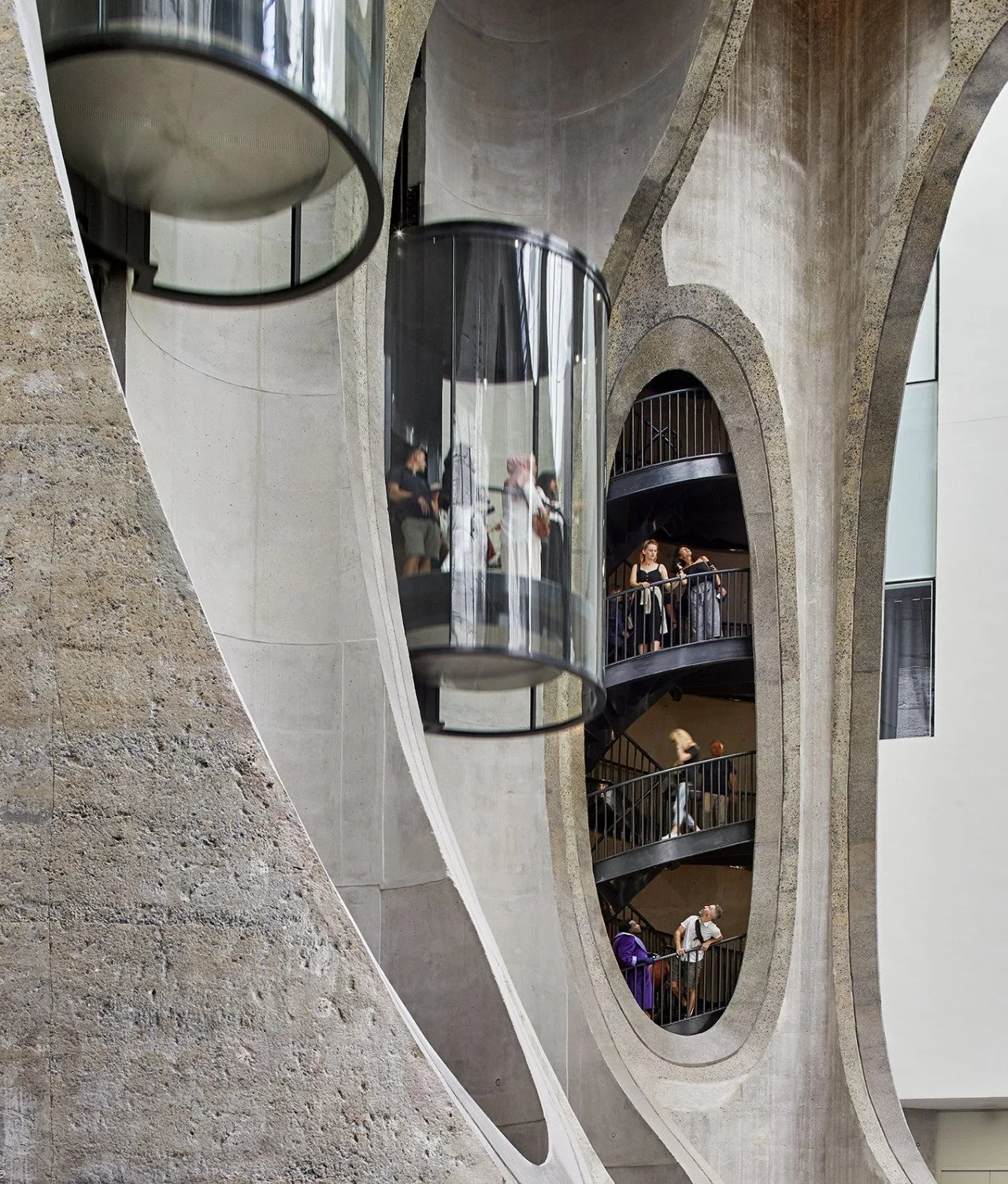
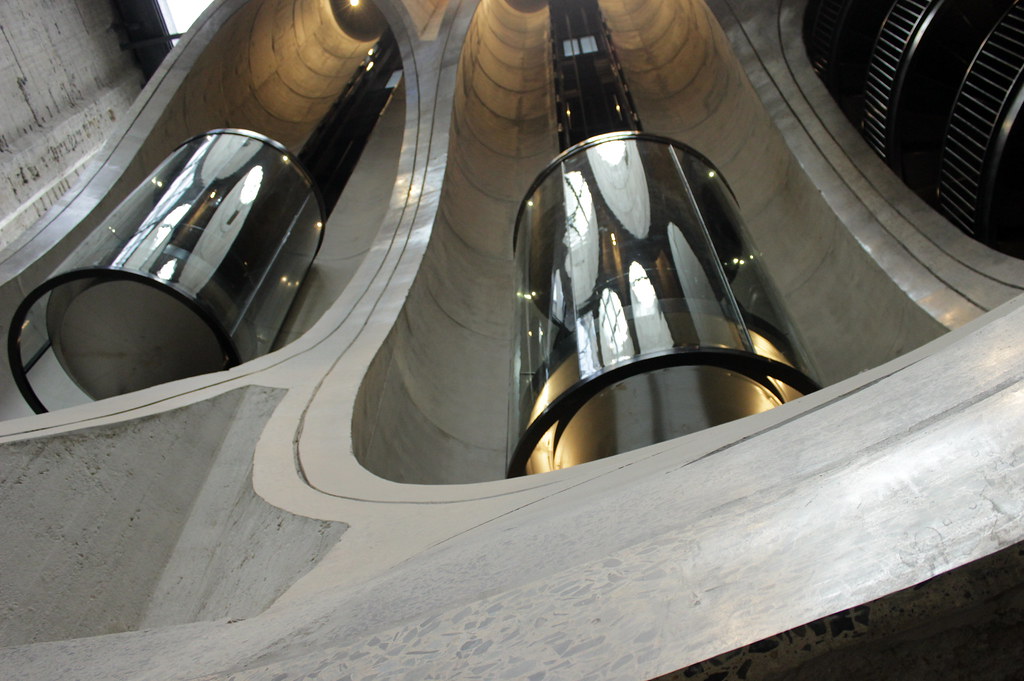
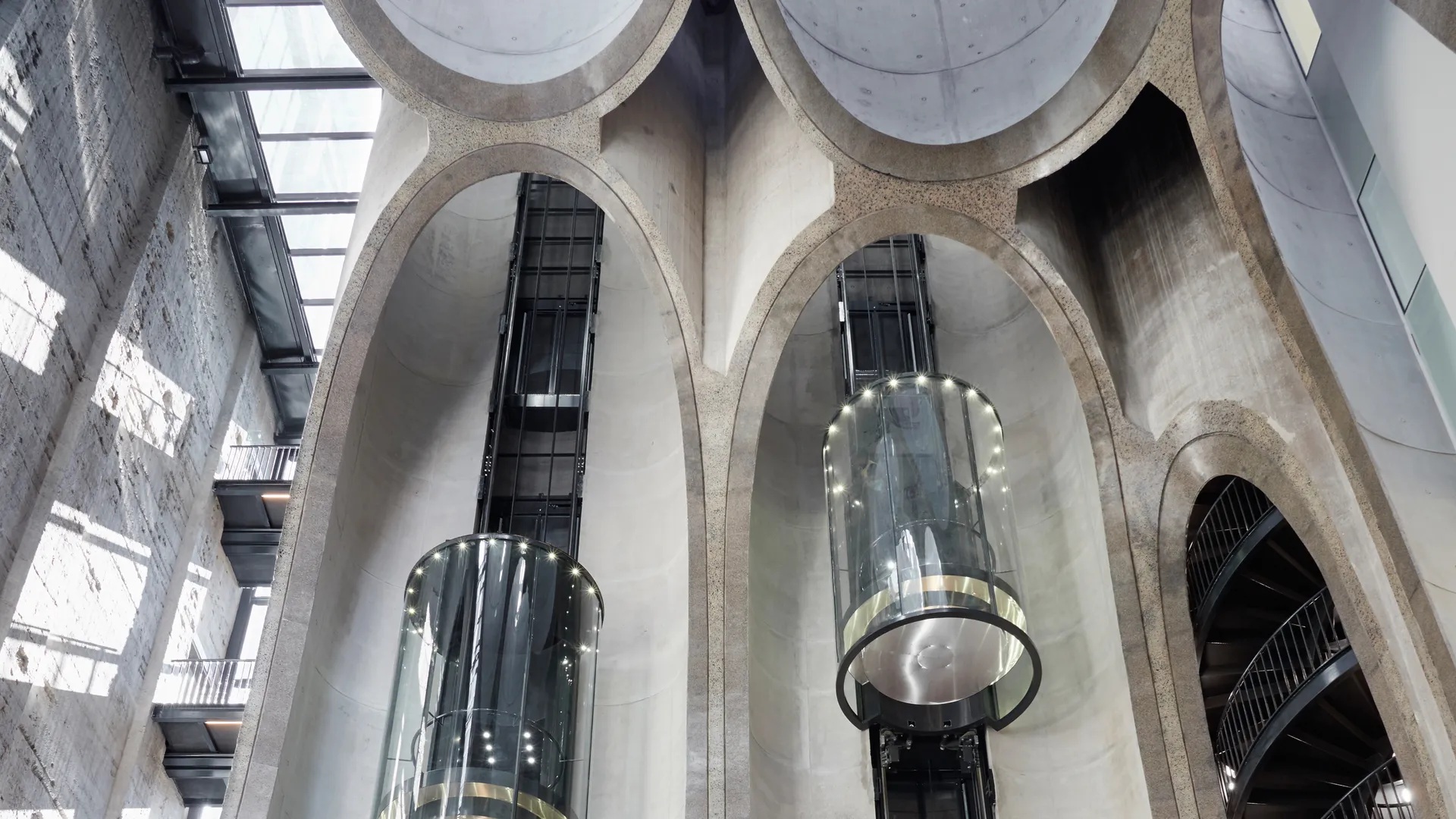
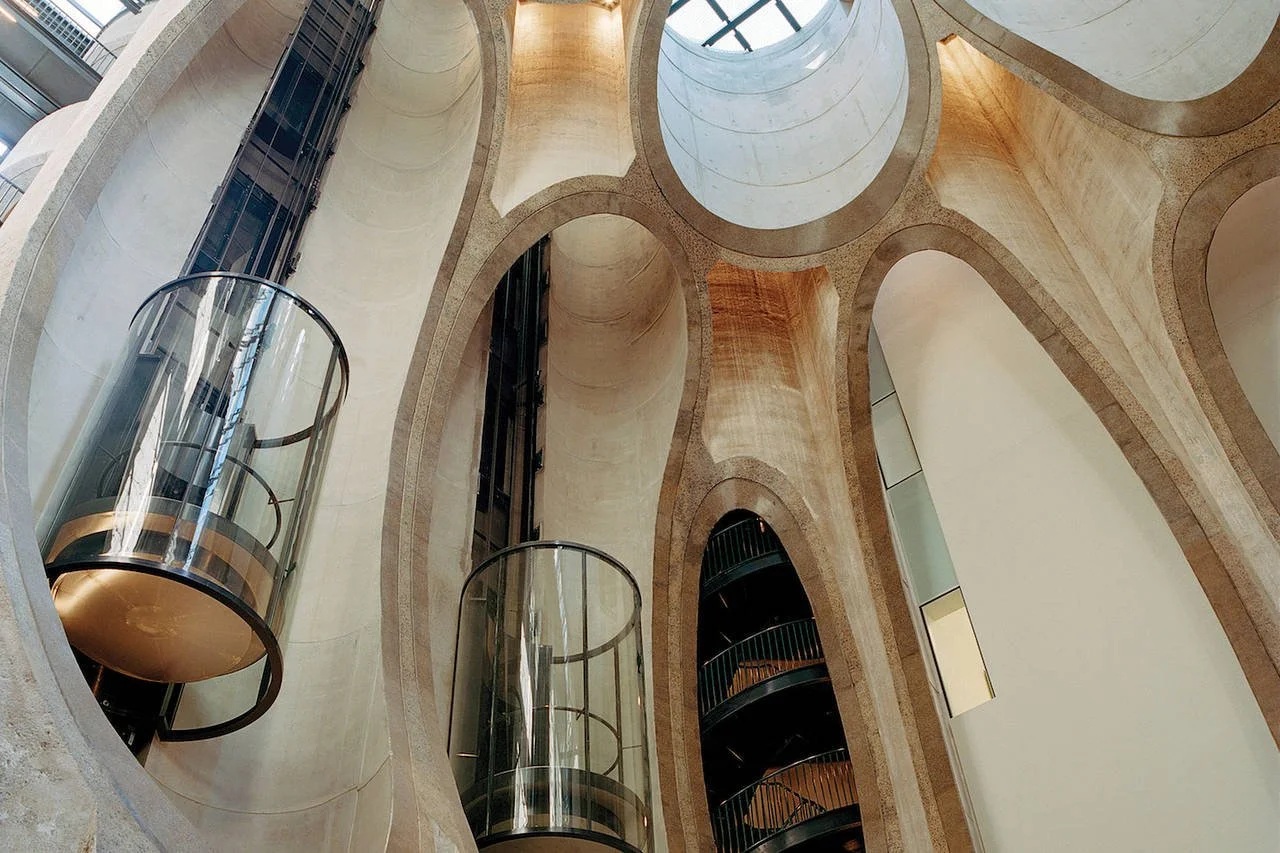
The museum lobby is equipped with two panoramic glass elevators installed directly within the massive silo tubes that once stored grain, allowing people to observe the inner structure of the old silos as they move up and down.
Moreover, natural light is maximized through voids and skylights, casting dramatic patterns of shifting light and shadow throughout the day. This creates a unique visual experience, making each vertical transition between floors feel like an integral part of the museum visit, rather than just a routine “up and down” movement.
The elevator design at MOCAA is more than just an aesthetic feature—it embodies Heatherwick’s vision of redefining vertical circulation. Time spent inside an elevator, often considered routine or insignificant, is transformed into a memorable and emotional experience. The elevators connect different levels of the silo complex, moving visitors both physically and experientially.
One of the most distinctive aspects of Heatherwick Studio’s design philosophy is the refusal to overlook any element — no matter how small. The elevator, often regarded as a purely utilitarian device, is transformed into a stage for creativity and wonder. By infusing it with artistry and a spirit of innovation, the design team blurs the boundary between engineering and experience.
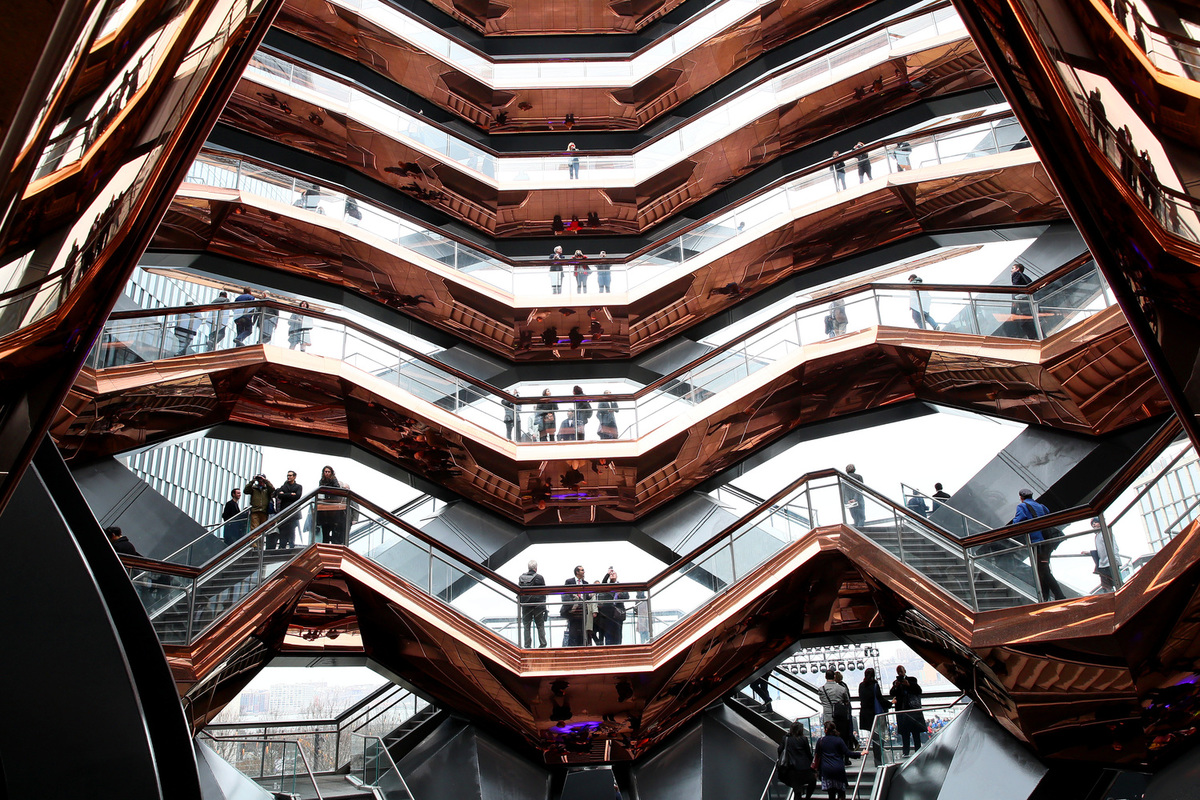
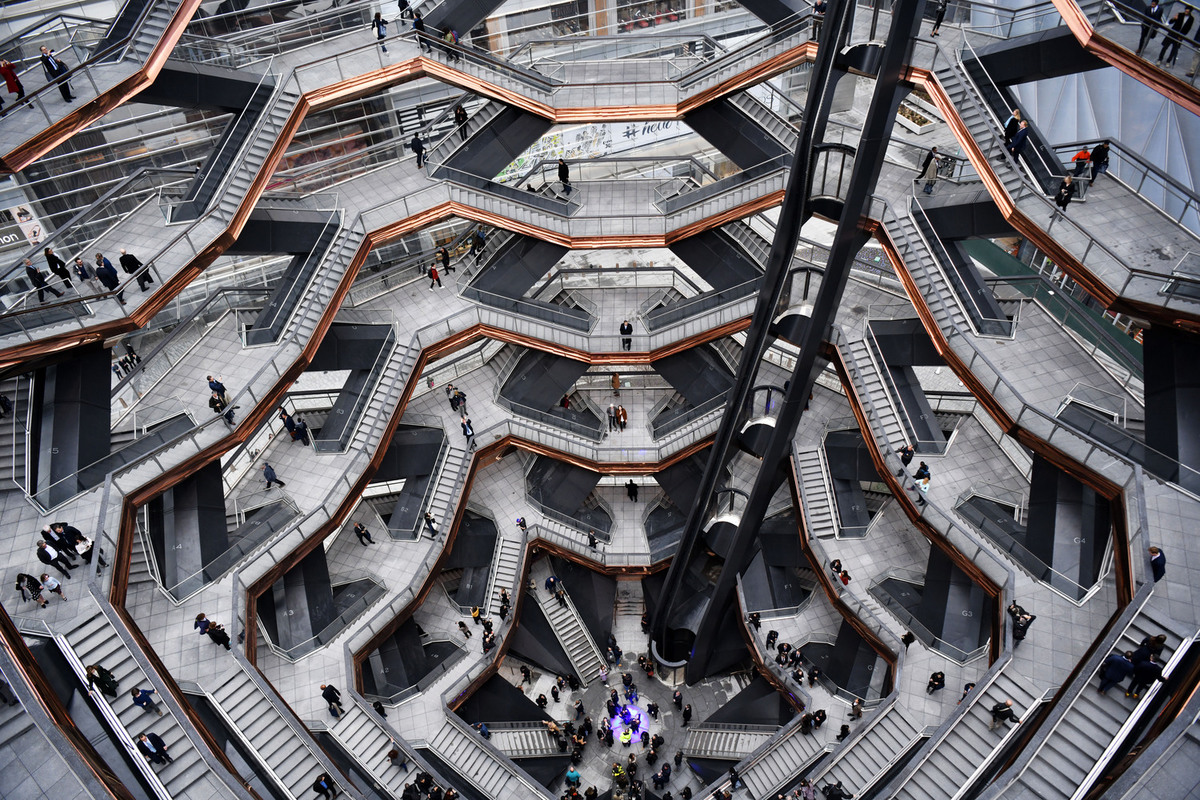
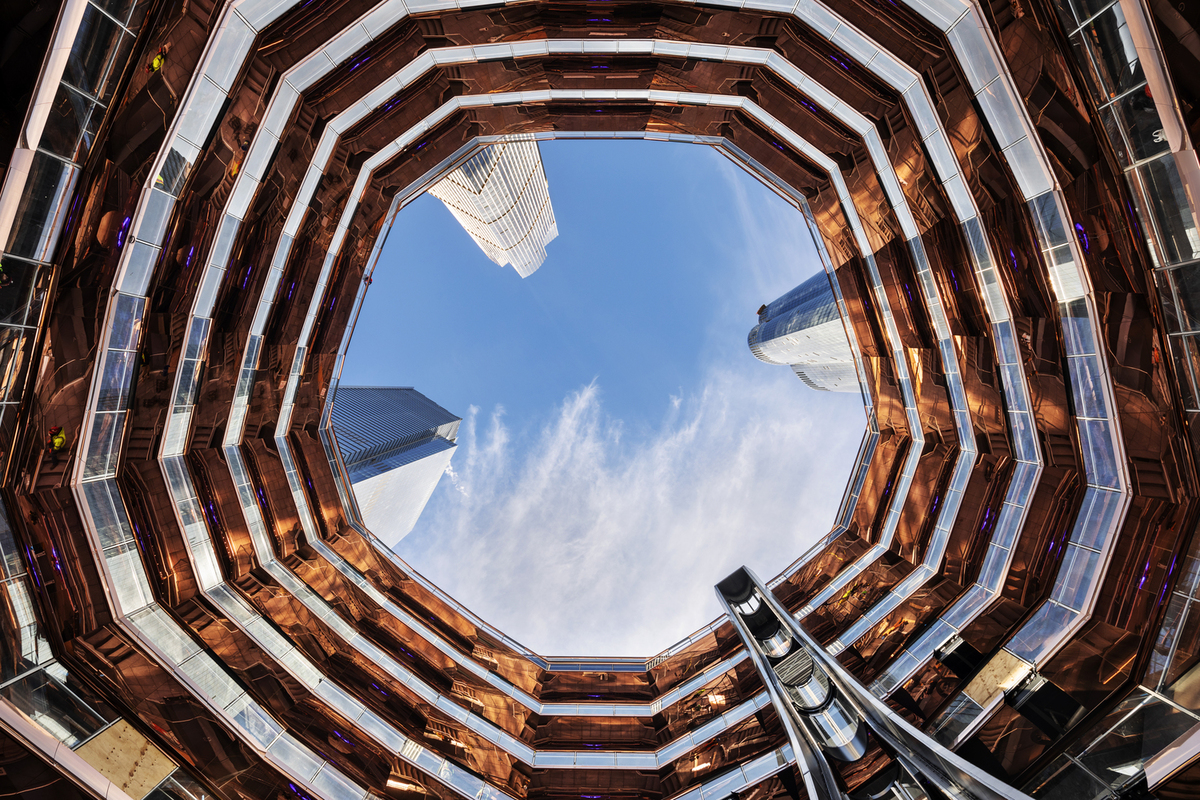
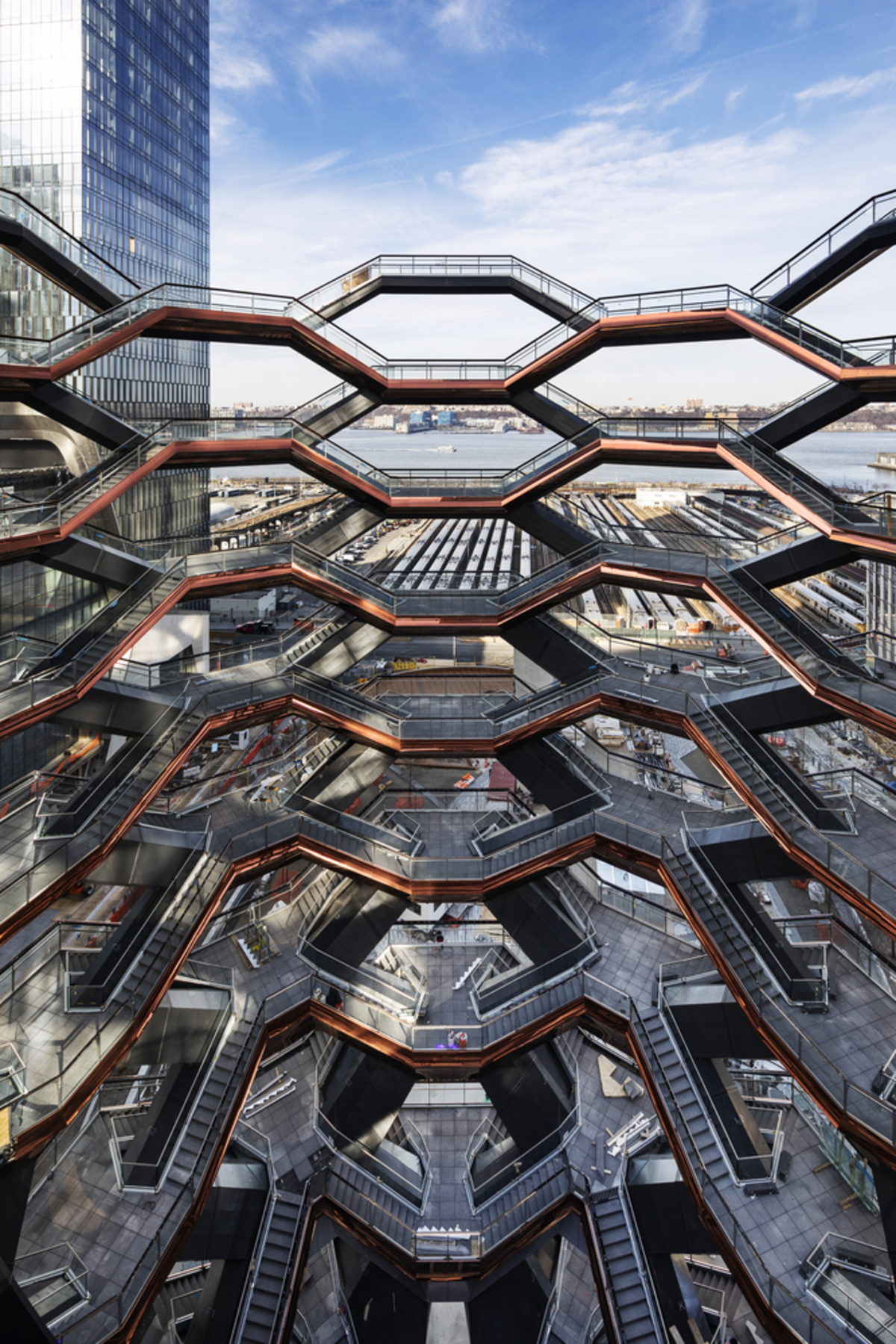
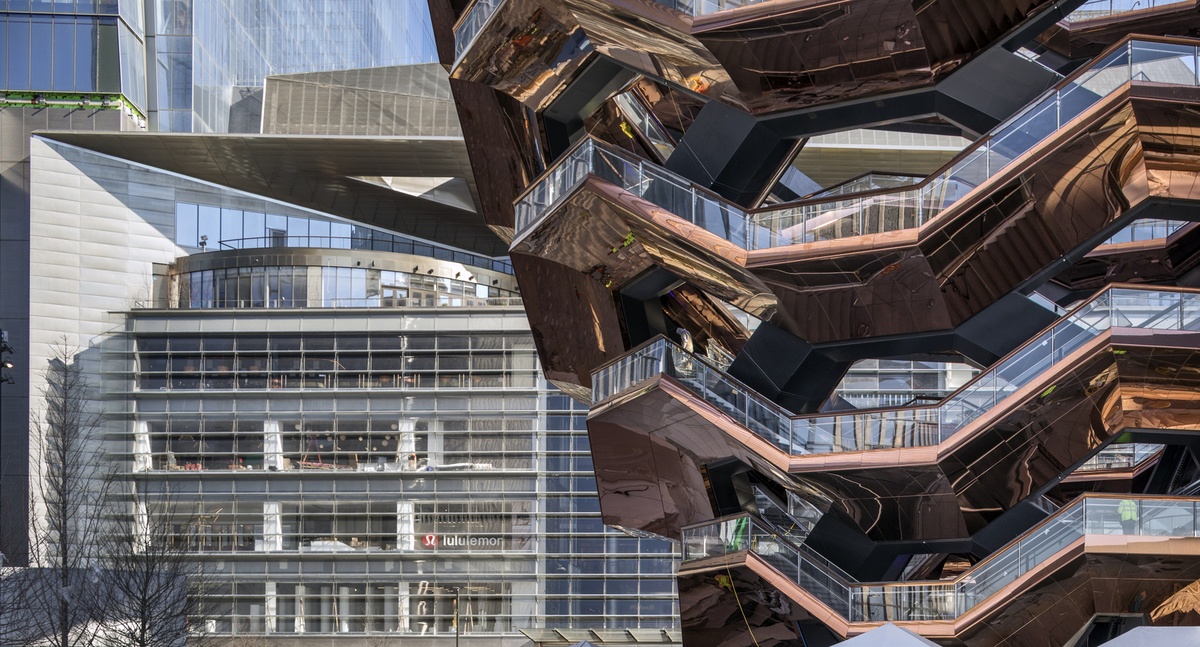
Heatherwick Studio has carried out many projects with a similar mindset — treating elevators and stairways as spaces for creativity. A standout example is “Vessel” at Hudson Yards, New York – a colossal, 16-storey spiralling steel structure comprising 2.465 steps, 80 landings, and sweeping views over both the Hudson River and Manhattan.